Otter.ai

Search documents
PM 的 AI 工具两层论:效率层让你更快,能力层让你更强
深思SenseAI· 2026-03-30 00:35
Core Insights - The article emphasizes that AI tools for Product Managers (PMs) can be categorized into two layers: efficiency layer, which speeds up tasks, and capability layer, which enables tasks that were previously impossible. Most PMs are currently stuck at the efficiency layer [3][7]. AI Tools for PMs - The article breaks down the AI tool stack for PMs into four categories: 1. **Writing and Communication**: Tools like Claude, Notion AI, and Grammarly help in drafting PRDs, summarizing research notes, and translating technical language for management [5]. 2. **Research and Insights**: Tools such as Dovetail, Maze, and Perplexity automate the summarization of interview records and cluster feedback themes, significantly reducing analysis time [5]. 3. **Roadmapping and Prioritization**: Tools like Productboard, Aha!, Linear, and Jira assist in clustering customer feedback and scoring features based on preset criteria [5]. 4. **Meetings and Collaboration**: Tools such as Granola, Otter.ai, and Fireflies automate transcription, generate summaries, and extract action items from meetings [5]. Efficiency vs. Capability - While AI tools have accelerated various steps in the product development process, the core cycle of product development remains unchanged. The article highlights that PMs are still dependent on a chain of handoffs, which limits overall efficiency [9][10]. - The concept of "Vibe Coding" is introduced, allowing PMs to describe their intentions in natural language and have AI generate runnable software, thus potentially transforming the PM's role [10][11]. Implications for PMs - The article suggests that the traditional lengthy handoff chains in product development can be bypassed, enabling PMs to create interactive prototypes and internal dashboards without waiting for engineering resources [13][14]. - Key takeaways include: 1. The distinction between "faster" and "different" is crucial, as many PMs are still operating within the efficiency layer without altering their workflows [15]. 2. The skill of clearly expressing product intent is becoming increasingly valuable in the context of Vibe Coding, as it directly translates to product construction [15]. 3. The dependency chain represents a significant cost center for PMs, as much time is spent waiting for design and engineering [15]. 4. Practical tool stack recommendations include maintaining existing efficiency tools while adding a Vibe Coding tool to prototype ideas independently [15]. 5. The article serves as content marketing for Replit, but the framework of "efficiency layer vs. capability layer" is valuable in understanding the stagnation in product iteration speed despite an increase in tools [16].

Should your business embrace radical transparency? Otter.ai’s CEO thinks you have no choice
Yahoo Finance· 2025-11-19 11:41
Core Insights - Otter.ai provides significant time savings for employees, allowing them to stay informed without attending lengthy meetings, thus enhancing productivity [1][3] - The platform saves the equivalent workload of one full-time employee for every 20 users, translating to substantial cost savings for enterprises [2] - Otter.ai aims to capture the enterprise market with its AI features, focusing on efficiency and tangible ROI amidst increasing scrutiny of enterprise AI investments [3] Company Overview - Founded in 2016 by Sam Liang and Yun Fu, Otter.ai has grown to achieve $100 million in annual recurring revenue and over 25 million users globally [4] - The company has established a strong presence in the enterprise sector, with notable clients including Walgreens, NBC Universal, Grant Thornton, and IBM [3] Market Dynamics - Meetings are identified as the most expensive activity in enterprises, with employees spending an average of 11.3 hours per week in meetings, costing approximately $29,000 per employee annually [7] - Otter.ai competes with larger companies like Microsoft and Zoom by emphasizing its innovative capabilities and platform-agnostic nature, supporting various meeting platforms [8][9] Future Vision - Liang envisions a future where all meetings are automatically recorded and uploaded, creating a comprehensive voice knowledge base that surpasses traditional written documentation [6][11] - The company promotes transparency within enterprises, encouraging the sharing of meeting information across departments to enhance efficiency [14][15] Privacy and Compliance - Otter.ai has faced scrutiny regarding privacy, with a recent lawsuit alleging unauthorized recording of conversations; however, the company asserts compliance with privacy policies and offers opt-in options for AI training [17][18] - Liang advocates for a balance between transparency and privacy, suggesting that existing privacy laws need to evolve to accommodate the AI landscape [19][20]
大声思考!如何在知识工作中运用你的声音
3 6 Ke· 2025-06-25 23:11
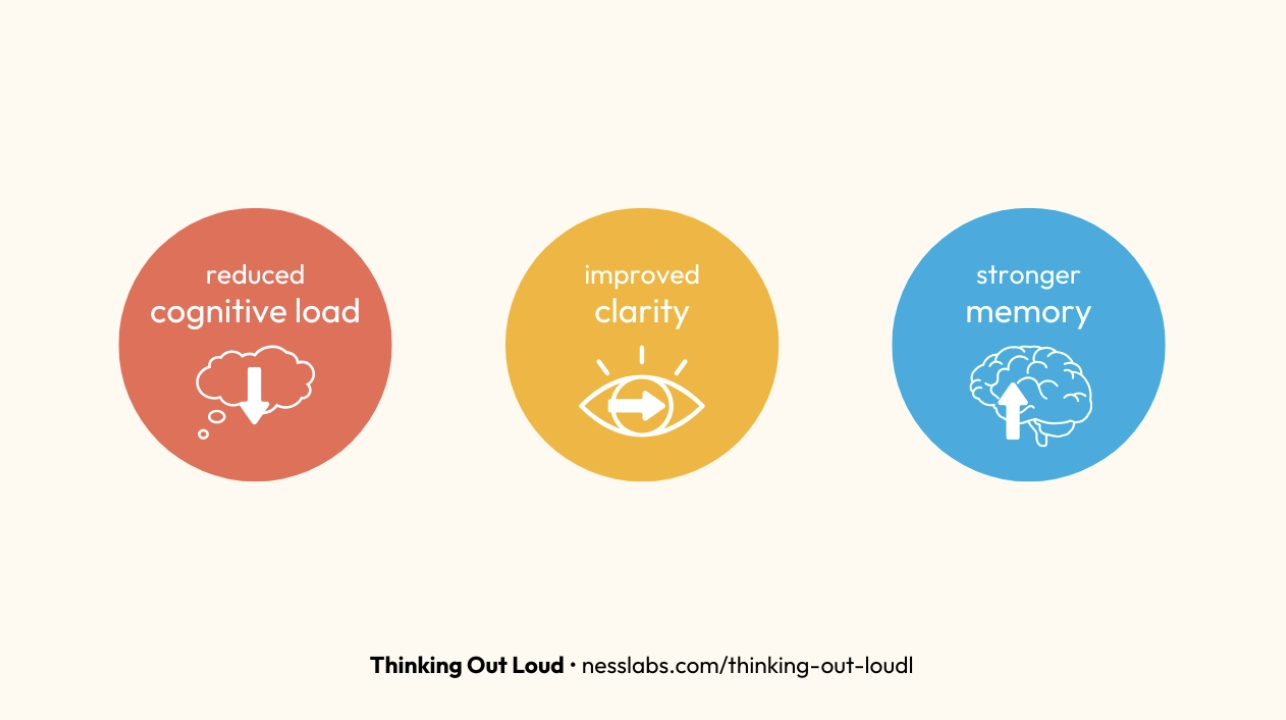
Core Insights - The article emphasizes the importance of vocal expression as a natural and powerful cognitive tool, suggesting that speaking can enhance clarity, creativity, and decision-making abilities in knowledge work [2][11]. Group 1: The Science of Vocal Thinking - Research indicates that vocalizing thoughts activates different cognitive processes compared to silent thinking, leading to reduced cognitive load and improved clarity and memory [6][12]. - Historical figures like Voltaire and Darwin utilized vocalization to refine their ideas, demonstrating the effectiveness of this method in enhancing understanding and problem-solving [3][6]. Group 2: Practical Applications of Vocalization in Knowledge Work - Five practical methods for utilizing voice in knowledge work include: 1. Verbally explaining complex problems to uncover solutions [7]. 2. Using voice memos for brainstorming to capture spontaneous creative connections [8]. 3. Reading drafts aloud to identify logical flaws and tone issues before finalizing documents [8]. 4. Combining physical movement with vocal thinking to enhance cognitive benefits [9]. 5. Practicing key points aloud before important meetings to refine thoughts and boost confidence [10]. Group 3: Voice-Driven Knowledge Work Tools - Various tools can integrate voice into workflows, such as: 1. Voice input applications like Wispr Flow for seamless speech-to-text functionality [14]. 2. Meeting transcription services like Otter.ai for real-time capturing and summarizing conversations [14]. 3. Text-to-speech tools like Speechify for converting written content into audio [14]. 4. Content creation tools that transform voice notes into structured drafts [14]. 5. Note integration features in existing systems, allowing for direct voice capture within knowledge management platforms [14].