Petro

Search documents
Financial Neutrality in 2026: Why Crypto Is No Longer Optional
Yahoo Finance· 2026-01-26 13:58
Individual Level - Ordinary households are using crypto-exchanges as a "financial VPN" to move money and protect savings from unpredictable political actions [1] - Cryptocurrency has become a practical infrastructure for families to maintain purchasing power amid economic instability and hyperinflation [36][39] - In countries like Venezuela and Iran, crypto serves as a lifeline for families facing financial turmoil, allowing them to bypass local economic failures [38][39] Corporate Level - Corporations in developed markets are increasingly adopting cryptocurrency to bypass traditional banking systems and enhance financial resilience [26] - Retail businesses are experiencing higher conversion rates and average order values through crypto transactions, with significant growth in luxury sectors [27][28] - Companies like Sony Honda are integrating blockchain technology into their products, creating decentralized ecosystems that enhance user experience and financial independence [30][32] Sovereign Level - Nations are rethinking financial security in light of "strategic instability," where traditional financial systems are weaponized for geopolitical control [2][7] - Venezuela's economic isolation serves as a case study for how dependence on foreign-controlled infrastructure undermines national resilience [11][13] - Iran has developed a parallel financial system using cryptocurrency to support imports and trade, demonstrating a more systemic integration compared to Venezuela [21][24] Financial Neutrality - The concept of "financial neutrality" is emerging, allowing states, corporations, and individuals to store and transfer value independently of politically controlled financial infrastructure [5] - The rise of financial neutrality marks a shift towards viewing digital assets as strategic hedges against asset freezes and sanctions [19] - The ability to transact freely is increasingly recognized as a fundamental human right, essential for financial autonomy and freedom [40][42]
Financial Neutrality in 2026: Why Crypto Is No Longer Optional
Yahoo Finance· 2026-01-26 13:58
Individual Level - Ordinary households are using crypto-exchanges as a "financial VPN" to move money and protect savings from unpredictable political actions [1] - Cryptocurrency has become a practical infrastructure for families to maintain purchasing power amid economic instability and hyperinflation [36][39] - In countries like Venezuela and Iran, crypto serves as a lifeline for families facing financial turmoil, allowing them to bypass local economic failures [38][39] Corporate Level - Corporations in developed markets are increasingly adopting cryptocurrency to bypass traditional banking systems and enhance financial resilience [26] - Retail businesses are experiencing higher conversion rates and average order values through crypto transactions, with significant growth in sectors like luxury fashion and electronics [27][28] - Companies like Sony Honda are integrating blockchain technology into their products, creating decentralized ecosystems that enhance user experience and financial independence [30][32] Sovereign Level - Nations are rethinking financial security in light of "strategic instability," with a focus on maintaining operational continuity through alternative financial systems [2] - The U.S. dollar and SWIFT network are being used as tools of geopolitical control, prompting countries to seek financial neutrality [7] - Venezuela's economic isolation serves as a case study for how dependence on foreign-controlled infrastructure can undermine national resilience [11][13] Financial Neutrality - The concept of "financial neutrality" is emerging, allowing states, corporations, and individuals to store and transfer value independently of politically controlled financial systems [5] - Digital assets are increasingly viewed as strategic hedges against asset freezes and sanctions, with countries like El Salvador leading the way in integrating Bitcoin into national reserves [20][19] - Iran's use of cryptocurrency has become integral to its economic operations, contrasting with Venezuela's more superficial adoption of blockchain technology [21][25]



薛鹤翔:商品稳定币的多元化探索——稳定币系列报告之六
Sou Hu Cai Jing· 2025-08-07 05:39
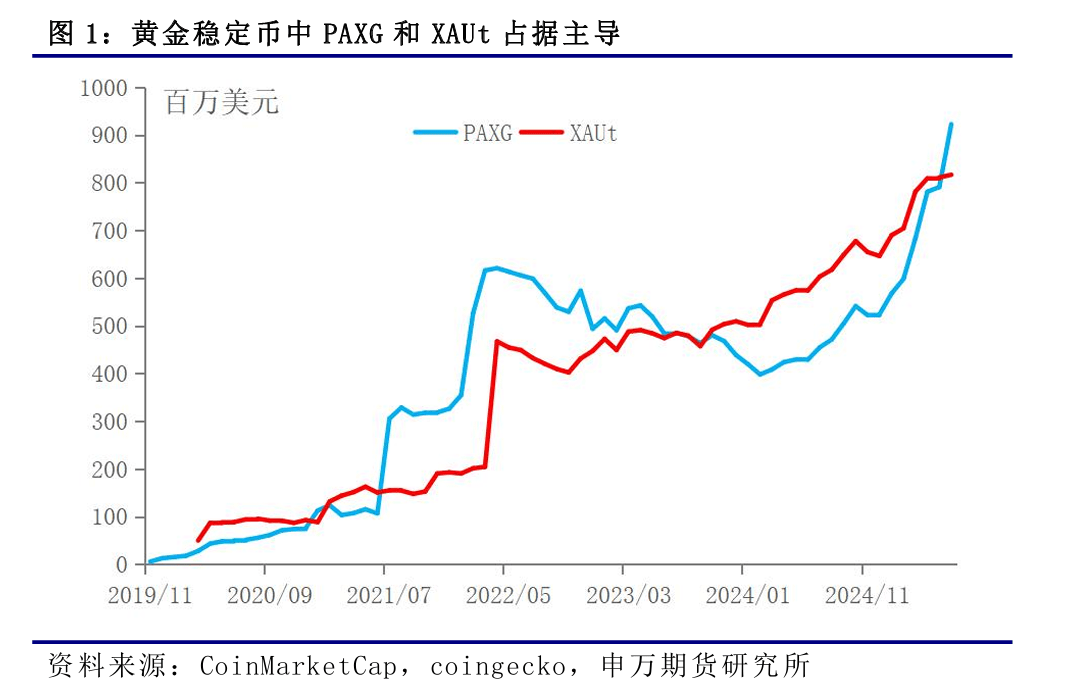
Group 1: Overview of Commodity-Backed Stablecoins - Commodity-backed stablecoins are cryptocurrencies anchored to physical commodities like gold and oil, aiming to maintain price stability through their value linkage to specific commodities [1][3] - The stablecoin market is predominantly led by fiat-backed stablecoins, with commodity-backed stablecoins being relatively small in scale, primarily represented by gold-backed stablecoins such as PAXG and XAUt, which have market sizes of $950 million and $830 million respectively, accounting for 0.64% of the total stablecoin market [1][3][6] - As of August 3, the total stablecoin market reached $277 billion, with fiat-backed stablecoins making up $233.83 billion, representing 84.4% of the market [3][6] Group 2: Comparison Between Fiat and Commodity-Backed Stablecoins - Fiat-backed stablecoins are pegged to fiat currencies like the US dollar, while commodity-backed stablecoins are pegged to physical commodities [6][7] - The reserve assets for fiat-backed stablecoins typically include cash and cash equivalents, whereas commodity-backed stablecoins are backed by the corresponding physical commodities [6][7] - Fiat-backed stablecoins are widely used in cryptocurrency trading, cross-border payments, and DeFi applications, while commodity-backed stablecoins serve as payment methods, hedging tools, and inflation-resistant investment options [6][7] Group 3: Case Studies of Commodity-Backed Stablecoins - Petro, a Venezuelan oil-backed stablecoin, was introduced to circumvent US financial sanctions and boost the economy but ultimately failed due to issues such as the authenticity of oil reserves, US sanctions, and lack of trust in the Venezuelan government [2][11] - Kinesis Silver (KAG) is a silver-backed stablecoin with a market cap of $140 million, offering a unique revenue-sharing mechanism where over 50% of Kinesis's income is shared with users monthly [12][13] - Agrotoken, a stablecoin backed by agricultural products like soybeans, corn, and wheat, aims to provide liquidity and financing options for farmers, having tokenized 230,000 tons of grain with a transaction volume of $70 million [15][21]