Pro Display XDR

Search documents
These are Apple’s Most Expensive Products | One More Thing
CNET· 2025-11-21 13:01
Product Pricing & Strategy - Apple's product line includes items with high price tags, a recurring theme throughout its history [1][6][7] - The most expensive Apple product currently is the Mac Studio M3 Ultra, fully configured at $14,099 [5] - High-priced upgrades and accessories, such as the Mac Pro wheel kit for $700, contribute to the overall cost [5] - Limited edition items, like the iPhone Pocket, are priced as collectible art rather than tech tools [7][8] Specific Product Examples & Costs - Vision Pro mixed reality headset can cost up to $4,048 with upgrades [2] - Pro Display XDR with nano-textured glass and pro stand totals $6,998 [3] - Fully upgraded MacBook Pro can reach $7,349 [4] - A maxed-out Mac Pro can cost $12,448 [4] - An 18-karat gold Apple Watch model was priced at $17,000 upon release [6] - A Mac Pro setup six years ago could exceed $53,000, with RAM alone costing $25,000 [6] Market Perception & Consumer Behavior - Some consumers may find certain Apple upgrades overpriced [5] - High prices may deter some consumers, as they may not see the value in certain products [2][9] - The iPhone Pocket's quick sell-out suggests it's viewed as a collectible art piece [8]



苹果代码泄露新动向:Studio Display 2浮出水面,或于2026年初亮相
Huan Qiu Wang Zi Xun· 2025-08-14 06:23
Core Insights - Apple is reportedly in the early testing phase of a new professional display, codenamed "Studio Display 2" (J427), which is expected to be officially launched in early 2026 [1][2] - The information leak originated from a recent software update, where developers discovered the hardware identifier "J427" in the system files, indicating a high-end display aimed at professional users [1][2] - Historical context shows that Apple has previously experienced similar code leaks, such as the Mac Pro (J180), which was eventually released in 2023 [1] Product Details - The first-generation Studio Display was launched in 2022, featuring a 27-inch 5K Retina display, A13 Bionic chip, and a six-speaker audio system, positioned between consumer-grade iMac displays and professional-grade Pro Display XDR [2] - Internal testing for new products typically begins 6-12 months prior to launch, aligning with the timeline for the J427 code exposure [2] - Supply chain dynamics suggest that display panel manufacturers may start mass production of components for the new model in the second half of 2025, allowing for a launch in Q1 or Q2 of 2026 [2] Strategic Implications - If the rumors are confirmed, Studio Display 2 will synergize with other professional devices from Apple, such as the Mac Pro with M4 chip and the updated Pro Display XDR, enhancing Apple's ecosystem in the creative work sector [2]
iPhone 今年要上的屏幕技术,能帮你立省 99 块
3 6 Ke· 2025-07-22 04:43
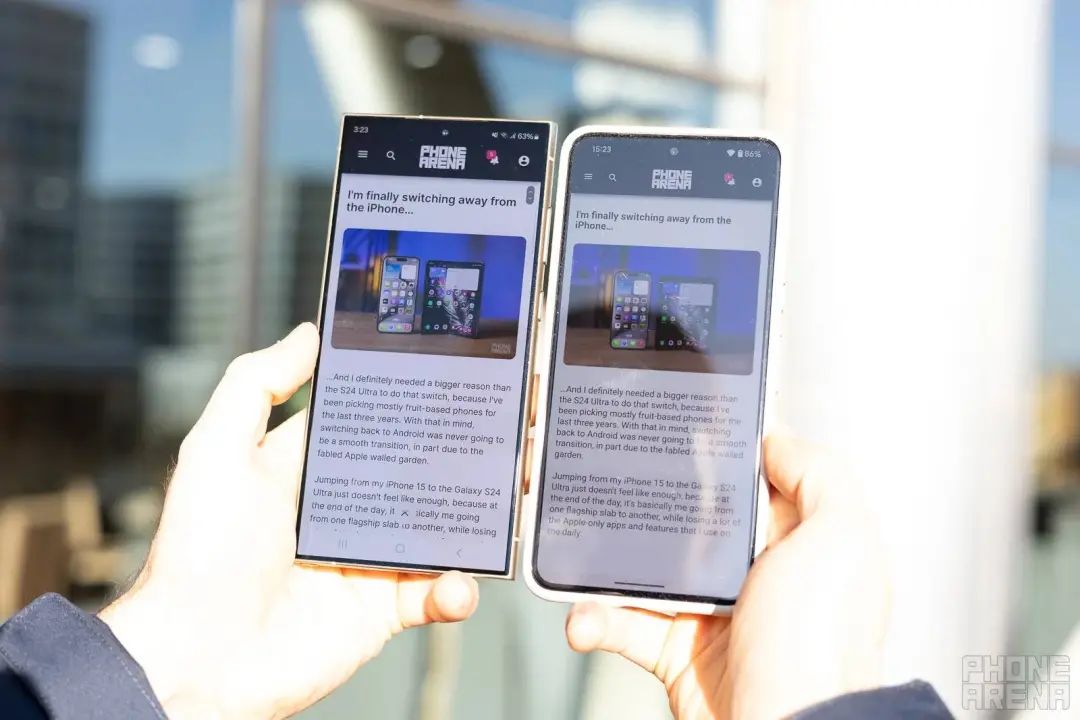
Core Insights - Apple is expected to introduce anti-reflective screens in the iPhone 17 Pro series, enhancing screen readability in bright environments [1][3] - The anti-reflective screen technology is anticipated to outperform the current "Ceramic Shield" in terms of scratch resistance and transparency [3][24] - The introduction of this feature could provide Apple with a competitive edge over domestic smartphone manufacturers, who have not yet adopted similar technology [3][24] Group 1: Technology Overview - The anti-reflective screen technology has been in development for over a decade, with various methods being explored to reduce glare and improve visual experience [10][20] - Samsung's collaboration with Corning has led to the development of "Corning Gorilla Armor" glass, which significantly reduces reflection by 75% compared to previous models [4][24] - Different anti-reflective technologies include AG (anti-glare) glass, nano-texture glass, and AR (anti-reflection) coatings, each with its own advantages and trade-offs [11][20][24] Group 2: Market Implications - The adoption of anti-reflective screens is likely to become a standard feature in flagship smartphones, as it addresses a critical aspect of user interaction with devices [25][29] - The competitive landscape may shift as domestic brands begin to adopt similar technologies, following Apple's lead in the anti-reflective screen market [24][29] - The demand for high-quality display technology is expected to grow, with consumers increasingly valuing features that enhance usability in various lighting conditions [25][29]