Quantum Loon处理器

Search documents
IBM量子芯片,重磅发布
半导体行业观察· 2025-11-13 01:35
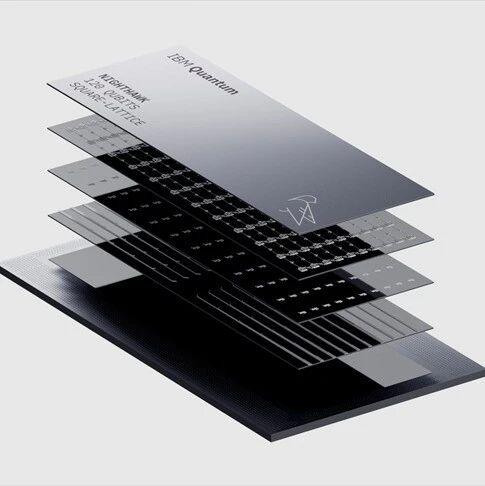
Core Insights - Quantum computing is gaining momentum with significant advancements from both emerging companies and established tech giants like Google, Microsoft, Amazon Web Services, and NVIDIA [2] - IBM is a leading player in the quantum computing space, recently unveiling its Quantum roadmap aimed at building a large-scale, fault-tolerant quantum system called Quantum Starling by 2028 [3][5] Group 1: IBM's Quantum Developments - IBM launched the Nighthawk processor, which will be delivered to users by the end of this year and is expected to play a crucial role in achieving quantum advantage by the end of 2026 [5] - The Nighthawk processor features 120 superconducting qubits connected by 218 tunable couplers, allowing for 30% more complex circuits compared to its predecessor, Quantum Heron, while maintaining a low error rate [8] - IBM's Quantum Loon is described as an experimental processor that includes key components necessary for fault-tolerant quantum computing [7] Group 2: Software and Collaboration - IBM's new quantum software improves the accuracy of circuits with over 100 qubits by 24% and reduces the cost of obtaining precise results by over 100 times [8] - The company collaborates with institutions like Algorithmiq and Flatiron Institute to contribute experimental results to a new open community system for tracking claims of quantum advantage [8] - IBM's partnership with AMD demonstrates that classical computers can use qLDPC (quantum low-density parity-check) codes for real-time error decoding, enhancing the reliability of quantum computations [14] Group 3: Future Roadmap and Innovations - IBM's roadmap includes four generations of Nighthawk processors, with the next generation expected to offer up to 7,500 quantum gates by the end of 2026 and 10,000 gates the following year [11] - By 2028, systems based on Nighthawk are projected to include up to 15,000 two-qubit gates and connect over 1,000 qubits [11] - The advanced 300mm wafer fabrication facility in Albany, New York, is expected to double the development speed of IBM's quantum processors, significantly enhancing qubit connectivity and performance [16]