Rubin GPUs

Search documents
Nvidia's $20 Billion Groq Acquisition Just Paid Off. This New Chip Could Change the AI Inference Game in 2026.
Yahoo Finance· 2026-03-24 14:15
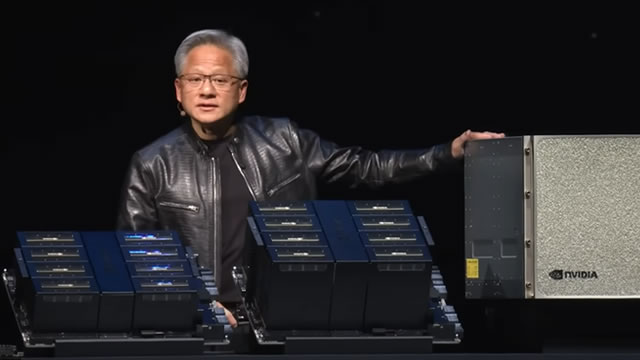
Core Insights - Nvidia acquired Groq's AI inference unit for $20 billion, surprising some analysts with the price tag [1] - Nvidia CEO Jensen Huang announced the integration of Groq's processors into Nvidia's AI factory architecture, leading to the unveiling of the Groq 3 LPX inference accelerator [2] Importance of AI Inference Chips - AI inference refers to a trained AI model making decisions based on new data, essential for applications like ChatGPT and self-driving cars [6] - Inference involves two steps: prefill (processing a query) and decode (formulating a response) [7] - Inference chips are optimized processors and memory chips designed to accelerate AI inference tasks cost-effectively [7] Game-Changing Technology - Groq specializes in language processing unit (LPU) technology, enabling low-latency parsing and sequencing of natural language inputs and outputs [8] - The Groq 3 LPU utilizes SRAM for increased interactivity, while Nvidia's Rubin GPUs use HBM for faster data processing [8] - Despite the Rubin GPU's larger memory, the Groq 3 LPU offers superior memory bandwidth, enhancing throughput and intelligence in AI models [8]

Nvidia Is the Ultimate Growth Stock to Buy Now -- Here's Why
The Motley Fool· 2026-03-19 05:05
Core Viewpoint - Nvidia's stock has been stagnant since August 2025, but the underlying business continues to grow rapidly, presenting a potential buying opportunity for investors [1][2]. Company Growth - Nvidia manufactures GPUs and related software/hardware, maintaining a leading position in the market, which allows it to command premium prices over cheaper alternatives [4]. - The introduction of Rubin GPUs, which reduce inference token costs by 10 times and require four times fewer units for AI training compared to Blackwell GPUs, is expected to enhance Nvidia's revenue [5][6]. - Nvidia's revenue grew by 73% in Q1 FY 2026, with expectations of 77% growth in the following quarter, driven by increased spending from hyperscalers and strong demand for its products [10]. Market Dynamics - AI hyperscalers are projected to spend around $650 billion on AI data centers, with Nvidia estimating that global data center capital expenditures could reach $3 trillion to $4 trillion by 2030 [8]. - The potential return of sales to Chinese companies could provide a significant boost to Nvidia's growth, with previous expectations of $8 billion in export sales before restrictions were imposed [9]. Stock Valuation - Despite positive growth indicators, Nvidia's stock trades at 21.8 times forward earnings, slightly above the S&P 500's 21.2 times, suggesting it may be undervalued given its growth prospects [11]. - The market currently reflects a pessimistic outlook for Nvidia, but expectations are that this sentiment will shift as 2026 progresses, making it a compelling investment opportunity [14].

Nvidia's $1T Guidance Leaves Stock Flat, But These 4 Plays Could Explode
Yahoo Finance· 2026-03-18 11:49
Group 1: Nvidia's Vision and Market Reaction - Nvidia aims to generate $1 trillion in revenue from 2025 through 2027 through its AI accelerators, indicating a significant growth potential [1] - The market's muted reaction suggests that this anticipated hypergrowth may already be priced into Nvidia's stock [1] Group 2: Opportunities Beyond Chips - Investors may find opportunities not in the chips themselves but in the secondary infrastructure and downstream sectors that will benefit from the surge in compute demand [2] Group 3: Key Hardware and Manufacturing Sectors - The wave of data center spending creates a multiplier effect in hardware and manufacturing sectors, with companies like TSMC and Samsung positioned as critical beneficiaries [3] - Apple is pursuing a different AI strategy focused on on-device intelligence rather than cloud computing, differentiating itself from other tech giants [3] Group 4: Manufacturing Partners - Nvidia relies on foundry partners like TSMC and Samsung to build its chips, which is essential for achieving its $1 trillion sales target [4] - TSMC is crucial for Nvidia, handling complex GPUs and advanced packaging, and has seen its stock gain nearly 14% year-to-date [5] - Samsung Electronics serves as a key foundry for Nvidia's high-volume inference silicon, with its stock up nearly 60% year-to-date [6] Group 5: Enterprise Infrastructure - Large enterprises are not only purchasing Nvidia's AI accelerators but also need to build large-scale data centers optimized for AI model training and operation [7] - Companies like Dell and HPE are positioned to benefit from the demand for integrated systems that include Nvidia's components [7]
Nvidia's $1 Trillion Inference Chip Opportunity: The Inflection Point Investors Were Waiting For?
247Wallst· 2026-03-17 12:21
Core Insights - Nvidia has unveiled the Vera Rubin platform, combining next-generation Rubin GPUs with an 88-core Vera CPU, projecting $1 trillion in cumulative orders for Blackwell and Vera Rubin systems through 2027, doubling its previous guidance of $500 billion [1][11]. Company Developments - Meta Platforms has committed to deploying Vera CPU-only servers alongside Blackwell and Rubin GPUs starting in 2027, with other companies like Alibaba, ByteDance, and Oracle also planning full-stack deployments [2][9]. - Nvidia is transitioning from a GPU monopoly to an AI platform leader by expanding its CUDA ecosystem to include CPUs and inference silicon, aiming to capture a complete data-center stack and secure higher-margin contracts [3][12]. Market Reaction - Despite the significant projections, Nvidia's stock showed little movement, indicating that investors may have already factored in the anticipated growth and are questioning whether the $1 trillion figure alone justifies a valuation increase [3][13]. - Analysts have expressed skepticism regarding Nvidia's ability to provide groundbreaking commentary that could lead to a stock breakout, reflecting a cautious market sentiment [13][14]. Strategic Positioning - The Vera Rubin architecture is designed for agentic AI workloads, focusing on low-latency tasks required by autonomous AI agents, which are increasingly demanded by hyperscalers [8][9]. - Nvidia's raised guidance is based on an "inference supercycle" driven by the growing need for complex AI applications beyond simple chatbots, indicating a potential shift towards a CPU supercycle as cloud giants adapt their infrastructures [11][12]. Competitive Landscape - The muted market response is attributed to high expectations and competitive pressures from custom silicon developed by major cloud players and ongoing advancements by Advanced Micro Devices (AMD) [14][15]. - Nvidia's strategic pivot towards a full-stack AI infrastructure is seen as a significant move to solidify its leadership in the evolving AI landscape, with the potential to ignite a new phase of growth [16][17].

Is Nvidia Stock a Buy as Revenue Continues to Soar?
Yahoo Finance· 2026-03-03 14:40
Core Insights - Nvidia continues to dominate the AI infrastructure market, showcasing significant revenue growth in its fiscal Q4 2026 results, driven by high demand for its GPUs [1] Financial Performance - Nvidia's Q4 revenue surged 73% year over year to $68.1 billion, exceeding the consensus estimate of $66.2 billion [5] - Adjusted earnings per share (EPS) increased by 82% to $1.62, surpassing the analyst consensus of $1.53 [5] Segment Performance - The data center segment led revenue growth, climbing 75% year over year to $62.3 billion, with notable strength in training and inference deployments [6] - Networking portfolio revenue within the data center segment skyrocketed over 3.5 times to $11 billion, driven by record demand for NVLink, InfiniBand, and Spectrum-X products [6] - Cloud computing providers remain the largest customers, with expectations for widespread adoption of the Vera Rubin platform [7] - The sovereign nation business revenue tripled to $30 billion, while no revenue was recorded from China despite approval to sell H200 chips [7] - Gaming revenue rose 47% to $3.7 billion, professional visualization sales jumped 74% to $1.3 billion, and automotive segment revenue edged up 2% to $604 million, reflecting a 39% increase year over year [8] Cash Flow and Future Guidance - Nvidia generated operating cash flow of $36.2 billion and free cash flow of $34.9 billion in the quarter, ending the fiscal year with $62.6 billion in cash and marketable securities and $8.5 billion in debt [9] - The company projects fiscal Q1 revenue around $78 billion, indicating a 77% growth, and has secured inventory and capacity to meet demand through 2027 [9]
英伟达:季度业绩与指引强劲;未来数月股价跑赢大盘路径更清晰 —— 建议买入
2026-03-01 17:23
Summary of Nvidia Corp. (NVDA) Conference Call Company Overview - **Company**: Nvidia Corp. (NVDA) - **Industry**: Semiconductors, specifically focusing on AI and data center solutions Key Financial Highlights - **Revenue**: Reported revenue of $68.1 billion, exceeding Goldman Sachs (GS) estimate of $67.3 billion and Street estimate of $66.2 billion [2] - **Gross Margin**: 75.2%, in line with GS and Street estimates [2] - **Operating Margin**: 67.7%, matching GS and Street estimates [2] - **Operating EPS**: $1.76, above GS estimate of $1.59 and Street estimate of $1.53 [2] - **Data Center Revenue**: $62.3 billion, above GS estimate of $61.3 billion and Street estimate of $60.5 billion [2] - **Gaming Revenue**: $3.7 billion, below GS estimate of $4.4 billion but above Street estimate of $4.0 billion [2] - **Professional Visualization Revenue**: $1.3 billion, significantly above GS estimate of $798 million and Street estimate of $778 million [2] - **Automotive Revenue**: $604 million, below GS estimate of $649 million and Street estimate of $651 million [2] - **Inventory**: $21.4 billion, up 8% quarter-over-quarter (QoQ) [2] - **Accounts Receivables**: $38.5 billion, up 15% QoQ [2] Guidance and Future Outlook - **1Q Revenue Guidance**: Expected revenue of $78.0 billion at midpoint, above GS estimate of $76.8 billion and Street estimate of $72.1 billion [5] - **Gross Margin Guidance**: Expected to be 75.0%, slightly above GS and Street estimates [5] - **Non-GAAP EPS Guidance**: Implied EPS of $1.79 (excluding stock-based compensation), compared to GS estimate of $1.80 and Street estimate of $1.67 [11] - **Long-term Growth**: Anticipated acceleration in growth profile in 2026, with estimates approximately 18% above Street expectations [1] Strategic Partnerships and Investments - **OpenAI Partnership**: Active discussions for investment and partnership, expected to finalize soon [2] - **Anthropic Investment**: Finalized a $10 billion investment, with an agreement for Anthropic to train its large language models (LLMs) on Nvidia's Blackwell and Rubin architectures [2] - **Meta Partnership**: Announced a broad partnership to supply various data center products, including GPUs, and collaborate on deploying Vera CPUs in 2027 [2] Market Position and Competitive Landscape - **Competitive Advantage**: Nvidia expected to reassert its competitive edge in AI chips as new models trained on Blackwell are released [1] - **AI Spending Environment**: Positive outlook for AI spending, particularly in the data center segment, which is beneficial for Nvidia and related semiconductor companies [6] Risks and Considerations - **Downside Risks**: Include potential slowdown in AI infrastructure spending, increased competition, margin erosion, and supply constraints [8] - **Price Target**: Maintained 12-month price target of $250, based on a 30x P/E multiple applied to normalized EPS estimate of $8.25 [8] Conclusion - Nvidia Corp. demonstrated strong financial performance and provided optimistic guidance, supported by strategic partnerships and a favorable outlook for AI spending. The company maintains a competitive edge in the semiconductor industry, particularly in AI applications, while also facing potential risks that could impact future performance.
The Staggering Number That Shows Why Nvidia Is Still a Buy
247Wallst· 2026-02-16 18:47
Core Viewpoint - Nvidia's strong financial performance and growth projections indicate that its stock is undervalued and presents a buying opportunity, especially with anticipated revenue growth driven by AI demand [1]. Financial Performance - Nvidia reported Q3 revenue of $57 billion, a 62% increase year-over-year and a 22% increase sequentially [1]. - Data Center revenue, primarily driven by AI, reached $51.2 billion, up 66% year-over-year and 25% from the previous quarter [1]. - The company guided Q4 revenue to be around $65 billion, with analysts expecting a consensus of $65.6 billion [1]. Growth Projections - Goldman Sachs projects Nvidia's revenue to reach $513 billion by 2028, significantly higher than the $400 billion consensus, representing a 53% compound annual growth rate from fiscal 2026 estimates of approximately $215 billion [1]. - Nvidia is expected to generate over $1 billion in sales daily at the projected 2028 revenue level [1]. Valuation Metrics - Nvidia's current forward P/E ratio is approximately 24, which is close to the S&P 500's multiple and has not been seen in nearly a year [1]. - The PEG ratio is under 0.5, indicating significant undervaluation relative to its projected earnings growth [1]. Market Context - Despite Nvidia's strong earnings, the stock has remained range-bound around $180 per share since August, attributed to concerns over AI spending and supply constraints [1]. - The anticipated strong demand for AI infrastructure and Nvidia's dominance in the GPU market suggest that the stock is likely to rise significantly in the near future [1].

Prediction: Nvidia Stock Is Going to Soar After Feb. 25
Yahoo Finance· 2026-02-03 20:05
Core Insights - Nvidia is a leading supplier of GPUs for data centers, crucial for AI development, and is set to launch a new chip architecture that is expected to reset industry benchmarks, with demand likely to exceed supply significantly [1] Financial Performance - Nvidia is scheduled to report its fiscal 2026 fourth quarter results on February 25, focusing on GPU sales strength and forward guidance, with CEO Jensen Huang expected to discuss the long-term direction of the AI industry during the conference call [2] Product Innovations - The AI hardware industry is currently focused on Nvidia's Blackwell and Blackwell Ultra GPU architectures, with the Blackwell Ultra GB300 GPU offering up to 50 times more performance than the previous Hopper-based H100 chip [4] - Nvidia's new GPU architecture, Rubin, is anticipated to outperform the Blackwell platform, allowing developers to train models with 75% fewer GPUs and reducing inference costs by up to 90% [5] Production and Shipping - Rubin GPUs are in full production and expected to start shipping in the second half of the year, with major cloud computing and AI companies like Amazon, Microsoft, Alphabet, and Oracle as initial customers [6] Revenue Growth - Nvidia reported total revenue of $147.8 billion for the first three quarters of fiscal 2026, marking a 62% increase year-over-year, with the data center segment contributing 89% of that revenue at $131.4 billion [7]
Got $5,000? These Are 3 of the Cheapest Artificial Intelligence (AI) Stocks to Buy Right Now
The Motley Fool· 2026-02-01 09:44
Core Viewpoint - Many AI stocks are perceived as expensive, but there are several undervalued options with significant growth potential [1][2]. Group 1: Advanced Micro Devices (AMD) - AMD's forward price-to-earnings ratio is 39.7, and its trailing P/E ratio is 131.6, indicating a high valuation at first glance [3][4]. - The stock's PEG ratio is notably low at 0.5, suggesting it is one of the cheapest AI stocks available [3]. - AMD anticipates revenue from AI data centers to grow at a compound annual growth rate (CAGR) of over 80% in the next three to five years [5]. - The company is gaining market share in server CPUs and is making progress in the GPU market with its Instinct MI350 Series [6]. Group 2: Micron Technology - Micron's PEG ratio is just below 0.7, and shares trade at 12.3 times forward earnings, indicating it is not an expensive commodity [7]. - The company has secured contracts for its entire 2026 high-bandwidth memory (HBM) supply, reflecting strong demand and supply constraints [9]. - Micron expects the total addressable market for HBM to reach $100 billion by 2028, with a CAGR of approximately 40% [9]. Group 3: Nvidia - Nvidia's PEG ratio is 0.7, and it is expected to experience strong growth over the next five years, making its current valuation more justifiable [10]. - The company projects annual AI infrastructure spending to reach $3 trillion to $4 trillion by the end of the decade, driven by emerging technologies [12]. - Nvidia's Blackwell GPUs are currently the most powerful AI chips, with plans to launch even more advanced Rubin GPUs later this year [13].



美洲科技 - 硬件:AI 项目动态-2026 年 1 月-Americas Technology_ Hardware_ AI Project Pulse_ January 2026
2026-01-30 03:14
Summary of Key Points from the AI Project Pulse Conference Call Industry Overview - The conference call focuses on the AI project space, particularly developments in neoclouds, sovereigns, and enterprise sectors as of January 2026 [1] Core Insights 1. **AI Neocloud Demand**: - Demand for AI neoclouds remains strong, supported by new financing arrangements and data center build announcements from companies like Digital Edge, Soluna, and xAI. This trend is expected to benefit companies such as DELL (Buy), SMCI (Sell), and CLS (Buy-CL) for AI servers, as well as ANET (Buy), HPE (Buy), and CSCO (Neutral) for data center networking [3][3][3] 2. **Sovereign AI Projects**: - Major sovereign AI projects in the Middle East, including G42 and HUMAIN, are on track to launch their first phases of AI infrastructure in 2026, which will positively impact companies like CSCO, DELL, and SMCI [3][3][3] 3. **Enterprise AI Use Cases**: - The transition from proof-of-concept to full-scale deployments in enterprises is expanding. Use cases include AI-powered chatbots in South Korea and autonomous network operations in New Zealand. This trend is seen as beneficial for IT hardware companies like DELL, HPE, and PENG [3][3][3] Notable Developments 1. **Data Center Investments**: - Digital Edge announced a $4.5 billion data center in Jakarta, Indonesia, with a capacity of up to 1 GW, expected to be operational by Q4 2026 [4][4] - NVIDIA invested $2 billion in CoreWeave to support the build-out of over 5 GW of AI factories by 2030 [4][4] - Oracle confirmed as a major tenant in the New Mexico Project Jupiter data center, which will host AI infrastructure for OpenAI [4][4] 2. **Mergers and Acquisitions**: - Voltage Park, a GPUaaS provider, merged with Lightning AI, which is known for its open-source tool PyTorch Lightning [5][5] 3. **New Data Center Projects**: - Soluna Holdings and MetroBloks signed an MoU to co-develop a ~100 MW AI data center in West Texas [7][7] - CoreWeave deployed 16,000 GPUs in its Texas data center, indicating rapid scaling [8][8] Financial Insights - A data center project cost calculator estimates that building 1 GW of capacity with $35,000 H100s would cost approximately $54 billion, aligning with OpenAI's previous estimates of around $50 billion for similar capacity [15][15] Key Partnerships - Partnerships are crucial in the AI infrastructure space, with companies like F5 providing application delivery capabilities for high-bandwidth AI data ingestion [9][9] - G42 is collaborating with Cisco and Dell for AI chip shipments and infrastructure development [13][13] Conclusion - The AI project landscape is characterized by robust demand, significant investments, and expanding use cases across neoclouds, sovereign projects, and enterprise applications. Companies involved in AI infrastructure are positioned to benefit from these trends, with ongoing developments in data centers and strategic partnerships enhancing their market potential [1][3][4][5][9][13]