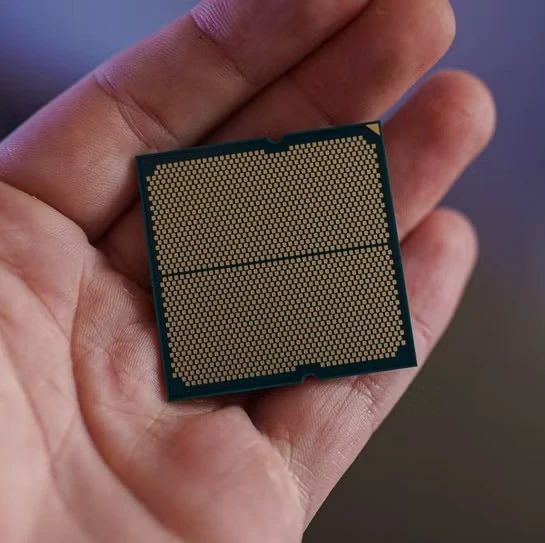
Ryzen 9 9950X

Search documents
AMD首颗客户端APU:Strix Halo详解
半导体行业观察· 2025-10-21 00:51
Core Viewpoint - AMD's Strix Halo is positioned as a high-performance integrated mobile processor, capable of handling demanding CPU and GPU workloads without the need for a discrete graphics card, with a TDP range of 55W to 120W [2] Specifications and Performance - Strix Halo features dual 8-core Zen 5 cores, totaling 16 cores, and includes a 512b FPU, differing from the mainstream Strix Point APU which has a single chip design [4] - The maximum boost frequency for Strix Halo is 5.1GHz, which is 600MHz lower than the desktop flagship Zen 5 CPU Ryzen 9 9950X [4] - The integrated RDNA 3.5 iGPU has 40 compute units, 32MB of Infinity Cache, and a boost clock of up to 2.9GHz, placing its raw computational power between RX 7600 XT and RX 7700 [4] Memory and Bandwidth - Strix Halo is equipped with a 256b LPDDR5X-8000 memory bus, allowing for a maximum shared bandwidth of 256GB/s, which is lower than RX 7600 XT's 288GB/s but higher than other tested APUs [5] - Memory latency for Strix Halo is approximately 123 nanoseconds, slightly better than Strix Point's 128 nanoseconds, although desktop processors like the 9950X perform better at 75-80 nanoseconds [7][9] - The 16 Zen 5 cores can achieve over 175GB/s bandwidth during read-modify-write operations, with a single CCD's theoretical total bandwidth reaching 128GB/s [11] CPU Performance - Strix Halo's CPU performance is significantly stronger than that of Strix Point, rivaling the previous generation desktop flagship CPU 7950X in integer performance and nearly matching the 9950X in floating-point performance despite an 11.7% lower clock speed [13][15] - In SPEC CPU 2017 Integer subtests, Strix Halo closely approaches the performance of the 9950X, with some floating-point tests showing it outperforming the 9950X [17][19] GPU Performance - Strix Halo's memory bandwidth is more than double that of other mobile SoCs tested, although the RTX 5070 mobile version has about 50% higher memory bandwidth [23] - The Infinity Cache provides over 40% more bandwidth than the L2 cache of the 5070M, with a capacity increase of 33% [25] - Strix Halo's floating-point throughput is approximately 2.5 times that of Strix Point, and it can compete with or exceed the performance of the 5070 Mobile [29] Conclusion - Strix Halo aims to create a versatile SoC suitable for both desktops and laptops, with CPU and GPU performance exceeding standard low-power laptop chips and rivaling systems with discrete graphics [41] - Future iterations of Strix Halo may include updated CPU and GPU IPs and larger memory buses, opening up exciting hardware possibilities [42]


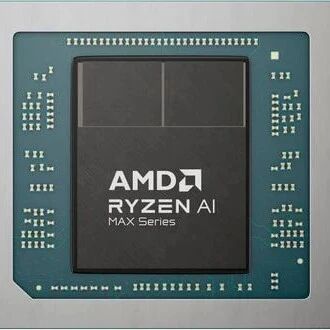
如何选CPU?一份指南!
半导体行业观察· 2025-04-07 01:04
Core Insights - The article emphasizes that clock speed is not the sole indicator of CPU performance, and other factors such as architecture, core count, and IPC (Instructions Per Clock) are crucial for a comprehensive comparison [3][4][10]. Clock Speed and Performance - Clock speed defines how many cycles a CPU can complete per second, but it does not directly correlate to the number of instructions executed [3]. - Newer architectures can execute more instructions per clock cycle, making IPC a more significant metric than clock speed alone [3][4]. Evolution of CPU Design - Historically, single-core processors relied heavily on clock speed for performance, but modern applications prioritize core count and multi-threading capabilities [4][6]. - The shift towards multi-core and multi-threaded designs has changed the performance landscape, making core count more relevant than clock speed [4][6]. Key Specifications for Comparison - When comparing CPUs, important specifications include core count, cache size, instruction extensions, and connectivity options [6][8]. - The architecture and connectivity (e.g., USB and PCIe support) are essential, with newer architectures generally offering better performance [6][8]. Cache and Instruction Extensions - Cache size is increasingly important as it allows for faster data access, reducing the need to fetch data from slower system memory [8]. - Instruction extensions like AVX can enhance performance for specific workloads, making them relevant for certain applications [8]. Practical Application of Specifications - Understanding the specifications is crucial, but it is equally important to consider the specific workloads the CPU will handle [10]. - Real-world performance reviews and benchmarks provide a clearer picture of how CPUs perform in practical scenarios, beyond just specifications [10].