SH363

Search documents
为中国饭碗装入更多“河套粮” ——内蒙古巴彦淖尔建设黄河流域现代高效农业集聚区
Jing Ji Ri Bao· 2025-06-05 22:08
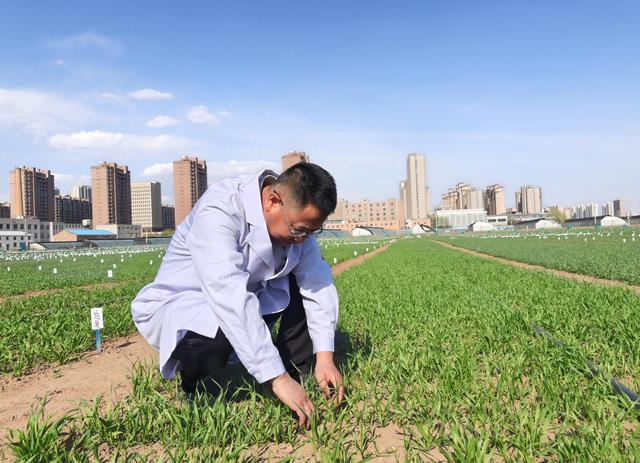
Core Insights - The article highlights the agricultural advancements and modernization efforts in Bayannur City, Inner Mongolia, emphasizing its role as a significant grain and livestock production base in China [1][2][9]. Group 1: Agricultural Development - Bayannur City is recognized as a "granary" and "vegetable basket" due to its fertile land and favorable climate, with over 13 million acres of arable land [1][2]. - The city is implementing a high-standard farmland construction project, aiming to enhance agricultural efficiency and sustainability over the next 3 to 5 years [2]. - In 2024, the grain output in Bayannur is projected to reach 5.87 billion jin, with significant increases in wheat and sunflower production [4]. Group 2: Modern Agricultural Practices - The introduction of advanced irrigation systems, such as drip irrigation, has led to water savings of 30% to 50% compared to traditional methods [3]. - The use of digital technology in agriculture, including a fully automated irrigation system, allows farmers to manage resources efficiently through mobile applications [3]. - The establishment of agricultural cooperatives under a "company + village party branch + farmers" model is enhancing productivity and profitability for local farmers [3]. Group 3: Seed and Crop Innovation - Bayannur City is focusing on seed industry revitalization, emphasizing the breeding of local specialty varieties and collaboration with research institutions [5][8]. - The "Bamai 13" wheat variety has set new records for yield and quality, showcasing the success of local breeding programs [6][7]. - The city plans to cultivate over 10 new crop varieties annually, reinforcing its position as a key seed production base in western Inner Mongolia [8]. Group 4: Livestock Industry - The meat sheep industry is a leading sector in Bayannur, with over 23 million sheep and an annual meat production exceeding 300,000 tons [9][10]. - The city is recognized as a major hub for sheep production and processing, with initiatives to enhance the value of sheep by-products [9][10]. - In 2024, livestock inventory is expected to reach approximately 11.77 million heads, with a slight increase in meat and milk production [10]. Group 5: Future Prospects - Bayannur City aims to transform traditional agriculture into a modern, efficient system, focusing on deep processing of agricultural products and sustainable practices [11]. - The city is committed to developing 11 key industrial chains, including wheat, sheep, and sunflower, to contribute to national food security [11].
良种强芯:以“一粒种”撬动“千斤粮”
Nei Meng Gu Ri Bao· 2025-05-06 04:45
Core Viewpoint - The articles highlight the significant advancements in seed industry innovation and agricultural practices in Inner Mongolia, emphasizing the importance of high-quality seeds for food security and agricultural productivity [1][3][4]. Group 1: Seed Industry Innovation - Inner Mongolia has established itself as a key player in the seed industry, focusing on crops such as corn, soybeans, sunflowers, and potatoes, and enhancing the role of enterprises in innovation [3][4]. - The region has created the first provincial-level biological breeding technology innovation center in the country and has developed the largest standardized soybean seed production base [1][4]. - A total of 1,032 major crop varieties have been independently bred in Inner Mongolia since the 14th Five-Year Plan, with significant market presence for varieties like "Jinmiao K1" and "Dengke 5" [4][5]. Group 2: Agricultural Practices and Technology - The use of automated seedling machines has streamlined the seedling process, allowing for efficient planting and management of rice crops in saline-alkali land [1]. - The coverage rate of quality seeds for major crops in Inner Mongolia has reached 95%, indicating a strong emphasis on quality and innovation in seed selection [1][4]. - The establishment of "watching and selecting seeds" platforms allows farmers to directly engage with and select high-quality varieties, bridging the gap between expert recommendations and farmer choices [5]. Group 3: Economic Impact - The seed production base in Inner Mongolia has stabilized at over 1.5 million acres, with the region leading in potato, soybean, and corn seed production nationally [5]. - Companies like Sanrui Agricultural Science have developed over 30 proprietary sunflower varieties, achieving a domestic market share of around 40% [4]. - The collaboration between enterprises and research institutions has led to the successful development of exclusive soybean varieties, significantly impacting local agricultural productivity [3][4].