SPHEREx望远镜

Search documents
NASA发文称:卫星光污染或威胁空基天文学研究
Ke Ji Ri Bao· 2025-12-14 01:09
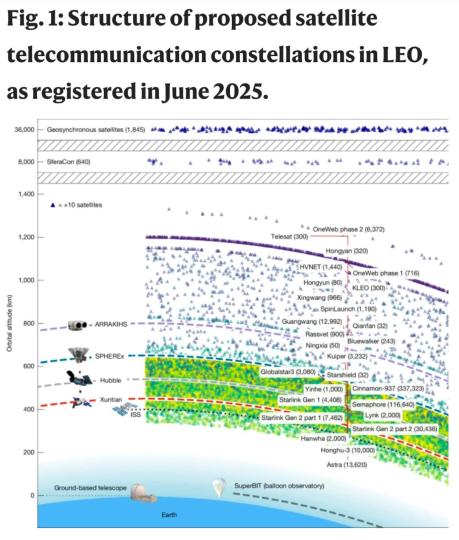
Core Insights - A recent analysis by NASA indicates that global ground-based astronomy research may face significant threats from satellite light pollution over the next decade, with approximately 96% of images from low Earth orbit observations potentially affected [1][2] Group 1: Satellite Impact on Astronomy - The number of satellites in orbit has surged to 15,000, up from just 75 in 2019, primarily due to decreased launch costs [2] - Ground-based observations, such as those from NASA's Webb Telescope, may be disrupted by reflected light from these satellites, rendering images unusable for research [2] - Previous studies have focused on the impact of satellites on ground-based astronomy, but the effects on space telescopes have been largely overlooked [2] Group 2: Future Projections and Solutions - NASA's Ames Research Center simulated the field of view changes for four space telescopes at an altitude of 800 kilometers as satellite numbers increase, including NASA's Webb and SPHEREx, ESA's ARRAKIHS, and China's planned survey space telescope [2] - It is projected that 560,000 satellites will be operational in the future, potentially polluting 39.6% of images from the Webb Telescope and 96% of images from the other three telescopes [2] - The average number of satellites observed by the Webb Telescope is estimated to be 2.14, while SPHEREx may see 5.64, ARRAKIHS 69, and the survey telescope 92 [2] - A potential solution proposed is to deploy satellites in orbits lower than those of the telescopes, although this could negatively impact the Earth's ozone layer [2]


国际最新研究:卫星光污染严重威胁空基天文望远镜观测宇宙
Zhong Guo Xin Wen Wang· 2025-12-07 06:17
Core Insights - The increasing number of satellites in Earth's orbit is significantly impacting ground-based astronomical observations, with a recent study warning that about 96% of images from low Earth orbit space telescopes may be affected by satellite light pollution in the next decade [1][4] - The number of satellites has surged from 75 in 2019 to 15,000 currently, primarily due to reduced launch costs, which poses a threat to the effectiveness of space telescopes like NASA's James Webb Telescope [1][4] Summary by Sections - **Impact on Space Telescopes** - The study highlights that the light pollution from satellites could render images from space telescopes unusable for research purposes [1] - It is noted that previous research has focused on the effects of satellites on ground-based astronomy, while the impact on space telescopes has been largely overlooked [1] - **Current and Future Satellite Projections** - The research indicates that there are currently 15,000 satellites in orbit, with projections suggesting that this number could rise to 560,000 in the future [4] - The anticipated increase in satellites could lead to 39.6% of images from the James Webb Telescope being polluted, while other telescopes like SPHEREx, ARRAKIHS, and a proposed Chinese survey telescope could see 96% of their images affected [4] - **Observational Data** - The average number of satellites observed by various telescopes is projected as follows: James Webb Telescope (2.14), SPHEREx (5.64), ARRAKIHS (69), and the survey telescope (92) [4] - **Potential Solutions** - A suggested solution to mitigate the impact of satellite light pollution is to deploy satellites in orbits lower than those of space telescopes, although this could have adverse effects on the Earth's ozone layer [4]