韦布望远镜

Search documents
张朝阳2026跨年演讲:解码太阳系奥秘,用数理公式演算宇宙谜题
Jing Ji Wang· 2026-01-04 08:12
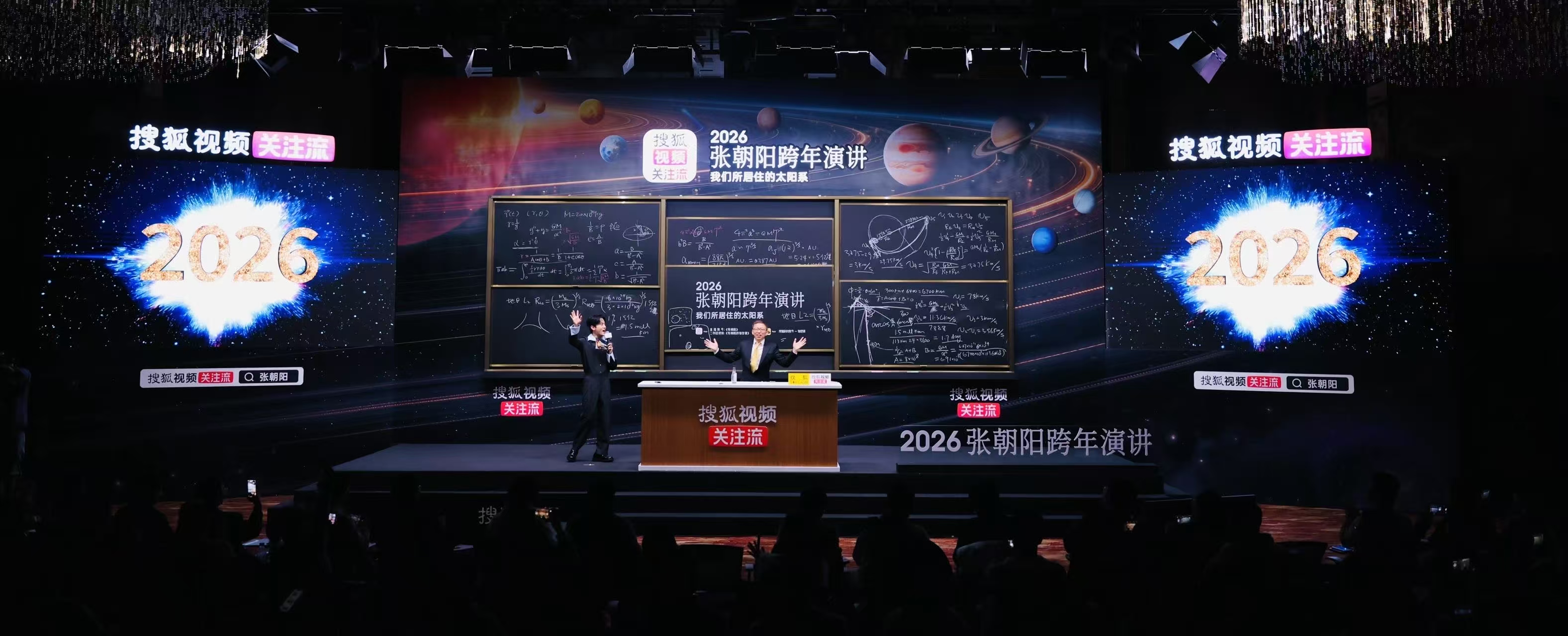
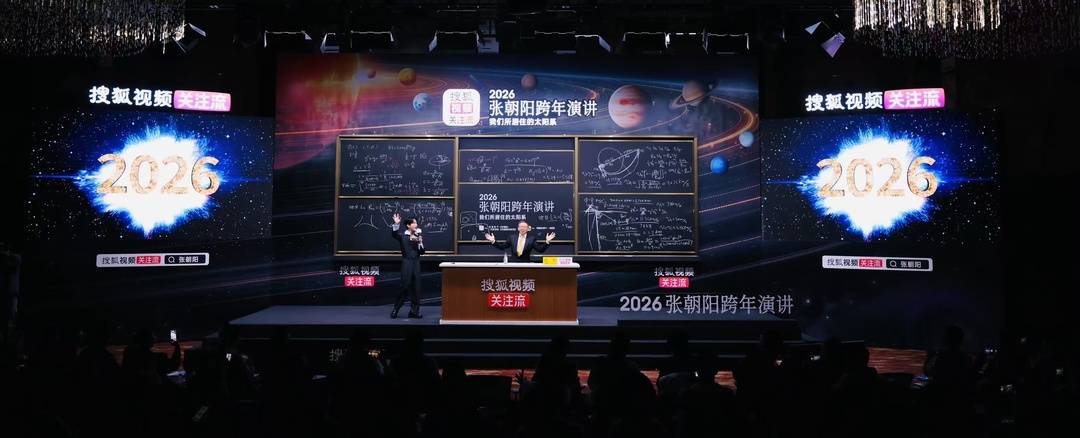
Core Viewpoint - The keynote speech by Zhang Chaoyang, founder and CEO of Sohu, focuses on the exploration of the solar system and its implications for human civilization, emphasizing the importance of understanding the laws governing the solar system as a key to understanding humanity's past and future [3][4]. Group 1: Solar System Exploration - The solar system operates under specific laws, and understanding these laws is crucial for humanity [4]. - Zhang Chaoyang describes the solar system as a "home" that is both distant and close, highlighting the need for exploration and understanding [4]. - The speech is characterized as a "archaeology" of the solar system, using Newton's laws as foundational principles to explore celestial mechanics [4][5]. Group 2: Human Advancement in Space - The development of AI and aerospace technology is propelling humanity towards a "multi-planet civilization" [3]. - Zhang outlines three key stages for human exploration beyond Earth: the escape phase dominated by Earth's gravity, the Hohmann transfer phase dominated by the Sun's gravity, and the capture phase dominated by Mars' gravity [6]. - The concept of Lagrange points is introduced as stable locations for deploying scientific instruments, such as the Webb Telescope [6]. Group 3: Educational Impact and Media Strategy - Zhang emphasizes the value of learning physics, which aids in understanding both macro phenomena like global warming and everyday experiences [9]. - The physics course has conducted 270 live sessions over four years, accumulating over 26,000 minutes of online content, contributing significantly to the knowledge base [9]. - The integration of traditional teaching with new media is seen as a meaningful approach to disseminating knowledge in the current digital age [9].

2026张朝阳跨年演讲解码太阳系奥秘 与观众探讨太空探索、火星移民等话题
Xin Lang Cai Jing· 2026-01-02 05:02
Core Insights - The theme of the recent New Year's speech by Sohu's founder Zhang Chaoyang is "The Solar System We Live In," emphasizing the importance of understanding the solar system as a familiar yet distant home [1][3] - Zhang describes the exploration of celestial bodies as foundational to physics, highlighting the contributions of Tycho Brahe, Johannes Kepler, and Isaac Newton in uncovering universal truths [3] Group 1: Theoretical Foundations - Zhang uses Newton's laws as a first principle to logically reconstruct Kepler's laws, demonstrating the elliptical orbits and the relationship between orbital semi-major axes and orbital periods [3][4] - He explains tidal forces and their origins through gravitational potential, noting that extreme tidal forces can even destroy celestial bodies, as seen with Saturn's rings [4] Group 2: Exploration of the Solar System - The first stop in space exploration discussed is the Lagrange points, which are stable points in a two-body system where many space probes, like the Webb Telescope, are deployed [5] - The second stop is Mars, described as Earth's "twin," with a detailed explanation of the three-phase journey to reach it, emphasizing the fuel-efficient Hohmann transfer orbit [5] - The third stop involves the Voyager missions, which utilized gravitational slingshots to accelerate into deep space, showcasing the potential for future space exploration [6] Group 3: Future of Space Exploration - Concerns were raised about Earth's resource consumption and the need for accelerated space exploration, with Zhang indicating that Mars colonization is a distant goal, currently relying on robotic missions for resource collection [6] - Discussions included innovative propulsion methods, such as using comets for gravitational slingshots and solar pressure for spacecraft propulsion [6]
NASA发文称:卫星光污染或威胁空基天文学研究
Ke Ji Ri Bao· 2025-12-14 01:09
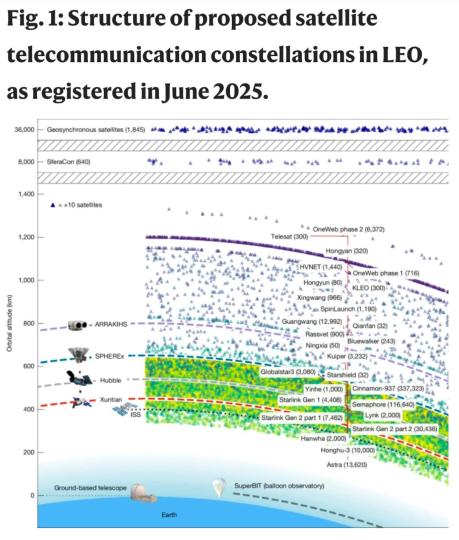
Core Insights - A recent analysis by NASA indicates that global ground-based astronomy research may face significant threats from satellite light pollution over the next decade, with approximately 96% of images from low Earth orbit observations potentially affected [1][2] Group 1: Satellite Impact on Astronomy - The number of satellites in orbit has surged to 15,000, up from just 75 in 2019, primarily due to decreased launch costs [2] - Ground-based observations, such as those from NASA's Webb Telescope, may be disrupted by reflected light from these satellites, rendering images unusable for research [2] - Previous studies have focused on the impact of satellites on ground-based astronomy, but the effects on space telescopes have been largely overlooked [2] Group 2: Future Projections and Solutions - NASA's Ames Research Center simulated the field of view changes for four space telescopes at an altitude of 800 kilometers as satellite numbers increase, including NASA's Webb and SPHEREx, ESA's ARRAKIHS, and China's planned survey space telescope [2] - It is projected that 560,000 satellites will be operational in the future, potentially polluting 39.6% of images from the Webb Telescope and 96% of images from the other three telescopes [2] - The average number of satellites observed by the Webb Telescope is estimated to be 2.14, while SPHEREx may see 5.64, ARRAKIHS 69, and the survey telescope 92 [2] - A potential solution proposed is to deploy satellites in orbits lower than those of the telescopes, although this could negatively impact the Earth's ozone layer [2]

国际最新研究:卫星光污染严重威胁空基天文望远镜观测宇宙
Zhong Guo Xin Wen Wang· 2025-12-07 06:17
Core Insights - The increasing number of satellites in Earth's orbit is significantly impacting ground-based astronomical observations, with a recent study warning that about 96% of images from low Earth orbit space telescopes may be affected by satellite light pollution in the next decade [1][4] - The number of satellites has surged from 75 in 2019 to 15,000 currently, primarily due to reduced launch costs, which poses a threat to the effectiveness of space telescopes like NASA's James Webb Telescope [1][4] Summary by Sections - **Impact on Space Telescopes** - The study highlights that the light pollution from satellites could render images from space telescopes unusable for research purposes [1] - It is noted that previous research has focused on the effects of satellites on ground-based astronomy, while the impact on space telescopes has been largely overlooked [1] - **Current and Future Satellite Projections** - The research indicates that there are currently 15,000 satellites in orbit, with projections suggesting that this number could rise to 560,000 in the future [4] - The anticipated increase in satellites could lead to 39.6% of images from the James Webb Telescope being polluted, while other telescopes like SPHEREx, ARRAKIHS, and a proposed Chinese survey telescope could see 96% of their images affected [4] - **Observational Data** - The average number of satellites observed by various telescopes is projected as follows: James Webb Telescope (2.14), SPHEREx (5.64), ARRAKIHS (69), and the survey telescope (92) [4] - **Potential Solutions** - A suggested solution to mitigate the impact of satellite light pollution is to deploy satellites in orbits lower than those of space telescopes, although this could have adverse effects on the Earth's ozone layer [4]
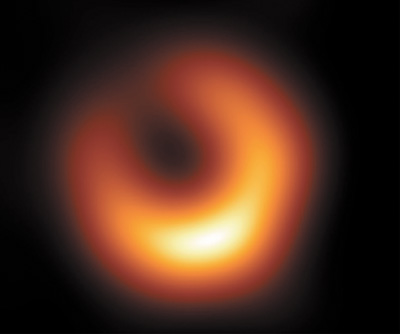
黑洞是如何“长”大的(瞰前沿)
Ren Min Ri Bao· 2025-04-11 21:51
Core Insights - The discovery of evidence showing the impact of supermassive black holes on the formation and evolution of host galaxies has been recognized as one of the "Top Ten Scientific Advances in China" for 2024 [8] - Black holes continue to be a hot topic in the scientific community, with significant public interest stemming from their mysterious nature and the technological advancements that allow for their study [9][10] Group 1: Black Hole Types and Formation - Black holes are categorized into three types based on mass: stellar black holes (a few to tens of solar masses), supermassive black holes (millions of solar masses), and intermediate black holes [10] - Stellar black holes form from the collapse of massive stars after supernova explosions, while supermassive black holes may grow from intermediate black holes through mergers or accretion of surrounding gas [15][16] - The existence of intermediate black holes remains uncertain, often referred to as the "missing link" in black hole research [14] Group 2: Detection and Research Methods - Various methods have been developed to detect black holes, including X-ray detection, gravitational wave observation, and gravitational lensing techniques [13] - Recent advancements include the discovery of GaiaBH3, the largest known stellar black hole in the Milky Way, and the identification of a small black hole (G3425) that fills a gap in the black hole mass distribution [13] Group 3: Technological Impact and Applications - Research on black holes has led to technological advancements that impact everyday life, such as the development of WiFi technology and laser interferometry used in earthquake warning systems and medical imaging [10] - The study of black holes not only addresses cosmic mysteries but also symbolizes humanity's quest for knowledge and technological progress [11]