
Spectral CT 7600

Search documents
40年深耕,飞利浦开启与华同新的新篇章
第一财经· 2025-11-14 13:09
Core Insights - Philips has undergone a transformation in China over the past 40 years, focusing on a new mission of safeguarding health and life [2][4][5] - At the recent China International Import Expo, Philips showcased nearly 50 innovative products and solutions, including ten "China debut" products and over ten AI-enabled products, covering the entire health care spectrum from healthy living to home care [2][4] Group 1: Company Strategy and Market Position - Philips has established itself as a significant player in China's health industry, with the country now being its second-largest global market [4][15] - The company has built a closed-loop system of "local R&D and manufacturing" with five innovation centers and five production bases in China [4][15] - The focus on localization and innovation is seen as a foundation for Philips' new journey in China [5][15] Group 2: Product Innovations and Health Services - Philips aims to enhance health outcomes for more people, addressing the diverse structure of China's healthcare system and the growing health needs of the population [7][11] - The MR7700 multi-nuclear magnetic resonance system, recently registered in China, allows for early diagnosis of diseases like pancreatic disorders and Parkinson's by providing comprehensive metabolic imaging without radiation [9][12] - The introduction of AI-powered products, such as the AI sonic toothbrush, reflects Philips' commitment to extending meaningful innovations from hospitals to home care, addressing the management needs of over 400 million chronic disease patients [9][12] Group 3: AI Integration in Healthcare - Philips invests €1.7 billion annually in R&D, with nearly 50% focused on AI and data science, resulting in almost 1,000 related patents [11][12] - The Spectral CT 7600 exemplifies the integration of AI in clinical imaging, allowing for simultaneous high and low-energy data acquisition, which aids in early disease detection while reducing patient radiation exposure [12][14] - AI-driven solutions, such as the Azurion smart catheter room, enhance surgical precision by integrating pre-operative data and providing personalized treatment plans [14] Group 4: Sustainability and Local Innovation - Philips has achieved over 95% local R&D and manufacturing in China, with a focus on sustainable practices, such as reducing helium usage in MRI machines from over 1,500 liters to just 7 liters [15][16] - The company’s efforts in green healthcare not only address local resource challenges but also contribute to a significant reduction in carbon emissions [16] - Philips' strategy in China is characterized by a systematic and long-term innovation network, aiming to share its advancements globally while addressing local needs [16]


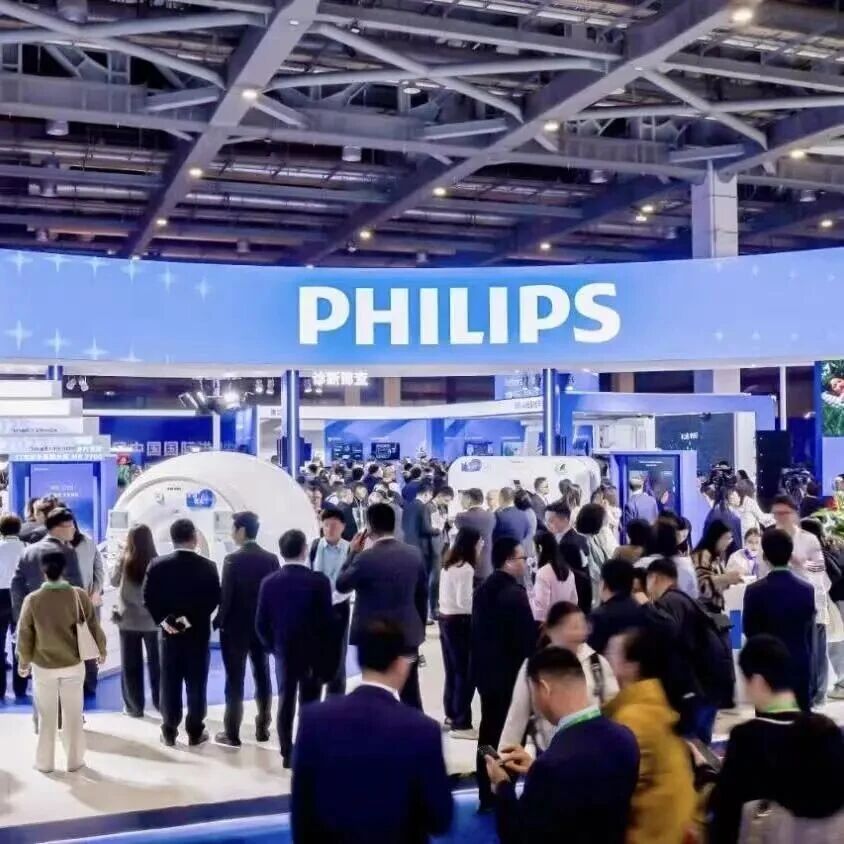
40年深耕,飞利浦开启与华同新的新篇章
Di Yi Cai Jing· 2025-11-14 12:07
Core Insights - Philips has undergone a transformation in China over the past 40 years, focusing on a new mission of safeguarding health and well-being [4] - At the recent China International Import Expo, Philips showcased nearly 50 innovative products and solutions, including ten new products making their debut in China and several AI-enabled offerings [5][4] Company Development - Philips has established itself as a significant player in China's health industry since its first joint venture in 1985, now becoming the company's second-largest global market [4] - The company has built a closed-loop system of local R&D and manufacturing with five innovation centers and five production bases in China [4][12] Product Innovation - Philips aims to enhance health outcomes for more people, addressing the diverse structure of China's healthcare system and the growing health needs of the population [5] - The MR7700 multi-nuclear magnetic resonance system, recently registered with China's NMPA, is a key product that allows for non-radiative, comprehensive biochemical metabolic mapping of the human body [6][5] AI Empowerment in Healthcare - Philips invests €1.7 billion annually in R&D, with nearly 50% focused on AI and data science, resulting in almost 1,000 related patents [7] - The Spectral CT 7600 exemplifies the integration of AI in clinical imaging, allowing for simultaneous high and low-energy data acquisition, improving early disease detection while reducing patient radiation exposure [7][10] Local Manufacturing and Sustainability - Philips has established a complete production chain in Suzhou, achieving 100% localization for certain products, which have served over 2,000 medical institutions globally [12] - The company has significantly reduced the helium requirement for its MRI machines, addressing supply chain vulnerabilities and contributing to a 20% reduction in carbon emissions [12]
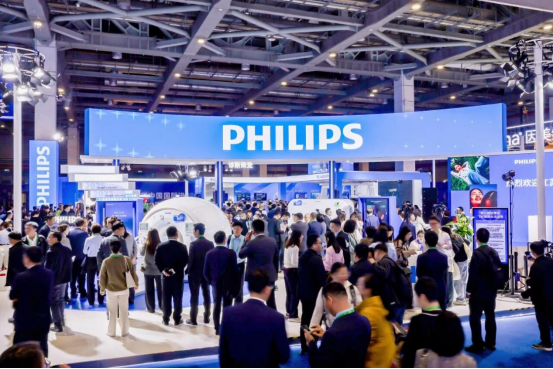
飞利浦进博答卷:深耕中国,以AI医疗创新构建可信赖的人机协同未来
2 1 Shi Ji Jing Ji Bao Dao· 2025-11-09 12:40
Core Viewpoint - The 8th China International Import Expo highlights Philips' commitment to innovation in healthcare, showcasing nearly 50 innovative products and ten new launches in China, emphasizing the company's strategic focus on the Chinese market and the integration of AI in healthcare solutions [1][2][3]. Group 1: Philips' Strategy in China - Philips aims to create a "closed-loop local business" model in China, balancing local innovation with global needs, particularly in the context of AI and healthcare [1][2]. - The company recognizes the forward-thinking innovation proposed by Chinese clinical experts, which is driven by the unique healthcare challenges and policies in China [2]. Group 2: Product Innovations - Philips introduced the MR 7700, the first 3T MRI device in the industry with multi-nuclear clinical capabilities, enabling non-invasive biochemical metabolic mapping to better understand disease pathways [3]. - The Spectral CT 7600, developed by Philips' Shenyang R&D team, enhances clinical energy scanning capabilities without increasing radiation exposure, catering to various patient needs [8][9]. Group 3: AI Integration in Healthcare - AI is viewed as a core driver for reshaping the future of healthcare in China, with a high acceptance rate among healthcare professionals and patients [4][5]. - Philips emphasizes the importance of seamless integration of AI into workflows, ensuring that healthcare professionals can focus on patient care without needing extensive training on AI technologies [6][7]. Group 4: Commitment to Local Development - Philips has established a comprehensive R&D capability in China, covering the entire product lifecycle from development to market [9]. - The company is transitioning from being a mere medical device supplier to a co-creator in the Chinese healthcare ecosystem, aiming to leverage local innovations for global benefits [9].