
绿色医疗

Search documents
华东社会办医第二届高质量发展大会在宁启幕
Xin Hua Ri Bao· 2025-12-16 22:06
Group 1 - The conference on high-quality development of social medical services in East China emphasizes the transition from quantity growth to quality enhancement in the healthcare system [1] - The theme "Gathering Strength for Innovation" highlights the need for breakthroughs in management, service, and technology within the industry [1] - The importance of standardization and governance is underscored as essential for the sustainable development of social medical services [1] Group 2 - There is a growing demand for high-quality medical resources, which presents both challenges and opportunities for the healthcare system [2] - Social medical services are encouraged to innovate in specialty construction, service models, and management systems to meet diverse public health needs [2] - The rehabilitation sector is identified as a significant area for growth, with potential developments in cancer rehabilitation, kidney rehabilitation, and mental health management [2]
40年深耕,飞利浦开启与华同新的新篇章
第一财经· 2025-11-14 13:09
Core Insights - Philips has undergone a transformation in China over the past 40 years, focusing on a new mission of safeguarding health and life [2][4][5] - At the recent China International Import Expo, Philips showcased nearly 50 innovative products and solutions, including ten "China debut" products and over ten AI-enabled products, covering the entire health care spectrum from healthy living to home care [2][4] Group 1: Company Strategy and Market Position - Philips has established itself as a significant player in China's health industry, with the country now being its second-largest global market [4][15] - The company has built a closed-loop system of "local R&D and manufacturing" with five innovation centers and five production bases in China [4][15] - The focus on localization and innovation is seen as a foundation for Philips' new journey in China [5][15] Group 2: Product Innovations and Health Services - Philips aims to enhance health outcomes for more people, addressing the diverse structure of China's healthcare system and the growing health needs of the population [7][11] - The MR7700 multi-nuclear magnetic resonance system, recently registered in China, allows for early diagnosis of diseases like pancreatic disorders and Parkinson's by providing comprehensive metabolic imaging without radiation [9][12] - The introduction of AI-powered products, such as the AI sonic toothbrush, reflects Philips' commitment to extending meaningful innovations from hospitals to home care, addressing the management needs of over 400 million chronic disease patients [9][12] Group 3: AI Integration in Healthcare - Philips invests €1.7 billion annually in R&D, with nearly 50% focused on AI and data science, resulting in almost 1,000 related patents [11][12] - The Spectral CT 7600 exemplifies the integration of AI in clinical imaging, allowing for simultaneous high and low-energy data acquisition, which aids in early disease detection while reducing patient radiation exposure [12][14] - AI-driven solutions, such as the Azurion smart catheter room, enhance surgical precision by integrating pre-operative data and providing personalized treatment plans [14] Group 4: Sustainability and Local Innovation - Philips has achieved over 95% local R&D and manufacturing in China, with a focus on sustainable practices, such as reducing helium usage in MRI machines from over 1,500 liters to just 7 liters [15][16] - The company’s efforts in green healthcare not only address local resource challenges but also contribute to a significant reduction in carbon emissions [16] - Philips' strategy in China is characterized by a systematic and long-term innovation network, aiming to share its advancements globally while addressing local needs [16]



40年深耕,飞利浦开启与华同新的新篇章
Di Yi Cai Jing· 2025-11-14 12:07
Core Insights - Philips has undergone a transformation in China over the past 40 years, focusing on a new mission of safeguarding health and well-being [4] - At the recent China International Import Expo, Philips showcased nearly 50 innovative products and solutions, including ten new products making their debut in China and several AI-enabled offerings [5][4] Company Development - Philips has established itself as a significant player in China's health industry since its first joint venture in 1985, now becoming the company's second-largest global market [4] - The company has built a closed-loop system of local R&D and manufacturing with five innovation centers and five production bases in China [4][12] Product Innovation - Philips aims to enhance health outcomes for more people, addressing the diverse structure of China's healthcare system and the growing health needs of the population [5] - The MR7700 multi-nuclear magnetic resonance system, recently registered with China's NMPA, is a key product that allows for non-radiative, comprehensive biochemical metabolic mapping of the human body [6][5] AI Empowerment in Healthcare - Philips invests €1.7 billion annually in R&D, with nearly 50% focused on AI and data science, resulting in almost 1,000 related patents [7] - The Spectral CT 7600 exemplifies the integration of AI in clinical imaging, allowing for simultaneous high and low-energy data acquisition, improving early disease detection while reducing patient radiation exposure [7][10] Local Manufacturing and Sustainability - Philips has established a complete production chain in Suzhou, achieving 100% localization for certain products, which have served over 2,000 medical institutions globally [12] - The company has significantly reduced the helium requirement for its MRI machines, addressing supply chain vulnerabilities and contributing to a 20% reduction in carbon emissions [12]
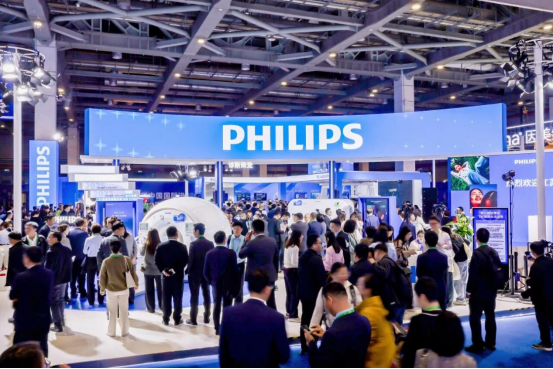
稳健医疗携全棉时代亮相链博会 科技创新串起“绿色共赢链”
Zheng Quan Ri Bao· 2025-07-16 13:20
Core Viewpoint - The third China International Supply Chain Promotion Expo showcases the innovative strength and green practices of the cotton industry, with a focus on global sourcing, production, and sales by companies like Steady Medical and Cotton Era [2][3]. Group 1: Event Overview - The expo opened on July 16, featuring Steady Medical and its brand Cotton Era, highlighting the theme "Global Good Cotton, One Cotton One World" [2]. - The event attracted significant attention with immersive experiences such as "Cotton Stories" and real-time connections to production facilities [2][3]. Group 2: Global Production and Market Expansion - The "Global Production" interactive area allowed attendees to witness the transformation of raw cotton into high-quality medical and cotton products [3]. - Steady Medical is expanding its global footprint by investing in production bases in North America and Southeast Asia, while Cotton Era is focusing on the Southeast Asian market and exploring entry into the Middle East and Europe [3]. Group 3: Green Initiatives and Collaborations - A joint initiative called the "Green Win Chain Initiative" was launched, promoting sustainable cooperation in the health sector and enhancing the "green content" of supply chains [3]. - Steady Medical introduced a "Green Operating Room" solution aimed at replacing synthetic materials with cotton, enhancing safety and efficiency in medical settings [4]. Group 4: Technological Innovations - Cotton Era is innovating with core materials like cotton non-woven fabric and gauze, significantly improving production efficiency and expanding applications in daily life [5][6]. - The company’s Cotton Tech continues to push boundaries in softness, breathability, and sustainability, promoting a "cotton lifestyle" as a new choice for comfort and health [6]. Group 5: Future Directions - Both companies aim to deepen their strategies of product leadership, operational excellence, and global vision, positioning Chinese cotton as a "green business card" on the international stage [6].

兰卫医学(301060) - 2024年度业绩说明会投资者关系活动记录表
2025-05-15 12:30
Industry Outlook - The third-party medical diagnostic service industry is rapidly developing, with ICL expected to benefit from cost and technology advantages [3] - ICL's chain operators have a broader laboratory network compared to hospital laboratories, allowing for lower costs and more testing projects [3] - New technologies such as AI pathology diagnosis and automated laboratory systems are anticipated to reshape the industry [3] Financial Performance - In 2024, the company achieved a revenue of CNY 174,218.10 million, a year-on-year increase of 4.05% [9] - The medical diagnostic service revenue was CNY 79,716.65 million, growing by 23.26%, contributing significantly to overall revenue growth [9] - The company reported a net profit of -CNY 10,943.62 million, a reduction in losses by 22.71% compared to the previous year [9] Operational Strategies - The company is focusing on digital transformation and information technology to enhance operational efficiency and service quality [5] - A dual-driven business model is being implemented to achieve full-process digitalization from sample receipt to laboratory testing [5] - The company aims to diversify its supplier base to mitigate risks associated with reliance on major suppliers, which account for 65.28% of procurement [6] Future Growth Drivers - The main growth drivers include stable revenue from core business operations and effective management of operational costs [5] - The company plans to enhance its capabilities in CRO (Contract Research Organization) and scientific services, which are showing growth potential [10] - Continued investment in AI medical applications is expected to create new revenue streams, although profitability in this area has not yet been achieved [11] Environmental Initiatives - The company is committed to energy management and has set specific goals for reducing emissions related to laboratory energy consumption and hazardous material transport [12] - A cold chain logistics system has been established to ensure safe and efficient transportation of clinical samples and medical devices [10] Challenges and Responses - The industry faces pressure from healthcare cost control measures, prompting the company to enhance its business model and expand its marketing network [12] - The company is adapting to seasonal revenue fluctuations and aims to stabilize profitability through improved operational efficiency [8]