
AI赋能医疗

Search documents
平安好医生:25年企业健管业务收入增速超40%,AI持续赋能业务且改善盈利-20260331
Xinda Securities· 2026-03-31 09:50
Investment Rating - The investment rating for Ping An Good Doctor (1833.HK) is not explicitly stated in the provided documents [1]. Core Insights - The company reported a revenue of approximately 5.468 billion yuan for 2025, representing a year-on-year increase of 13.7%. The adjusted net profit was about 414 million yuan, up 161.3%, while the net profit attributable to the parent company reached 380 million yuan, reflecting a significant increase of 366.1% [2][3]. - The enterprise health management business experienced a growth rate exceeding 40% in 2025, driven by improved operational efficiency. The company served over 6,700 paying corporate clients, marking an 83.1% year-on-year increase [3]. - The integration of AI into the business has enhanced profitability, with AI services covering 100% of individual clients within the Ping An Group. The AI doctor service had nearly 12 million users in 2025, with a diagnostic accuracy rate of 95.1% [3]. Financial Summary - For 2025, the total revenue was 5,468 million yuan, with a projected growth rate of 14% for 2026, 7% for 2027, and 10% for 2028. The net profit attributable to the parent company is expected to be 458 million yuan in 2026, 569 million yuan in 2027, and 683 million yuan in 2028, with respective growth rates of 21%, 24%, and 20% [4][5]. - The gross margin for 2025 was 32.41%, with projections of 32.68% for 2026, 32.91% for 2027, and 33.19% for 2028. The return on equity (ROE) was 3.83% in 2025, expected to rise to 5.88% by 2028 [4][5]. - The price-to-earnings (P/E) ratio is projected to decrease from 68.84 in 2025 to 32.49 by 2028, indicating a potential increase in valuation attractiveness over time [4][5].
平安好医生(01833):25年企业健管业务收入增速超40%,AI持续赋能业务且改善盈利
Xinda Securities· 2026-03-31 08:32
Investment Rating - The investment rating for Ping An Good Doctor (1833.HK) is not explicitly stated in the provided documents, but the analysis suggests a positive outlook based on financial performance and growth prospects [1]. Core Insights - The company reported a revenue of approximately 5.468 billion yuan in 2025, representing a year-on-year increase of 13.7%. The adjusted net profit was about 414 million yuan, up 161.3%, while the net profit attributable to shareholders increased by 366.1% to approximately 380 million yuan [2][3]. - The enterprise health management business experienced a growth rate exceeding 40% in 2025, driven by improved operational efficiency and profitability. The company served over 6,700 paying corporate clients, marking an 83.1% increase year-on-year [3]. - The integration of AI into the business model has enhanced profitability, with AI services covering 100% of individual clients and achieving a diagnostic accuracy rate of 95.1% [3]. Financial Performance Summary - **Revenue Growth**: The company expects revenues of approximately 5.873 billion yuan in 2026, 6.431 billion yuan in 2027, and 7.167 billion yuan in 2028, with year-on-year growth rates of 7%, 10%, and 11% respectively [5]. - **Net Profit**: The net profit attributable to shareholders is projected to be 458 million yuan in 2026, 569 million yuan in 2027, and 683 million yuan in 2028, with growth rates of 21%, 24%, and 20% respectively [5]. - **Profitability Metrics**: The gross margin is expected to improve from 32.41% in 2025 to 33.19% in 2028, while the return on equity (ROE) is projected to increase from 3.83% to 5.88% over the same period [4][5]. Business Segments Summary - **Health Management Services**: The enterprise health management segment generated 1.306 billion yuan in revenue, reflecting a year-on-year growth of 40.6%. The company provides comprehensive health management solutions to corporate clients [3]. - **Insurance Collaboration**: The commercial insurance collaboration business generated 3.296 billion yuan, with a year-on-year increase of 11%. The company has significantly improved its service offerings, resulting in a 1.5 times increase in new insurance policies for health rights clients [3]. AI Integration and Service Enhancement - The AI-driven services have significantly contributed to cost reduction and efficiency improvements, with a reported 45% decrease in the cost of consultation services in Q4 2025 [3]. - The company has expanded its service network, collaborating with over 5,100 hospitals and 240,000 pharmacies, enhancing its service delivery across various channels [3].
新里程:公司持续推进旗下医院建设“线上+线下”相结合的互联网医疗服务体系
Zheng Quan Ri Bao Wang· 2026-02-24 07:47
Core Viewpoint - The company is advancing its "online + offline" integrated internet medical service system to enhance patient experience through AI-enabled diagnostic and treatment scenarios [1] Group 1: Company Initiatives - The company is implementing online services such as appointment scheduling, payment, report inquiries, online consultations, and smart companion services [1] - AI applications for intelligent report interpretation and medical assistance have been launched in the company's hospitals, marking a significant upgrade in smart service and precision medicine [1] Group 2: Strategic Focus - The company aims to deepen its "medical + pharmaceutical" dual-driven strategy while further refining its business layout and enhancing health technology capabilities [1]

卓正医疗招股进行时:稀缺健康消费龙头,高粘性会员体系成长潜力十足
智通财经网· 2026-01-29 01:45
Core Viewpoint - Zhuozheng Medical has successfully launched its IPO, attracting significant investor interest in the mid-to-high-end healthcare service market, with a global offering of 4.75 million shares at a maximum price of 66.6 HKD, expected to be listed on February 6 [1][2] Industry Overview - The private healthcare service industry has experienced a slowdown in growth over the past year, leading to a clearer divide between strong and weak players, with top companies continuing to grow steadily while many smaller institutions face challenges and exit the market [1] - The industry is undergoing a reshaping phase, with Zhuozheng Medical reporting impressive growth despite the downturn, achieving a compound annual growth rate (CAGR) of 42.2% in revenue and 126.7% in gross profit from 2022 to 2024 [1] Business Model - Zhuozheng Medical's unique business model, likened to "Costco of healthcare services," focuses on a family doctor-centered membership plan that provides a one-stop multi-specialty medical service, enhancing customer loyalty and engagement [3][4] - The company targets high-frequency healthcare services, covering a wide range of needs from disease prevention to chronic disease management, thus avoiding competition with public hospitals in low-frequency, high-acuity cases [3][4] Financial Performance - From 2022 to 2024, Zhuozheng Medical's revenue increased from 470 million to 960 million CNY, with a CAGR of 42.2%, and gross profit surged from 43.98 million to 230 million CNY, with a CAGR of 126.7% [6] - The company achieved positive operating cash flow over the past three years, indicating a healthy self-sustaining capability, with marketing expenses significantly lower than industry averages [6][7] Market Position - Zhuozheng Medical's revenue is primarily cash-based (over 85%), with minimal reliance on national insurance, providing a buffer against policy fluctuations in the healthcare sector [7] - The company is strategically positioned in the mid-to-high-end healthcare market, with a network covering ten cities in China and expansion into overseas markets like Singapore and Malaysia [9] Team and Technology - The company boasts a high-quality team of 387 full-time doctors, with an average of 15 years of clinical experience, primarily sourced from top-tier hospitals [10] - Zhuozheng Medical is integrating AI into its service chain, enhancing operational efficiency and paving the way for future collaborations with tech companies [10] Conclusion - Zhuozheng Medical is well-positioned to capitalize on the shift in the private healthcare sector from scale to quality, leveraging its unique membership model and low dependency on marketing and insurance to create a sustainable growth trajectory [11]

金鹰基金欧阳娟:创新药迎来业绩窗口期 脑机和AI医疗焕发产业新生
Xin Lang Cai Jing· 2026-01-22 07:09
Core Insights - The innovative drug sector is entering a critical performance realization phase in 2026, driven by multiple catalysts and advancements in brain-computer interfaces and AI medical technologies [1][6][7] - Fund managers, including Ouyang Juan from Jinying Fund, express optimism about the innovative drug sector's upward trend, supported by domestic healthcare policies and China's competitive edge in global markets [1][6][7] - The potential of AI in healthcare is significantly underestimated, with expectations for new business models to emerge as AI applications in drug development, cancer screening, and personalized treatment evolve [2][7] Group 1: Industry Outlook - The innovative drug sector is expected to maintain a positive outlook, benefiting from ongoing support from domestic healthcare policies and the global competitiveness of Chinese innovative drugs [1][6] - The year 2026 is anticipated to be pivotal for the brain-computer interface industry, with significant changes expected in both domestic and international markets [3][8] - The AI healthcare sector is entering a phase of commercial exploration, with vast amounts of medical data and a growing demand for AI applications [2][8] Group 2: Investment Strategies - Focus areas for investment include innovative drugs with strong global competitiveness, which can benefit from both domestic and Western markets [3][8] - The innovative drug supply chain, including CXO and life sciences services, is projected to see a recovery in order growth as global financing accelerates [3][8] - The brain-computer interface and AI medical sectors are highlighted as emerging areas of interest, with potential for substantial growth and innovation [2][3][8]
2026京东健康年度医生盛典在京举行 AI赋能共创互联网医疗新生态
Jing Ji Wang· 2026-01-22 01:24
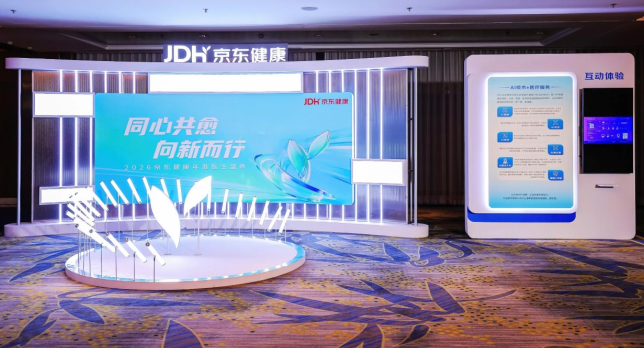
Group 1 - The 2026 JD Health Annual Doctor Ceremony was held in Beijing, focusing on building a broad ecosystem to enhance the professional value of doctors and promote quality medical resources to the public [1] - JD Health's CEO emphasized the company's commitment to collaborating with doctors and expanding its services [1] Group 2 - The launch of the evidence-based medicine AI product "ZhiYi" was a highlight of the event, integrating millions of authoritative medical literature and guidelines to support clinical decision-making and research [3] - "ZhiYi" will be fully integrated into the JD Doctor APP and is designed to enhance diagnostic efficiency and research quality [3] - JD Health has established a leading AI health service matrix, including various AI models and products, marking a significant leap in its AI technology capabilities [3] Group 3 - JD Health's internet medical services have evolved beyond online consultations to offer personalized solutions that link "AI + physical products + services," creating a comprehensive service loop [3] - The company is recognized for its strong supply chain and digital quality control capabilities, effectively connecting patients with quality medical resources, particularly in traditional Chinese medicine [3] Group 4 - JD Health has entered a new phase of "ecological co-construction" with top hospitals, exemplified by the "JD Home Fast Testing" service that allows nurses to collect samples at home [4] - Collaborations with various institutions in remote medical care, smart outpatient services, and health education are underway to build a collaborative ecosystem [4] - JD Health is actively involved in industry standard-setting, having published 317 standardized treatment paths in collaboration with the medical community [4] Group 5 - The "Great Doctor Charity Action Plan" was launched in partnership with several charitable organizations, aiming to encourage more doctors to participate in social welfare services through research, case collection, and resource linking [4]

麦澜德20260114
2026-01-15 01:06
Summary of the Conference Call for MylanDe Company Company Overview - MylanDe Company focuses on brain-computer interface (BCI) products, targeting hospitals with pricing between 500,000 to 1,000,000 yuan at the hospital terminal, with discounts for distributors [2][3] - The company plans to enter 40 to 50 hospitals by 2026, with a sales target of over 10 million yuan in the first year for new products [2][6] Industry Insights - The pricing for BCI devices is approximately 900 yuan per session, with significant support from medical insurance, although specific reimbursement ratios are not yet clear [2][5] - The company is strategically positioned in the non-invasive BCI market, focusing on cognitive, motor rehabilitation, and closed-loop neural regulation [2][12] Core Technology and R&D - MylanDe's core technology is multimodal, integrating EEG and near-infrared technologies, developed in collaboration with Zhejiang University to enhance data accuracy and treatment efficacy [2][10] - The company invests several million yuan annually in R&D, with a commitment of over 100 million yuan for BCI projects, including a partnership with Jiangsu Province BCI Research Institute [4][13] Market Strategy - The company has established a sales team that includes existing rehabilitation and medical business teams, with plans to expand into new channels such as neurology and mental rehabilitation [5][14] - MylanDe aims to maintain a competitive edge with a six-month lead in the market and plans to introduce iterative products to solidify its market position [8][11] Product Development and Future Plans - MylanDe is focused on obtaining regulatory certifications for BCI products in cognitive and motor rehabilitation by 2027, with additional products expected by 2028 [12][20] - The anticipated gross margin for new products is between 75% to 80%, with expectations of significant profit contributions as sales scale up [21] Competitive Landscape - The company has a competitive advantage in the non-invasive BCI sector, with a focus on neural regulation, and is exploring partnerships for further development in the rehabilitation space [8][16] - MylanDe is also considering the potential for semi-invasive or invasive BCI technologies in the future [20] Financial Projections - The company expects growth in its pelvic floor and anti-aging product lines, with projected growth rates of approximately 10% for pelvic floor products and 10%-20% for anti-aging products in 2026 [28] Additional Insights - MylanDe is actively seeking domestic alternatives for imported components to stabilize its supply chain and reduce dependency [18][19] - The company is exploring the consumer market (To C) in the long term, with plans to expand applications beyond medical uses [22] - AI integration in medical applications is a focus area, with ongoing development of personalized treatment plans and a database for BCI data [24]

轻松健康集团与大湾区医疗集团达成战略合作 AI赋能共建智慧健康生态
Huan Qiu Wang· 2026-01-14 06:09
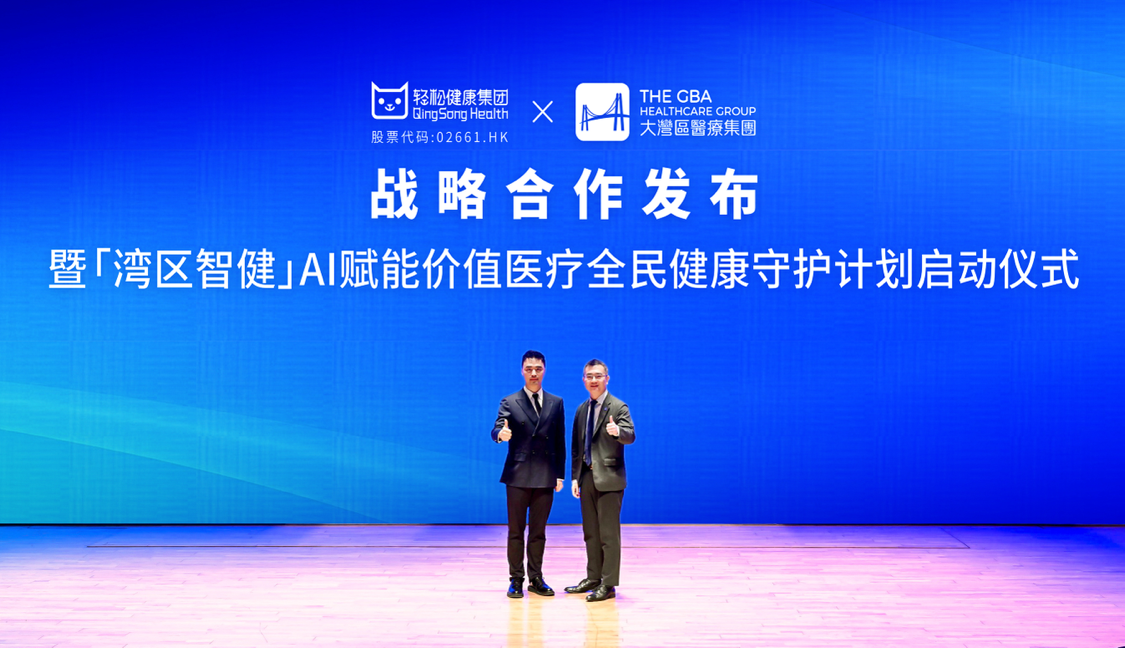
Core Insights - The strategic partnership between Easy Health Group and Greater Bay Area Medical Group aims to establish a long-term collaboration focused on creating an AI-enabled value healthcare ecosystem in the Guangdong-Hong Kong-Macao Greater Bay Area [1][5] - The initiative, named "Bay Area Smart Health: AI Empowered Value Medical Universal Health Protection Plan," seeks to provide accessible, affordable, and trustworthy health services throughout the life cycle, addressing challenges posed by an aging population and diverse health needs [1][5] Group 1 - The collaboration will leverage Greater Bay Area Medical Group's experience in value-based healthcare models and family doctor service systems, combined with Easy Health Group's strengths in AI technology, big data analysis, and internet health management [5] - The partnership aims to develop an intelligent health management solution covering prevention, diagnosis, and rehabilitation, enhancing the efficiency of medical resource allocation and integrated services [5][6] Group 2 - Specific initiatives include the development of an intelligent health management platform, AI-assisted preventive medicine tools, health education seminars, medical training collaborations, and cross-border medical cooperation [5][6] - The focus will be on creating a cloud platform driven by AI for intelligent health management, offering personalized preventive plans and comprehensive health management services [5][6] Group 3 - Easy Health Group's Executive Vice President emphasized the commitment to using AI technology for structural upgrades in health management, marking this partnership as a significant step in implementing AI capabilities in real medical scenarios [6] - The Chief Insurance Officer of Greater Bay Area Medical Group expressed optimism about the collaboration, highlighting its potential to provide precise and convenient health management solutions in response to societal demands such as aging populations and chronic disease prevention [6]
以持续创新攻坚真菌诊断难题
Zhong Guo Zheng Quan Bao· 2025-11-30 20:21
Core Insights - The core viewpoint emphasizes the importance of long-term investment in core technology for sustainable development in the biopharmaceutical industry, as articulated by the chairman of Danna Biotech, Zhou Zeqi [1] Company Overview - Danna Biotech, founded in 2014, has become a leading company in early diagnosis of fungal diseases in China, with its IPO on the Beijing Stock Exchange scheduled for November 3, 2025, marking it as the first IVD company listed there [1] - The company initially focused on pan-fungal detection and has since diversified its product line, introducing the "5G+ Joint Detection Scheme" to enhance diagnostic accuracy for various pathogenic infections [1][3] Product Development - The first core product developed by Danna Biotech is the horseshoe crab reagent, which allows for rapid differentiation between fungal and bacterial infections, significantly reducing the diagnosis time from 3-7 days to as little as 15 minutes [2] - The market for invasive fungal disease diagnostic reagents in China is projected to grow from 240 million yuan in 2018 to 3.03 billion yuan by 2030, with a compound annual growth rate of 23.5% [2] Innovation and R&D - Danna Biotech has obtained 91 domestic and international patents, including 48 invention patents, and has developed over 70 new products through a robust R&D framework [3][4][5] - The company invests over 30 million yuan annually in R&D, accounting for more than 10% of its total revenue, supporting the development of six core technology platforms [4] Financial Performance - In the first half of 2025, Danna Biotech reported a net profit of 49.96 million yuan, representing a year-on-year increase of 29.55%, with a gross profit margin of 85.99% [5] Future Plans - The company plans to use funds raised from its IPO for the construction of a new headquarters and further R&D, focusing on invasive fungal infections and leveraging AI technology to enhance diagnostic efficiency [5][6] - AI technology is expected to play a crucial role in improving diagnostic accuracy and efficiency, with plans to develop specialized applications for multidimensional diagnostic results [6]
瑞尔集团早盘涨超7% 今日将发中期业绩 此前预计中期利润超2000万元
Zhi Tong Cai Jing· 2025-11-28 01:42
Core Viewpoint - 瑞尔集团's stock rose over 7% in early trading, reflecting positive market sentiment ahead of its upcoming board meeting to approve mid-term results [1] Financial Performance - The company anticipates a pre-tax profit of no less than 20 million HKD for the reporting period, a significant increase from 7.4 million HKD in the same period last year [1] - The profit increase is attributed to operational improvements driven by AI-enabled clinical and business management systems, a rebound in patient demand and service volume, and strict cost reduction and efficiency enhancement measures [1]