THERABREATH

Search documents
Church & Dwight Issues 2026 Guidance
RTTNews· 2026-01-30 12:35
Financial Performance - The company expects full-year 2026 reported EPS to increase approximately 18% to 22% and adjusted EPS to grow by 5% to 8% [1] - For the first quarter, the company anticipates organic sales growth of approximately 3% and a reported sales decline of about 1% due to exited businesses in 2025 [2] - In the fourth quarter, the company's net income was $143.5 million, or $0.60 per share, compared to $189.2 million, or $0.76 per share, last year; adjusted EPS was $0.86, up 11.7% [4] Sales and Growth Initiatives - The company expects volume-driven organic sales growth of approximately 3% to 4% in 2026, with reported sales declining by approximately 1.5% to 0.5% due to exited businesses [1] - The company announced three incremental growth initiatives: expansion of the ARM & HAMMER brand, growth of the Oral care portfolio with THERABREATH, and international expansion through acquisitions [3] - Organic sales growth for the fourth quarter was 0.7%, lower than the company's outlook of approximately 1.5%, but was 1.8% when excluding the exited VMS [4] Market Reaction - In pre-market trading on NYSE, Church & Dwight shares increased by 3.6% to $95.28 [5]


Can PG's Productivity Drive Fuel EPS Gains Amid Inflation?
ZACKS· 2026-01-20 18:36
Core Insights - Procter & Gamble (PG) is focusing on productivity as a key driver for earnings growth amidst ongoing inflationary pressures in raw materials, logistics, and labor [1][3] - The company is implementing cost savings, supply-chain efficiencies, and organizational simplification to protect profitability, rather than relying solely on pricing [1][2] - This productivity-driven strategy aims to offset inflation and create opportunities for reinvestment in innovation and brand support, which are essential for PG's long-term growth [1][2] Productivity Initiatives - PG's productivity initiatives include manufacturing optimization, procurement efficiencies, and structural cost reductions, which are part of a multi-year cost savings program [2] - These efforts have stabilized operating margins and supported earnings per share (EPS) growth despite elevated input costs [2] - By simplifying product portfolios and improving demand forecasting, PG is converting efficiency gains into earnings resilience [2] Long-term Sustainability - The sustainability of PG's productivity gains is crucial for long-term earnings growth, which relies on volume recovery and successful innovation [3] - If PG can effectively reinvest efficiency gains without impairing execution, its productivity engine may continue to drive EPS growth [3] - In a market where pricing power is normalizing, PG's ability to self-fund growth through productivity could be vital for maintaining earnings momentum [3] Industry Comparisons - Other companies like Church & Dwight (CHD) and Colgate-Palmolive (CL) are also leveraging productivity-driven efficiency gains to protect earnings amid inflation [4][5][6] - CHD is focusing on manufacturing efficiencies and disciplined cost control to expand adjusted gross margins while investing in brand marketing [5] - CL is utilizing productivity programs to offset inflation and currency pressures, with a focus on reinvesting savings into brand building and innovation [6] Financial Performance - PG's shares have declined approximately 6.7% over the past six months, compared to an 8.4% decline in the industry [7] - The company has a forward price-to-earnings ratio of 20.17, higher than the industry average of 18.19 [9] - The Zacks Consensus Estimate indicates a year-over-year EPS growth of 2.1% for fiscal 2026 and 5% for fiscal 2027, although recent estimates have been revised downward [10]

Church & Dwight Accelerates Innovation to Defend Market Share
ZACKS· 2026-01-08 15:41
Core Insights - Church & Dwight Co., Inc. (CHD) is leveraging product innovation to maintain market share in a competitive consumer environment [1][8] - The company reported strong performance from new product launches in early 2025, contributing to market share expansion [2][8] - Incremental upgrades across brands are aimed at enhancing brand differentiation amid increased promotional activity and private-label competition [3] Product Performance - In Q3 2025, CHD gained market share in four of its eight power brands: ARM & HAMMER, THERABREATH, HERO, and TOUCHLAND [4][8] - THERABREATH showed significant consumption growth, while HERO and TOUCHLAND performed well due to ongoing product launches and brand engagement [4] - ARM & HAMMER benefited from sustained brand support across multiple categories [4] Strategic Focus - The company's strategy is centered on consistent product refreshes and targeted enhancements to reinforce its established portfolio [5] - CHD aims to sustain brand relevance and defend market share through disciplined execution rather than large disruptive launches [2][5] Market Performance - CHD shares have increased by 2.8% over the past month, outperforming the broader Consumer-Staples sector, which declined by 0.9% [6] - The stock has also outperformed the S&P 500 index and the industry growth rates of 1.4% and 1.6%, respectively [6] Valuation Metrics - CHD currently trades at a forward 12-month P/E ratio of 22.19, which is above the industry average of 17.67 and the sector average of 16.01 [10]

Procter & Gamble Delivers, But Is Volume Growth Still a Worry?
ZACKS· 2026-01-05 19:00
Core Insights - Procter & Gamble (PG) demonstrated operational discipline with solid first-quarter fiscal 2026 earnings despite a challenging consumer environment, supported by pricing, productivity gains, and a strong mix of premium products [1][8] - Volume growth remains a concern, particularly in North America, where higher prices and value-seeking behavior are impacting consumption [2][8] - The company's future growth depends on reaccelerating volumes while maintaining profitability, with plans for product upgrades and increased digital engagement [3][8] Volume Trends - Volume trends in North America are soft, with higher prices and increased promotions affecting consumption across several categories [2] - PG has regained market share in some areas through innovation, but overall consumption growth has slowed, indicating that pricing alone cannot sustain growth [2][5] - Management emphasizes the need to restore volume through superior product performance and value propositions amid competition from private labels [2] Future Growth Strategies - PG's strategy for sustained growth includes significant product upgrades, expanding digital engagement, and reinvesting productivity savings into brand support [3] - Improving market trends in regions like China and parts of Latin America may help offset softness in the U.S. market [3] - The trajectory of volume recovery will be a critical indicator of whether PG can achieve balanced growth [3] Competitive Landscape - Church & Dwight (CHD) and Colgate-Palmolive (CL) are also facing challenges in maintaining volume growth despite strong execution [4] - CHD has seen solid results but must focus on sustaining volume momentum through innovation and effective marketing [5] - Colgate is managing performance through pricing and premiumization, but volume growth is pressured by softer demand and consumer behavior [6] Valuation and Estimates - PG's shares have declined approximately 11.7% over the past six months, compared to the industry's 13.2% decline [7] - The company trades at a forward price-to-earnings ratio of 19.7X, higher than the industry average of 17.9X [9] - The Zacks Consensus Estimate for PG's fiscal 2026 and 2027 EPS indicates year-over-year growth of 3.1% and 2.8%, respectively, with stable estimates over the past week [10]

Can Procter & Gamble's Shift to DTC and Digital Win New Consumers?
ZACKS· 2025-12-23 18:41
Group 1 - The Procter & Gamble Company (PG) is shifting its go-to-market strategy to enhance digital engagement and selectively expand direct-to-consumer (DTC) capabilities, aiming to strengthen brand relationships and capture first-party data [1][8] - PG's digital strategy focuses on improving omnichannel execution rather than building large standalone DTC businesses, investing in brand websites, subscription models, social commerce, and AI-driven personalization [2][8] - The company faces challenges with DTC economics potentially diluting margins at scale and must balance digital expansion with maintaining strong retailer relationships [3][8] Group 2 - Church & Dwight (CHD) and Colgate-Palmolive (CL) are also leveraging digital and DTC initiatives to enhance brand engagement and reach younger consumers without pursuing large-scale DTC expansion [4] - CHD utilizes digital marketing and e-commerce partnerships to build awareness for emerging brands, focusing on data-driven marketing and influencer engagement to accelerate household penetration [5] - Colgate employs digital tools and selective DTC initiatives to strengthen consumer engagement and premium positioning, particularly in oral care and skin health, while investing in digital analytics and AI for improved targeting [6] Group 3 - Procter & Gamble's shares have decreased by approximately 11% over the past six months, compared to a 12.4% decline in the industry [7] - PG's forward price-to-earnings ratio stands at 19.84X, higher than the industry average of 18.05X [9] - The Zacks Consensus Estimate indicates year-over-year EPS growth of 3.1% and 2.9% for fiscal 2026 and 2027, respectively, with stable EPS estimates over the past week [10]
Margins Flat, Innovation High: Is PG Trading Growth for Stability?
ZACKS· 2025-11-26 17:11
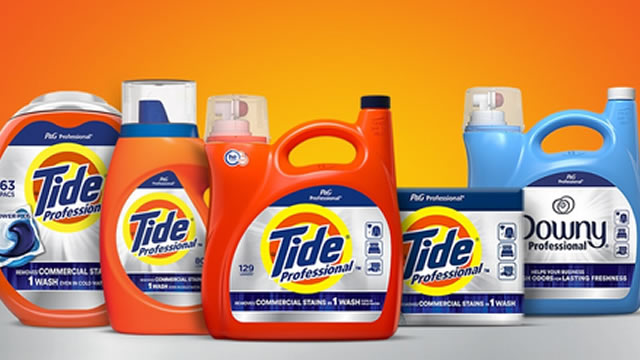
Core Insights - Procter & Gamble (PG) is focusing on stability over acceleration, with flat core operating margins and modest organic sales gains, indicating a cautious growth profile [1][8] - The company is increasing its innovation efforts, launching significant product upgrades, including a major revamp of the Tide liquid formula and premium products across various brands [2][8] - Heavy spending on innovation and restructuring may limit near-term earnings leverage, but the company aims for sustainable growth rather than short-term margin expansion [3][8] Innovation Strategy - PG is introducing meaningful product upgrades, including the largest Tide formula change in 20 years and premium launches in Olay, SK-II, and Baby Care, to drive integrated superiority [2] - Despite the challenges, PG views innovation as essential for reigniting category growth and restoring market share, particularly in North America [2] Financial Performance - PG's shares have declined approximately 11.4% year-to-date, slightly better than the industry's 12% drop [7] - The company has a forward price-to-earnings ratio of 20.70X, higher than the industry average of 18.45X, indicating a premium valuation [9] - The Zacks Consensus Estimate for PG's fiscal 2025 and 2026 EPS shows year-over-year growth of 2.6% and 5.7%, respectively, with upward revisions in estimates over the past month [10]

Procter & Gamble vs. Church & Dwight: Which Household Stock Outshines?
ZACKS· 2025-11-26 16:01
Core Insights - The competitive landscape between Procter & Gamble (PG) and Church & Dwight (CHD) highlights contrasting business models, with PG being a market leader and CHD as a value-driven challenger [1][2] Procter & Gamble (PG) - PG has achieved its 40th consecutive quarter of organic sales growth, with Q1 fiscal 2026 revenues reaching $22.39 billion, reflecting its dominance in the consumer products sector [3] - The company’s portfolio includes 10 daily-use categories, with eight showing growth or stability in organic sales, driven by strong brands like Tide, Pampers, and Gillette [4] - PG's management is focusing on an integrated superiority strategy, enhancing product performance and innovation, as seen in significant upgrades to Tide and Pampers [5][6] - Financially, PG reported a 3% increase in core EPS and a free cash flow productivity of 102%, with plans to return approximately $15 billion to shareholders in fiscal 2026 [7] Church & Dwight (CHD) - CHD reported a 5% net sales growth in Q3 2025, with organic sales up 3.4%, primarily due to a 4% increase in volume [8][9] - The company is expanding its market share with strong performance from brands like THERABREATH and ARM & HAMMER, and it achieved 7.7% organic growth internationally [10] - CHD's marketing investment increased to 12.8% of sales, supporting new product launches and acquisitions, such as TOUCHLAND, which targets younger consumers [11] - Financially, CHD's adjusted EPS grew by 2.5% in Q3, with cash flow growth of 19.6%, and it has reduced its expected tariff impact for 2025 [12] Comparative Analysis - The Zacks Consensus Estimate indicates PG's fiscal 2026 sales and EPS growth at 3.2% and 2.6%, respectively, while CHD's estimates suggest 1.6% sales growth and 1.2% EPS growth for 2025 [13][16] - Year-to-date, PG's stock has declined by 11.4%, while CHD's has fallen by 19.6%, with both trading below historical P/E medians [17][18] - PG is trading at a forward P/E of 20.7, while CHD's is at 22.38, reflecting CHD's premium valuation due to its consistent market share growth [18][19] Conclusion - Both companies face challenges in the current market, but PG offers stability and a valuation discount, while CHD presents a higher growth potential with a focus on share gains [20][24]

5 Revealing Analyst Questions From Church & Dwight’s Q3 Earnings Call
Yahoo Finance· 2025-11-07 05:33
Core Insights - Church & Dwight delivered a strong third quarter performance, driven by share gains in both value and premium products [1] - The success of ARM & HAMMER in value laundry and growth from personal care brands like THERABREATH and HERO were highlighted by management [1] - The acquisition of TOUCHLAND exceeded expectations in the hand sanitizer category, contributing to the company's outperformance [1] Financial Performance - Revenue reached $1.59 billion, surpassing analyst estimates of $1.53 billion, reflecting a 5% year-on-year growth [6] - Adjusted EPS was $0.81, beating analyst expectations of $0.74 by 9.9% [6] - Adjusted EBITDA stood at $334.7 million, with a margin of 21.1%, exceeding estimates by 7.2% [6] - Operating margin improved to 16.1%, up from -6.1% in the same quarter last year [6] - Organic revenue increased by 3.4% year-on-year, significantly above the 1.5% growth expected by analysts [6] Guidance and Market Outlook - Revenue guidance for Q4 CY2025 is set at $1.64 billion, aligning with analyst expectations [6] - Adjusted EPS guidance for the full year is $3.49, also in line with analyst forecasts [6] - Market capitalization is reported at $20.7 billion [6] Analyst Insights - Analysts raised questions regarding the impact of TOUCHLAND on profit outcomes from the vitamin business, with management indicating a strong baseline for TOUCHLAND [6] - Concerns about promotional spending and its effects on price/mix were addressed, clarifying that negative price/mix was mainly due to vitamins and value adjustments in BATISTE [6] - The Q4 outlook was attributed to external factors such as port strikes and vitamin seasonality rather than a decline in underlying demand [6] - The resilience of the value segment in laundry was discussed, with trends toward larger pack sizes noted [6] - The outperformance of premium personal care brands was linked to effective branding strategies and social media engagement [6]
Procter & Gamble's Margins Stay Firm: Is Premiumization Paying Off?
ZACKS· 2025-08-07 16:25
Core Insights - Procter & Gamble Company's (PG) fourth-quarter fiscal 2025 results indicate steady margins despite global volatility, showcasing the effectiveness of its premiumization strategy [1][8] - The company achieved a 150-basis point expansion in core operating margin, driven by productivity improvements and disciplined reinvestment in innovation [1][8] - PG's core EPS grew by 6% year over year, reflecting its focus on product superiority and value across all tiers [1][2] Performance Drivers - PG's commitment to "irresistible superiority" across product, packaging, brand communication, retail execution, and holistic value has been a key driver of performance [2] - Successful product launches, such as Pampers in China and the SK-II LXP line, have gained significant market share by offering clear performance benefits [2] - The company's restructuring program aims to simplify its portfolio, optimize supply chains, and enhance organizational agility, creating room for further investment in its premium strategy [3] Competitive Landscape - In a challenging macroeconomic environment, peers like Colgate-Palmolive Company (CL) and Church & Dwight Co., Inc. (CHD) are also leveraging premiumization to maintain profitability [4] - Colgate maintained a gross margin of 60.1% in Q2 2025, benefiting from premium innovations and a favorable product mix [5] - Church & Dwight offset a 40-basis point decline in adjusted gross margin through productivity gains and strategic brand investments, reinforcing profitability [6] Valuation and Estimates - PG's shares have declined by 8.8% year to date, compared to a 5.6% dip in the industry [7] - The company trades at a forward price-to-earnings ratio of 21.73X, higher than the industry average of 19.46X [9] - The Zacks Consensus Estimate indicates year-over-year EPS growth of 2.3% for fiscal 2025 and 6.3% for fiscal 2026, although estimates have moved downward recently [10]