Tiguan

Search documents
Delhi High Court rules in favour of Maruti Suzuki over Volkswagen trademark dispute: Report
MINT· 2026-03-13 09:42
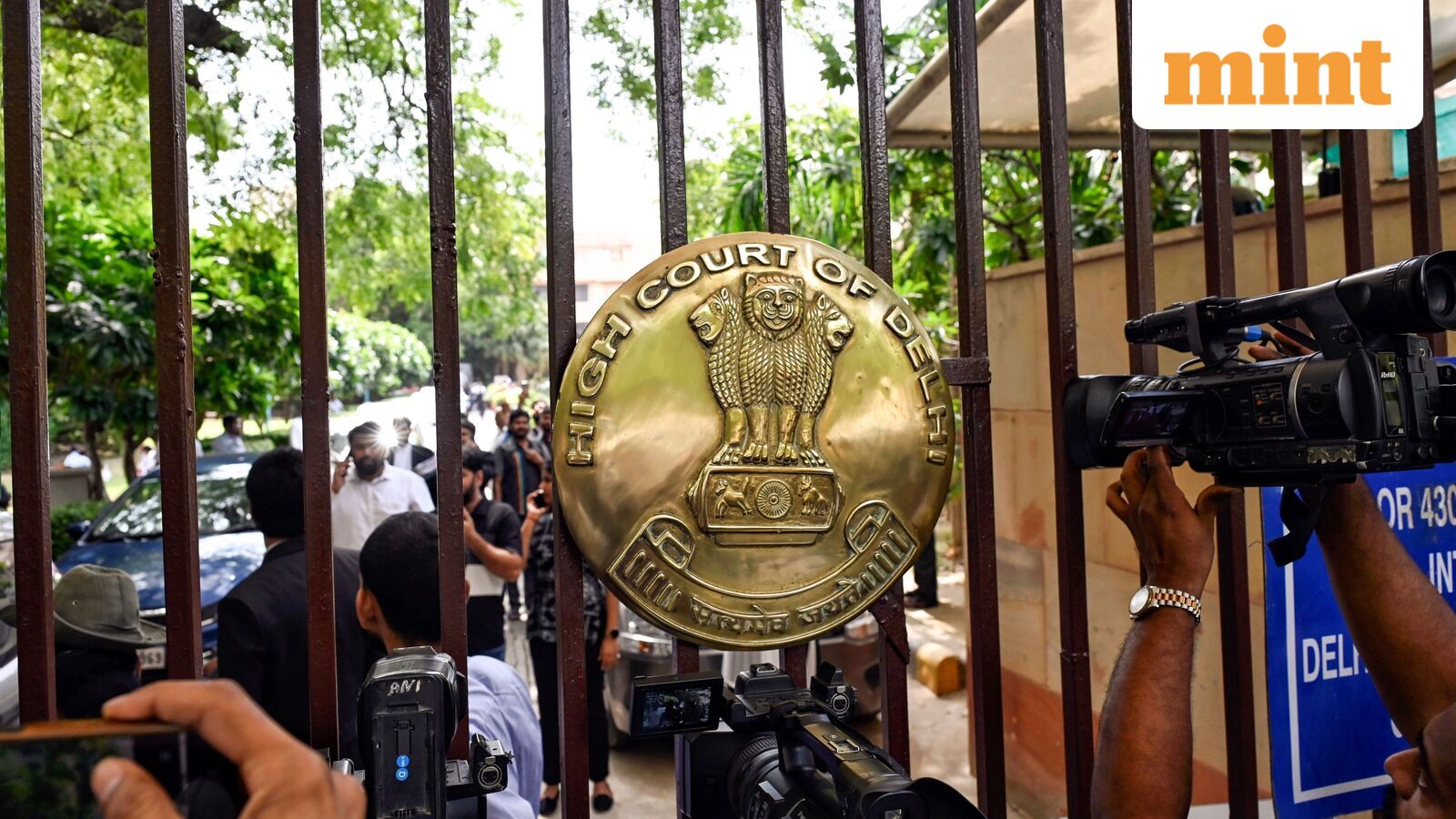
Core Viewpoint - The Delhi High Court declined to hear Volkswagen's petition against the trademark application of Maruti Suzuki for "TRANSFORMOTION," affirming that there is no likelihood of consumer confusion between the two trademarks [1][3]. Trademark Application and Opposition - Maruti Suzuki applied to register the trademark "TRANSFORMOTION," which was accepted and published for public notice [2]. - Volkswagen opposed the registration, claiming that "TRANSFORMOTION" was deceptively similar to its trademark "4MOTION," but the Registrar rejected this opposition [2]. Court's Findings - The Court noted that both Volkswagen and Maruti Suzuki have substantial goodwill in the Indian market, and consumers are likely to make informed decisions when purchasing cars [3]. - The Court accepted Maruti Suzuki's argument that "TRANSFORMOTION" is derived from the word "transformation," and highlighted that Maruti began using the mark in 2016, while Volkswagen's use of "4MOTION" started in 2017, indicating a lack of consumer familiarity with Volkswagen's mark at that time [4][6]. Distinction Between Trademarks - The Court observed that "4MOTION" refers to a four-wheel drive system in Volkswagen's Tiguan model, while "TRANSFORMOTION" signifies the transition from analogue to digital speedometers in Maruti's vehicles [5]. - The Court concluded that there is no plausible chance of confusion between the two marks based on visual comparison [6]. Implications for the Industry - The distinction between trademarks is essential to prevent consumer confusion in competitive markets [7]. - The timeline of trademark usage can significantly influence legal outcomes in trademark disputes [7]. - Legal rulings in trademark cases may set precedents for future disputes in the automotive industry and beyond [7].

Volkswagen stung by nearly $1B tariff hit, projects $5.8B import tax for the year
Yahoo Finance· 2025-10-30 15:00
Core Insights - Volkswagen's financial performance in Q3 was significantly impacted by tariffs, resulting in a nearly $1 billion hit to the bottom line, with total tariff costs for the first nine months reaching $2.44 billion [1][2] - The company has lowered its financial expectations for the year, projecting an operating return on sales of 2% to 3% and a net cash flow of breakeven [2] Financial Performance - Volkswagen reported a Q3 revenue increase of 2.3% year-over-year to 80.3 billion euros, but faced an operating loss of 1.3 billion euros compared to a profit of 2.83 billion euros in the previous year [6] - The group operating margin was reported at 5.4%, but increased trading tariffs are expected to burden the company by up to 5 billion euros on a full-year basis [2] Tariff Impact - The US tariffs on imported vehicles amounted to 800 billion euros ($925 million) in Q3, contributing to a total tariff impact of 2.1 billion euros ($2.44 billion) for the first nine months [1] - The tariff exposure in Q2 was higher at $1.52 billion, prior to a trade deal with the EU that reduced some tariffs to 15% starting in August, while 27.5% tariffs remain for vehicles made in Mexico [4] Production and Deliveries - Total vehicle deliveries increased by 1% in the first nine months, but US deliveries fell by 8%, highlighting the challenges faced in the American market [5] - Volkswagen is in discussions with the US government to potentially expand vehicle production in the US, with an Audi plant being considered [6] Brand and Market Challenges - The Porsche brand faced a significant charge of $5.92 billion related to changes in its electric vehicle rollout and brand goodwill, indicating ongoing challenges within the company [3] - The operating result (EBIT) for Volkswagen last year was 21.7 billion euros, meaning the current tariff-related losses equate to 23% of last year's profit [3]
Volkswagen warns workers of potential stoppages as chip crunch looms
Yahoo Finance· 2025-10-22 13:25
Core Points - Volkswagen has indicated that it cannot rule out production stoppages due to supply chain issues stemming from a dispute over Dutch chip maker Nexperia, which poses a threat to Europe's auto sector [1][2][3] - The Dutch government seized control of Nexperia last month, raising concerns about intellectual property, while China has restricted exports of essential products needed by European car manufacturers [2][7] - Volkswagen has communicated to its staff that, while production has not yet been affected by chip shortages, the situation is dynamic and could change in the short term [2][3] Production Impact - Reports suggest that Volkswagen may plan production stoppages starting next Wednesday, initially affecting the Golf series and subsequently other models [4] - The company is currently monitoring the situation closely and has not confirmed any specific plans regarding production halts [4][6] - Volkswagen will temporarily pause production of its Golf and Tiguan models at its Wolfsburg plant on Friday for an unrelated inventory issue, clarifying that this is not connected to chip supply problems [5] Industry Context - The ongoing dispute over Nexperia adds to existing global trade tensions impacting European carmakers, including increased U.S. import tariffs and Chinese export restrictions on rare earths [7] - Other automakers, such as BMW and Mercedes, are also taking steps to secure their production in light of the Nexperia situation [7] - Recent discussions between Dutch and Chinese economy ministers did not yield a resolution to the Nexperia impasse [8]
VW denies chip supply issues as production pauses planned
Yahoo Finance· 2025-10-22 10:19
Group 1 - Volkswagen (VW) is experiencing a production slowdown for the Golf and Tiguan models due to concerns over a supply chain shock linked to a chip shortage from a key supplier in the Netherlands [1] - VW has denied that the production pause is due to chip supply issues, stating that the adjustment was planned to align with seasonal inventory trends, and the pause is expected to end by the end of the week [2] - The Dutch government has implemented emergency measures on the China-owned semiconductor maker Nexperia, which has resulted in the Chinese government banning exports of Nexperia's semiconductor products, crucial for Europe's auto industry [3] Group 2 - The European Automobile Manufacturers' Association (ACEA) has indicated that while alternative chips are available, the process of re-homologation and ramp-up could take several months, with existing stocks of Nexperia components potentially running out within weeks [4] - ACEA's director general, Sigrid de Vries, emphasized that despite efforts to diversify supply chains, risks cannot be completely eliminated, affecting a wide range of suppliers and nearly all members of the association [4] - The current situation has been described as alarming, with a call for quick and pragmatic solutions from all involved countries [5]
Honda pulls the plug on large electric SUV as driver demand for battery powered cars plummets
New York Post· 2025-07-09 17:28
Core Viewpoint - Honda has halted plans for a large electric SUV due to weaker-than-expected demand for sizable electric vehicles and the impact of President Trump's decision to cut EV incentives in the US [1][2][4]. Group 1: Honda's Decision - Honda has reportedly scrapped the development of a seven-seat electric SUV, which was initially planned to follow the five-seat SUV and sedan based on the Concept 0 unveiled at CES [1][4]. - The company has cut approximately $48 billion (¥7 trillion) from its research and development budget for electric vehicles [4]. Group 2: Market Context - Demand for large electric cars has been lower than anticipated, influencing Honda's decision to suspend its EV plans [2][9]. - Other manufacturers, including Ferrari and Lamborghini, have also delayed or pushed back their electric vehicle projects in response to market conditions [12]. Group 3: Broader Industry Trends - The electric vehicle market is facing challenges, as evidenced by Kia's EV9 selling only 165 units in Australia compared to 5,165 units of the combustion-powered Sorento in the first half of the year [8][11]. - Major brands like Mercedes and VW are experiencing significant sales ratios favoring combustion-powered models over their electric counterparts [11].