
U.S. West Texas Intermediate

Search documents
Oil prices jump after Yemeni Houthis attack Israel, widening Iran conflict
Reuters· 2026-03-29 22:17
Core Viewpoint - Oil prices have surged following attacks by Yemen's Iran-aligned Houthis on Israel, indicating an escalation in the Middle Eastern conflict and its impact on global oil markets [1]. Group 1: Oil Price Movements - Brent crude futures increased by $3.16, or 2.81%, reaching $115.73 per barrel after a previous settlement that was 4.2% higher [2]. - U.S. West Texas Intermediate rose by $3.13, or 3.14%, to $102.77 per barrel, following a 5.5% gain in the prior session [2].

Oil falls over 13% on Trump postponing military strikes on Iran energy infrastructure
Reuters· 2026-03-23 11:29
Group 1 - Oil prices experienced a significant decline of over 13% following U.S. President Donald Trump's announcement to postpone military strikes on Iranian energy infrastructure [1][2] - Brent crude futures dropped approximately $17, or 15%, reaching a session low of $96 per barrel, while U.S. West Texas Intermediate fell by $13, or about 13.5%, to a session low of $85.28 [2] Group 2 - The postponement of military action has led to a rally in world markets, with stocks rising and the dollar declining as investor sentiment improves [3]
Oil prices rise after US, Iran threaten to hit energy targets in the Middle East
Reuters· 2026-03-22 22:11
Group 1 - Oil prices increased due to threats from U.S. President Donald Trump and Iran to target energy facilities in the Middle East, escalating tensions in the region [1] - Brent crude futures rose by $1.01, or 0.90%, reaching $113.20 per barrel, marking the highest settlement since July 2022 [2] - U.S. West Texas Intermediate crude was priced at $98.85 per barrel, up 62 cents, or 0.63%, following a previous gain of 2.27% [2]
Treasury yields climb as fear grows that Fed rate cuts are off the table
CNBC· 2026-03-20 15:08
Group 1: Treasury Yields and Federal Reserve Stance - Treasury yields increased as investor concerns grow that Federal Reserve rate cuts may not occur due to rising inflation driven by the Middle East conflict [2][3] - The 10-year Treasury yield rose by 10 basis points to 4.38%, while the 2-year note yield also increased by 10 basis points to 3.932% [1] - The Federal Open Market Committee voted 11-1 to keep the key interest rate unchanged, reflecting a shift in market expectations towards potential rate hikes instead of cuts [4][5] Group 2: Impact of Middle East Conflict on Markets - The conflict between Iran and Israel, including strikes and attacks on energy sites, is influencing market sentiment and positioning investors for a more hawkish Fed stance [3] - Central banks in Europe are also maintaining steady rates as they assess the conflict's economic impact, with markets now anticipating rate hikes this year [5] Group 3: Oil Prices and Market Reactions - Oil prices experienced a decline, with U.S. West Texas Intermediate falling by 1.2% to $94.99 per barrel and Brent crude down by 1.3% to $107.28 [6] - The decrease in oil prices follows indications from Treasury Secretary Scott Bessent about potential sanctions relief on Iranian crude, which could alleviate price pressures [6]

Oil jumps 4% as Iranian retaliatory strikes on Qatar's key energy facility stoke supply worries
CNBC· 2026-03-19 00:55
Group 1: Oil Prices and Market Impact - Oil prices have increased due to ongoing tensions in the Middle East, with Brent crude futures rising 4% to $111.80 and U.S. West Texas Intermediate futures increasing over 3% to $99.47 [2] - The strikes on energy infrastructure in the region are raising concerns about a potential supply crunch [1][5] Group 2: Damage to LNG Facilities - Iranian missile strikes have caused "extensive damage" to Ras Laffan Industrial City, the largest LNG export facility globally, prompting emergency response efforts [3] - Qatar has suspended LNG production since March 2 due to previous Iranian drone attacks, impacting its status as the world's second-largest LNG exporter, accounting for nearly 20% of global shipments [5] Group 3: Regional Security Concerns - Qatar's foreign Ministry condemned the missile strikes as a "dangerous escalation" and a violation of sovereignty, indicating potential responses under international law [4] - Saudi Arabia and the United Arab Emirates are on alert following the escalation of attacks on energy facilities in the region [4]
Oil prices surge to 18-month high as Middle East conflict escalates. Here's what it means for your gas prices
Fastcompany· 2026-03-04 16:51
Core Insights - Oil prices have surged to an 18-month high due to escalating conflict involving the United States, Israel, and Iran [1] - The war has disrupted oil and gas shipments in the Middle East, leading to supply constraints and market uncertainty [2] - Concerns over shipping through the Strait of Hormuz have intensified, with significant disruptions reported [2][3] Oil Market Impact - Brent crude prices exceeded $82 per barrel, marking a nearly 13% increase over the past week, while U.S. West Texas Intermediate (WTI) rose to around $76 per barrel, up approximately $10 from the previous week [4] - The conflict has led to increased shipping costs as insurers cancel war risk coverage, further impacting oil prices [3] Consumer Effects - Rising oil prices are expected to translate into higher consumer costs, with U.S. gas prices averaging over $3 per gallon [5] - Heating oil and propane prices are also anticipated to rise in response to the increased crude oil prices [5] Future Projections - Analysts warn that crude oil prices could reach $100 per barrel if the conflict and shipping disruptions persist [6] - The U.S. economy is currently less exposed to oil supply shocks, producing nearly 19% of the world's oil, which constitutes only 0.4% of its GDP [7] - Despite the reduced economic exposure, rising gas prices and utility bills are still expected in the near future [7]

Oil soars amid Strait of Hormuz shipping fears as Iran war drives prices to nearly $80
CNBC· 2026-03-02 08:06
Core Insights - Oil prices have surged significantly due to ongoing military actions by the U.S. and Israel against Iran, with Brent crude reaching a 52-week high of $79.40 and U.S. West Texas Intermediate at $73.10, both increasing by over 9% [1][2] Group 1: Military Actions and Oil Prices - The U.S. military operation, termed Operation Epic Fury, aims to achieve specific objectives against Iranian targets, contributing to the rise in oil prices [2] - As the U.S. targets Iranian military capabilities, global oil supply dynamics are under scrutiny, with expectations that oil prices may stabilize around the $80 mark for a period [3] Group 2: Risks to Oil Supply - The Strait of Hormuz, a critical passage for 13-15 million barrels of oil daily (20% of global supply), is unlikely to be completely closed, although risks from targeted attacks on vessels are significant [4] - The U.S. and Israel possess the military strength to mitigate the threat of Iran fully blocking the Strait, which is vital for oil producers like Saudi Arabia and Iraq [4] - However, single attacks on shipping are harder to prevent, raising concerns about how Asian refiners will secure oil volumes from the Middle East following recent tanker incidents [5] Group 3: Alternative Supply Routes - Some oil can be rerouted through Oman and certain UAE grids, while Saudi Arabia has plans to utilize the East-West pipeline via the Red Sea as a contingency [6] - Despite alternative routes, a significant volume of oil remains at risk, with potential price spikes to $100 if energy infrastructure is targeted [8]
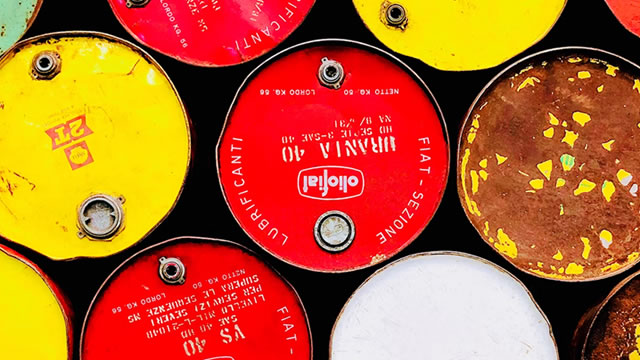
Oil Prices Open 2026 Higher as Geopolitical Risk Rises
Yahoo Finance· 2026-01-02 03:21
Core Viewpoint - Oil prices are experiencing a slight increase due to ongoing geopolitical tensions, despite having faced significant annual losses in 2025, marking the worst performance since 2020 [1][2]. Group 1: Price Movements - Brent crude oil is trading at $61.03 per barrel, reflecting a 0.30% increase, while U.S. West Texas Intermediate is at $57.59 per barrel, also up by 0.30% [1]. - Both major oil benchmarks fell nearly 20% in 2025, indicating a challenging year for the oil market [2]. Group 2: Geopolitical Factors - Tensions between Ukraine and Russia have escalated, with allegations of drone attacks on civilian and energy infrastructure, contributing to upward pressure on oil prices [3]. - Ukraine's President Zelensky reported over 200 drone attacks targeting power infrastructure, while Russia claimed drone strikes on its energy and industrial facilities [3]. Group 3: U.S. Sanctions Impact - The U.S. has imposed new sanctions on four companies and associated oil tankers involved in Venezuela's oil sector, further constraining oil exports from the country [4]. - These sanctions are forcing Venezuela's state oil company PDVSA to shut down wells in the Orinoco Belt due to limited storage capacity [5].
Oil prices hold steady due to stalled Ukraine peace talks and supply outlook
CNBC· 2025-12-05 15:09
Core Insights - Oil prices experienced a decline due to investor anticipation regarding the potential for increased supply from peace talks in the Russia-Ukraine conflict [1] - The market is currently influenced by opposing factors: stalled peace negotiations provide a bullish outlook, while resilient OPEC production offers a bearish counterbalance [2] - A significant majority of economists predict a 25-basis-point interest rate cut by the U.S. Federal Reserve, which could stimulate economic growth and energy demand [3] Oil Market Dynamics - Oil prices were steady, with Brent crude rising to $63.67 per barrel and U.S. West Texas Intermediate reaching $60.03 per barrel, supported by the lack of progress in peace talks [1] - The geopolitical situation, particularly tensions with Venezuela and the potential for U.S. military action, could impact oil prices significantly [4] - Rystad Energy highlighted that U.S. actions against Venezuela could threaten the country's crude oil production of 1.1 million barrels per day, primarily exported to China [5] OPEC and Production Factors - OPEC+ has decided to maintain steady production levels until early next year, providing some support for oil prices amidst oversupply concerns [4] - Saudi Arabia has reduced its January Arab Light crude selling prices to Asia, marking the lowest level in five years due to oversupply conditions [6]

Market Wrap: Sensex ends 388 pts higher, Nifty reclaims 26,000 as RBI relief lifts financial stocks
The Economic Times· 2025-11-17 10:23
Market Performance - The S&P BSE Sensex closed up 388 points, or 0.46%, at 84,950.95, while the NSE Nifty 50 added 103.40 points, or 0.4%, finishing at 26,013.45, marking a return above the 26,000 level [1][14] - Financial stocks gained 0.6% and were the strongest drivers of the benchmarks, supported by the Reserve Bank of India's measures for export-focused industries facing U.S. tariff pressures [2][14] - In the broader market, small-caps added 0.5%, and mid-caps climbed 0.7% to reach a fresh record high [3][14] Company-Specific Developments - Tata Motors Passenger Vehicles slipped 4.7% after the automaker revised its fiscal 2026 margin outlook for its U.K. arm, Jaguar Land Rover [5][14] - Shares of companies like Eternal, Maruti Suzuki, Kotak Mahindra Bank, Mahindra & Mahindra, and Tech Mahindra led the advance, each rising between 1% and 2% [14] Investor Sentiment and Expectations - The market maintained positive momentum near the key psychological level of 26,000, with investors anticipating a strong catalyst for further upward movement, particularly a potential trade deal [6][14] - The risk-reward ratio is considered favorable, bolstered by stronger-than-expected Q2 earnings from mid-caps, reinforcing confidence in growth revival and potential future earnings upgrades [7][14] Global Market Context - Global stocks and bond yields held firm, with European indices rising slightly and U.S. futures indicating a steady mood [8][14] - Expectations for a U.S. interest rate cut in December have fallen to less than 50%, putting pressure on stocks, especially in the technology sector [9][14] Commodity and Currency Movements - Gold prices edged down to $4,072 an ounce, despite a 55% increase this year from $2,624 an ounce on January 1, driven by safe-haven demand and geopolitical tensions [11][14] - Oil prices slipped, with Brent crude falling 44 cents, or 0.7%, to $63.95 a barrel, and U.S. West Texas Intermediate declining 48 cents, or 0.8%, to $59.61 [12][14] - The Indian rupee inched higher to 88.63 per U.S. dollar, supported by light dollar inflows, despite a widening trade deficit [13][14]

