Unitree H2(H2仿生人)

Search documents
10万亿风口,正在引爆
Ge Long Hui· 2025-10-20 12:35
Core Insights - The technology sector is experiencing a resurgence as negative news such as trade wars fades, indicating a potential recovery in stock performance [1] Group 1: Robotics Market Trends - The Robotics Index ETF (560770.SH) rose by 1.25%, reflecting positive market sentiment [2] - Unitree Technology launched its latest humanoid robot, Unitree H2, which features a more human-like appearance and capabilities, marking a significant step towards commercialization in 2024 and 2025 [2] - The robotics sector saw a strong performance in the first half of the year, followed by a correction, but is expected to regain momentum in Q4 due to upcoming earnings reports and new product launches [2] Group 2: Order Growth and Commercialization - Leading humanoid robot companies are securing increasing numbers of substantial orders, indicating accelerated commercialization [4] - Examples include UBTECH's orders totaling 1.26 billion yuan from Guangxi and 320 million yuan from a major automotive technology company, showcasing the demand for robots in manufacturing [6] - UBTECH's Walker series robots have accumulated over 630 million yuan in publicly disclosed orders for 2025, with applications in manufacturing, data collection, and logistics [7] Group 3: Technological Advancements - Recent technological breakthroughs in dexterous hands and tactile sensors are enhancing the capabilities of humanoid robots, making them more viable for industrial applications [12] - The integration of large models with robotics is improving the robots' ability to understand complex tasks, reducing programming challenges [12] Group 4: Policy and Market Potential - Chinese government initiatives are promoting the large-scale application of humanoid robots in various sectors by 2027, establishing a supportive policy environment [13] - The global humanoid robot market is projected to grow significantly, with estimates increasing from $3 trillion to $5 trillion by 2035, driven by labor shortages and economic viability [17] Group 5: Investment Opportunities - The Robotics Index ETF has seen a net inflow of 970 million yuan since September, indicating growing investor interest in the robotics sector [19] - The ETF tracks the entire robotics industry chain, providing investors with exposure to key players and components in the market [22] Group 6: Future Outlook - The humanoid robotics industry is at a historical turning point, with technological feasibility and economic viability being validated by large-scale orders [26] - The market is expected to evolve similarly to past technological revolutions, with significant growth anticipated over the next decade [26]

10万亿风口!正在引爆
Ge Long Hui· 2025-10-20 10:27
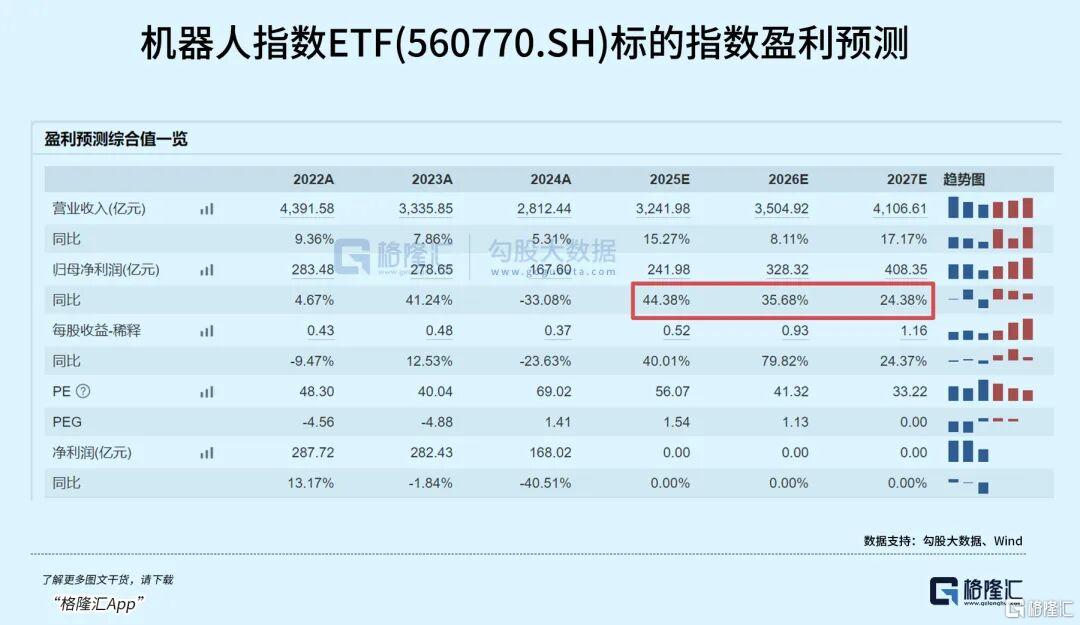
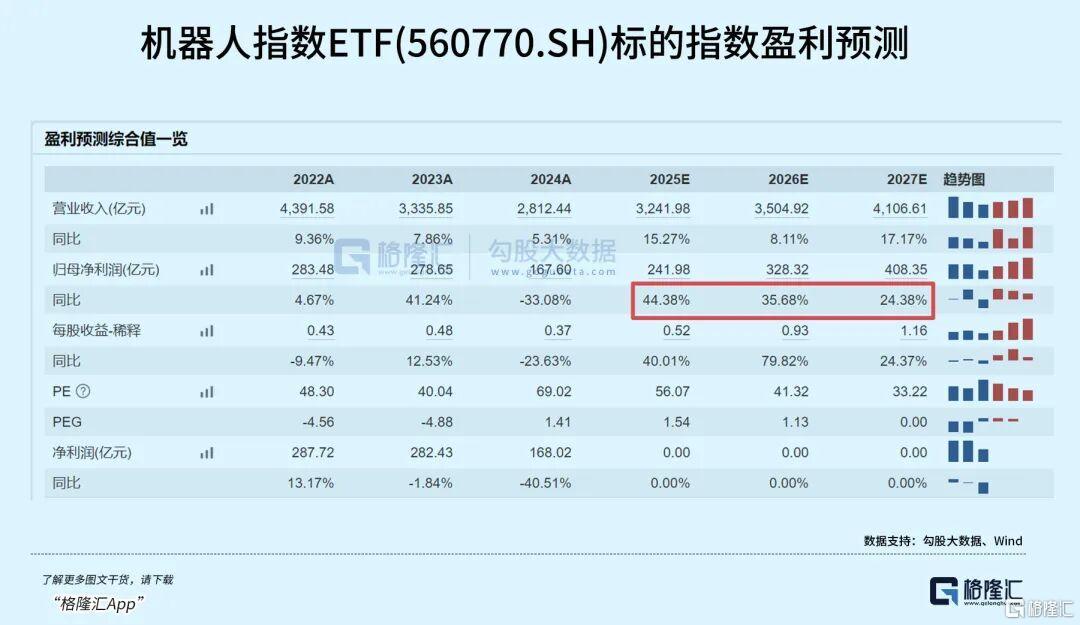
Core Viewpoint - The technology sector, particularly the humanoid robotics industry, is experiencing a resurgence as negative factors like trade wars diminish, with significant advancements in commercialization and order acquisition [1][2]. Industry Trends - The Robot Index ETF (560770.SH) rose by 1.25%, indicating positive market sentiment towards robotics [2]. - The launch of the Unitree H2 humanoid robot by Yushutech, featuring a more human-like appearance and advanced capabilities, marks a significant step towards the commercialization of robotics [2]. - The first half of the year saw a strong performance in the robotics sector, followed by a correction, but renewed interest is expected in Q4 due to upcoming earnings reports and new product launches [2]. Order Acquisition - Leading humanoid robot companies are securing increasing numbers of substantial orders, indicating a shift from experimental prototypes to commercially viable products [3][6]. - Examples include: - UBTECH received a 126 million yuan order for the Walker S2 robot from a data collection center [5]. - A well-known automotive technology company ordered 32 million yuan worth of Walker S2 robots for manufacturing [5]. - ZhiYuan Robotics secured multi-million yuan orders for its "Spirit G2" robot from major players in the consumer electronics and automotive sectors [5]. Commercialization Acceleration - The acceleration of the commercialization process is evidenced by the growing number of real orders, confirming the economic value and practicality of humanoid robots [6]. - Current orders are primarily concentrated in industrial manufacturing and professional services, indicating clear application scenarios for humanoid robots [6]. - Technological advancements, such as UBTECH's autonomous battery swapping and ZhiYuan's dexterous manipulation, are translating into competitive market advantages and order acquisition [6]. Market Forecasts - The projected net profit growth rates for the Robot Index ETF are 44.38%, 35.68%, and 24.38% for 2025, 2026, and 2027, respectively, indicating strong future profitability [6]. - The global humanoid robot market size is expected to grow significantly, with estimates rising from $3 trillion to $5 trillion by 2035, driven by labor shortages and the economic viability of humanoid robots [12]. Policy Support - The Chinese government is actively promoting the commercialization of humanoid robots, with plans for large-scale applications in various sectors by 2027 [9][10]. - The establishment of the "China Humanoid Robot Mass Production Alliance" by major companies signifies a collaborative effort to advance the industry [10]. Investment Opportunities - The investment landscape for humanoid robots is shifting from individual companies to a more integrated approach across the entire supply chain, creating a "pyramid" structure of opportunities [13][14]. - The Robot Index ETF has seen significant inflows, with net inflows of 970 million yuan since September, reflecting growing investor interest [15]. Conclusion - The humanoid robotics industry is at a pivotal moment, with technological feasibility, economic viability, and supportive policies converging to create a favorable environment for growth and investment [22].