
精灵G2机器人

Search documents
寻找最强具身大脑!全球机器人顶会ICRA开启报名,智元全程陪跑带你拿奖
量子位· 2026-03-23 07:12
允中 发自 凹非寺 量子位 | 公众号 QbitAI 智元直接把一整套硬核装备塞进你的背包: 业界顶配机器人开发平台、海量真实数据集、以及通往机器人学术圣殿IEEE ICRA舞台的传送门 。 更有总价值超 百万美元 的奖金与资源掉落,等你来开箱! 两大赛道,决战具身智能之巅 全球具身智能的极客玩家,是时候登场了! 还在为缺乏 顶级硬件平台验证算法 而苦恼?还在为 仿真环境和真实产线差距太大 而挠头?还在苦恼自己的 顶尖算法只能在PPT上跑 ? 现在,你的"天命副本"来了。 由 智元(AGIBOT) 主办的机器人领域顶级赛事—— AGIBOT WORLD CHALLENGE @ICRA 2026 ,正式向全球豪杰发出召集令! 大赛共设置 推理-操作 和 世界模型 两大赛道,不管你擅长的是让机器人动手干活,还是让机器人动脑预判,这里都能找到你的主场。 1、Reasoning to Action(推理-操作)赛道 本赛道旨在评估模型的推理和动作执行能力,包括线上仿真和线下真机赛段。 参赛者将基于AGIBOT WORLD开源数据集,训练能够解决一系列复杂任务的模型。 本赛道聚焦于弥合Sim2Real Gap,实现从开 ...


未知机构:东北计算机20260128智元VLA端侧推理性能提速15倍并于精灵G-20260129
未知机构· 2026-01-29 02:20
Summary of Key Points from Conference Call Records Industry Overview - The humanoid robot solid-state battery demand is projected to exceed 74 GWh by 2035, indicating significant growth potential in the robotics and battery sectors [1] - Shandong aims to achieve a scale of over 200 billion yuan in the robotics and intelligent equipment industry by 2026, highlighting regional ambitions for industry expansion [2] Company Highlights - ZhiYuan reported a 15-fold increase in VLA edge inference performance, validated through the Spirit G2 robot, showcasing advancements in AI and robotics technology [1] - AutomationAnywhere is in discussions to acquire C3.ai, which would facilitate its entry into the public market, indicating strategic moves in the AI software sector [1] - LG Energy will supply batteries for humanoid robots to Tesla, reflecting partnerships that could enhance product offerings in the robotics market [1] Financial Performance - Xiangxin Technology has projected a net profit for the year between 168 million yuan and 200 million yuan, representing a decline of 53.26% to 44.36%, which may indicate challenges in the company's financial health [3]


智元VLA端侧部署取得技术突破:摆脱机器人依赖外挂桌面显卡计算模式
Feng Huang Wang· 2026-01-28 04:07
此次优化涉及全栈推理系统搭建、算法逻辑重构、编译优化及低精度量化等多个技术层面。公司称,其 方案摆脱了机器人以往依赖外挂桌面显卡进行计算的模式,在Jetson Thor芯片上实现了模型的完整端侧 推理,并已在精灵G2机器人上完成真机验证。 据智元介绍,这一突破旨在降低部署成本、提升机器人作业流畅性与场景适应性。优化后的端侧推理帧 率超过了此前业内的最佳水平。该进展被视为解决VLA模型端侧算力瓶颈、推动具身智能规模化落地 的关键技术探索。 凤凰网科技讯1月28日,智元宣布,其在具身智能VLA模型端侧部署上取得技术突破。通过算法与工程 协同优化,成功将其π0.5VLA模型在英伟达Jetson Thor平台上的推理帧率从1.4Hz提升至22.1Hz,性能提 升超过15倍。 ...


智元:VLA端侧推理性能提速15倍,并于精灵G2机器人完成真机验证
Xin Lang Cai Jing· 2026-01-28 03:57
Group 1 - The core viewpoint of the article is that the company has developed a one-stop solution for algorithm and engineering collaborative optimization, significantly enhancing performance metrics [1] - The π0.5 VLA model's inference frame rate on the Jetson Thor platform has been improved from 1.4Hz to 22.1Hz, representing an increase of over 15 times [1] - The performance enhancement has been validated on the actual hardware of the Spirit G2 robot [1]
这一年,张江的答案|一方智谷,锚定“机器人+”新未来
机器人大讲堂· 2026-01-23 09:04
Core Insights - Zhangjiang Robot Valley has established itself as a key area for embodied intelligent robotics in Shanghai, showcasing a robust industrial layout and vibrant ecosystem in 2025 [1] Group 1: Industrial Layout and Key Projects - The Zhangjiang Robot Valley covers a total area of 4.2 square kilometers and is positioned as a core area for the embodied intelligent robotics industry in Pudong New District [5] - The first phase of the Zhangjiang Robot Valley platform, with a total construction area of 110,000 square meters, has been completed, enhancing the region's capacity for high-quality development in the robotics industry [7] Group 2: Leading Enterprises and Complete Industry Chain - A clear and complete industry chain has formed in Zhangjiang Robot Valley, with nearly 100 companies in the embodied intelligent industry, covering complete machines, software, core components, and supporting services [15] - Major companies like Zhuoyide Robotics and Green Harmonic have established their headquarters in the valley, contributing to the innovation and collaboration within the industry [13][15] - The establishment of the "Zhuoyide Ecosystem Accelerator" aims to support core component R&D and technology transfer, enhancing the overall industry ecosystem [13] Group 3: Ecosystem Development and Services - Zhangjiang Robot Valley is committed to building a comprehensive industrial ecosystem, providing full-chain services from R&D to market promotion, thus driving both industrial and innovation ecosystems [20] - The valley hosted over 60 industry events in the year, including the flagship "2025 Zhangjiang Embodied Intelligence Developer Conference," which attracted over 200 companies and 5,000 experts [21] - The establishment of the first engineering series digital technology professional title application policy briefing in Shanghai aims to support talent development in robotics and intelligent manufacturing [23] Group 4: Future Development Plans - In 2026, Zhangjiang Group plans to strengthen its industrial organization capabilities, focusing on four core capability platforms and five element guarantee platforms to accelerate the construction of the embodied intelligent industry cluster [26] - The focus will remain on humanoid robots, high-end medical robots, and intelligent service robots, aiming to create a leading global ecosystem for embodied intelligent robotics [26]


真量产,还是伪需求?行业激辩人形机器人争议
2 1 Shi Ji Jing Ji Bao Dao· 2025-11-25 10:01
Core Viewpoint - The industry is experiencing a pivotal moment with discussions centered around orders and mass production of humanoid robots, which are anticipated to enter a significant production phase in 2026 [2][5]. Group 1: Industry Trends - The year 2025 is characterized by the emergence of new technologies and significant funding in the embodied intelligence sector, with many companies reporting substantial financial backing [3][4]. - Key industry players, including companies like Yuanli Lingji and Galaxy General, have gathered to discuss advancements and challenges in the field, highlighting a trend of talent and capital migrating from other sectors into embodied intelligence [4][6]. Group 2: Production and Orders - Several companies have announced mass production and delivery of humanoid robots, with notable orders such as a 2.64 billion yuan project from UBTECH for their Walker S2 industrial robot [6][8]. - The concept of true mass production is debated, with industry leaders emphasizing the need for real commercial demand rather than artificial demand driven by subsidies or investment hype [8][9]. Group 3: Challenges and Considerations - There are concerns regarding the reliability and operational success of humanoid robots, with reports of high failure rates during testing and operational phases [7][9]. - Industry experts stress the importance of meeting specific operational criteria, such as continuous performance and environmental resilience, to ensure long-term viability and customer satisfaction [9][10].
高交会观察:中国创新力“大爆炸”
Jing Ji Guan Cha Wang· 2025-11-17 14:08
Core Insights - The 27th China International High-Tech Achievements Fair (CIHTAF) concluded in Shenzhen, showcasing over 5,000 companies and achieving a transaction intention amount exceeding 170 billion yuan [1] - The event highlighted the integration of technology and application, emphasizing the need for clear and quantifiable commercial outcomes from innovations [1] Commercialization Focus - China Aerospace Science and Technology Corporation (CASC) showcased the Long March 8 rocket model, which aims to address the critical issue of reducing launch costs for commercial space endeavors [2] - The rocket has a payload capacity of 7 tons to a 700 km sun-synchronous orbit, indicating advancements in launch capabilities [2] - Beijing Jun Tian Hang Yu Technology Co., Ltd. presented the "Jun Tian No. 1 04A satellite," designed for urban management applications, showcasing the urgency for practical applications in the commercial space sector [2] Low-altitude Economy - Shenzhen Daohe Tongtai Robotics Co., Ltd. introduced an "air-ground integration" solution that significantly reduces inspection time for cross-sea bridges from 15 days to 3 days [3] - The solution utilizes a smart inspection platform called "Avant Hub," enabling coordinated operations between drones and ground robots, enhancing traffic efficiency by 42% and reducing carbon emissions by 18% [3][4] - The company plans to focus on smart transportation, smart parks, and smart energy sectors for short-term revenue generation, transitioning from selling equipment to providing services and platforms [4] Specialized Drone Applications - The China Academy of Launch Vehicle Technology showcased specialized drones for emergency rescue and security detection, indicating a shift in industry demand towards precise security and emergency response solutions [5] - The "Eagle" drone is designed for physical countermeasures, while the "Ming Die" emergency rescue system is equipped for critical area operations [5] Computing Power Infrastructure - The Huawei booth featured the "Ascend 384 Super Node" computing cluster, capable of 300 PFLOPS, aimed at supporting large-scale model training [6] - The cluster's architecture can enhance efficiency by over three times for specific models, addressing the growing demand for computational power [6] Energy Efficiency Solutions - Chaoju Technology Co., Ltd. presented the FusionPoD for AI liquid-cooled cabinet, addressing the energy consumption challenges associated with high-density computing [7] - The liquid cooling technology is essential for managing the power density exceeding 20 kW in AI applications, aiming to balance computational expansion with energy costs [7] Industrial IoT Systems - Beijing Aerospace Topology Technology Co., Ltd. showcased the "Ran Hong" industrial IoT system, which utilizes an open-source operating system to improve operational efficiency in the gas industry [8] - The system addresses fragmentation and coordination issues in traditional industrial control systems, demonstrating a shift towards full-stack domestic solutions [8] Robotics and Automation - Shenzhen Cyborg Robotics Technology Co., Ltd. focused on practical applications of robotics, demonstrating core component load testing rather than flashy performances [9] - The company aims to meet specific industrial needs with robots designed for precision and efficiency, moving away from merely aesthetic designs [11] - The trend in robotics is shifting towards adopting automotive manufacturing standards, ensuring higher reliability and performance in industrial applications [12]
格力博称与智元创新合作未涉及精灵G2机器人
Zhong Guo Jing Ying Bao· 2025-10-21 04:49
Core Viewpoint - Greebo's collaboration with Zhiyuan Innovation is focused on exploring the global robotics market, but it has not yet involved the specific model of the Spirit G2 robot [1] Company Summary - Greebo is a leading company in the global new energy garden machinery industry, having engaged in the research, design, production, and sales of new energy garden machinery since 2007 [1] - The company has been responsible for or participated in the formulation of seven industry standards [1] Collaboration Details - The partnership aims to leverage complementary advantages to create industrial synergy [1] - Greebo has already increased its investment in Zhejiang Zhidong and Annu Intelligent and has reached cooperation agreements [1] - Future participation in the collaboration regarding the Spirit G2 robot will depend on a professional assessment of the product's commercial prospects in overseas markets [1]

格力博称与智元创新的合作尚未涉及精灵G2机器人
Zhong Guo Jing Ying Bao· 2025-10-21 02:07
Group 1 - Greebo is a leading company in the global new energy garden machinery industry, engaged in R&D, design, production, and sales since 2007, and has participated in setting 7 industry standards [1] Group 2 - On October 21, Greebo announced its collaboration with Zhiyuan Innovation to jointly explore the global robotics market, aiming for industrial synergy through complementary advantages [3] - The company has increased its investment in Zhejiang Zhidong and Annu Intelligent as part of this collaboration [3] - Currently, Greebo's partnership with Zhiyuan Innovation does not involve the recently released Spirit G2 robot, and future participation will depend on a professional assessment of the product's commercial prospects in overseas markets [3]
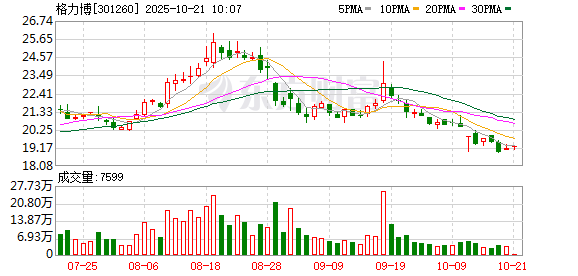
格力博:目前公司与智元的合作尚未涉及该特定型号
Zheng Quan Shi Bao Wang· 2025-10-21 01:01
Core Viewpoint - Greebo (301260) is collaborating with Zhiyuan Innovation to jointly explore the global robotics market, aiming for industrial synergy through complementary advantages [1] Group 1: Collaboration Details - The partnership involves increasing investment in Zhejiang Zhiding and Annu Intelligent, indicating a strategic move to enhance capabilities in the robotics sector [1] - The collaboration does not currently involve Zhiyuan's recently launched Spirit G2 robot, with future participation dependent on the product's commercial prospects in overseas markets [1]