Vulcan robot

Search documents
Honeywell Sees Physical AI Gain Foothold in Business World
PYMNTS.com· 2026-01-27 14:37
Core Insights - Honeywell is increasingly integrating artificial intelligence into physical operations, with significant adoption in various sectors [1][2] - Over 200,000 sites have implemented Honeywell's AI tools to enhance energy efficiency and productivity in airports, hospitals, and factories [2] Group 1: Adoption of Physical AI - The widespread adoption of "physical AI" projects was noted last year, indicating a shift towards operational efficiency [2] - Other companies, such as JLL, emphasize the financial benefits of using AI to optimize commercial real estate operations [3] Group 2: Operational Efficiency and Cost Reduction - AI systems can help companies reduce ongoing operating expenses by identifying inefficiencies in office and facility management [4] - Examples from other enterprises, like Amazon and Walmart, illustrate the integration of physical AI into core operational infrastructure, enhancing throughput and lowering costs [5] Group 3: Supply Chain Resilience - Honeywell is leveraging lessons from the pandemic to strengthen its supply chains against tariff-related disruptions [5] - The global trade order is shifting towards bilateral agreements, prompting companies to adapt their supply chains to local ecosystems [6]



Physical AI Moves from Automation to a New Workforce Layer
PYMNTS.com· 2025-11-18 19:58
Core Insights - Physical AI is emerging as the next stage of robotics, enabling machines to operate in unpredictable environments, unlike traditional automation [1][5][7] Industry Developments - Research groups are utilizing simulation, digital twins, and multimodal learning to help robots learn adaptive behaviors with minimal retraining [3][4] - The World Economic Forum highlights a shift in manufacturing, where robots are moving from isolated stations to shared work areas, enhancing their roles in production, inspection, and transport [5] - Carnegie Mellon University researchers are developing new sensor designs and training methods that allow robots to function reliably in crowded environments [6] Company Applications - Amazon's Vulcan robot exemplifies the application of physical AI, using vision and touch to handle various product shapes in fulfillment centers, integrating seamlessly with logistics software [9] - Walmart is expanding its physical AI systems to reduce costs and improve throughput across its distribution network, including a partnership with Symbotic for advanced automation [10][11] - GXO Logistics is scaling its physical AI pilots after successful deployments of AI-powered inventory robots, indicating a trend of integrating physical AI into core operational infrastructure [12]


Amazon robotics chief: ‘I want to eliminate every menial, mundane job’ as AI reshapes warehouse work
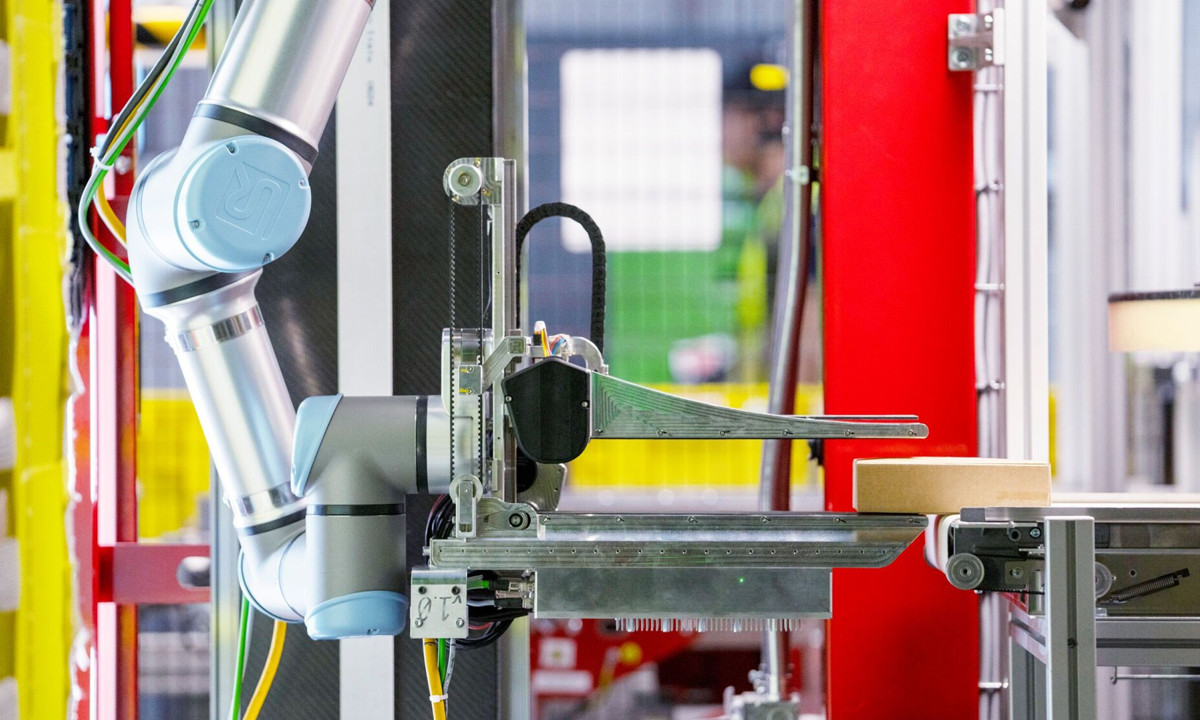
Fox Business· 2025-11-14 23:52
Core Insights - Amazon is significantly investing in artificial intelligence and robotics to transform its warehouse and fulfillment operations while simultaneously cutting 14,000 corporate jobs as part of a restructuring effort [1][4][6] - The company plans to potentially replace up to 500,000 jobs with robots over time, reflecting a shift towards automation [1][2] - Amazon's workforce has tripled since 2018, reaching approximately 1.5 million employees, but the company is now focusing on reducing middle management and adapting to AI advancements [3] Job Changes and Workforce Strategy - Amazon's CTO of Robotics, Tye Brady, emphasized the intention to eliminate menial and repetitive jobs, indicating a clear shift in job roles within the company [2] - The company has committed $2.5 billion over five years to retrain employees and communities, recognizing the need for upskilling in response to changing job demands due to technology [6] Financial and Technological Investments - Amazon plans to invest over $125 billion this year, primarily in cloud and AI infrastructure, highlighting its commitment to technological advancement [9] - Recent innovations include robotic arms for packing and the Vulcan robot with tactile sensing, aimed at increasing automation in fulfillment centers while still employing human workers [9]
Amazon uses AI to make robots better warehouse workers
TechXplore· 2025-10-23 06:08
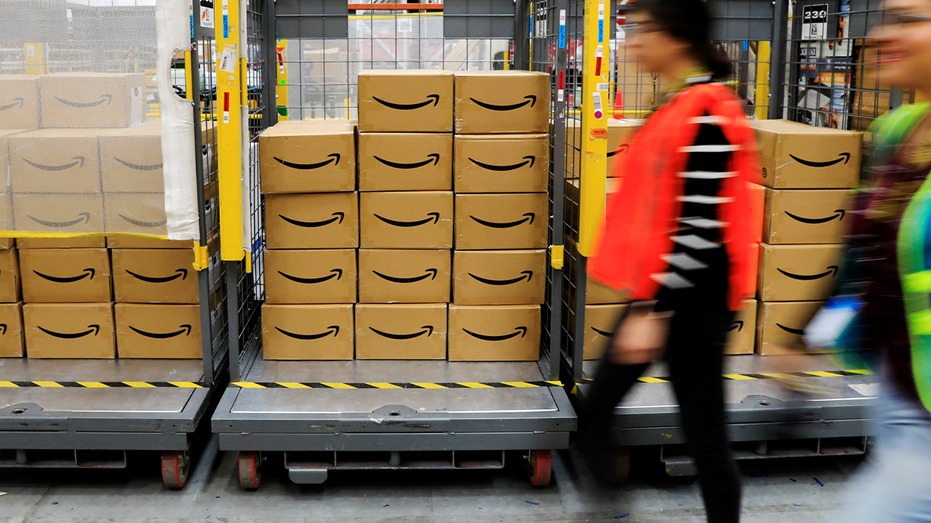
Core Insights - Amazon is accelerating the automation of its warehouses using artificial intelligence and robotics, raising concerns about the future of human employment in the sector [1][2][4] Group 1: Automation and Technology - Amazon showcased advanced robotic arms and high-tech tools in Silicon Valley, emphasizing that AI is enhancing innovation and speeding up development cycles [2][3] - The "Blue Jay" robotic arms are designed for efficient picking, sorting, and consolidating tasks, with testing currently taking place in South Carolina [3] - AI has reduced the design, build, and deployment time of the Blue Jay by approximately two-thirds, taking just over a year [4] Group 2: Employment Impact - Amazon's Robotics chief technologist stated that the company has created more jobs in the U.S. over the past decade than any other company, countering fears of job losses due to automation [4] - Reports suggest that robotics could allow Amazon to avoid hiring 160,000 workers in the next two years, particularly during peak holiday seasons [6] Group 3: Innovations Beyond Warehousing - Amazon is also implementing technology outside of distribution centers, such as smart glasses for delivery drivers that provide real-time navigation and delivery instructions [5][7] - An AI agent was demonstrated to manage robots and warehouse teams more efficiently, indicating a broader application of AI in operations [6]
Teradyne, Inc. (TER): A Bull Case Theory
Yahoo Finance· 2025-09-19 17:48
Group 1: Company Overview - Teradyne, Inc. is currently trading at $117.82 as of September 10th, with trailing and forward P/E ratios of 40.91 and 23.70 respectively [1] - The company is recognized as a cyclical semiconductor test-equipment supplier, but it is also expanding its robotics franchise, which is part of its long-term vision [2] Group 2: Robotics and Automation - Teradyne has developed a strong robotics portfolio through acquisitions, including Universal Robots and Mobile Industrial Robots, positioning itself at the forefront of structural growth drivers like Amazon's warehouse automation [3] - The integration of AI, industrial automation, and electrification themes such as electric vehicles (EV) and advanced driver-assistance systems (ADAS) is central to Teradyne's strategy [2] Group 3: Market Position and Valuation - The current semiconductor test downturn, influenced by weaknesses in the automotive and industrial sectors, has negatively impacted Teradyne's share price, which is around $110, reflecting cyclical pressures [4] - Teradyne's valuation at approximately 24x EV/EBITDA is primarily linked to its semiconductor and robotics businesses, with potential for a re-rating as robotics adoption increases [4] - The company has a healthy balance sheet with virtually no debt, presenting an asymmetric upside opportunity due to the combination of depressed sentiment from semiconductor cyclicality and the underappreciated long-term value of its robotics segment [5]

2 Artificial Intelligence (AI) Stocks That Could Dominate the Rest of 2025
The Motley Fool· 2025-06-14 07:15
Group 1: Advanced Micro Devices (AMD) - AMD shares have increased by 61% since reaching a 52-week low of $76.48 in April, driven by three consecutive quarters of accelerating revenue growth [4][7] - The company is preparing to launch new MI300 series GPUs for data centers, with the MI300 chip generating $5 billion in revenue last year [5][6] - AMD's revenue grew by 36% year-over-year in the first quarter, up from a 24% increase in the previous quarter, attracting investor interest ahead of the upcoming Advancing AI event [7][9] - The MI350 GPU is expected to deliver 35 times more throughput than its predecessor, with strong customer interest noted by management [6][8] - Analysts project a 20% growth in earnings per share for AMD in 2025, followed by a 44% surge in 2026, supporting potential stock gains [9] Group 2: Amazon - Amazon shares have rebounded by 42% from a 52-week low of $151.76, with expectations of record earnings in 2025 and 2026 [11] - The company reported a 62% year-over-year increase in earnings in the first quarter, driven by its extensive use of robotics in fulfillment centers [11][12] - Amazon has the largest fleet of industrial robots, with over 750,000 units, enhancing delivery speeds and efficiency [12] - The company is testing humanoid robots for last-mile delivery, which could significantly improve margins as last-mile costs account for over half of total shipping expenses [13] - The stock is trading at 35 times 2025 earnings estimates, which is considered reasonable given the robust earnings growth and potential for margin improvement [15]