WMS(仓库管理系统)

Search documents
上市首日涨超109%!清华夫妇造出百亿机器人IPO,顺丰赚近14亿
机器人大讲堂· 2026-03-25 09:15
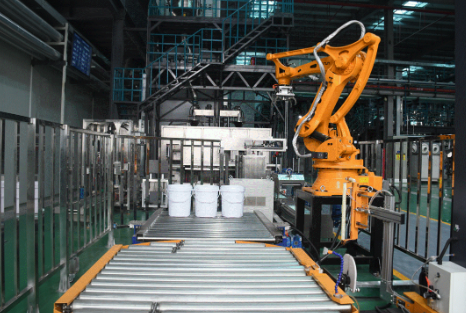
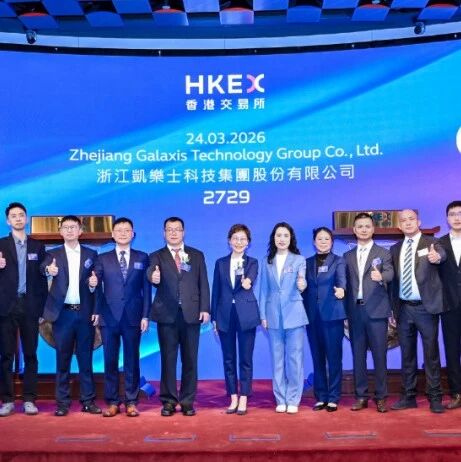
Core Viewpoint - The article discusses the successful IPO of Kales Technology (凯乐士科技), highlighting its position as the first "full-stack intelligent in-warehouse logistics robot" company listed on the Hong Kong Stock Exchange, and its innovative technology that sets it apart in a competitive market [1][3]. Group 1: Company Overview - Kales Technology was listed on March 24, with an initial pricing of HKD 16.66 per share, opening at HKD 32, reflecting a significant increase of approximately 92.17% on the first day [3]. - The company achieved a market capitalization that briefly surpassed HKD 130 billion, with its founders, Gu Chunguang and Yang Yan, both holding prestigious academic backgrounds from Tsinghua University and further studies at MIT and Cornell University [3][4]. - Kales has developed a comprehensive "hardware + software" full-stack technology system, focusing on reshaping supply chain operations through advanced robotics [4]. Group 2: Product Lines and Technology - Kales Technology's core product lines include Multi-directional Shuttle Robots (MSR), Autonomous Mobile Robots (AMR), and Conveying Sorting Robots (CSR), which together cover essential logistics functions such as storage, sorting, and transportation [5][8]. - The MSR can enhance warehouse space utilization from 30%-40% to over 70% and reduce labor costs by 40%, demonstrating its efficiency in high-demand scenarios [7]. - The AMR is highly adaptable, requiring no major site modifications, and includes innovations like the VNA AMR and the globally unique VFR series for narrow aisle operations, capturing a 19.3% market share in its segment [7][8]. - Kales' CSR combines conveyor systems with sorting robots, achieving high throughput and continuous operation, capable of processing thousands of items per hour [8]. Group 3: Market Applications - Kales Technology's products are utilized across various industries, including new energy, pharmaceuticals, automotive, and textiles, with notable clients such as CATL, BYD, and OPPO [10]. - The company has developed specialized solutions for industries with stringent requirements, such as a fireproof stacker for lithium battery production and an automated material handling system for the semiconductor sector [10]. Group 4: Founders' Background - The success of Kales is attributed to its founders, Gu Chunguang and Yang Yan, who possess a blend of top-tier academic credentials and extensive industry experience [11][14]. - Gu's previous role at a private enterprise allowed him to gain practical insights into logistics challenges, which he later applied to Kales' development [13][14]. - The couple's complementary skills in industry insight and engineering have been pivotal in establishing a solid foundation for the company [14]. Group 5: Strategic Partnerships and Growth - Kales' relationship with SF Express began in late 2016, where SF's need for efficient storage solutions aligned with Kales' technology, leading to significant collaboration [15][16]. - SF Express not only invested approximately HKD 1.66 billion but also provided a testing ground for Kales' technology, facilitating rapid development and adaptation to real-world logistics challenges [16]. - Despite facing losses from 2022 to 2024, Kales has shown a trend of narrowing losses, with a significant reduction in adjusted net losses projected for the coming years [18][19]. Group 6: Future Outlook - Kales plans to allocate approximately 45% of its IPO proceeds to R&D, 25% to capacity expansion, and 20% to international market development, indicating a strategic focus on growth and innovation [19]. - The global smart logistics robot market is expected to approach one trillion by 2030, presenting significant opportunities, although competition is intensifying [19].

告别效期损耗之痛:深度集成WMS,让企业仓库管理智能“保鲜”
Sou Hu Cai Jing· 2025-12-09 11:46
Core Insights - The article highlights the challenges faced by a large electronic manufacturing company in South China regarding inventory management, particularly the disconnect between their Warehouse Management System (WMS) and SAP HANA ERP, leading to inefficiencies and losses [1][3][4] Group 1: Challenges in Inventory Management - The company struggles with inventory discrepancies where the production system shows stock that cannot be found in the warehouse, leading to delays and operational inefficiencies [1] - Manual monitoring of expiration dates results in significant losses due to expired goods being overlooked, impacting financial reporting and customer satisfaction [3] - There is a data disconnect between the WMS and ERP, causing financial teams to spend excessive time reconciling inventory data, which affects billing efficiency and customer satisfaction [3] Group 2: Solutions Implemented - The company decided to implement a new WMS that integrates seamlessly with SAP HANA, focusing on real-time data flow to address existing challenges [4][5] - The new system allows for closed-loop management of inventory, where production orders in SAP HANA are instantly communicated to WMS, improving inventory accuracy and reducing the time from order to shipment by over 60% [5] - A dynamic alert system for expiration management was established, significantly reducing the rate of expired goods by 75% through proactive monitoring and prioritization of items nearing expiration [5] Group 3: Integration Benefits - The integration of WMS with SAP HANA enables real-time conversion of warehouse operations into financial records, streamlining the accounting process and eliminating manual reconciliation [6] - The transformation of the warehouse from a cost center to a value hub enhances operational efficiency, product quality, and overall competitiveness in the supply chain [7] - The seamless data flow between business operations and financial reporting provides a solid foundation for management decision-making, improving overall organizational performance [7]

喜报!1药网(YI.US)华中运营中心湖北亿昊再度荣登“湖北省民营企业服务业100强”榜单!
智通财经网· 2025-11-20 05:14
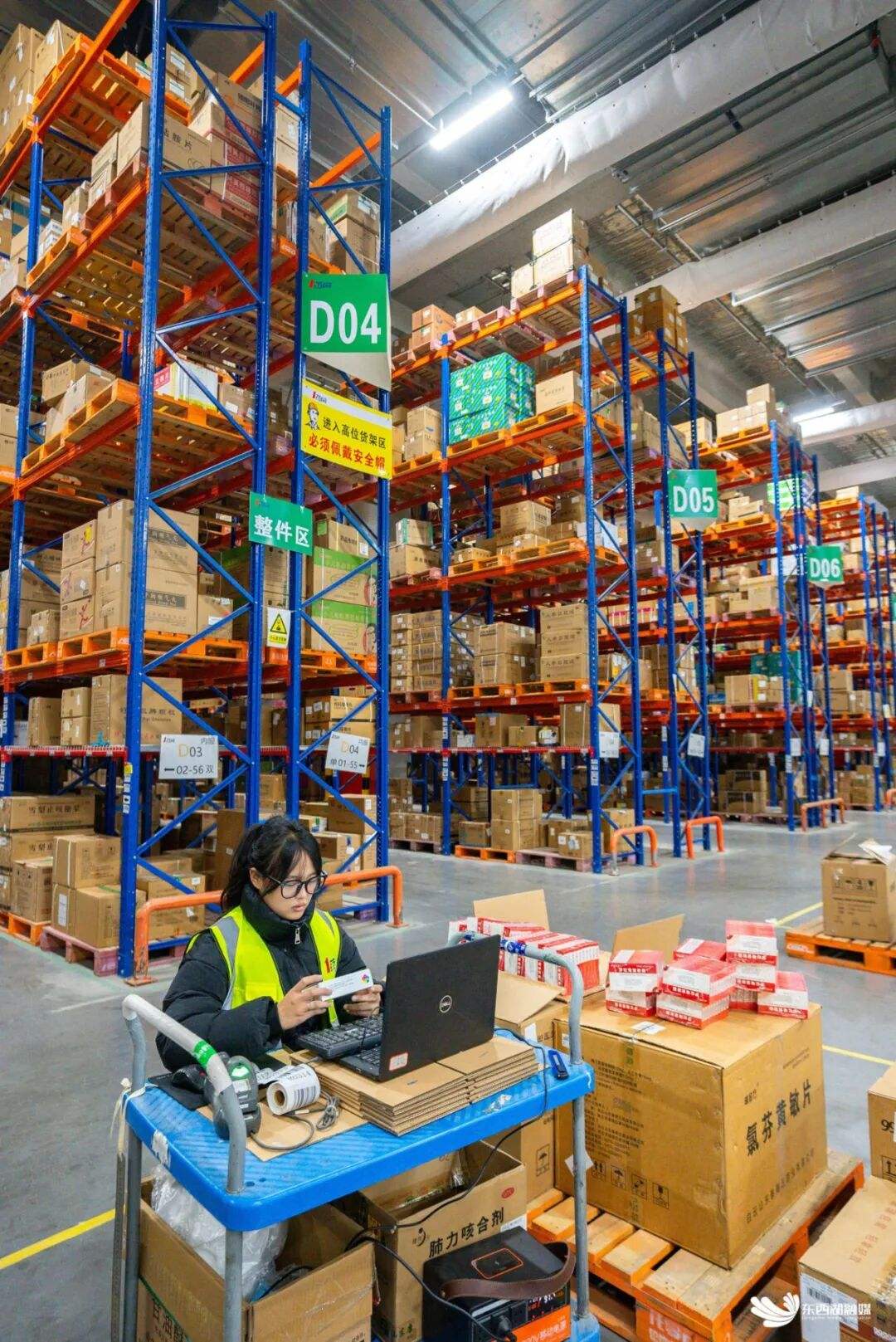
Core Insights - Hubei Yihau Pharmaceutical Co., Ltd. has been recognized in the "Top 100 Private Service Enterprises in Hubei" for the second consecutive year, highlighting its strong regional economic impact and industry influence [1] - The company has achieved rapid growth since its establishment, with annual revenue reaching 2.6 billion RMB in 2024 and operating from a modern warehouse of over 25,000 square meters [3] - Hubei Yihau leverages advanced logistics and digital technologies to enhance operational efficiency, significantly reducing logistics damage rates by 60% [3][4] Group 1 - Hubei Yihau operates as the core center for 1药网 in Central China, covering a wide range of products including pharmaceuticals, medical devices, and health foods [1] - The company has built a national logistics network named "Kunpeng," which optimizes service quality and reduces costs through big data modeling [3] - The company has established a modern logistics base in Wuhan, featuring specialized storage areas and a high storage capacity design to improve operational efficiency [3] Group 2 - Hubei Yihau utilizes a proprietary Warehouse Management System (WMS) developed by 1药网 to achieve refined control over its processes, enhancing turnover efficiency and minimizing human error [4] - The company focuses on digital technology innovation and customer experience optimization, aiming to empower partners in the pharmaceutical industry and drive digital transformation [4] - Hubei Yihau's strategic role in the region is to enhance overall industry efficiency and create greater value for society and the public [4]

风华高科以系统重构驱动智能制造,推动数字化变革
Jing Ji Wang· 2025-10-11 08:19
Core Insights - The company is implementing a digital transformation strategy centered around the FAITH management philosophy to enhance high-level manufacturing capabilities and achieve high-quality development [1] Group 1: Digital Transformation Initiatives - The company is building an integrated system comprising MES, ERP, WMS, and WCS to shift data from static storage to dynamic empowerment, significantly improving efficiency across various operations [2][3] - The MES system, set to be fully operational by 2025, aims to achieve dual improvements in quality and efficiency by automating key equipment operations and establishing a quality control loop, enhancing manual inspection efficiency by approximately 20% [2] - The ERP platform focuses on optimizing resource management through centralized sales, procurement, and payment processes, resulting in a 9.7-fold increase in BOM efficiency and a 12.4-fold increase in process route efficiency [2] Group 2: Logistics and Delivery Enhancements - The company is progressively establishing WMS systems across product units to improve logistics and delivery, ensuring effective shipment control in product substitution scenarios [3] - The WCS system is being developed to facilitate intelligent warehousing operations, including automated inventory checks, laying the groundwork for a fully automated logistics system [3] Group 3: Intelligent Manufacturing and System Integration - The digital transformation strategy follows a three-step approach: automation, digitalization, and intelligence, focusing on deep system collaboration and smart factory development [5] - The integration of APS, ERP, MES, and WMS systems will create a closed-loop management process that enhances order response speed and overall operational efficiency [5] - The company is adopting a "demonstration-led, comprehensive promotion" strategy to scale up intelligent manufacturing, identifying nine smart manufacturing scenarios for replication [5] Group 4: Technology and Quality Control - The company is leveraging intelligent technology to integrate business scenarios, ensuring the transition from technology implementation to value realization [6] - RPA digital robots are being utilized to enhance decision-making by automating data analysis across production, inventory, and sales, while the SCADA system is being developed to improve data collection and monitoring [6] - The establishment of a unified data platform through SCADA and MES integration will enable real-time quality parameter monitoring and proactive quality management, reinforcing product quality assurance [6]