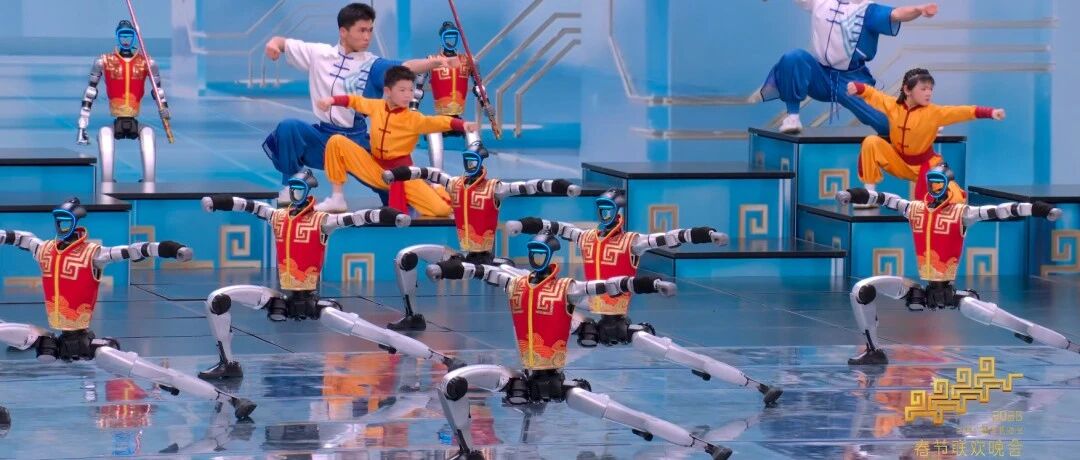
Walker大型仿人机器人

Search documents
为什么春晚的机器人不“僵”了?具身智能正在经历一场大脑进化
机器人大讲堂· 2026-02-19 00:00
Core Viewpoint - The evolution of humanoid robots is moving from performance in controlled environments to practical applications in real-world scenarios, emphasizing the need for robots to understand and predict physical interactions [5][6][26]. Group 1: Humanoid Robot Performance - The performance of humanoid robots at the Spring Festival Gala has shown significant advancements, with previous years featuring coordinated movements and complex formations [1][2]. - This year's robots demonstrated a level of agility and responsiveness that suggests a breakthrough in their control algorithms and hardware integration [5]. Group 2: Challenges in Real-World Applications - Despite advancements, the transition from staged performances to real-world applications remains challenging, as robots must navigate unpredictable environments like factories and homes [5][6]. - Current humanoid robots lack the ability to understand physical laws, which limits their effectiveness in dynamic settings [13][22]. Group 3: VLA Paradigm and Industry Anxiety - The dominant paradigm for embodied intelligence is the Visual-Language-Action (VLA) model, which is currently highly competitive [7]. - Companies like Ant Group and Horizon are developing advanced VLA models that enhance spatial awareness and adaptability across different robotic configurations [8][10]. Group 4: Transition to World Models - The industry is recognizing the need to evolve from VLA to embodied world models that allow robots to simulate and predict physical interactions [14][15]. - Ant Group's LingBot-World is a notable example, providing a high-fidelity simulation environment for robots to learn and adapt without real-world consequences [16]. Group 5: Impact on Industry Scalability - The shift from action mapping to physical pre-simulation is expected to reduce the data requirements for training new skills significantly, from thousands of examples to just 30-50 [23]. - Robots equipped with predictive capabilities have shown a high success rate in complex tasks, achieving over 91% in multi-task scenarios [24]. Group 6: Conclusion and Future Directions - The journey of humanoid robots is transitioning from mere demonstrations to practical applications, with a focus on understanding physical laws and improving operational capabilities in real-world environments [26][28]. - The ongoing debate about the best approaches for robotic intelligence continues, with various strategies being explored to enhance performance in unpredictable settings [27].