Zen 5

Search documents
AMD产品路线图,令人失望
半导体行业观察· 2025-12-07 02:33
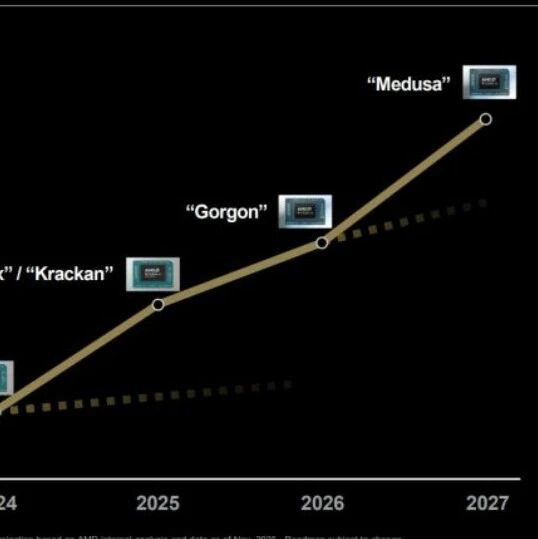
Core Insights - AMD's consumer product roadmap for 2026 appears underwhelming, particularly in the mobile and consumer laptop segments, where immediate success is unlikely [1][3] - The Gorgon platform, set to launch in 2026, will still utilize the Zen 5 architecture, which may not compete effectively against Intel's Panther Lake and Qualcomm's Snapdragon X Elite Gen 2 [3][10] - AMD's Zen 5 architecture is primarily designed for data centers, leading to higher heat generation and lower performance per watt in mobile applications [4][5] 2026 Product Launches - AMD plans to introduce the Gorgon platform in 2026, which will be based on a 4nm process, competing against Intel's 3nm offerings [9] - The Gorgon platform is expected to face challenges in battery life and performance per watt compared to its competitors [9][12] - The Strix Point platform, while gaining some design wins, lacks the energy-efficient solutions necessary to compete with Intel's offerings [5][10] Future Developments - The Medusa platform, expected in 2027, will be based on the Zen 6 architecture, which aims to improve performance and efficiency [11] - AMD's ability to enhance battery life and performance per watt remains uncertain, even with the upcoming Medusa platform [11][12] - AMD's goal is to increase its market share in the consumer segment to 40%, although this may occur in lower-margin segments [12] Competitive Landscape - Intel's Lunar Lake and Panther Lake architectures are positioned to outperform AMD's offerings in terms of efficiency and performance, particularly in the mobile segment [5][10] - AMD's current strategy may lead to a reliance on lower-margin products to fill gaps left by competitors [12] - The success of AMD's high-end desktop processors, such as the 9800X3D and 9950X3D, indicates that its data center-first strategy has yielded positive results in that market [8]


英特尔高性能CPU:Lion Cove深入解读
半导体行业观察· 2025-07-09 01:26
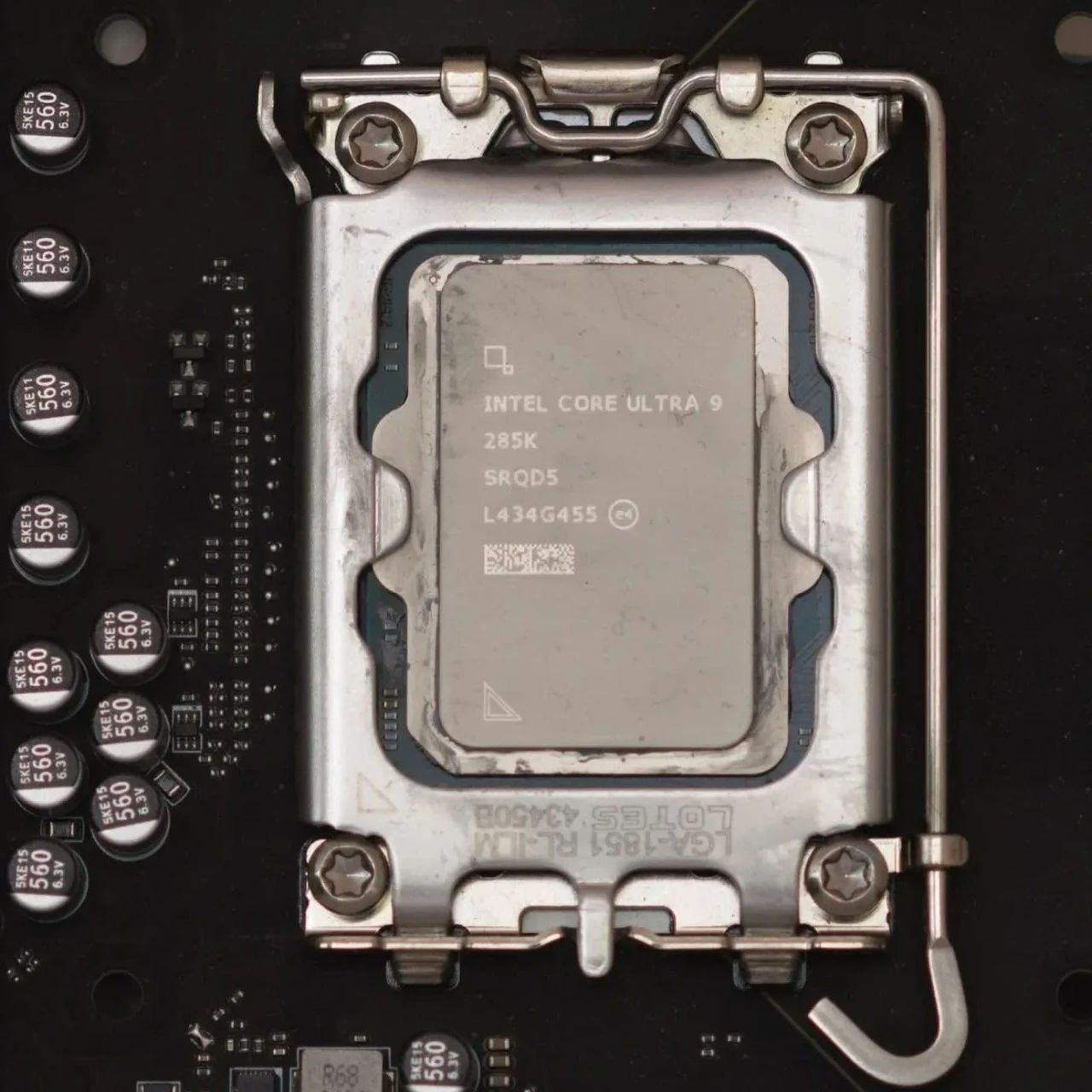
Core Insights - Intel's latest high-performance CPU architecture, Lion Cove, shows significant improvements over its predecessor, Raptor Cove, particularly in instruction cycles and execution engine organization [1] - Lion Cove's performance on the Arrow Lake desktop platform is competitive with AMD's Zen 5 architecture, achieving better overall performance at lower power consumption compared to Raptor Cove [1] - Gaming performance, which is a key focus for many users, varies significantly from productivity workloads, highlighting the need for tailored optimizations [1] Performance Analysis - Lion Cove supports up to 8 micro-operations per cycle, translating to approximately 8 instructions per cycle, with high IPC results in SPEC CPU2017 tests, some exceeding 4 IPC [5] - Despite high IPC capabilities, gaming workloads typically operate at the lower end of the IPC spectrum, with performance limited by front-end and back-end latencies [5][11] - The architecture features a four-level data cache setup, with L1 data cache divided into two levels, enhancing performance by alleviating L2 cache load [13][15] Memory Access and Latency - Accessing L3 and DRAM incurs high latency costs, with performance monitoring events indicating how each cache level impacts overall performance [17][19] - Lion Cove's L1.5 cache helps mitigate some L1 cache miss issues, although its absolute hit rate remains modest [15] - The architecture's memory access patterns reveal that while L2 cache misses are rare, the high costs associated with L3 or DRAM accesses can still significantly affect performance [19] Front-End and Back-End Performance - The front-end of Lion Cove experiences some throughput losses, primarily due to instruction fetch delays and branch prediction errors [27][30] - The architecture's branch predictor performs well, but recovery from prediction errors can lead to significant delays, impacting overall performance [30][39] - Lion Cove can exit up to 12 micro-operations per cycle, with average execution reaching 28 micro-operations before encountering blockages [44] Comparative Analysis - Compared to AMD's Zen 4, Lion Cove faces more severe back-end memory latency issues, while its front-end latency challenges are less pronounced [45] - The architecture's larger BTB and instruction cache help prevent code fetches from slower caches, contributing positively to performance [46] - The differences in design strategies between Intel and AMD highlight the ongoing optimization challenges faced by both companies in meeting diverse workload demands [47]