ZrTiTe4和HfZrTe4)

Search documents
国内外科研单位联合筛选出新型高性能电池材料
Xin Hua Wang· 2025-11-06 01:17
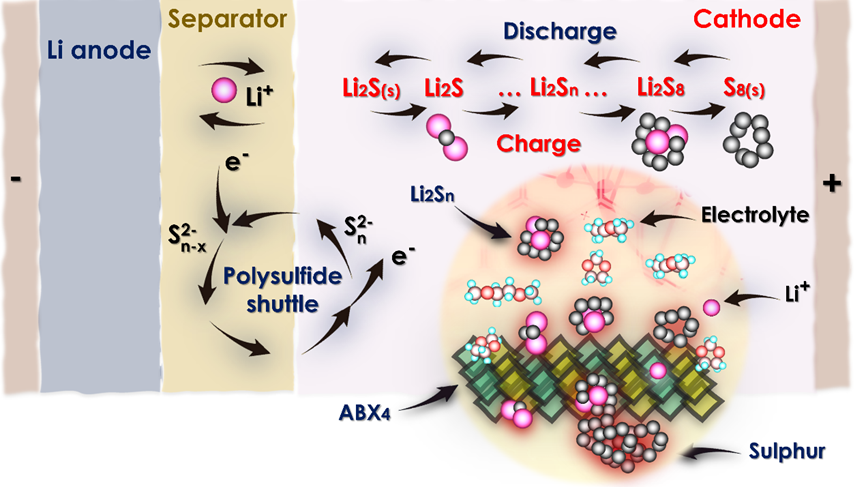
Core Viewpoint - The rapid development of energy storage technology has led to the identification of new high-performance battery materials, which address challenges faced by traditional battery materials in energy storage capacity, charging speed, and cycle longevity [1][2]. Group 1: New Battery Materials - A collaborative research team from various institutions, including Tianjin University and Shanghai Jiao Tong University, has predicted a new class of two-dimensional topological disulfide monolayer materials (HfTiTe4, ZrTiTe4, and HfZrTe4) through theoretical calculations [1]. - These new materials exhibit potential in fast charging performance, cycle stability, and thermal stability, making them suitable for applications in portable electronic devices, electric vehicles, and large-scale energy storage systems [1][2]. Group 2: Performance Enhancements - As anode active materials, these new materials provide abundant lithium and sodium ion storage sites and ultra-fast ion transport capabilities, significantly enhancing the fast charging performance of batteries [2]. - When used as a sulfur cathode material carrier, these materials are expected to greatly extend the cycle life of the cathode and optimize its fast charging performance [2]. Group 3: Stability and Efficiency - The new two-dimensional materials possess unique chemical properties and adsorption capabilities that can effectively "capture" polysulfides, preventing them from affecting battery stability and charging efficiency [2]. - The materials maintain good thermal and kinetic performance across a temperature range from room temperature to approximately 227°C, supporting applications in high-temperature scenarios such as outdoor driving of new energy vehicles and industrial energy storage systems [2].
天津大学国家储能平台筛选出新型高性能电池材料
Zhong Guo Xin Wen Wang· 2025-11-05 13:29
Core Insights - A new class of two-dimensional topological disulfide monolayer materials (HfTiTe4, ZrTiTe4, and HfZrTe4) has been predicted to exhibit significant potential in fast charging performance, cycling stability, and thermal stability for high-performance battery technology development [1][2] Group 1: Material Properties - The new materials can theoretically store 1.60 Ah of lithium ions and 1.35 Ah of sodium ions per gram, showcasing superior electrochemical performance compared to existing two-dimensional carbon and phosphorus materials [2] - Ion diffusion barriers in these materials are exceptionally low, at 0.206 eV for lithium and 0.046 eV for sodium, indicating minimal resistance to ion movement [2] Group 2: Application and Stability - The materials possess unique chemical properties that effectively "trap" polysulfides, preventing them from affecting battery stability and charging efficiency, which is a common issue in lithium-sulfur and sodium-sulfur batteries [2] - They maintain good thermal and kinetic performance from room temperature up to approximately 227°C, making them suitable for high-temperature applications such as electric vehicles in summer, industrial energy storage systems, and high-power portable electronic devices [2]
天津大学等国内外科研单位筛选出新型高性能电池材料
Xin Hua She· 2025-11-05 10:02
Core Insights - The article discusses the development of new high-performance battery materials by a collaborative research team from various institutions, addressing challenges faced by traditional battery materials in energy storage technology [1][2]. Group 1: New Battery Materials - A new class of two-dimensional topological disulfide monolayer materials (HfTiTe4, ZrTiTe4, and HfZrTe4) has been predicted through theoretical calculations, showing potential in fast charging performance, cycling stability, and thermal stability [1][2]. - These materials can significantly enhance the fast charging capabilities of battery anodes due to their abundant lithium and sodium ion storage sites and ultra-fast ion transport capabilities [2]. Group 2: Performance Enhancements - The new materials are expected to improve the cycling lifespan of sulfur cathodes and optimize their fast charging performance when used as sulfur cathode material carriers [2]. - The materials exhibit low resistance to ion movement, which contributes to their outstanding electrochemical performance when used in battery anodes [2]. Group 3: Stability and Thermal Resistance - The new materials possess unique chemical properties and adsorption capabilities that can effectively "capture" polysulfides, preventing them from affecting battery stability and charging efficiency [2]. - They maintain good thermal and kinetic performance across a temperature range from room temperature to approximately 227°C, making them suitable for high-temperature applications in electric vehicles, industrial energy storage systems, and high-power portable electronic devices [2].

科学家“算”出新型电池材料 能“锁住”能量充得更快
Ke Ji Ri Bao· 2025-11-05 05:44
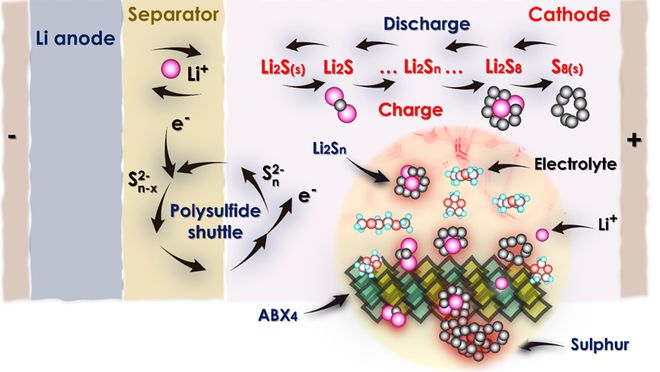
Core Insights - A research team from Tianjin University, in collaboration with Shanghai Jiao Tong University and other institutions, has predicted a new class of two-dimensional topological disulfide monolayer materials (HfTiTe4, ZrTiTe4, and HfZrTe4), providing significant theoretical support for the development of high-performance battery technologies [1][3] Group 1: Material Properties - The new two-dimensional materials exhibit rich lithium and sodium ion storage sites and ultra-fast ion transport capabilities, significantly enhancing battery fast-charging performance [3] - The theoretical capacity for lithium ion storage in these materials is 1.60 Ah per gram, while for sodium ions, it is 1.35 Ah per gram [3] - The diffusion barriers for ions in the materials are low, at 0.206 eV for lithium and 0.046 eV for sodium, outperforming many existing two-dimensional materials [3] Group 2: Stability and Efficiency - The materials possess unique chemical properties and adsorption capabilities that effectively stabilize polysulfides, mitigating the "shuttle effect" and improving battery cycle stability and charging efficiency [3] - They maintain good thermal stability and kinetic performance across a wide temperature range from room temperature to approximately 227°C, making them suitable for high-temperature applications in electric vehicles and industrial energy storage systems [4]