钠硫电池

Search documents
抢占光储新机遇、拓展能源新商机2026年光伏储能广州博览会9月16-18日盛情开启
Sou Hu Cai Jing· 2026-01-11 07:51
Group 1: Industry Overview - The Chinese photovoltaic industry continues to innovate and advance technologically, promoting the healthy development of the sector and facilitating the construction of distributed photovoltaic power generation and solar power plants [2] - China has established a significant position in the global photovoltaic market, achieving remarkable success domestically while showcasing strong competitiveness internationally [2][4] - The 2026 World Solar Photovoltaic and Energy Storage Industry Expo in Guangzhou is actively booking exhibition spaces, highlighting the industry's growth and opportunities [2] Group 2: Technological Advancements - Rapid advancements in photovoltaic technology have led to a substantial decrease in solar power generation costs and significant efficiency improvements, with breakthroughs in multi-crystalline, mono-crystalline, PERC, TOPCon, and HBC technologies [4] - The development of distributed photovoltaic applications, such as rooftop and agricultural solar power, has diversified energy solutions for urban and rural residents [4] Group 3: Market Development - The construction of photovoltaic power plants is accelerating nationwide, with innovative models like large ground-mounted stations and complementary fishing and agriculture projects enhancing land resource utilization and stimulating local economic growth [4] - Guangdong Province has emerged as a key area for distributed photovoltaic development, supported by favorable sunlight conditions and government policies [4] Group 4: Energy Storage and Policy Support - Advances in energy storage technologies, including lithium and sodium-sulfur batteries, have effectively addressed the intermittency issues of photovoltaic power generation, enhancing stability and reliability [6] - The Chinese government plays a crucial role in the rapid development of the photovoltaic industry through subsidies, tax incentives, and green finance, facilitating the research and application of photovoltaic technologies [6] Group 5: Challenges and Future Outlook - Despite significant achievements, the Chinese photovoltaic industry faces challenges such as international trade friction, raw material price fluctuations, and pressure for technological iteration, necessitating continuous improvement in competitiveness [8] - The successful hosting of the 2026 World Solar Photovoltaic and Energy Storage Industry Expo will provide a platform for industry collaboration and showcase the strength and potential of the Chinese photovoltaic sector [8]


国内外科研单位联合筛选出新型高性能电池材料
Xin Hua Wang· 2025-11-06 01:17
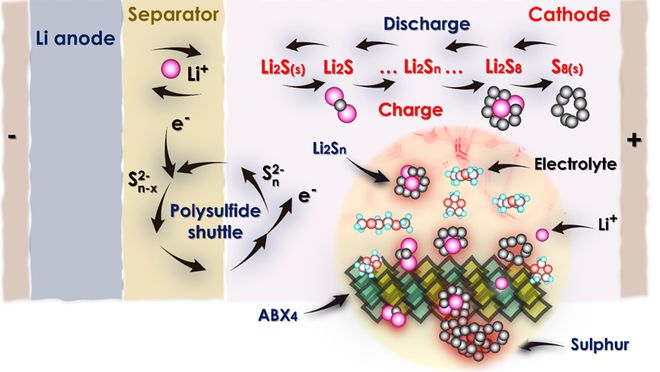
Core Viewpoint - The rapid development of energy storage technology has led to the identification of new high-performance battery materials, which address challenges faced by traditional battery materials in energy storage capacity, charging speed, and cycle longevity [1][2]. Group 1: New Battery Materials - A collaborative research team from various institutions, including Tianjin University and Shanghai Jiao Tong University, has predicted a new class of two-dimensional topological disulfide monolayer materials (HfTiTe4, ZrTiTe4, and HfZrTe4) through theoretical calculations [1]. - These new materials exhibit potential in fast charging performance, cycle stability, and thermal stability, making them suitable for applications in portable electronic devices, electric vehicles, and large-scale energy storage systems [1][2]. Group 2: Performance Enhancements - As anode active materials, these new materials provide abundant lithium and sodium ion storage sites and ultra-fast ion transport capabilities, significantly enhancing the fast charging performance of batteries [2]. - When used as a sulfur cathode material carrier, these materials are expected to greatly extend the cycle life of the cathode and optimize its fast charging performance [2]. Group 3: Stability and Efficiency - The new two-dimensional materials possess unique chemical properties and adsorption capabilities that can effectively "capture" polysulfides, preventing them from affecting battery stability and charging efficiency [2]. - The materials maintain good thermal and kinetic performance across a temperature range from room temperature to approximately 227°C, supporting applications in high-temperature scenarios such as outdoor driving of new energy vehicles and industrial energy storage systems [2].
天津大学等国内外科研单位筛选出新型高性能电池材料
Xin Hua She· 2025-11-05 10:02
Core Insights - The article discusses the development of new high-performance battery materials by a collaborative research team from various institutions, addressing challenges faced by traditional battery materials in energy storage technology [1][2]. Group 1: New Battery Materials - A new class of two-dimensional topological disulfide monolayer materials (HfTiTe4, ZrTiTe4, and HfZrTe4) has been predicted through theoretical calculations, showing potential in fast charging performance, cycling stability, and thermal stability [1][2]. - These materials can significantly enhance the fast charging capabilities of battery anodes due to their abundant lithium and sodium ion storage sites and ultra-fast ion transport capabilities [2]. Group 2: Performance Enhancements - The new materials are expected to improve the cycling lifespan of sulfur cathodes and optimize their fast charging performance when used as sulfur cathode material carriers [2]. - The materials exhibit low resistance to ion movement, which contributes to their outstanding electrochemical performance when used in battery anodes [2]. Group 3: Stability and Thermal Resistance - The new materials possess unique chemical properties and adsorption capabilities that can effectively "capture" polysulfides, preventing them from affecting battery stability and charging efficiency [2]. - They maintain good thermal and kinetic performance across a temperature range from room temperature to approximately 227°C, making them suitable for high-temperature applications in electric vehicles, industrial energy storage systems, and high-power portable electronic devices [2].