Zsiga手办

Search documents
泡泡玛特遭公募减持 机构把脉新消费机会
Zhong Guo Zheng Quan Bao· 2026-01-25 21:03
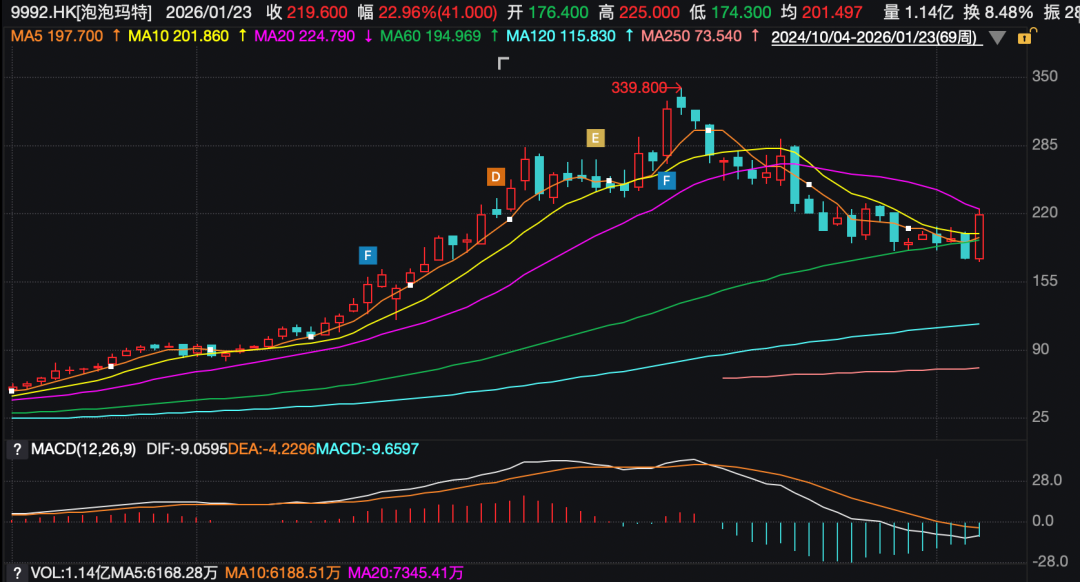
Core Insights - The recent rebound of Pop Mart's stock price, which surged nearly 23% to a market capitalization of over HKD 294.6 billion, is attributed to stock buybacks, the popularity of the "electronic wooden fish," and the launch of a co-branded trendy toy phone [1] - Despite the rebound, public funds have shown a net reduction in holdings of Pop Mart, indicating mixed sentiment among institutional investors [1][2] - The overall trend shows a significant decrease in the number of funds heavily invested in Pop Mart, from 160 to 107, highlighting a clear withdrawal of institutional capital [2] Institutional Investment Trends - In Q4 2025, institutional holdings of Pop Mart decreased from 43.82 million shares to 34.25 million shares, with a total market value decline of nearly 45% [1][2] - Some funds, such as Ruifeng Fund and Fuguo Fund, have increased their positions in Pop Mart, indicating a divergence in investment strategies among institutions [2] - Notable increases in holdings include Ruifeng's addition of 2.45 million shares and other funds also making significant purchases [2] Market Sentiment and Consumer Behavior - Investor sentiment remains cautious, with concerns about the sustainability of demand for Pop Mart's products, particularly among younger consumers [3] - The founder of Pop Mart emphasizes the company's identity as an IP company, suggesting that the value lies in aesthetic and emotional appeal rather than practicality [3] - The popularity of products like the "electronic wooden fish" reflects a shift in consumer values, where emotional connection and cultural relevance are prioritized [3][4] Future Outlook for New Consumption Sector - Despite recent challenges, many investment institutions remain optimistic about the new consumption sector, anticipating a transition from toy companies to IP ecosystem operators by 2026 [5] - The outlook suggests potential for significant growth if macroeconomic conditions improve and companies effectively execute their strategies [5] - The Hong Kong stock market is viewed as undervalued, with expectations for a recovery in consumer demand supported by policy initiatives [5]

“电子木鱼”火爆全网,泡泡玛特止跌了吗?
Zhong Guo Zheng Quan Bao· 2026-01-25 12:13
Group 1 - After four consecutive months of decline, Pop Mart experienced a strong rebound, with its stock price rising nearly 23% from January 19 to 23, bringing its total market value back to HKD 294.6 billion [1] - The stock price of Pop Mart reached a historical high of HKD 339.8 per share at the end of August 2025, with a total market value exceeding HKD 400 billion, but subsequently fell nearly 30% in the fourth quarter of 2025 due to concerns over the decline in IP popularity [3] - Institutional funds significantly reduced their holdings in Pop Mart in the fourth quarter of 2025, with the number of shares held by public funds decreasing from 43.82 million at the end of the third quarter to 34.25 million at the end of the fourth quarter, a reduction of 9.57 million shares [4] Group 2 - Despite the reduction in institutional holdings, some funds increased their positions in Pop Mart during the fourth quarter of 2025, such as Ruiyuan Fund and Invesco Great Wall, which added 2.45 million and over 230,000 shares respectively [4] - The founder of Pop Mart, Wang Ning, emphasized that the company is an IP company, and the blind box concept is merely an enhancement, with the core value lying in aesthetics and emotional connection rather than practicality [6] - Investment institutions remain optimistic about the new consumption sector, with expectations that companies like Pop Mart will evolve into IP ecosystem operators, focusing on diversified IP development and expansion into overseas markets by 2026 [8] Group 3 - The Hong Kong stock market is currently at a historically low valuation, providing a safety margin for both non-essential and essential consumer sectors, which are expected to attract investment as economic recovery continues [9] - The sentiment in the market is cautious, with a longer observation period required for transformation companies, which has affected the valuation recovery process [8] - The overall outlook for the new consumption sector is positive, with potential for long-term value release over the next two years as the macroeconomic environment stabilizes [8][9]