
baijiu

Search documents
The 24th China International Alcoholic Drinks Expo Kicks Off in Luzhou, China's "City of Liquor"
Globenewswire· 2026-03-23 10:45
Core Insights - The 24th China International Alcoholic Drinks Expo was held from March 19 to 22, 2026, in Luzhou, Sichuan Province, with Thailand as the Guest Country of Honor [1][4] Industry Overview - The expo covered over 80,000 square meters, featuring exhibitors from nearly 50 countries and regions, with participation from over 1,000 enterprises and more than 10,000 products [4] - The exhibition included six major categories of alcoholic drinks: baijiu, beer, wine, huangjiu, fruit and liqueur-based spirits, and international distilled spirits [4] - A dedicated section for digital and intelligent innovation showcased the application of artificial intelligence in the liquor industry [4] Cultural Exchange - The Thailand Pavilion highlighted distinctive alcoholic products such as Chang beer, Singha beer, Thai whisky, and traditional rice wine, along with authentic Thai foods and cultural performances [4] - The event aimed to foster two-way exchange and win-win cooperation between Chinese and international liquor sectors [4] Economic Impact - The expo served as a platform for global dialogue, positioning Luzhou as an increasingly international place of origin for liquor [5] - It facilitated participation from nearly 50 enterprises and purchasers from renowned overseas producing regions, alongside more than 20 multilateral and bilateral trade and investment promotion events [5] Historical Significance - Luzhou is recognized for its exceptional baijiu craftsmanship, with traditional brewing techniques dating back over 700 years [6] - The event has evolved from the inaugural "Luzhou Famous Liquor Festival" in 1987 into a significant international expo, reflecting the industry's narrative of preservation and innovation [7]
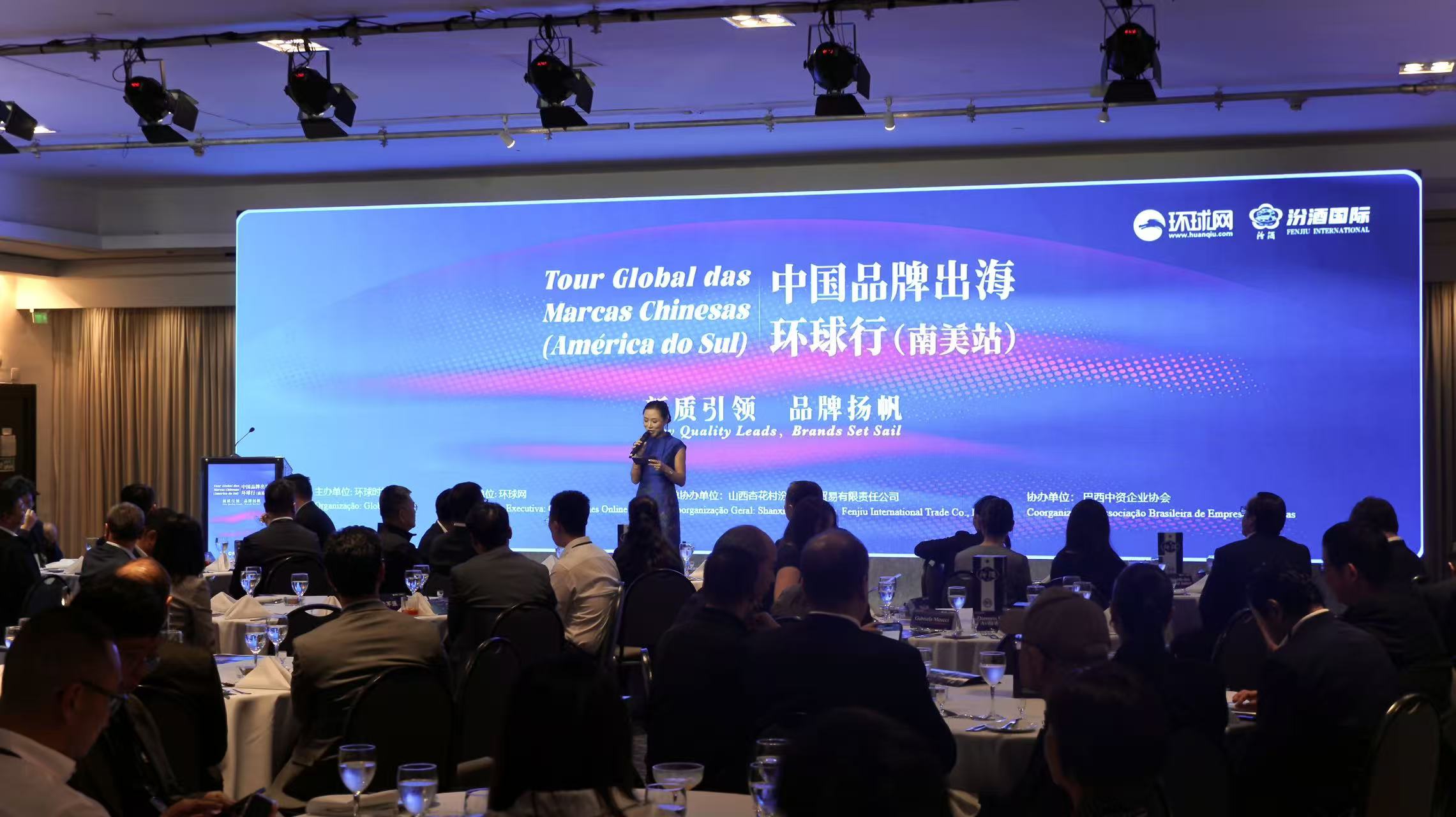
Tour Global das Marcas Chinesas (América do Sul) 2026 é realizada em São Paulo, Brasil
Globenewswire· 2026-03-16 02:53
Core Insights - The "Global Tour of Chinese Brands - South America" event was held in São Paulo, Brazil, on March 10, 2026, focusing on sustainable growth and cooperation opportunities between China and Brazil [1][9] - The event served as a platform for Chinese brands to deepen mutual trust and pursue joint development with Brazilian companies [3] - The Global Times, with over 330 million global users, acts as a bridge for Chinese brands to authentically connect with international markets [4] Group 1: Event Overview - The event was organized by the Global Times and aimed to facilitate open exchanges between Chinese brands and global markets [9] - It featured discussions among diplomats and business leaders from both countries on sustainable growth paths [1] Group 2: Brand Engagement - Li Dongcheng emphasized the need for Chinese brands to establish local supply chains and understand consumer behavior in Brazil [5] - Fenjiu, a traditional Chinese baijiu producer, showcased its long-standing connection with the Americas and launched new products during the event [6] Group 3: Market Insights - The District of Tongzhou in Beijing presented urban development opportunities through promotional videos and exhibitions [8] - Brazilian entrepreneur Admar Pereira expressed hopes for more Chinese brands entering the Brazilian market and highlighted the importance of understanding local consumer needs [8]


Diageo 1H26 Earnings Ready to Unfold: What Are the Chances of a Beat?
ZACKS· 2026-02-18 17:31
Core Insights - Diageo Plc (DEO) is set to release its interim results for the first half of fiscal 2026 on February 25, facing challenges in North America and Asia Pacific, while showing strong performance in Europe, Latin America, and Africa [1][10] Group 1: Performance Overview - Diageo's first-quarter organic net sales were broadly flat despite positive volume growth, indicating regional and category shifts, particularly weakness in Chinese white spirits and softer U.S. spirits demand [2][3] - The company has experienced significant declines in key markets, especially in North America and Greater China, due to soft consumption trends and increased promotional intensity [3][4] - Management has indicated that fiscal 2026 performance will be weighted towards the second half, with expectations of weak organic net sales and operating profit trends in the first half [5][6] Group 2: Regional Performance - The Asia Pacific region has faced the most pressure, particularly in Greater China, where declines in baijiu consumption have negatively impacted performance [4] - Positive trends in India are expected to partially offset weaknesses in the Asia Pacific region [4] - In Europe, strong momentum in Guinness and resilient execution have contributed positively, despite a subdued spirits backdrop [8] - Latin America is benefiting from stabilizing consumer environments in Brazil and Mexico, with positive price/mix trends aiding results [9] Group 3: Market Trends and Valuation - Diageo has been experiencing solid business momentum, strong consumer demand, and market share gains, particularly in the spirits category [7] - The company's shares have risen by 9.1% over the past three months, outperforming the S&P 500 index's growth of 3.2% [10] - Diageo's forward 12-month P/E multiple is 14.88X, which is below the industry average of 16.89X and the S&P 500's average of 22.51X, indicating a relatively cheap valuation compared to the industry [14]


X @The Economist
The Economist· 2025-12-14 16:00
For decades Moutai and other Chinese spirit-makers have tightly controlled supply and prices of baijiu. But market shifts have left distributors with mounting stocks that they are eager to sell https://t.co/zIgsqN4q28 ...
X @The Economist
The Economist· 2025-12-13 12:20
The baijiu business is the latest to be struck by involution, a phenomenon where gluts in goods leads to vicious price-cutting https://t.co/Z26GOw8SWw ...
X @The Economist
The Economist· 2025-12-11 13:10
The baijiu business is the latest to be struck by “involution” https://t.co/V0lPuyU4gD ...
Alcohol Stocks Take $830 Billion Hit as Drinking Habits Change
Yahoo Finance· 2025-10-30 20:00
Core Insights - The global beer, wine, and spirits industry has experienced a significant decline, with a total market value loss of $830 billion over the past four years, representing a 46% drop from its peak in June 2021 [1][2]. Industry Challenges - Shifting drinking patterns and rising health concerns are negatively impacting earnings, alongside external factors such as US tariffs, high interest rates affecting consumer spending, and elevated commodity prices [2][3]. - In China, weak household confidence and a ban on alcohol for official functions have further contributed to the industry's downturn [2][4]. Company Performance - Major companies like Diageo, Pernod Ricard, and Remy Cointreau have seen their stock prices hit decade-low levels, while Kweichow Moutai is trading over 40% below its 2021 high [4][5]. - The industry is facing pressure not only from declining revenues but also from high levels of debt and management turnover as companies adapt to changing market dynamics [5]. Changing Consumer Behavior - A Gallup survey indicates that US alcohol consumption has reached its lowest level since 1939, influenced by health warnings from organizations like the World Health Organization and changing preferences among younger generations [6][8]. - The trend of celebrities promoting non-alcoholic beverages and the rise of alternatives such as cannabis and weight-loss drugs are further impacting traditional alcohol sales [7][8].