
household goods

Search documents
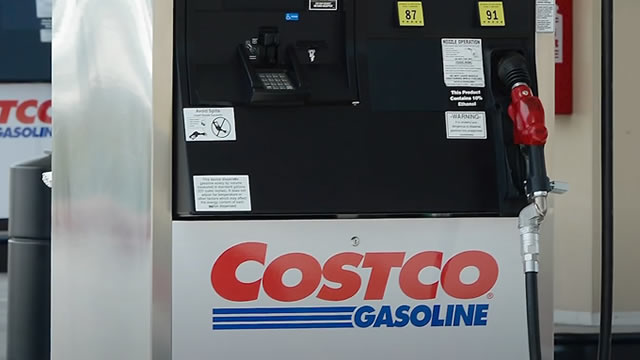
Jim Cramer on Costco: “This One Is What You Buy in This Environment”
Yahoo Finance· 2026-03-31 16:36
Group 1 - Costco Wholesale Corporation (NASDAQ:COST) is viewed positively by analysts, with Jim Cramer recommending it as a stock to buy in the current economic environment, highlighting its resilience amidst broader market challenges [1][3] - The company operates membership warehouses and offers a wide range of products including groceries, fresh food, household goods, electronics, and services through pharmacies, gas stations, and e-commerce [3] - Cramer emphasizes that Costco, along with Walmart, represents strong investment opportunities during difficult economic times, suggesting that the company is positioned to be a significant winner [1]

How an MBA internship led Mitsubishi to e-commerce platform Yami—and into the U.S. snacks market
Fortune· 2026-03-20 07:00
Core Insights - Mitsubishi Shokuhin, Japan's largest food wholesaler, is forming a strategic partnership with Yami to enhance access to U.S. consumers for its Japanese food and beverage brands [3][5] - The partnership aims to leverage Yami's e-commerce platform, which caters to Asian Americans and the broader Asian diaspora, allowing Mitsubishi Shokuhin to bypass traditional retail challenges [4][5] Company Overview - Mitsubishi Shokuhin generated approximately 2.1 trillion yen ($14 billion) in revenue in its last fiscal year and supplies a wide range of food products to around 3,000 retailers in Japan [3][6] - The company was fully privatized by Mitsubishi Corporation in a tender offer worth 137.6 billion yen (about $950 million) to accelerate overseas expansion [7] Market Context - Japan experienced a tourism boom, welcoming a record 42.7 million foreign visitors in 2025, who spent 9.5 trillion yen (about $60 billion), creating demand for Japanese products abroad [8] - Japan's exports of agricultural and food products reached a record 1.7 trillion yen in 2025, with significant increases in beef, rice, and green tea exports [8] E-commerce Landscape - Yami, founded by Alex Zhou, has grown to nearly $100 million in revenue within three years without outside funding and has raised institutional capital, including a $50 million Series B round [10][11] - The platform serves close to four million registered customers and has seen a growing interest from non-Asian shoppers in Asian products [11][13] Strategic Implications - The partnership with Yami allows Mitsubishi Shokuhin to directly reach millions of consumers online, enhancing its market presence in the U.S. [5] - Platforms like Yami can transform one-time souvenir purchases into ongoing demand for Japanese products, aligning with Mitsubishi Shokuhin's goals [9]


UBS Cuts BJ’s Wholesale Club Holdings, Inc. (BJ) Target to $117 After Q4 Earnings Review
Yahoo Finance· 2026-03-15 18:56
Core Insights - BJ's Wholesale Club Holdings, Inc. is recognized as one of the top-performing consumer staples stocks in February, with UBS adjusting its price target to $117 from $120 while maintaining a Buy rating [1][8] Financial Performance - For the fourth quarter, BJ's reported a 1.6% increase in comparable club sales and a 2.6% increase in comparable sales excluding gasoline [2] - Membership fee income increased by 10.9% year-over-year to $129.8 million, driven by strong membership acquisition and retention [2] - The company maintained a 90% renewal rate among long-tenured members during the fiscal year [3] - Digital sales channels experienced significant growth, with digitally enabled comparable sales rising by 31%, leading to a two-year stacked increase of 57% [3] - Earnings for the quarter were reported at $0.96 per diluted share [3] Annual Results - For the full fiscal year, BJ's net income reached $578.4 million, an increase from $534.4 million the previous year, while adjusted EBITDA rose to $1.16 billion [4] - The company engaged in share repurchases under its buyback program and provided fiscal 2026 guidance indicating moderate comparable sales growth and ongoing investment in expansion [4] Business Model - BJ's operates membership-based warehouse clubs in the U.S., offering a range of products including bulk groceries, household goods, electronics, and private-label items, focusing on value and exclusive member savings [5]

BMO Sees Costco Wholesale Corporation (COST) as Stable Bet in Volatile Retail Sector
Yahoo Finance· 2026-03-12 20:29
Group 1 - Costco Wholesale Corporation (COST) is identified as one of the best economic recovery stocks to buy now [1] - BMO Capital raised its price target for COST to $1,315 from $1,175, maintaining an Outperform rating, highlighting the company's strong Q4 results and stable performance in Q2 [2] - For the first 24 weeks of fiscal year 2026, Costco reported net sales of $134.22 billion, an increase of 8.7%, while quarterly net sales rose 9.1% to $68.24 billion compared to $62.53 billion the previous year [3] Group 2 - The net income for the quarter was $2.035 billion, or $4.58 per diluted share, up from $1.788 billion, or $4.02 per diluted share, in the previous year [4] - For the first 24 weeks, net income increased from $3.59 billion, or $8.06 per diluted share, to $4.04 billion, or $9.08 per diluted share [4] - Costco operates 924 warehouses globally and supports e-commerce activities in several countries, indicating ongoing expansion in both physical and online channels [4][5]
A Costco shopper is suing, saying members deserve a slice of any tariff refunds
Business Insider· 2026-03-12 15:33
Core Viewpoint - A Costco member is seeking repayment for tariff refunds that the company may receive from a lawsuit against US Customs and Border Protection, raising concerns about "double recovery" for the same unlawful tariff burden imposed by former President Trump's tariffs [1][2][3]. Group 1: Legal Action and Claims - The lawsuit filed by Matthew Stockov claims that Costco could receive refunds from both the government and its customers for the same tariff-related expenses [2][3]. - Stockov alleges that he paid higher prices for various tariffed items, including electronics and household goods, due to these tariffs [6]. - The suit argues that Costco's plan to return value through lower prices for future shoppers does not constitute proper restitution for past customers who were affected by the tariffs [7]. Group 2: Company Response and Financial Implications - Costco CEO Ron Vachris has stated that the company intends to pass along any refunds received through lower prices and better values for members [6]. - The complexity of tracing the item-level impact of tariffs has been highlighted, making it challenging for the company to address the concerns of affected members [7]. - Costco has indicated that it plans to issue refunds pending future guidance from the government and the court regarding the tariff charges [8].
Florida carrier with 57 drivers files for Chapter 11 bankruptcy
Yahoo Finance· 2026-02-24 21:26
Company Overview - Standard Freight Logistics Inc., based in St. Augustine, Florida, has filed for Chapter 11 bankruptcy protection, listing estimated assets between $100,000 and $500,000 and liabilities between $500,000 and $1 million [1] - Founded in 2007, the company employs 57 drivers and operates 49 power units, carrying a variety of commodities including general freight, household goods, metal sheets, motor vehicles, and fresh produce [2] Financial and Operational Performance - The company reported 702,000 miles in 2023 according to its most recent FMCSA filing [2] - Over the past 24 months, the carrier underwent 47 total inspections in the U.S., with a vehicle out-of-service rate of 57.7%, significantly above the national average of 22.26% [3] Industry Context - The bankruptcy filing reflects a trend among small- to midsize trucking firms seeking court protection due to prolonged freight market softness, elevated insurance costs, and tighter safety scrutiny impacting carrier balance sheets in early 2026 [4] - The filing indicates the company intends to maintain its status as an active motor carrier while restructuring [3]
Are Wall Street Analysts Bullish on Costco Wholesale Stock?
Yahoo Finance· 2026-02-09 14:51
Core Viewpoint - Costco Wholesale Corporation has shown mixed performance in the market, with a notable decline over the past year but a strong year-to-date performance, indicating potential resilience and growth opportunities in the retail sector. Financial Performance - For Q1, Costco reported total revenue of $67.3 billion, reflecting an 8.3% year-over-year increase, driven by new warehouse openings, higher membership fees, productivity improvements, and increased digital tool usage [4] - The net income per share for the quarter was $4.50, marking an 11.4% increase from the same quarter last year [4] Market Performance - Over the past 52 weeks, Costco's shares have declined by 4.7%, while the S&P 500 Index has increased by 14% [2] - Year-to-date, Costco's stock has risen by 16.1%, outperforming the S&P 500's 1.3% increase [2] Analyst Ratings and Expectations - For fiscal 2026, analysts project Costco's EPS to grow by 12.2% year-over-year to $20.18 [5] - The consensus rating among 35 analysts is a "Moderate Buy," with 19 "Strong Buy," 4 "Moderate Buy," 11 "Hold," and 1 "Strong Sell" rating [5] - D.A. Davidson analyst Michael Baker has maintained a "Hold" rating with a price target of $1,000, while the mean price target of $1,058.32 suggests a 5.7% premium from current levels [8]
Jim Cramer Says “I Want You to Stay With Costco, I Still Like It”
Yahoo Finance· 2026-01-28 17:52
Group 1 - Costco Wholesale Corporation (NASDAQ:COST) is currently trading at a high valuation, approximately 50 times earnings, which raises concerns about its stock price being too "rich" for new investments [1] - The company's re-up rate, which indicates customer retention and repeat purchases, is not as strong as desired, despite the stock experiencing a bounce [1] - Costco operates membership warehouses offering a wide range of products and services, including groceries, fresh food, household goods, electronics, pharmacies, gas stations, optical centers, and e-commerce options [2] Group 2 - There is a belief that certain AI stocks may present greater upside potential and carry less downside risk compared to Costco, suggesting a shift in investment focus for some investors [3]
Jim Cramer Says “Costco, I Like It”
Yahoo Finance· 2026-01-13 14:06
Company Overview - Costco Wholesale Corporation (NASDAQ:COST) operates membership warehouses providing a variety of products including groceries, fresh food, household goods, electronics, and more [2] Recent Performance - Costco's stock performance was unsatisfactory last year, declining by 6% while the S&P 500 increased by 16% [1] - The company faced challenges including the departure of long-standing CFO Richard Galanti, who had been with the company for over 38 years [1] - Renewal rates for memberships have slowed, growing less than market expectations [1] Market Position - Despite past performance issues, there is a shift in sentiment as the new year has brought a different outlook for Costco's stock [1]
RBC Reduces Target (TGT) Valuation After In-Line Results and Updated Model
Yahoo Finance· 2025-12-06 19:20
Core Insights - Target Corporation (NYSE:TGT) is facing challenges due to customers reducing discretionary spending amid elevated inflation, impacting its core categories like housewares and apparel [3] - The company has announced plans to eliminate 1,800 corporate jobs to regain growth after approximately four years of stagnant sales [4] - Despite these challenges, Target's digital sales are performing well, with a 2.4% increase in digital comparable sales and a 35% rise in same-day services linked to its membership program [5] - Target has a strong history of dividend payments, having increased its dividends for 54 consecutive years [5] Financial Performance - RBC Capital has lowered Target's price target from $107 to $99 while maintaining an Outperform rating, indicating that the company's results were largely in line with expectations [2] - The firm noted that initiatives discussed could help Target return to growth, although the path appears long and the level of reinvestment required remains unclear [2] Company Overview - Target Corporation is a large American retailer offering a wide variety of products, including groceries, clothing, electronics, and household goods, through both physical stores and an online platform [6]
