nova15

Search documents
手机涨价,华为苹果为啥不涨?
36氪· 2026-03-26 10:14
Core Viewpoint - The current price increase in the smartphone industry is a result of a shift from competing on hardware and scale to competing on supply chain, ecosystem, and long-term value [4][67]. Group 1: Price Increase Dynamics - Major brands like Xiaomi, OPPO, vivo, and Honor are signaling price increases for mid-range phones by 300 to 500 yuan and flagship models by 1000 to 2000 yuan [6][7]. - The price of storage chips, particularly DRAM and NAND flash, has surged, with DRAM contract prices increasing by 90% to 95% and NAND flash by 55% to 60% in early 2026 [20]. - The cost of storage chips in a typical mid-range Android phone has risen from approximately 300 yuan to 500-600 yuan, increasing its cost share from 12% to over 20% [20]. Group 2: Factors Behind Price Increases - The demand for storage chips has been drastically altered by the explosive growth of AI servers, which require significantly more memory than standard servers [22][23]. - Major storage manufacturers have redirected over 80% of their advanced production capacity to AI server-specific storage, leading to a severe shortage for mobile devices [24]. - The rising costs of raw materials like copper and aluminum, along with the global AI infrastructure expansion, have further exacerbated the situation [26]. Group 3: Apple and Huawei's Pricing Strategies - Apple has managed to lower the price of the iPhone 17e by 1000 yuan compared to the iPhone 16e, leveraging its massive global procurement scale to negotiate lower prices with suppliers [8][33]. - Apple's self-developed components, such as the C1X baseband, allow it to reduce costs compared to purchasing from third-party suppliers like Qualcomm [36]. - Huawei is not increasing prices due to its self-developed technologies, which help mitigate external cost pressures, and its procurement of domestic components at lower prices [45][49]. Group 4: Market Positioning and Strategy - Huawei aims to enhance its market reputation and user loyalty rather than focusing solely on short-term profits, with a goal of selling 70 million phones in 2026 [50][56]. - Both Apple and Huawei are strategically positioned to maintain or lower prices while other brands are forced to increase them due to weaker supply chain management [57][58]. - The smartphone market is expected to see a significant shift, with lower-end models potentially disappearing or being severely downgraded due to increased component costs [60].


聚焦“高精尖”· “20CM”高弹性|科创芯片ETF华宝(589190)今起全“芯”上市!
Xin Lang Cai Jing· 2026-01-27 01:32
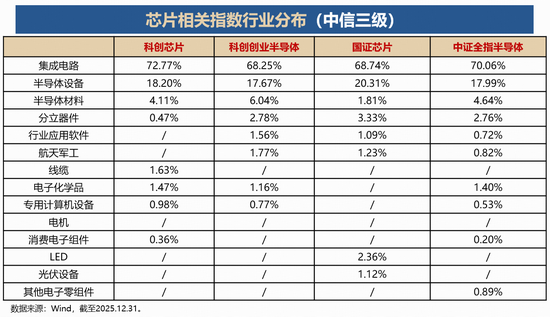
Core Insights - The "14th Five-Year Plan" emphasizes extraordinary measures to achieve decisive breakthroughs in key core technologies across various sectors, including integrated circuits and artificial intelligence [1][2] - The launch of the Huabao Science and Technology Chip ETF (589190) aims to provide investors with opportunities to engage in the domestic chip industry, tracking the Shanghai Stock Exchange Science and Technology Chip Index [1][2] Industry Overview - The chip industry is a core battleground for major countries, with the Huabao Science and Technology Chip ETF tracking an index that includes 50 companies involved in semiconductor materials, design, manufacturing, packaging, and testing [2][14] - As of December 2025, the index's components focus on upstream and midstream sectors, with nearly 80% in chip design and semiconductor materials and equipment [2][15] Performance Metrics - The Shanghai Stock Exchange Science and Technology Chip Index has shown a significant annualized return of 17.93% from December 31, 2019, to December 31, 2025, outperforming similar indices [5][17] - The index's maximum drawdown during the same period was -56.81%, which is better than other comparable indices [5][17] Key Holdings - The top three holdings in the index are SMIC (10.36%), Haiguang Information (10.05%), and Cambricon (9.45%), with a weight limit of 10% for individual stocks [3][16] - The index includes a diverse range of companies, with a significant focus on integrated circuit manufacturing [3][16] Financial Highlights - The net profit of the index's constituent companies surged by 94.22% in the first three quarters of 2025, leading among similar indices [7][17] - R&D investment for these companies reached 119.745 billion yuan, with a research intensity of 11.22%, significantly higher than the overall A-share market [7][17] Fund Management - As of January 26, 2026, Huabao Fund's equity ETF assets reached 139.8 billion yuan, ranking 9th in the industry [19] - The fund has established a comprehensive ETF matrix covering AI and technology sectors, with the Science and Technology Chip ETF being a crucial addition [19]



聚焦“高精尖”·20CM“大长腿”|科创芯片ETF华宝(589193)今起“芯”动首发!
Xin Lang Cai Jing· 2025-12-30 00:44
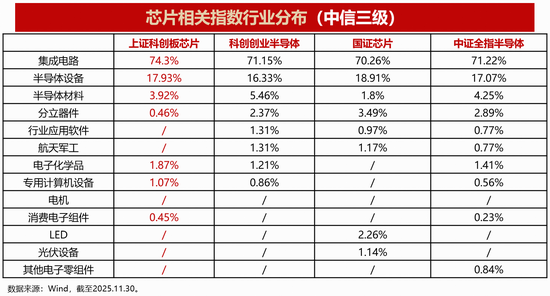
Core Viewpoint - The "14th Five-Year Plan" emphasizes extraordinary measures to drive breakthroughs in key technologies across various sectors, including integrated circuits and artificial intelligence, positioning China's chip industry for significant growth opportunities [1][14]. Industry Overview - The semiconductor industry is a core battleground for major powers, with the newly launched Huabao Science and Technology Chip ETF tracking the Shanghai Stock Exchange's Chip Index, which includes 50 companies involved in semiconductor materials, design, manufacturing, packaging, and testing [2][14]. - As of November 2025, the Shanghai Stock Exchange Chip Index has a significant focus on upstream and midstream sectors, with chip design and semiconductor materials and equipment accounting for 80.48% of the index [15][16]. Performance Metrics - The Shanghai Stock Exchange Chip Index has shown strong performance, with an annualized return of 17.43% from December 31, 2019, to November 30, 2025, outperforming similar indices [5][18]. - The index's maximum drawdown during the same period was -56.81%, which is better than other comparable indices [5][18]. Financial Highlights - The net profit of the index's constituent companies surged by 94.22% in the first three quarters of 2025, leading among similar indices [20]. - Research and development investment for these companies reached 119.7 billion yuan, with a research intensity of 11.22%, significantly higher than the overall A-share market level of 2.16% [20]. Key Holdings - The top three companies in the index by weight are Haiguang Information (10.86%), Cambricon (9.84%), and SMIC (8.87%), with the index capping individual stock weights at 10% [17][16].