Fox Business

Search documents
Berkshire Hathaway to buy Occidental Petroleum's chemicals arm for $9.7B
Fox Business· 2025-10-02 20:35
Core Viewpoint - Occidental Petroleum is divesting its chemicals arm OxyChem to Berkshire Hathaway for $9.7 billion to reduce debt after significant acquisitions [1][5]. Group 1: Transaction Details - The sale of OxyChem marks Occidental's largest divestment to date, aimed at slashing its debt load [1]. - OxyChem generated combined revenue of $2.42 billion in the first half of the year, producing chemicals for swimming pools and medical supplies [3]. - The deal is expected to close in the fourth quarter and will be Berkshire's largest acquisition since its $11.6 billion purchase of Alleghany Corporation in 2022 [3][10]. Group 2: Financial Implications - Analysts have expressed concerns that the sale could negatively impact Occidental's free cash flow growth in the coming years, as OxyChem was anticipated to contribute significantly to expansion [2]. - The transaction price of $9.7 billion is viewed as low compared to previous estimates of OxyChem's value at $12 billion [2]. - Occidental plans to use $6.5 billion of the proceeds from the sale to reduce its debt, aiming to bring total principal debt below the $15 billion target set after the CrownRock acquisition [9]. Group 3: Strategic Focus - The divestment indicates Occidental's strategic refocus on its core oil and gas business, which accounted for 75% of its total earnings last year [10]. - CEO Vicki Hollub stated that the sale would enable the company to "unlock 20-plus years of low-cost resource runway" in oil and gas [11]. Group 4: Background Context - Berkshire Hathaway is Occidental's largest shareholder, having begun acquiring a stake in the company in February 2022 [4]. - The divestment follows Occidental's $55 billion acquisition of Anadarko Petroleum, which left the company with significant debt [5][8].

ETFs are flush with new money. Why billions more are flowing their way
Fox Business· 2025-10-02 19:32
Core Insights - Investors have invested over $900 billion into U.S. exchange-traded funds (ETFs) in 2025, with a net inflow of $917 billion through September 29, indicating a potential record year if the trend continues [1][2][8] - The Securities and Exchange Commission (SEC) is expected to approve dual-share class structures, allowing mutual fund investors to convert to ETFs in a tax-efficient manner, which could further boost ETF inflows [3][6][7] Investment Trends - ETFs have gained popularity due to their tax advantages and efficiency compared to mutual funds, with significant inflows driven by bullish investors seeking diverse investment strategies [2][6] - The total assets in U.S. ETFs reached a record $12.19 trillion by the end of August 2025, up from $10.35 trillion at the end of the previous year [8] Notable Funds and Strategies - Vanguard's S&P 500 ETF (VOO) and BlackRock's iShares Core S&P 500 ETF (IVV) have seen nearly $140 billion in net inflows this year, averaging close to $1 billion per trading day [9] - BlackRock's iShares Bitcoin Trust ETF (IBIT) has emerged as the fastest-growing ETF, attracting nearly $24 billion in 2025, highlighting the demand for innovative investment products [12] Market Dynamics - The shift towards active ETFs has accelerated, with active funds now comprising close to 10% of the market's assets and capturing 37% of total inflows through July 2025 [17] - Financial advisers are increasingly moving away from traditional investment strategies, opting for alternative strategies that offer customization and risk management [16][18]



Major health insurers scaling back Medicare Advantage offerings in 2026
Fox Business· 2025-10-02 15:08
Core Insights - Leading health insurers are scaling back their Medicare Advantage offerings due to anticipated decreases in government reimbursement starting in 2024 [1][5] - The reduction in Medicare Advantage plans is a response to higher-than-expected medical service usage and lower payments related to patients' health conditions [5][6] Company Actions - CVS Health's Aetna will reduce its prescription drug plans by 100 counties in 2026, while Humana will decrease its plan availability to 85% of counties, down from 89% [2][8] - UnitedHealth will cease operations in 109 counties, impacting approximately 180,000 individuals [2][12] - Humana will operate in 46 states in 2026, down from 48, and Aetna will offer plans in 43 states and 2,159 counties, a reduction from 44 states and 2,259 counties [8] Market Dynamics - Insurers are exiting less profitable markets due to funding cuts from the Centers for Medicare and Medicaid Services, rising healthcare costs, and increased service utilization [6][7] - UnitedHealth's decision to shut down over 100 plans will affect around 600,000 members, primarily those enrolled in preferred provider organizations [12] Plan Offerings - Humana plans to introduce new plan types in four states across 177 counties, with 83% of its standalone prescription drug plans in 2026 expected to have decreased premiums [11] - CVS Health aims to expand its offerings for individuals eligible for both Medicare and Medicaid to 16 new states [11]



Government shutdown begins but analysts say markets historically weather disruptions well
Fox Business· 2025-10-02 12:11
Economic Impact of Government Shutdown - A partial government shutdown has begun due to an impasse between Republicans and Democrats over spending levels, creating uncertainty in economic conditions and financial market reactions [1] - Historically, government shutdowns have been short-lived and have had minimal impact on the economy, with investors focusing on corporate earnings and broader economic trends [2][5] - The U.S. has experienced 20 shutdowns in the last 50 years, with an average market drawdown of -1.6% during these periods, and the worst being -6.1% in 1979 [5] - During the longest shutdown from December 2018 to January 2019, the S&P 500 rose over 10%, indicating that macroeconomic factors often outweigh short-term political turmoil [5] Market Reactions and Investor Sentiment - Investors have largely tuned out shutdown drama, viewing it as political posturing rather than a fundamental market risk, although a prolonged shutdown may be perceived differently [8] - There may be heightened market volatility due to seasonal factors and an uncertain macro backdrop, with the dollar and U.S. government bonds typically seeing a boost during past shutdowns [9] - Disruptions to government services could impact parts of the economy, particularly small businesses that rely on government lending and investment programs [10] Historical Performance of S&P 500 - The S&P 500 index has shown a net positive return during the past 10 shutdowns, with a total return exceeding 10% when netted out [13] - If the current shutdown becomes lengthy and economic clarity diminishes, market participants may become less willing to buy, potentially affecting market performance [14]
Nearly 1 in 5 American homes slash prices as buyers gain upper hand in shifting market
Fox Business· 2025-10-02 11:00
Core Insights - Nearly 20% of American homes listed for sale experienced price cuts in September, indicating a shift in market dynamics favoring buyers [1][5] - Price reductions are more prevalent in lower-priced homes, while high-end sellers tend to hold firm on prices due to greater financial flexibility [2][4] Market Trends - The percentage of listings with price cuts remained at 19.9%, consistent with August but showing a slight increase from the previous year [1] - Homes priced between $350,000 and $500,000 saw the largest markdowns at 21.6%, while luxury properties over $1 million had a lower reduction rate of 13.3% [1] Regional Variations - Price cut trends varied by region, with only 14% of listings in the Northeast experiencing reductions, compared to approximately 21% in the South and West [7] - Major metropolitan areas like Denver, Portland, and Indianapolis had the highest rates of price reductions, at 30.7%, 30.2%, and 29.7% respectively [7] Inventory and Selling Dynamics - Active inventory increased by 17% year-over-year in September, maintaining over 1 million homes on the market for five consecutive months, although still 14% below pre-pandemic levels [8] - Homes are taking longer to sell, with the median time on the market rising to 62 days, which is one week longer than last year [10] Price Stability and Market Sentiment - The median list price remained stable at $425,000, unchanged from the previous year but approximately 36% higher than in 2019 [10] - The current housing market reflects a more balanced environment, with price reductions signaling a shift towards a buyer-friendly market [5][11]

Private sector lost 32,000 jobs in September, ADP says
Fox Business· 2025-10-01 13:01
Group 1: Job Market Overview - Private sector companies lost 32,000 jobs in June, which is below economists' expectations of a gain of 50,000 jobs [1] - The previous month's payrolls were revised down from a gain of 54,000 to a loss of 3,000 [1] - Despite strong economic growth in Q2, U.S. employers remain cautious with hiring [2] Group 2: Sector Performance - The education and health services sector gained 33,000 jobs, while leisure and hospitality lost 19,000 positions [3][5] - Other sectors such as natural resources and mining added 4,000 jobs, and information gained 3,000 [3] - Professional and business services lost 13,000 jobs, financial activities shed 9,000, and trade, transportation, and utilities lost 7,000 jobs [5][7] Group 3: Business Size Impact - Large businesses (500 or more employees) added 33,000 jobs, while businesses with 50 to 499 employees lost 20,000 jobs [9] - Establishments with fewer than 50 employees shed 40,000 jobs [9] Group 4: Wage Growth - Wage growth remained little changed, with pay for those staying in their roles climbing 4.5% year-over-year [9] - Pay gains for those remaining in their jobs slowed to 6.6% from 7.1% in August [9] Group 5: Economic Data Release Concerns - The ADP data is released prior to the Labor Department's nonfarm payrolls report, which is expected to show an increase of 50,000 positions [10] - Due to a partial government shutdown, the Labor Department will halt all economic data releases, including jobless claims and nonfarm payrolls data [10] - The Chicago Federal Reserve President indicated that alternate data sources will be considered for the October meeting if official data is not available [11]


Fed president warns inflation is 'going the wrong way' as tariff concerns mount
Fox Business· 2025-10-01 12:35
Core Viewpoint - The Federal Reserve Bank of Chicago President Austan Goolsbee expressed concerns about rising inflation and the potential for tariff-induced price hikes to become a persistent issue, particularly if stagflation occurs [1][3]. Inflation Concerns - Goolsbee highlighted that inflation has recently risen after a period of easing from the 40-year high reached in 2022, which raises concerns for policymakers [2][3]. - He noted that inflation has been above the Fed's target of 2% for over four years, and the recent upward trend is troubling [3][6]. Dual Mandate Challenges - The Fed's dual mandate to maximize employment and stabilize prices presents a dilemma, especially if both inflation and unemployment worsen simultaneously [6][9]. - Goolsbee emphasized that if inflation proves persistent, it would create a challenging scenario for the Fed, complicating its ability to meet its dual mandate [3][6]. Economic Forecasts and Tariffs - Goolsbee introduced the "11% lane" framework to assess the impact of tariff-induced price hikes, noting that goods imports accounted for 11% of U.S. GDP in 2024 [10]. - Concerns were raised about tariffs affecting intermediate goods, which could lead to broader macroeconomic impacts and increased production costs [11][12]. Services Inflation - The trend of rising services inflation could indicate that tariff inflation is not a one-time event, which would heighten concerns for the Fed [13][14]. - Goolsbee expressed that if services inflation continues to rise, it would be difficult to attribute this solely to tariffs, suggesting a more complex inflationary environment [14].

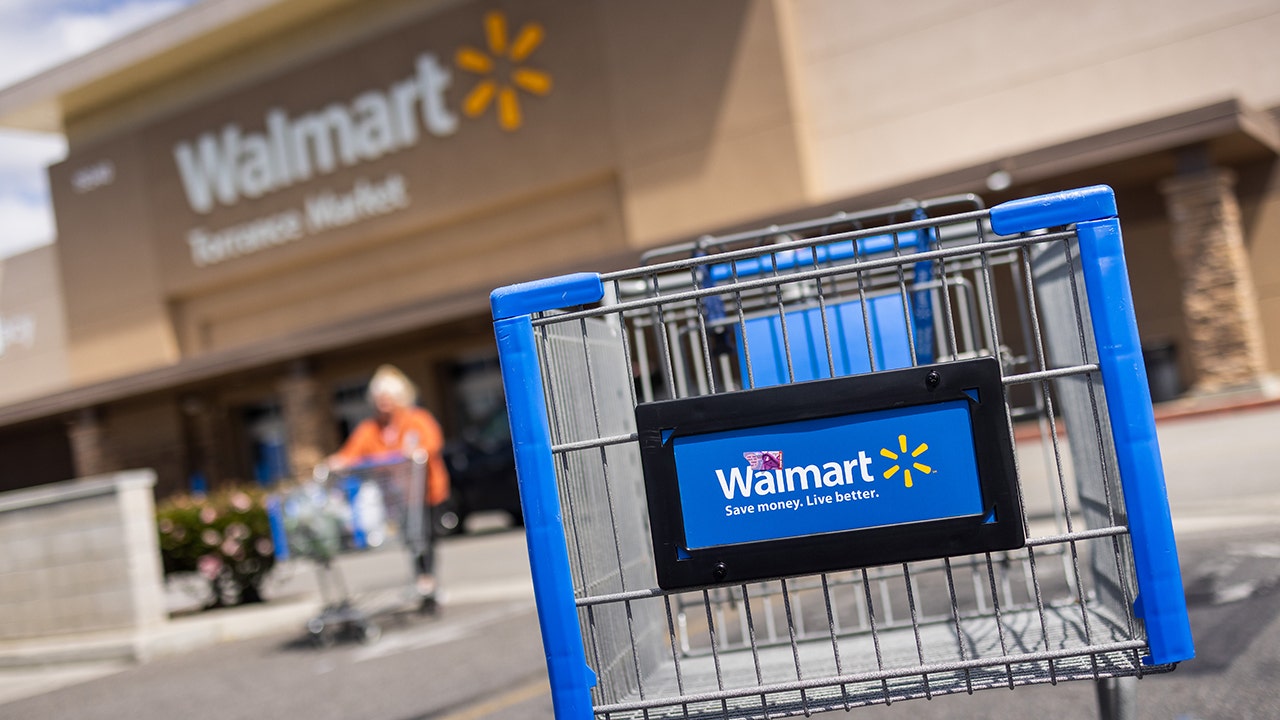
Walmart eliminating synthetic dyes from its private-label food brands
Fox Business· 2025-10-01 12:00
Core Insights - Walmart U.S. is eliminating synthetic dyes and 30 ingredients from its private food labels, marking one of the largest retail brand overhauls in history [1][11] - The changes are driven by customer demand for simpler, more familiar ingredients, as stated by Walmart U.S. CEO John Furner [1][11] - The revamp will affect multiple product categories across over 4,500 stores nationwide [2][11] Product Reformulation - Bakery items, including Marketside cakes, will be reformulated [4] - Great Value cereals, snacks, sports drinks, and dressings will also undergo reformulation [5] Industry Context - The initiative aligns with the Make America Healthy Again (MAHA) movement, which advocates for a ban on artificial dyes [7] - A shopper survey indicated that 54% of consumers check ingredient labels, and 62% desire more transparency in food products [8] Pricing and Market Position - Although the reformulation may lead to higher prices, Walmart believes its scale will help mitigate potential price increases [10] - The Great Value brand is present in 9 out of 10 American households, indicating significant market penetration [11] Competitor Actions - Other major food manufacturers, such as General Mills and Kraft Heinz, are also planning to remove artificial dyes from their products by 2027 [13][14]

Fed's Goolsbee says central bank has other data options if shutdown disrupts economic reports
Fox Business· 2025-09-30 22:01
Chicago Federal Reserve President Austan Goolsbee said Tuesday the central bank will look at alternate data sources to consider at its October meeting if upcoming economic data is not released as scheduled due to a potential government shutdown. The government is slated to shut down at 12:01 a.m. ET on Wednesday if Congress fails to approve a funding extension. The House has passed a continuing resolution, but efforts have stalled in the Senate as Democrats push for continued funding of healthcare subsidies ...

Exxon to slash thousands of jobs in major corporate overhaul and comprehensive restructuring plan
Fox Business· 2025-09-30 17:56
Core Insights - Exxon Mobil is planning to cut 2,000 jobs, which accounts for 3% to 4% of its global workforce as part of a corporate restructuring effort [1][5] - The company is consolidating smaller offices into regional hubs to align its global footprint with its operating model [2][4] - Other oil industry leaders are also implementing cost-cutting measures, with TotalEnergies aiming to save $7.5 billion by 2030 and Chevron having laid off 15% to 20% of its employees [5] Company Strategy - The restructuring plan is part of Exxon's long-term strategy to redesign work processes and improve cost competitiveness [4] - Exxon emphasizes the importance of collaboration and is realigning its operations to support this goal [2][4] Market Reaction - Following the announcement of job cuts, Exxon's shares fell by 1.46%, trading at $112.55 [5]