TechCrunch

Search documents
Meta is offering multi-million pay for AI researchers, but not $100M ‘signing bonuses'
TechCrunch· 2025-06-27 19:02
Core Insights - Meta is offering substantial multi-million-dollar pay packages to attract AI researchers to its new Superintelligence Lab, but claims of $100 million signing bonuses are exaggerated [1][2][3] - The actual compensation structure includes various components, primarily restricted stock unit grants (RSUs), rather than immediate cash bonuses [2][3] - Meta's total pay packages for very senior leaders can reach around $100 million over four years, but this is not standard for all hires [3][5] Company Strategy - Meta is focusing on hiring top talent in the AI field, particularly those with expertise in entertainment AI, aligning with its existing products like Quest VR headsets and AI glasses [3][4] - The company has successfully recruited notable figures from OpenAI, including Lucas Beyer, who confirmed his move to Meta and clarified the misinformation regarding signing bonuses [3][4] - Meta's competitive hiring strategy reflects the tight AI talent market, where even substantial offers can be turned down in favor of opportunities at more prominent startups [5][6] Financial Implications - Meta's investment in AI talent is significant, with reports indicating that it is willing to pay over $100 million for key hires, particularly in the context of acquiring stakes in companies like Scale [5] - The company is distributing $14 billion to shareholders as cash dividends, indicating a robust financial position to support its hiring initiatives [5]



Meta buys over 1 GW of renewables to power its data centers
TechCrunch· 2025-06-27 16:02
Group 1 - Meta has expanded its renewable power portfolio by adding over 1 gigawatt of generating capacity through recent deals [1][2] - The company will purchase 791 megawatts of solar and wind power from Invenergy in Ohio, Arkansas, and Texas, and acquire environmental attributes from two solar farms in Texas totaling 360 megawatts from Adapture Renewables [1][2] - These projects are expected to come online in 2027 and 2028, continuing Meta's trend of significant renewable energy investments [2] Group 2 - Meta's recent renewable energy deals come at a time when subsidies for renewable technologies are being targeted for elimination in legislative discussions [3] - Solar power is identified as the fastest method for data centers to acquire new power, with typical solar farms being completed in about 18 months [3] - Phased construction of solar farms allows for some power generation to begin even sooner than the full completion timeline [3]

Meta in talks to acquire voice cloning startup Play AI
TechCrunch· 2025-06-27 10:38
Core Insights - Meta is looking to enhance its AI capabilities by potentially acquiring Play AI, a voice cloning startup, to integrate voice technology into its offerings [1][3] - Play AI has developed technology that allows users to clone various voices for applications like customer service, and has raised a total of $23.5 million from notable investors [2] - The acquisition would enable Meta to expand its creative suite by adding audio features, complementing its existing chatbot functionalities [3]

Apple updates the rules for its EU App Store by adding more complicated fees
TechCrunch· 2025-06-26 20:38
Core Points - Apple announced updates to its developer policies to comply with the EU's Digital Markets Act (DMA) ahead of the June 26 deadline to avoid fines [1][2] - The updates include new "anti-steering" rules allowing EU app developers to link to alternative payment methods outside the App Store [3] - Apple introduced a new fee structure, replacing the Core Technology Fee (CTF) with an initial acquisition fee of 2% and a store services fee of either 13% or 5% based on developer tiers [4][5] Developer Fee Structure - The new fee structure includes a Core Technology Commission (CTC) that will replace the CTF, with a 5% commission for developers on standard terms in the EU [6][7] - Developers previously paying the CTF of €0.50 per app install after 1 million downloads will transition to the new rules by January 1, 2026 [7] - Tier 1 developers have limited access to App Store services, while Tier 2 developers gain access to more comprehensive tools and features [5] Industry Reaction - Epic Games CEO Tim Sweeney criticized Apple's compliance with the DMA, labeling it as "malicious compliance" and arguing it undermines fair competition in digital markets [8]

Travis Kalanick is trying to buy Pony.ai — and Uber might help
TechCrunch· 2025-06-26 20:10
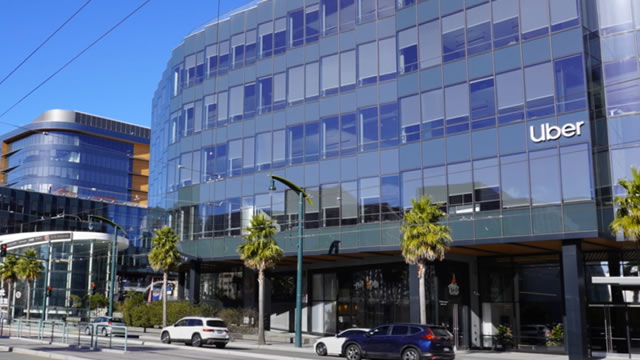
Core Insights - Travis Kalanick, the founder of Uber, is exploring the acquisition of the U.S. arm of Chinese autonomous vehicle company Pony.ai, with potential financial backing from investors and possible assistance from Uber [1][2] - Pony.ai went public last year with a market cap of approximately $4.5 billion and has been preparing its U.S. operations for a sale or spinoff since 2022 [2] - Kalanick's potential acquisition would mark his return to the self-driving vehicle sector after being ousted from Uber in 2017, following a series of controversies including a fatal incident involving an Uber test vehicle [2][3] Company Developments - Under Kalanick's leadership, Uber was initially focused on developing its own autonomous vehicle technology, but after his departure, the company sold its self-driving division to Aurora and shifted to a partnership model with other companies like Waymo [3] - Kalanick has been involved in robotics through his ghost kitchen venture, CloudKitchens, and would continue to manage that business if he acquires Pony.ai [4] - Kalanick expressed that Uber was competitive in the autonomous vehicle space during his tenure, suggesting that the company could have benefited from an autonomous ride-sharing product [5]


Uber has Atlanta's autonomous ride-hailing and delivery market on lock
TechCrunch· 2025-06-26 17:10
Core Insights - Uber Eats has introduced sidewalk delivery robots in Atlanta, enhancing its delivery options for customers [1] - Serve Robotics, a partner of Uber, aims to capitalize on the consumer-facing autonomy market with a significant number of autonomous vehicle trips [2] - Serve's expansion strategy focuses on urban environments rather than college campuses, targeting areas with higher revenue potential [3] Company Developments - Serve Robotics, which became independent from Uber in 2021, is expanding its operations in Atlanta, marking its fourth commercial city [3] - The company plans to increase its fleet from approximately 100 robots in Los Angeles to 2,000 across multiple U.S. cities by the end of 2025 [4] - Uber Eats customers in Atlanta can receive deliveries from various participating restaurants, with service hours from 9 a.m. to 10 p.m. [5]
Rivian cuts dozens on manufacturing team ahead of R2 launch
TechCrunch· 2025-06-26 16:58
Group 1 - Rivian has laid off approximately 140 employees, representing about 1% of its workforce, as part of preparations for the launch of its R2 SUV in 2026 [1] - The layoffs primarily affected Rivian's manufacturing team and were initiated to address "process inefficiencies" [1] - The company confirmed the layoffs and stated that affected employees are encouraged to apply for other positions within the organization [1] Group 2 - At the beginning of the year, Rivian had over 14,800 employees in North America and Europe, as reported in its annual filing with the SEC [2] - The company has implemented multiple workforce reductions in recent years, including a 10% cut in early 2024 and another layoff of around 1% in April 2024 [2]


Elon Musk reportedly fires Tesla's top sales exec
TechCrunch· 2025-06-26 16:50
Core Insights - Tesla's vice president Omead Afshar has been fired by CEO Elon Musk, marking a significant leadership change within the company [1] - Afshar's departure coincides with a notable decline in Tesla's sales, with the company experiencing its first annual drop in car sales since it began mass production of electric vehicles over a decade ago [2] - The company is facing challenges, including a 71% year-over-year decline in profits in Q1 and a nearly 28% drop in European sales year-over-year in May [3] Group 1: Leadership Changes - Omead Afshar was a key executive at Tesla, having joined in 2017 and played a significant role in the construction of Tesla's factory in Austin, Texas [4] - His recent support for Tesla's robotaxi service indicates his involvement in the company's strategic initiatives prior to his dismissal [2] - Following Afshar's exit, Tesla's director of HR for North America, Jenna Ferrua, has also left the company, suggesting potential broader changes in the leadership team [7] Group 2: Sales and Financial Performance - Tesla's sales growth has stalled, with fewer cars sold in 2024 compared to 2023, marking a critical turning point for the company [2] - The company's profits have significantly decreased, with a reported 71% drop year-over-year in the first quarter of 2025 [3] - Upcoming reports on global delivery figures and financial results are expected to provide further insights into Tesla's performance [3]


Meta hires key OpenAI researcher to work on AI reasoning models
TechCrunch· 2025-06-26 16:13
Core Insights - Meta has hired influential OpenAI researcher Trapit Bansal to enhance its AI reasoning models within a new AI superintelligence unit [1][2] - Bansal was instrumental in developing OpenAI's reinforcement learning initiatives and is recognized as a foundational contributor to OpenAI's first AI reasoning model, o1 [2] - The addition of Bansal is expected to significantly boost Meta's AI superintelligence lab, which includes other notable leaders from the tech industry [3] Company Developments - Mark Zuckerberg has been actively recruiting for Meta's AI team, offering substantial compensation packages, reportedly around $100 million, to attract top talent [4] - The specific compensation details for Bansal's move to Meta remain undisclosed [4] - Currently, Meta does not have a publicly available AI reasoning model as part of its Llama family of open models [3]

Meta's recruiting blitz claims three OpenAI researchers
TechCrunch· 2025-06-26 04:50
Group 1 - Meta has successfully recruited three researchers from OpenAI, indicating the effectiveness of its aggressive hiring strategy [1] - The recruited researchers, Lucas Beyer, Alexander Kolesnikov, and Xiaohua Zhai, were instrumental in establishing OpenAI's Zurich office [1] - CEO Mark Zuckerberg is reportedly offering compensation packages exceeding $100 million to attract top AI talent [2] Group 2 - Zuckerberg's recruitment efforts include personal outreach via WhatsApp to hundreds of AI researchers and hosting dinners to entice them [2] - Meta's strategy has yielded mixed results, with notable hires like Scale AI's CEO Alexandr Wang, but has not yet secured OpenAI co-founders Ilya Sutskever and John Schulman [3] - OpenAI's CEO Sam Altman expressed satisfaction that none of their top talent have accepted offers from Zuckerberg so far [4]