TechCrunch

Search documents
What Snowflake's deal with OpenAI tells us about the enterprise AI race
TechCrunch· 2026-02-02 19:09
Core Insights - Snowflake has entered into a $200 million multi-year AI deal with OpenAI, indicating a growing competition in enterprise AI [1] - The partnership allows Snowflake's 12,600 customers to access OpenAI models across major cloud providers, enhancing their AI capabilities [1][2] - Snowflake's CEO emphasized the importance of combining enterprise knowledge with OpenAI's intelligence to create powerful and trustworthy AI agents [2] Partnership Details - The deal with OpenAI is part of a broader strategy, as Snowflake had previously announced a similar $200 million deal with Anthropic [3] - Snowflake aims to remain model-agnostic, providing customers with choices among various AI providers, including OpenAI, Anthropic, Google, and Meta [4] - The focus of the partnership is on reliability, performance, and real customer usage [4] Industry Trends - Other enterprises, such as ServiceNow, are also forming multi-year deals with AI companies like OpenAI and Anthropic, reflecting a trend towards offering customers model choices [7] - Surveys indicate conflicting results regarding which AI companies are leading in enterprise adoption, with both Anthropic and OpenAI being highlighted [8][9] - The current trend suggests that enterprises will continue to partner with multiple AI providers to leverage different strengths and weaknesses of their models [10][12]


Amazon's ‘Melania' documentary makes $7M on opening weekend
TechCrunch· 2026-02-01 19:16
Core Insights - The documentary "Melania" about First Lady Melania Trump is exceeding box office expectations, projected to earn $7.04 million in its opening weekend, ranking third overall behind "Send Help" and "Iron Lung" [1] - Amazon's acquisition of "Melania" for $40 million, along with an additional $35 million for promotion, raises concerns about profitability despite the film's strong opening performance [2] - Critics suggest Amazon's bid was more about political favor than box office potential, with a significant margin over Disney's bid [3] Financial Aspects - The documentary's opening weekend earnings of $7.04 million surpassed pre-release estimates of $3 to $5 million, but profitability remains uncertain due to high acquisition and promotion costs [2] - Amazon's total investment in "Melania" amounts to $75 million, which is substantial for a documentary [2] Critical Reception - "Melania" has received overwhelmingly negative reviews, with a score of 7% on Metacritic and 10% on Rotten Tomatoes, indicating poor critical reception [4] - The film has been described as a "carefully stage-managed chronicle" of Melania Trump's life, suggesting a lack of depth in its content [6] Strategic Implications - Amazon MGM's head of domestic theatrical distribution views the film's performance as a starting point for a longer lifecycle, anticipating significant viewership on Amazon's Prime streaming service [7]

Waymo reportedly raising a $16 billion funding round
TechCrunch· 2026-01-31 21:56
Funding and Valuation - Waymo is nearing the completion of a $16 billion funding round, which will value the company at $110 billion [1] - Over 75% of the funding is expected to come from Alphabet, Waymo's parent company, with participation from new investors Dragoneer, Sequoia Capital, and DST Global, as well as existing investors Andreessen Horowitz and Mubadala [1] Operational Performance - Waymo has completed over 20 million trips, emphasizing its focus on safety-led operational excellence and technological leadership to meet the demand for autonomous mobility [2] - The company is experiencing rapid expansion, including a recent launch in Miami, although it has faced challenges such as robotaxis stalling at traffic lights during a blackout in San Francisco [2] Financial Metrics - Waymo has an annual recurring revenue exceeding $350 million [3] - The company previously raised $5.6 billion in a Series C funding round in 2024, which valued it at $45 billion [3]

Nvidia CEO pushes back against report that his company's $100B OpenAI investment has stalled
TechCrunch· 2026-01-31 17:54
Core Viewpoint - Nvidia CEO Jensen Huang dismissed reports of friction with OpenAI as "nonsense," emphasizing the ongoing partnership and investment plans between the two companies [1][3]. Group 1: Investment and Partnership Dynamics - Nvidia plans to invest up to $100 billion in OpenAI and build 10 gigawatts of computing infrastructure for the AI company [1]. - Huang has begun to emphasize that the deal is nonbinding and has privately criticized OpenAI's business strategy while expressing concerns about competitors like Anthropic and Google [2]. - Recent discussions between Nvidia and OpenAI are reportedly focusing on a potential equity investment of tens of billions of dollars, rather than the previously announced $100 billion [2][6]. Group 2: Statements from Key Stakeholders - An OpenAI spokesperson stated that both companies are "actively working through the details of our partnership," highlighting Nvidia's crucial role in powering OpenAI's systems [3]. - Huang reiterated his belief in OpenAI's work, calling it "incredible" and one of the most consequential companies of our time, and confirmed Nvidia's intention to participate in OpenAI's latest funding round [4][3]. - Huang declined to specify the exact amount Nvidia would invest, suggesting that OpenAI CEO Sam Altman should announce the funding details [6].

Uber puts another chip on the self-driving roulette table
TechCrunch· 2026-01-30 16:37
Core Insights - Waabi, a self-driving truck startup, has raised a total of $1 billion, which includes $750 million upfront and an additional $250 million from Uber based on deployment milestones [2] Group 1: Company Developments - The funding marks a significant expansion for Waabi into the robotaxi sector, indicating a strategic shift beyond just trucks [2] - Waabi aims to deploy over 25,000 robotaxis, raising questions about the effectiveness of Uber's broad autonomous vehicle partnership strategy [2] Group 2: Industry Context - Uber has over 20 autonomous vehicle partners globally, highlighting the competitive landscape in the autonomous vehicle market [2] - The discussion around Waabi's "simulation-first" approach suggests a potential differentiation in its strategy compared to other players in the industry [3]

Elon Musk's SpaceX, Tesla, and xAI in talks to merge, according to reports
TechCrunch· 2026-01-29 22:47
Core Insights - Elon Musk's companies, SpaceX, xAI, and Tesla, are exploring potential merger scenarios, with discussions reportedly in early stages [1][2] - Two primary merger scenarios are being considered: one between SpaceX and Tesla, and another between SpaceX and xAI [1] - A merger between SpaceX and xAI could precede a planned SpaceX IPO this year, consolidating various products under one corporation [2] Company Developments - Recent corporate filings indicate the establishment of two new entities in Nevada, suggesting Musk is keeping merger options open [3] - SpaceX has previously invested $2 billion in xAI, and Tesla has also made a similar investment, indicating a trend towards resource sharing among Musk's companies [5] Valuation and Market Position - xAI was valued at $80 billion following its acquisition of X, which was valued at $33 billion, while SpaceX's secondary sale valued it at $800 billion, making it the most valuable private company in the U.S. [6]

Amazon is reportedly in talks to invest $50 billion in OpenAI
TechCrunch· 2026-01-29 22:11
Core Insights - OpenAI, currently valued at $500 billion, is seeking an additional $100 billion in investment, potentially raising its valuation to $830 billion [1] - Amazon is reported to be considering contributing at least $50 billion to this funding round [1] Group 1: Investment Details - Negotiations for the potential deal are being led by Amazon's CEO, Andy Jassy, and OpenAI's CEO, Sam Altman [2] - OpenAI is also in discussions with sovereign wealth funds in the Middle East and has held talks with Nvidia, Microsoft, and SoftBank [3] - The funding deal is expected to close by the end of Q1 [3] Group 2: Competitive Landscape - The partnership between Amazon and OpenAI is notable due to Amazon's existing ties with OpenAI's competitor, Anthropic [4] - Amazon's AWS serves as the primary cloud and training provider for Anthropic, with Amazon having invested at least $8 billion into the company [4] - Amazon has recently opened an $11 billion data center campus in Indiana, specifically designed to run Anthropic models [4]
Microsoft won't stop buying AI chips from Nvidia, AMD, even after launching its own, Nadella says
TechCrunch· 2026-01-29 21:21
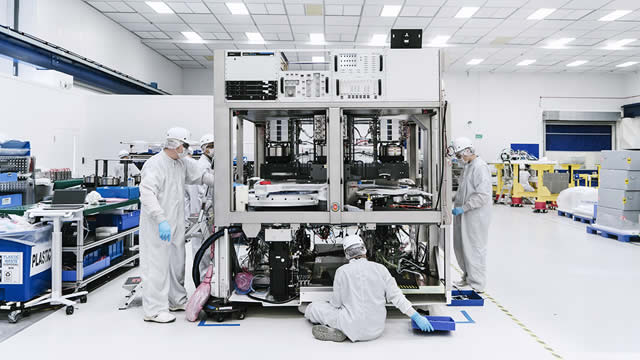
Core Insights - Microsoft has launched its first AI chip, the Maia 200, in its data centers and plans to expand its deployment in the coming months [1] - The Maia 200 chip is designed for AI inference, optimized for running AI models in production, and reportedly outperforms Amazon's Trainium and Google's TPU [2] - Microsoft continues to rely on partnerships with Nvidia and AMD for chip supply despite developing its own chips [3][4] Company Developments - The Maia 200 will be utilized by Microsoft's Superintelligence team, which is focused on developing the company's own AI models to reduce reliance on external providers like OpenAI and Anthropic [5] - The chip will also support OpenAI's models on Microsoft's Azure cloud platform, highlighting the ongoing challenge of accessing advanced AI hardware [7] - Mustafa Suleyman, leading the Superintelligence team, expressed excitement about the launch, indicating the significance of the Maia 200 for their AI model development [8] Industry Context - The trend among cloud giants to develop proprietary AI chips is driven by the challenges and costs associated with acquiring advanced chips from Nvidia, amidst a supply crunch [3] - Microsoft's strategy includes a balance of vertical integration while maintaining partnerships with other chip manufacturers, emphasizing the importance of collaboration in innovation [4]


Apple buys Israeli startup Q.AI as the AI race heats up
TechCrunch· 2026-01-29 18:58
In Brief Apple, Meta, and Google are locked in a fierce battle to lead the next wave of AI, and they’ve recently increased their focus on hardware. With its latest acquisition of the AI startup Q.AI, Apple aims to gain an edge, particularly in the audio sector.As first reported by Reuters, Apple has acquired Q.AI, an Israeli startup specializing in imaging and machine learning, particularly technologies that enable devices to interpret whispered speech and enhance audio in noisy environments. Apple has bee ...


Waymo robotaxis are now giving rides to and from San Francisco International Airport
TechCrunch· 2026-01-29 17:55
Core Insights - Waymo has received approval to operate a robotaxi service to and from San Francisco International Airport (SFO), marking a significant milestone after years of negotiations [1][5] - The service will initially be available to a select number of riders, with plans to expand access to all customers in the coming months [1] - Waymo's operations at SFO are crucial for its business model, which relies on geographic scale and high rider volume [3] Group 1: Operational Developments - Pickups and drop-offs for the robotaxi service will occur at the SFO Rental Car Center, accessible via AirTrain [1] - Waymo has accelerated its expansion efforts, launching services in new cities, increasing its fleet size, and adding more operational areas, including most of the San Francisco Bay Area and parts of Silicon Valley [4] - The company also operates in cities like Atlanta, Austin, Los Angeles, Miami, and Phoenix, including curbside service to Phoenix Sky Harbor International Airport [4] Group 2: Safety Concerns - Waymo faces criticism regarding safety, particularly after an incident where one of its robotaxis struck a child near an elementary school in Santa Monica, leading to an investigation by the National Highway Traffic Safety Administration (NHTSA) [2] - The NHTSA is also investigating Waymo for illegal behavior of its robotaxis around school buses [2] Group 3: Regulatory Milestones - Waymo's journey to operate at SFO included a failed attempt to secure a permit in 2023, followed by a successful negotiation that granted a permit in March 2025 for mapping SFO with data-sharing conditions [5] - In September, Waymo and SFO signed a testing and operations pilot permit, bringing the company closer to commercial operations at the airport [7]