The Motley Fool

Search documents
Should You Forget Robinhood and Buy SoFi Instead?
The Motley Fool· 2026-01-24 10:00
Core Viewpoint - SoFi is positioned as a more resilient investment compared to Robinhood, particularly in the face of potential economic downturns due to its diversified service offerings and customer base growth [1][8]. Company Performance - SoFi has expanded its customer base to 12.6 million, marking a 35% increase year-over-year [3]. - Revenue for SoFi rose by 38% to $950 million, with non-GAAP adjusted earnings increasing by 120% to $0.11 per share [4]. - Robinhood's revenue doubled to $1.2 billion, and diluted earnings per share surged by 259% to $0.61 [4]. Service Diversification - SoFi offers a broad range of financial products, including student loan refinancing, personal loans, credit card consolidation, and renters insurance, which may help it withstand economic slowdowns [9][11]. - In contrast, Robinhood's revenue is heavily reliant on trading activities, particularly options and crypto trading, which accounted for 78% of its transaction-based revenue in Q3 [11]. Market Conditions - The market has been on a bull run since 2022, and Robinhood has not yet faced a market downturn, which could pose risks when economic conditions change [12]. - Economic indicators suggest potential challenges ahead, including job layoffs reaching a four-year high in 2025, which may affect Robinhood's trading volume as customers may reduce riskier investments [12][13]. Investment Recommendation - Given the current economic landscape and service diversification, adding SoFi to an investment portfolio may be a more prudent choice compared to Robinhood [13].




1 Excellent Energy Stock to Buy Now Before the Next Phase of America's Nuclear Renaissance
The Motley Fool· 2026-01-24 09:45
Industry Overview - Nuclear energy is experiencing a renaissance in the U.S. after years of neglect from politicians and green energy advocates [1] - The energy demands of artificial intelligence (AI) necessitate a reliable, safe, and clean power source, which nuclear energy provides [3] Safety and Environmental Impact - Nuclear energy results in only 0.03 deaths per terawatt hour produced, significantly lower than coal (24.6) and oil (18.4) [4] - Over its lifetime, a nuclear plant produces just 6 tons of greenhouse gas emissions, compared to 53 tons for solar and 11 tons for wind [5] Operational Efficiency - Nuclear plants can operate at peak output 92% of the time, while wind and solar can only manage 35% and 24%, respectively [6] Company Profile: BWX Technologies - BWX Technologies specializes in nautical nuclear propulsion systems and has built over 400 nuclear reactors for the U.S. Navy since the 1950s [8] - The company is developing small modular reactors (SMRs), with its BANR microreactor capable of generating 50 megawatts of power [9][10] Government Collaboration - The U.S. government is collaborating with BWX on Project Pele, aimed at creating a mobile microreactor for military use [11] Financial Performance - In Q3 2025, BWX reported revenue of $866 million, a 29% increase from Q3 2024, with a 20% rise in earnings per share [13] - BWX has shown a compound annual growth rate (CAGR) of 11.6% over the past three years and consistently beats earnings expectations [13] Dividend and Investment Potential - BWX pays an annual dividend of $1 per share, yielding nearly 0.5%, and has increased its dividend for 10 consecutive years at a rate of 5.6% over the past five years [14] - BWX Technologies is positioned as a compelling investment in the nuclear sector due to its expertise, military relationships, and strong financials [15]


My 6 Highest Conviction Stock Picks for 2026 and Beyond
The Motley Fool· 2026-01-24 09:30
Investment Themes - The world needs to invest trillions of dollars in AI infrastructure and lower-carbon energy sources, alongside addressing the retirement-income gap due to an aging population [1][2] Brookfield Corporation - Brookfield Corporation is positioned at the intersection of AI infrastructure, wealth products, and real estate recovery, launching its first AI infrastructure fund targeting $100 billion in assets [4][5] - The company anticipates 25% annual earnings growth over the next five years, with a projected $7 trillion investment needed in AI infrastructure over the next decade [5] Kinder Morgan - Kinder Morgan operates the largest natural gas infrastructure platform in the U.S., transporting 40% of the country's gas production, and is well-positioned to meet the growing demand for gas [7][8] - The company expects gas demand to rise by 28 billion cubic feet per day by 2030, with $10 billion in new capital projects planned to enhance its growth outlook [8] Meta Platforms - Meta Platforms is investing heavily in AI, aiming to build personal superintelligence and has launched several AI products, including a popular AI chatbot and AI glasses [9][11] - The company is in the early stages of its AI potential, with significant upside expected for existing apps and new products [12] NextEra Energy - NextEra Energy is a leader in clean energy infrastructure, partnering with AI companies for power supplies and estimating investments of $295 billion to $325 billion in clean power and data centers through 2032 [12][14] Realty Income - Realty Income is a major REIT focusing on income-generating properties, benefiting from the $50 trillion need for U.S. retirement investment and the $14 trillion in corporate real estate [15][17] - The REIT aims to unlock real estate value through sale-leaseback transactions to support its high-yielding monthly dividend [17] Prologis - Prologis focuses on industrial real estate and is leveraging its expertise in energy to develop data centers, with a power pipeline of up to 5.7 gigawatts [18][19] - The company has strong momentum in logistics and digital infrastructure, signing a record 228 million square feet of leases last year, which is expected to drive earnings and dividend growth [19]





This Stock Is Quietly Becoming a Cornerstone of the Artificial Intelligence Boom
The Motley Fool· 2026-01-24 09:22
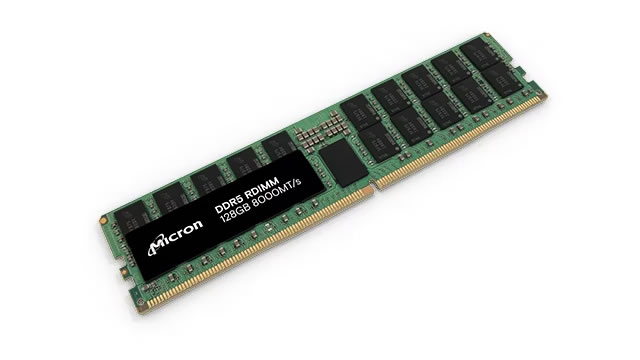
Core Insights - Micron Technology is becoming a crucial player in the AI semiconductor market, particularly in the memory chip segment that supports Nvidia's GPUs [1][2] - The demand for DRAM and HBM memory chips significantly exceeds supply, benefiting Micron in both the short and long term [9] Company Overview - Micron Technology specializes in memory chips, including DRAM and HBM, which are essential for AI computations due to their high data retrieval speeds [7] - The company has a market capitalization of $450 billion and a gross margin of 45.53% [8] Market Dynamics - Only three companies, including Micron, dominate the global supply of DRAM and HBM, leading to limited supply and massive demand [9] - Micron has already committed its entire supply of HBM for the 2026 calendar year, indicating strong future revenue prospects [10] Expansion Plans - Micron is investing over $200 billion to enhance its U.S. manufacturing capacity, including expansions in Virginia and new facilities in Idaho and New York [12] - The company has also signed a letter of intent to acquire a semiconductor fabrication site in Taiwan for $1.8 billion [12] Valuation and Investment Outlook - Despite a significant stock price increase in 2025, Micron's valuation remains reasonable at 5.5 times forward sales and 11 times forward earnings [13] - Micron is positioned as a long-term player in the AI sector, making it a solid investment opportunity for an AI-driven future [13]

The 4 Best AI Stocks to Buy as Trillion-Dollar Tech Shapes a Once-in-a-Lifetime Investment Opportunity
The Motley Fool· 2026-01-24 09:12
Industry Overview - Robotaxis are poised to revolutionize the transportation industry, comparable to the impact of the automobile since its invention [1] - Grand View Research projects robotaxi sales to grow at an annual rate of 74% through 2030, with the ride-sharing market valued at $918 billion by 2033 [2] - Morgan Stanley estimates that autonomous vehicle sales will exceed $3 trillion by 2040 [2] Company Analysis Nvidia - Nvidia is a leader in autonomous driving technology, providing an end-to-end platform that includes hardware and software for self-driving cars [5][6] - The company’s Hyperion platform integrates hardware, software, and sensors necessary for autonomous driving, and collaborates with Uber to assist OEMs in building autonomous vehicles [7] - Wall Street forecasts Nvidia's earnings to grow at 38% annually over the next three years, making its current valuation of 45 times earnings reasonable [8] Uber Technologies - Uber operates the largest ride-sharing platform globally, making it a strategic partner for autonomous vehicle companies [10] - The company collaborates with over 20 AV partners and is already linking users with robotaxis in multiple cities [10] - Morgan Stanley predicts Uber will capture 22% of autonomous ride-sharing trips in the U.S. by 2032, with earnings expected to grow at 28% annually, resulting in a current valuation of 11 times earnings [11] Tesla - Tesla's full self-driving platform relies solely on computer vision, making it less costly and more scalable compared to competitors that use multiple sensor types [12][13] - The company plans to leverage its existing fleet of nearly 8 million cars to crowdsource robotaxis, allowing owners to earn income through the autonomous ride-sharing platform [14] - Morgan Stanley estimates Tesla will account for 25% of autonomous ride-sharing trips in the U.S. by 2032, although its valuation is complicated by struggles in its electric car business [15][16] Alphabet (Waymo) - Alphabet's Waymo leads the autonomous ride-sharing market with commercial services in five U.S. cities and is testing in numerous others [17] - Wall Street anticipates Alphabet's earnings to grow at 15% annually over the next three years, with a current valuation of 32 times earnings [18] - Morgan Stanley expects Waymo to maintain its market leadership, accounting for 34% of autonomous ride-sharing trips in the U.S. by 2032 [19]




China Poised to Approve Nvidia's H200 Chips for Import. Here's What It Means for Investors
The Motley Fool· 2026-01-24 09:05
Core Viewpoint - Nvidia is poised for significant growth as Chinese regulators may approve the sale of its H200 AI chips, which could unlock a lucrative market previously restricted due to export limitations [2][3][5]. Group 1: Market Dynamics - Nvidia has been a key player in the AI revolution, with its GPUs being the preferred choice for AI applications [2]. - The company faced challenges due to restrictions on sales to China, one of its largest markets, impacting its overall performance [2]. - Recent reports indicate that Chinese tech giants like Alibaba, Tencent, and ByteDance are being instructed to submit orders for Nvidia's H200 chips, suggesting a potential easing of restrictions [3][5]. Group 2: Financial Implications - In 2024, sales of lower-quality AI chips to Chinese customers reached $17.1 billion, despite the absence of sales from Nvidia's advanced chips [6]. - CEO Jensen Huang noted that demand for H200 chips in China is "very high," with potential sales exceeding $50 billion annually if imports are approved [7]. - Nvidia has reportedly received orders for 2 million H200 chips at $27,000 each, which could generate $54 billion in revenue, subject to a 25% export levy, resulting in $40 billion in incremental revenue [7][8]. Group 3: Future Projections - Nvidia has not factored in sales to China in its forecasts, which could significantly enhance its outlook [10]. - The company has an AI chip sales backlog of $500 billion for the next six quarters, with expectations for this figure to grow [10]. - Analysts project Nvidia's revenue for fiscal 2027 to be $320 billion, with the potential for earnings per share (EPS) to reach $8.29, suggesting a possible share price increase to $385, representing a 105% gain from current levels [10].

Prediction: This AI Stock Could Outperform the "Magnificent Seven" by 2030
The Motley Fool· 2026-01-24 09:00
Core Insights - IREN is positioned to be a significant beneficiary as the demand for AI infrastructure grows, particularly in the context of energy supply constraints [1][13] - Smaller market cap AI stocks, like IREN, have the potential to outperform larger tech giants, referred to as the "Magnificent Seven," by 2030 due to their higher revenue growth potential [1][2] Company Overview - IREN has transitioned from a crypto mining operation to focus on AI infrastructure, with data centers specifically designed to handle AI workloads [5] - The company has a robust pipeline of 3 gigawatts of energy capacity ready for deployment, which is critical as energy becomes a bottleneck for AI innovation [5][8] Competitive Advantage - IREN has secured land and gigawatt capacity that will be operational ahead of competitors, including a 1.4 gigawatt site in Texas set to start in April and a 600 megawatt site expected in 2027 [8][9] - Compared to competitors like Cipher Mining and Nebius, IREN is advancing its data center preparations more rapidly, with a multi-gigawatt development pipeline [9] Market Demand - The demand for AI computing capacity is projected to grow significantly, with OpenAI's computing needs tripling from 200 megawatts in 2023 to 1.9 gigawatts by 2025, correlating with a revenue increase from $2 billion to $20 billion [7][10] - Major tech companies, including Meta Platforms and Microsoft, are investing heavily in AI infrastructure, indicating a strong market trend towards increased gigawatt capacity [10][11][12] Industry Outlook - The global demand for AI computing capacity is expected to rise, with IREN leading the competition in securing necessary energy resources [13] - Tech giants are committing to higher spending on AI this year compared to 2025, positioning IREN as a likely outperformer against established tech leaders [13]


3 Troubling Trends for Intuitive Surgical – and 1 Bright Spot
The Motley Fool· 2026-01-24 08:45
Core Viewpoint - Intuitive Surgical is facing several challenges, particularly in Asia and with its product placements, but there are still promising opportunities for growth in robotic surgery. Group 1: Challenges - Procedure growth in Japan remains below expectations, with the Japanese Ministry of Health nearing the end of its evaluation of reimbursement guidelines for additional robotic procedures, set to take effect in June 2026 [3][4]. - Increased competition from Chinese robotic surgical systems companies is impacting Intuitive's performance, as local suppliers are favored in provincial tenders, leading to lower pricing [4][5]. - The company has seen a significant decline in Ion system placements, with only 42 systems placed in Q4 2025 compared to 69 in the same period the previous year, attributed to U.S. customers focusing on increasing utilization [6][7]. Group 2: Growth Projections - Intuitive Surgical projects da Vinci procedure growth of 13% to 15% for 2026, which is below the 18% growth achieved in 2025, indicating a slowdown [9]. - Factors contributing to this slowdown include capital pressures in Europe and potential impacts on U.S. hospitals from changes to Affordable Care Act premium subsidies and Medicaid funding [10]. Group 3: Opportunities - A study published in the Annals of Surgery found that patients undergoing robotic-assisted surgeries were 50% less likely to require subsequent open surgery compared to those with laparoscopic procedures, highlighting the effectiveness of robotic surgery [11]. - There is a significant opportunity for Intuitive Surgical, with approximately 20 million soft tissue surgical procedures performed annually that could benefit from robotic assistance [12].


2 AI Stocks to Buy Before They Soar to $20 Trillion, According to Wall Street Experts
The Motley Fool· 2026-01-24 08:40
Core Insights - Nvidia and Tesla are positioned to deliver significant returns for shareholders due to their involvement in the AI revolution [1][2] - Experts predict that the combined market value of Nvidia and Tesla could reach at least $20 trillion in the future [2] Nvidia - Nvidia's GPUs are the industry standard for AI infrastructure, accounting for approximately 85% of AI accelerator sales in 2025, with expectations of maintaining this dominance [4][5] - The company employs a "full-stack" approach to accelerated computing, integrating hardware and software to provide the lowest total cost of ownership for customers [4][5] - Nvidia's data center GPU sales are projected to grow at an annual rate of 36% through 2033, with adjusted earnings expected to increase at 38% annually over the next three years [6][7] - Analyst Beth Kindig predicts Nvidia could reach a market value of $20 trillion by 2030, implying a potential upside of about 340% from its current market value of $4.5 trillion [8] Tesla - Tesla's current market value is $1.5 trillion, with CEO Elon Musk suggesting it could reach $25 trillion, indicating a potential upside of approximately 1,560% [8][10] - Despite losing its status as the global leader in electric vehicle sales, Tesla's investment thesis now focuses on physical AI, including autonomous vehicles and humanoid robots [10][12] - Tesla's full self-driving (FSD) software is set to expand into new markets, with plans for monetization through subscriptions and autonomous ride-sharing services [11] - The robotaxi market is expected to grow at 99% annually through 2033, while humanoid robot sales are projected to increase at 54% annually through 2035 [13] - Musk claims Tesla's expertise in physical AI is unmatched, but the stock's valuation remains challenging due to struggles in the core electric car business and execution risks in new AI ventures [14][15]
This Speculative Industrial Stock Could Be Worth $4 Billion by Mid-2026
The Motley Fool· 2026-01-24 08:05
Core Viewpoint - Intuitive Machines is positioned as a leading player in the emerging space economy, with potential for significant stock price appreciation contingent on the success of its upcoming lunar mission, IM-3 [1][4]. Company Overview - Intuitive Machines is a key partner in NASA's Artemis program, ranked among the top 20 partners by contract value for 2024, alongside major companies like Northrop Grumman and Lockheed Martin [4]. - The company has a market capitalization of $2.4 billion, with a current stock price of $20.03, reflecting a 94% increase over the past six months [5][14]. - Intuitive Machines has a backlog of contracts worth $235 million as of September 30, 2025, and is actively pursuing additional contracts, including an $8.2 million award from the U.S. Air Force Research Laboratory [12]. Financial Performance - For Q3 2025, Intuitive Machines reported revenue of $52.4 million, with net losses reduced from $81.1 million in Q3 2024 to $10.3 million [13]. - The company holds cash reserves of $622 million against a debt of $371 million, indicating a relatively stable financial position for a start-up in a niche industry [13]. Mission and Future Prospects - The upcoming IM-3 mission is critical for the company, as it aims to demonstrate improved landing capabilities after previous missions faced challenges [8][11]. - If successful, IM-3 could significantly enhance investor confidence and drive the stock price higher, potentially reaching a valuation of $4 billion [14]. - The company has additional missions planned, including a fourth mission in 2027, which may further solidify its position in the space industry [12].