The Motley Fool

Search documents
IAU vs. PPLT: Gold or Platinum in a Record-Breaking Rally?
The Motley Fool· 2026-01-17 11:01
Core Insights - The iShares Gold Trust (IAU) and abrdn Physical Platinum Shares ETF (PPLT) differ significantly in cost, assets under management, and recent performance, with IAU being more cost-effective and larger in scale, while PPLT has shown superior returns over the past year [1][3][4] Cost and Size Comparison - IAU has an expense ratio of 0.25%, while PPLT's is 0.60%, which could impact long-term investors [4] - IAU's assets under management (AUM) stand at $68.8 billion compared to PPLT's $2.86 billion, indicating a much larger scale for IAU [3][4] Performance and Risk Analysis - Over the past year, IAU delivered a return of 67.2%, while PPLT outperformed with a return of 135.6% [3] - The maximum drawdown over five years for IAU was -21.82%, compared to PPLT's -35.73%, suggesting IAU has experienced less volatility [5] Fund Composition - PPLT is focused on providing exposure to platinum, appealing to investors looking for diversification beyond gold, and has been operational for 16 years [6] - IAU offers exposure to physical gold, tracking gold's spot price minus its expense ratio, and is one of the largest gold ETFs available [9] Market Context - Both ETFs benefited from a significant rally in precious metals in 2025, driven by Federal Reserve rate cuts, inflation concerns, and substantial central bank gold purchases [8] - Platinum's performance was further boosted by supply shortages from South Africa and increasing industrial demand, particularly from hydrogen fuel cells [8][9] Investment Considerations - IAU is positioned as a lower-cost option with greater liquidity and a long-standing reputation as a stable monetary asset, while PPLT may appeal to those anticipating continued industrial demand for platinum despite its higher volatility [10]

2 Overhyped Cryptocurrencies That Could Turn $100,000 Into Nothing
The Motley Fool· 2026-01-17 10:33
Core Viewpoint - The cryptocurrency market has shown significant volatility, with established tokens like Bitcoin, Ethereum, and XRP generally providing returns for long-term investors, while caution is advised for newer or less established tokens [1][2]. Group 1: Shiba Inu (SHIB) - Shiba Inu launched in August 2020 and became popular as a meme coin, but it has lost approximately 90% of its peak valuation from 2021 [3][7]. - The project has implemented burning mechanisms to reduce the total coin supply, but the impact has been minimal, and there is a lack of developer projects supporting the token [5]. - The metaverse project associated with Shiba Inu has failed to gain traction, with low engagement levels and delays leading to its classification as unsuccessful [6][7]. Group 2: Bitcoin Cash (BCH) - Bitcoin Cash was created by forking the Bitcoin blockchain in August 2017, offering lower transaction fees and faster processing times [8]. - Over the past year, Bitcoin Cash's price has increased by approximately 44%, while Bitcoin's price has decreased by 6%, giving it a market cap of around $12.7 billion, ranking it as the 11th-largest cryptocurrency [9][10]. - Despite its growth, Bitcoin Cash's market cap is still a small fraction of Bitcoin's $1.8 trillion, and institutional adoption remains low, raising concerns about its long-term viability compared to Bitcoin [10][11].


Why a $7.4 Million Buy in this Power Stock Matters Even as Shares Trail the S&P by 16 Points
The Motley Fool· 2026-01-17 10:30
Company Overview - Generac Holdings is a leading provider of power generation and energy storage solutions, serving residential, commercial, and industrial markets globally [5] - The company has a market capitalization of $9.47 billion and reported revenue of $4.35 billion with a net income of $310.18 million [4] Recent Developments - Matrix Asset Advisors increased its holdings in Generac by 46,101 shares during the fourth quarter, valued at approximately $7.44 million [2] - This purchase raised Generac's stake to 1.38% of Matrix Asset Advisors' total reportable U.S. equity assets, which amount to $1.11 billion as of December 31 [3] Financial Performance - Generac's third-quarter net sales decreased by 5% to $1.1 billion, attributed to softened residential demand, while commercial and industrial revenue grew by 9% year over year [8] - The company maintained a steady adjusted EBITDA margin of 17.3% and generated $96 million in free cash flow during the third quarter [9] Market Position - Generac's stock price was $161.43 as of January 15, with a return of 0.81% over the past year, underperforming the S&P 500 by approximately 16 percentage points [3][9] - The company has a diversified revenue stream, with significant contributions from residential and light commercial standby generators, and is focused on critical infrastructure sectors [7]


Best Consumer Growth Stock to Buy Right Now: Dutch Bros or Chipotle?
The Motley Fool· 2026-01-17 10:25
Core Insights - Chipotle's growth appears to be slowing, with a nearly 30% decline in value over the past year, while Dutch Bros has seen minimal growth, indicating a divergence in performance between the two companies [1][3]. Company Performance - Dutch Bros reported a 25% year-over-year revenue growth in Q3 2025, significantly outperforming Chipotle's 7.5% growth during the same period [3]. - Comparable sales for Dutch Bros grew by 5.7% year-over-year, while Chipotle's comparable sales growth was only 0.3%, suggesting potential customer retention issues for Chipotle [5]. Valuation Analysis - Dutch Bros has a high valuation with a P/E ratio of 124, compared to Chipotle's more reasonable P/E ratio of 35, indicating that Chipotle may have more room for error in its financial performance [6][8]. - The current valuation of Dutch Bros necessitates sustained high revenue growth and margin expansion to justify its stock price, while Chipotle's valuation allows for more flexibility [8]. Market Context - The performance of Dutch Bros raises concerns about its sustainability, as it could face a fate similar to Cava, which experienced a significant stock decline despite maintaining revenue growth [9][10]. - Chipotle, despite its slowing growth, may present a more attractive investment opportunity due to its lower valuation compared to Dutch Bros [10].



Peloton Interactive: High-Risk Turnaround or Long-Term Fitness Opportunity?
The Motley Fool· 2026-01-17 10:07
Core Viewpoint - Peloton Interactive has experienced significant challenges post-COVID-19, transitioning from a pandemic-driven growth phase to a struggle for stability and growth in a normalized economy [1][2]. Financial Performance - Peloton reported positive GAAP net income in the last two fiscal quarters (Q4 2025 and Q1 2026), a notable improvement given its history of substantial net losses [3]. - The company has returned to gross profitability in its hardware sales after previously posting negative gross margins in fiscal 2022 and 2023, with 72% of revenue now derived from high-margin subscriptions [3]. Cost Management - Operational efficiencies have been achieved through workforce reductions, a smaller retail footprint, and decreased product development spending, aiming for $100 million in savings this fiscal year [4]. - However, these cost-cutting measures may not be sufficient for long-term growth, indicating a need for Peloton to find new avenues for revenue generation [4]. Subscriber Trends - Connected-fitness subscribers decreased to 2.7 million as of September 30, reflecting a 6% year-over-year decline, with analysts forecasting a revenue decline of 0.5% between fiscal 2025 and fiscal 2026 [5]. Market Position and Valuation - Peloton's stock trades at a price-to-sales ratio of 1.1, near historically low levels, which some investors may view as a long-term opportunity in the fitness industry [7]. - However, the company is perceived as a high-risk turnaround story, with skepticism about its ability to regain subscriber growth amidst intense competition and changing consumer preferences [8][9]. Competitive Landscape - The fitness market is challenging, with consumers often attracted to new trends and free online workout content, limiting the target market for high-priced exercise equipment [9].


The Best Dividend Stocks to Buy With $5,000 Right Now
The Motley Fool· 2026-01-17 09:25
Core Viewpoint - The article discusses consumer stocks that are positioned for significant stock recovery and continued dividend growth, emphasizing the importance of dividend investing over growth investing [1][2]. Clorox - Clorox is known for its bleach and owns other brands like Pine-Sol and Burt's Bees, benefiting from increased cleanliness demand during the COVID-19 pandemic [3]. - The stock has lost about 50% of its value over the last five years due to inflation, a cyberattack, and ERP software transition challenges [3]. - Clorox's current market cap is $13 billion, with a stock price of $109.98 and a dividend yield of 4.47%, supported by a consistent annual payout increase for 49 years [4][5]. - The investment in ERP software is expected to enhance efficiency, and the stock's P/E ratio of 17 suggests potential for dividend growth and stock price recovery [6]. Target - Target operates approximately 2,000 stores across the U.S. and has faced challenges such as rising inventories and falling sales post-pandemic [7][8]. - The stock has started to recover from its November low, with a current price of $111.14 and a dividend yield of 4.06%, marking it as a Dividend King with 54 years of payout increases [10]. - Target's P/E ratio is 13, significantly lower than competitors like Walmart and Costco, which trade at 42 and 51 times earnings, respectively, indicating potential for stock price recovery alongside rising dividends [11].



Amazon vs. Walmart: Which Retail Powerhouse Belongs in a Long-Term Portfolio?
The Motley Fool· 2026-01-17 09:15
Core Viewpoint - Amazon and Walmart are leading retail stocks, but Amazon is positioned as the stronger long-term growth option due to its faster revenue growth and diversification into multiple industries [1][6][13] Company Overview - Walmart operates over 10,000 retail stores, primarily focusing on physical locations, while Amazon started with e-commerce and has expanded into physical stores, but still relies heavily on online sales [2][5] - Amazon's market cap is approximately $2.6 trillion, while Walmart's market cap is around $954 billion [4][7] Logistics and Operations - Walmart excels in logistics with its extensive network of stores acting as shipping centers, enabling same-day delivery and free shipping for customers [3] - Amazon has over 1,300 shipping facilities, but this is less effective compared to Walmart's logistics capabilities [5] Revenue Growth - Amazon's online store sales grew by 10% year over year, while Walmart's overall revenue growth was 5.8% [6] - Walmart is expected to reach a $1 trillion market cap this year, but Amazon is growing faster in terms of overall revenue [6][8] Diversification and Profit Margins - Amazon's revenue is bolstered by its ventures into cloud computing, online advertising, and AI, contributing to higher profit margins [8][9] - Amazon Web Services revenue increased by 20% year over year, and online ad sales rose by 24% year over year, showcasing its diversified revenue streams [9] - Walmart's advertising segment, while growing at 53% year over year, still represents less than 1% of its total sales, limiting its impact on overall profit margins [10][11] Future Outlook - Although Walmart has performed well in the past five years, Amazon is expected to outperform and provide better returns for investors in 2026 [13]



2 Quantum Computing Stocks That Could Make a Millionaire
The Motley Fool· 2026-01-17 09:10
Core Insights - The article discusses the potential of quantum computing as a significant investment opportunity, highlighting two companies well-positioned in this field: IonQ and Alphabet [2][3]. Group 1: IonQ - IonQ is a pure play quantum computing company, focusing exclusively on quantum technology, which presents both high potential rewards and risks [4]. - The company utilizes trapped ion technology for constructing qubits, resulting in a lower error rate and longer quantum state retention, which are critical advantages in quantum computing [5]. - IonQ currently generates some revenue through major cloud service providers but is still in the early stages of commercial growth, making it an attractive option for aggressive investors [7]. Group 2: Alphabet - Alphabet, the parent company of Google, generates substantial revenue through its search engine and Google Cloud, which has seen significant growth due to demand from AI customers [8][9]. - The company is actively developing its own quantum chip, Willow, which aims to reduce errors as more qubits are added, marking a significant advancement in quantum computing [11]. - Alphabet's established profitability combined with its investments in quantum computing presents a compelling opportunity for investors, potentially leading to significant returns [12].



Billionaire Stanley Druckenmiller Sells Broadcom Stock and Buys an AI Stock Up 1,000% Since Early 2025
The Motley Fool· 2026-01-17 08:05
Core Insights - Stanley Druckenmiller sold his position in Broadcom and initiated a position in Sandisk during the third quarter of 2025 [1][2] Group 1: Broadcom - Broadcom holds a dominant position in three semiconductor markets: wireless networking, wired networking, and application-specific integrated circuits (ASICs) [3] - The company has approximately 75% market share in AI ASICs, which are custom chips designed to accelerate AI workloads [4] - AI revenue from networking chips and ASICs rose 65% to $20 billion in 2025, with expectations for significant growth in the coming years [5] - Wall Street estimates Broadcom's adjusted earnings will grow at 43% annually through 2027, with a median target price of $461 per share, indicating a 34% upside from its current price of $343 [6] Group 2: Sandisk - Sandisk manufactures data storage solutions based on NAND flash technology, benefiting from a strategic partnership with Kioxia [7] - Flash memory devices like SSDs are preferred for AI applications due to their speed and efficiency, while HDDs are used for cost-effective long-term storage [8] - Sandisk achieves cost efficiencies and supply chain security through vertical integration, managing the entire process from design to final product [9] - As the fifth-largest NAND flash memory manufacturer, Sandisk gained market share in the first half of 2025, with ongoing tests of its enterprise SSDs by major hyperscalers [10] - Wall Street estimates Sandisk's adjusted earnings will grow at 79% annually through June 2029, but its current valuation of 170 times earnings appears high, with a median target price of $307 per share indicating a 26% downside from its current price of $415 [11]


CEO Jensen Huang Just Delivered Bad News for Nvidia's Rivals for 2026
The Motley Fool· 2026-01-17 08:02
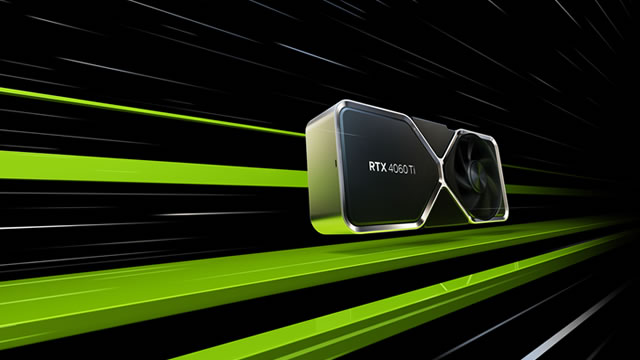
Core Viewpoint - Nvidia is poised for growth as it has begun full production of its next-generation AI chip, Vera Rubin, six months ahead of schedule, which could significantly enhance its competitive advantage in the AI chip market [6][8]. Company Performance - Nvidia's stock experienced a 37% decline from its all-time high in early 2025 but has rebounded, gaining 977% over the past three years, with current stock prices sitting 12% below its peak [2][3]. - The company has a market capitalization of $4.5 trillion, with a gross margin of 70.05% and a dividend yield of 0.02% [11]. Product Development - The Vera Rubin chip is designed to reduce AI token processing costs by up to 90% while using 75% fewer GPUs, addressing the increasing computational demands of AI [6]. - Nvidia's aggressive one-year release cadence for new processors has positioned it ahead of competitors, who typically release new products every two years [7]. Competitive Landscape - Despite Nvidia's lead, there is growing competition from companies like Advanced Micro Devices, Broadcom, Alphabet, and Amazon, all of which are developing alternative AI processing solutions [9][12]. - The ongoing chip shortage for AI processing capabilities has forced customers to seek alternatives, highlighting the competitive pressures Nvidia faces [9]. Future Outlook - Nvidia's backlog exceeds $500 billion, with projected sales of $378 billion next year, indicating a potential growth of 155% [13]. - The company expects to surpass its previous sales outlook due to increasing demand, suggesting a strong runway for future growth [14].