The Motley Fool

Search documents
Nvidia vs. Alphabet: Which Is the Better AI Growth Stock for 2026?
The Motley Fool· 2026-01-15 02:15
Core Viewpoint - Both Nvidia and Alphabet are positioned well in the AI sector, but Alphabet is suggested to offer a better risk-reward balance at current valuations [1][3][15]. Nvidia - Nvidia reported a revenue of $57.0 billion for Q3 of fiscal 2026, marking a 62% year-over-year increase, with data center revenue reaching $51.2 billion, up 66% [4]. - The company's gross margin was 73.4% on a GAAP basis, and earnings per share rose 67% year-over-year to $1.30 [4]. - Nvidia's current price-to-earnings ratio stands at 46, reflecting its rapid growth but also raising concerns about sustainability due to the cyclical nature of the semiconductor industry [16]. Alphabet - Alphabet's Q3 revenue increased by 16% year-over-year to $102.3 billion, with earnings per share rising 35% to $2.87 [8]. - Google Cloud revenue grew 34% year-over-year to $15.2 billion, with operating income increasing 85% to $3.6 billion and an operating margin of 23.7% [9]. - The backlog for Google Cloud surged 46% sequentially and 82% year-over-year to $155 billion, indicating strong future growth potential [10]. - Alphabet's price-to-earnings ratio is approximately 30, suggesting a more favorable valuation compared to Nvidia [16]. Strategic Partnerships - Alphabet has entered a multi-year collaboration with Apple to integrate Google's Gemini models into Apple's Foundation Models, enhancing AI features like Siri on Apple devices [12][13]. - This partnership is significant as it positions Alphabet centrally in AI interactions across a vast user base of over 2.2 billion active Apple devices [13]. Investment Considerations - While Nvidia is experiencing rapid growth, Alphabet's diversified business model and less cyclical nature make it a more stable investment option [16]. - Despite Alphabet's potential, its current valuation is considered somewhat risky, particularly due to its reliance on advertising and the macroeconomic environment [17][18].




Why the SMH ETF Could Be a Core AI Investment for 2026
The Motley Fool· 2026-01-15 02:06
Core Insights - Artificial intelligence (AI) is initiating a significant infrastructure investment cycle in the technology sector, with 90% of AI investors planning to maintain or increase their exposure in the next year [2] - Global AI-related data center capital expenditures are projected to reach $527 billion by 2026, primarily benefiting a select group of semiconductor companies [3] Investment Opportunity - The VanEck Semiconductor ETF (SMH) offers concentrated exposure to leading AI companies, with its top five holdings accounting for approximately 49.8% of its assets, providing investors with a diversified yet focused investment in the AI sector [5] - SMH has demonstrated robust performance, achieving a 49% gain in 2025, significantly outperforming the S&P 500's 16.4% return [6] Long-term Growth Potential - The shift from training large language models to inference workloads is expected to drive AI compute demand, with inference projected to account for two-thirds of total demand by 2026, indicating sustained growth for hardware such as GPUs and memory chips [9] - SMH's long-term track record shows annualized returns of around 30.9% over the past decade, outperforming the S&P 500's 12.9% annualized return during the same period [8] Valuation Metrics - Currently, SMH is trading at nearly 33 times trailing-12-month earnings, aligning with the price-to-earnings multiples of many large-cap tech stocks, making it a suitable choice for investors seeking AI exposure without selecting individual stocks [10]

3 AI ETFs Poised for 100% Surge as Tech Revolution Accelerates
The Motley Fool· 2026-01-15 01:36
Core Viewpoint - The artificial intelligence (AI) sector is experiencing significant growth, with opportunities for investors still available as the market is in its early stages [1][4]. Industry Overview - AI stocks, particularly those from major tech companies and the "Magnificent Seven," have driven market gains in 2025, with companies investing tens of billions in AI development [2]. - The AI market is projected to grow to $2.4 trillion by 2032, indicating a long-term growth trajectory [4]. Investment Strategies - Investing in AI-themed ETFs rather than individual stocks may be a more effective strategy, as the market is beginning to broaden beyond established players like Nvidia and Microsoft [3]. - Three ETFs are highlighted as potential investment opportunities that could double in value: 1. **Global X Artificial Intelligence & Technology ETF**: Focuses on companies involved in AI and big data, avoiding overemphasis on large-cap stocks [5][6]. 2. **iShares A.I. Innovation and Tech Active ETF**: Actively managed, investing in companies of various sizes with a concentration in major tech stocks, accounting for approximately 28% of the portfolio [9][10]. 3. **Defiance Quantum ETF**: Targets companies engaged in quantum computing, which is seen as a long-term investment opportunity despite being in early stages [12][14]. ETF Details - **Global X Artificial Intelligence & Technology ETF**: - Current Price: $52.28 - Top holdings include Alphabet, Tesla, and Apple, making up about 11% of the portfolio [7]. - **iShares A.I. Innovation and Tech Active ETF**: - Current Price: $34.36 - Over $8 billion in assets under management, benefiting from BlackRock's research capabilities [11]. - **Defiance Quantum ETF**: - Current Price: $117.30 - Focuses on advanced quantum computing technologies, with significant long-term potential [13].

Is Coca-Cola Still 1 of the Best Dividend Stocks to Buy and Hold Forever?
The Motley Fool· 2026-01-15 01:10
Group 1: Company Overview - Coca-Cola is recognized as an outstanding business with a long history of success and dominance in the non-alcoholic ready-to-drink market, supported by a highly recognizable brand [1] - The company provides a stable income stream for investors, making it one of the best dividend stocks for long-term investment [2] Group 2: Financial Performance - Coca-Cola's Board of Directors raised its dividend payout for the 63rd consecutive year, solidifying its status as a Dividend King [2] - The company has averaged a quarterly operating margin of 26.5% over the past five years and is projected to generate $11.9 billion in free cash flow by 2026 [3] Group 3: Market Position and Stability - Coca-Cola operates in a stable sector with minimal risk of profit decline, which contributes to its long-term staying power [4] - The company possesses strong pricing power due to its brand strength, allowing it to consistently raise prices [5] Group 4: Stock Performance and Valuation - Coca-Cola's stock has generated a total return of 132% over the past decade, which is significantly lower than the S&P 500's 330% return [8] - The current price-to-earnings ratio of 23.3 suggests that Coca-Cola is not overpriced, providing a solid entry point for investors [7]


Why Rezolve AI Stock Trounced the Market Today
The Motley Fool· 2026-01-15 00:18
Core Viewpoint - The company, Rezolve AI, made a significant change to its revenue guidance, which has attracted attention from analysts and investors, leading to a notable increase in its stock price [1]. Group 1: Analyst Recommendations - H.C. Wainwright's Scott Buck raised his price target for Rezolve AI from $10 to $12 per share while maintaining a buy recommendation [2]. - Buck highlighted that the company reported revenue of $17 million in December and updated its revenue guidance for 2026 to $350 million, nearly double the current consensus estimate [3]. - Cantor Fitzgerald's Matthew Van Vliet reiterated his overweight recommendation on the stock with a price target of $8 per share [4]. Group 2: Market Performance - Rezolve AI's stock experienced a 11.54% increase, closing at $4.06, with a market capitalization of $1.2 billion [5]. - The stock's trading range for the day was between $3.45 and $4.08, while its 52-week range was from $1.07 to $8.45 [6]. - The company has shown significant volatility but has been a standout performer in the early part of the year, with the recent guidance update likely to further fuel investor interest [6].

Alphabet and Amazon Just Said Something That May Eliminate Nvidia's Biggest Risk
The Motley Fool· 2026-01-14 23:15
Core Viewpoint - Nvidia is experiencing significant growth due to its leadership in the AI chip market, specifically with its GPUs, which are essential for powering AI applications [1][3]. Group 1: Nvidia's Market Position - Nvidia's GPUs are the fastest available, making them the preferred choice for major tech companies in the AI sector [1][2]. - The company has reported record revenue and profits, with a stock price increase of 1,200% over the past five years [3]. Group 2: Competitive Landscape - Nvidia faces competition from other chip designers like Advanced Micro Devices and Broadcom, which offer lower-priced alternatives [5]. - Some of Nvidia's customers, including Alphabet and Amazon, are developing their own chips, raising concerns about potential reductions in orders for Nvidia's products [6]. Group 3: Customer Commitment - Executives from Alphabet and Amazon have expressed strong commitment to Nvidia, indicating that they will continue to rely on Nvidia's GPUs despite their own chip developments [8][9]. - Alphabet's Sundar Pichai and Amazon's Matt Garman emphasized the importance of Nvidia's hardware in their cloud services, suggesting ongoing demand for Nvidia products [8]. Group 4: Future Growth Potential - Nvidia predicts that AI infrastructure spending could reach $4 trillion by the end of the decade, indicating substantial growth opportunities for both Nvidia and its competitors [10]. - The ongoing demand for GPUs and related products is expected to lead to further gains in Nvidia's earnings and stock price as the AI boom continues [11].


Why Dow Stock Floated Higher Today
The Motley Fool· 2026-01-14 23:13
Industry Overview - The U.S. plastics industry is expected to experience significant growth, with a forecasted compound annual growth rate (CAGR) of just under 4% [3] - The market is projected to expand from over $195 billion last year to more than $266 billion by 2033, driven by rising demand in sectors such as automotive, construction, and packaging [3] Company Performance - Dow's stock surged by more than 6% following the optimistic analysis of the plastics market, marking a notable change after being a laggard over the past year [1][4] - The current stock price of Dow is $28.26, with a market capitalization of $19 billion [4][5] - Dow's stock had previously underperformed due to oversupply, rising input costs, and weak global demand, compounded by a 50% cut to its dividend [5] Market Sentiment - Despite the recent stock surge, there are concerns that Dow's struggles may continue, as the chemical industry is cyclical and dependent on the resolution of negative factors [6] - The company has a gross margin of 6.92% and a dividend yield of 7.91%, indicating some financial strain [5]


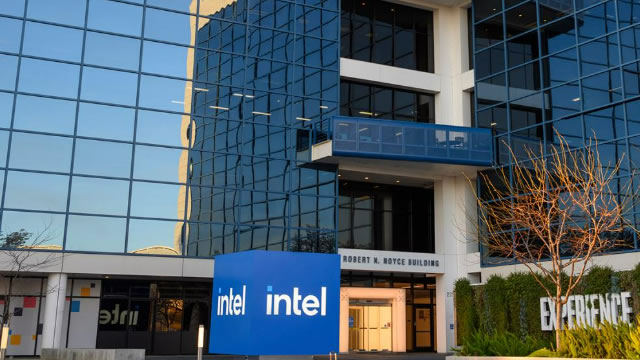
Stock Market Today, Jan. 14: Intel Jumps on Sold Out 2026 Server CPU Capacity
The Motley Fool· 2026-01-14 22:52
Core Viewpoint - Investors are optimistic about Intel's potential turnaround driven by strong demand for AI servers and foundry wins, with a focus on how sustained AI data center demand will impact 2026 capacity and margins [1][3]. Company Performance - Intel's stock closed at $48.72, reflecting a 3.02% increase, with a market capitalization of $236 billion and trading volume reaching 148 million shares, significantly above the three-month average of 91 million shares [2]. - The company has experienced a remarkable growth of 14,867% since its IPO in 1980 [2]. Market Context - The broader market saw the S&P 500 decline by 0.51% while the Nasdaq Composite fell by 1.00%, indicating mixed performance across the technology sector [4]. - Competitors in the semiconductor space, such as Advanced Micro Devices and Nvidia, showed varied movements as investors assess AI-driven growth against supply constraints [5]. Demand and Capacity Insights - Intel's server CPU capacity for 2026 is nearly sold out, and the company may consider increasing chip prices due to server chip shortages [6]. - The stock has surged over 30% this year, driven by optimism surrounding AI demand and domestic foundry manufacturing initiatives [6]. Future Considerations - While current tailwinds are boosting Intel's outlook, there is a caution that these factors may already be priced into the stock, and any economic downturn or decrease in AI infrastructure demand could lead to a stock correction [6][7].

Netflix's Bid to Acquire Warner Bros. Discovery Just Got a Boost From an Unlikely Source
The Motley Fool· 2026-01-14 22:51
Group 1 - Netflix has agreed to acquire Warner Bros. Discovery in a cash-and-stock deal valued at $72 billion, which has sparked a competitive battle with Paramount Skydance aiming to disrupt the acquisition [1][2] - Netflix is considering amending its bid to an all-cash offer for Warner Bros.' studio and streaming assets, while spinning off legacy cable and broadcast television stations into a new entity called Discovery Global [2] - Under the original agreement, Warner Bros. shareholders would receive $23.25 in cash per share, Netflix shares worth approximately $4.47, and shares of the Discovery Global spin-off [3] Group 2 - Paramount CEO David Ellison has launched a hostile takeover bid, offering $30 per share directly to investors, criticizing Netflix's bid as "inferior" and claiming that Discovery Global ownership has "zero equity value" [4] - Recent developments suggest that the value of the cable channels may be underestimated, as Comcast's spin-off of Versant Media Group indicates higher potential valuations [6][8] - The potential all-cash offer from Netflix, combined with the perceived higher value of the cable channels, may influence undecided Warner Bros. shareholders to accept Netflix's offer [8]


12 Top ETFs to Buy in January for Higher Passive Income in 2026 -- Including the Schwab U.S. Dividend Equity ETF (SCHD)
The Motley Fool· 2026-01-14 20:15
Core Insights - The article emphasizes the importance of passive income, particularly through dividends and dividend-focused exchange-traded funds (ETFs) as effective investment strategies [1][2] Dividend Performance - Dividend-paying stocks have historically outperformed non-dividend payers, with dividend growers and initiators achieving an average annual total return of 10.24% from 1973 to 2024, compared to 4.31% for non-payers [3] - The average annual total return for dividend payers stands at 9.20%, while those with no change in dividend policy yield 6.75% [3] Dividend-Paying ETFs - The article lists 12 attractive dividend-paying ETFs, highlighting their yields and historical performance over various time frames [4][6] - For instance, the iShares Preferred & Income Securities ETF (PFF) has a yield of 6.37% with a 5-year average annual return of 2.05% [4] - The State Street SPDR Portfolio S&P 500 High Dividend ETF (SPYD) offers a yield of 4.53% with a 5-year average annual return of 10.37% [4] Benefits of Dividends - Healthy dividend-paying stocks tend to increase their payouts over time, which helps investors keep pace with inflation [5] - Dividends provide a consistent income stream without the need to sell off portfolio assets, allowing for reinvestment opportunities [5] Investment Strategies - Investors can diversify their investments across multiple ETFs to balance yield and growth potential [8] - Specific ETFs are recommended based on sector outlooks, such as the Vanguard Energy ETF for those bullish on energy due to AI data center growth, and the Vanguard Real Estate ETF for real estate investments [8]