42章经

Search documents
「你觉得 AI 有泡沫吗?」——有|42章经
42章经· 2025-11-30 13:36
Core Viewpoint - The current AI market is experiencing a bubble, characterized by expectations exceeding reality, but this bubble can drive industry development and may not necessarily burst immediately [3][4]. Group 1: Value vs. Price - From a value perspective, the AI industry is thriving, with practitioners expressing excitement about advancements, indicating no bubble in terms of value [6]. - Price differentiation is crucial, with the primary market showing higher valuations compared to the U.S., where some companies exhibit inflated valuations [9]. - The secondary market reflects a high price level, with AI companies' price-to-earnings ratios around 30, suggesting that earnings growth supports current valuations [10][11]. Group 2: Structural Changes in AI - The AI industry is highly structured, divided into segments such as China vs. the U.S. and hardware vs. software, leading to varying degrees of bubble risk across different sectors [16][17]. - The transition from pre-training to post-training narratives indicates a shift in focus within the industry, with current discussions centered on return on investment (ROI) rather than just technological advancements [18][19]. Group 3: Market Sentiment and Investment - Recent discussions around the AI bubble have been fueled by significant capital movements and investments, raising concerns about ROI as investments grow while returns stabilize [30]. - The current market sentiment is fragile, with a noticeable decline in risk appetite compared to previous months, although this has not yet significantly impacted industry practitioners [35][36]. Group 4: Future Outlook and Winners - The future of the AI industry is expected to see significant differentiation among companies, with potential winners emerging from various segments [71][73]. - The industry is transitioning from a focus on AGI to practical applications and cost efficiency, indicating a new cycle in AI development [100][101].

Ilya 离开 OpenAI 后的首期播客,久违地被人类智慧安慰到了 | 42章经
42章经· 2025-11-26 05:14
Core Insights - The article discusses the insights shared by Ilya regarding the future of AI and the development of superintelligence, emphasizing a shift back to research-focused approaches after a period of scaling [3][5]. Group 1: Era Transition - Ilya outlines a clear timeline for the evolution of AI, indicating that the period from 2012 to 2020 was focused on research, while 2020 to 2025 is characterized by scaling, particularly after the emergence of GPT-3. He predicts that from 2025 onwards, the limitations of pre-training scaling laws will necessitate a return to research-focused methodologies [5]. Group 2: SSI's Strategy - Ilya's company, SSI (Safe Superintelligence), plans to focus on developing superintelligence without intermediate products, aiming to avoid market distractions that lead to compromises in quality [3][4]. Group 3: Learning Mechanisms - Ilya emphasizes the importance of developing a value function in AI, which allows for more intuitive learning processes similar to human decision-making. He believes that breakthroughs in this area could significantly enhance AI efficiency [6][10]. Group 4: Reinforcement Learning (RL) Insights - Ilya presents a contrarian view on RL, suggesting that it may hinder the capabilities of models by forcing them to conform to narrow human-defined metrics, potentially sacrificing broader intelligence [7][8]. He also notes that RL is becoming more resource-intensive than pre-training, indicating a shift in the industry's focus [8]. Group 5: Empathy and AI - Ilya argues that empathy could be a crucial element in developing superintelligence, proposing that AI should be designed to care for sentient life, akin to how human evolution has hardcoded empathy into our brains [13][14][19]. Group 6: Language and Research Direction - The language used in the AI field can shape research directions, with terms like AGI and scaling influencing the focus of development. Ilya warns against the overemphasis on these buzzwords, which may lead to neglecting other important aspects of intelligence [20][22]. Group 7: Market Dynamics - Ilya predicts that the future AI market will not be dominated by a single entity but will instead feature specialization, where companies focus on specific applications, creating a balanced ecosystem similar to biological evolution [22].

活动报名:AI 的机会与泡沫|42章经
42章经· 2025-11-23 13:01
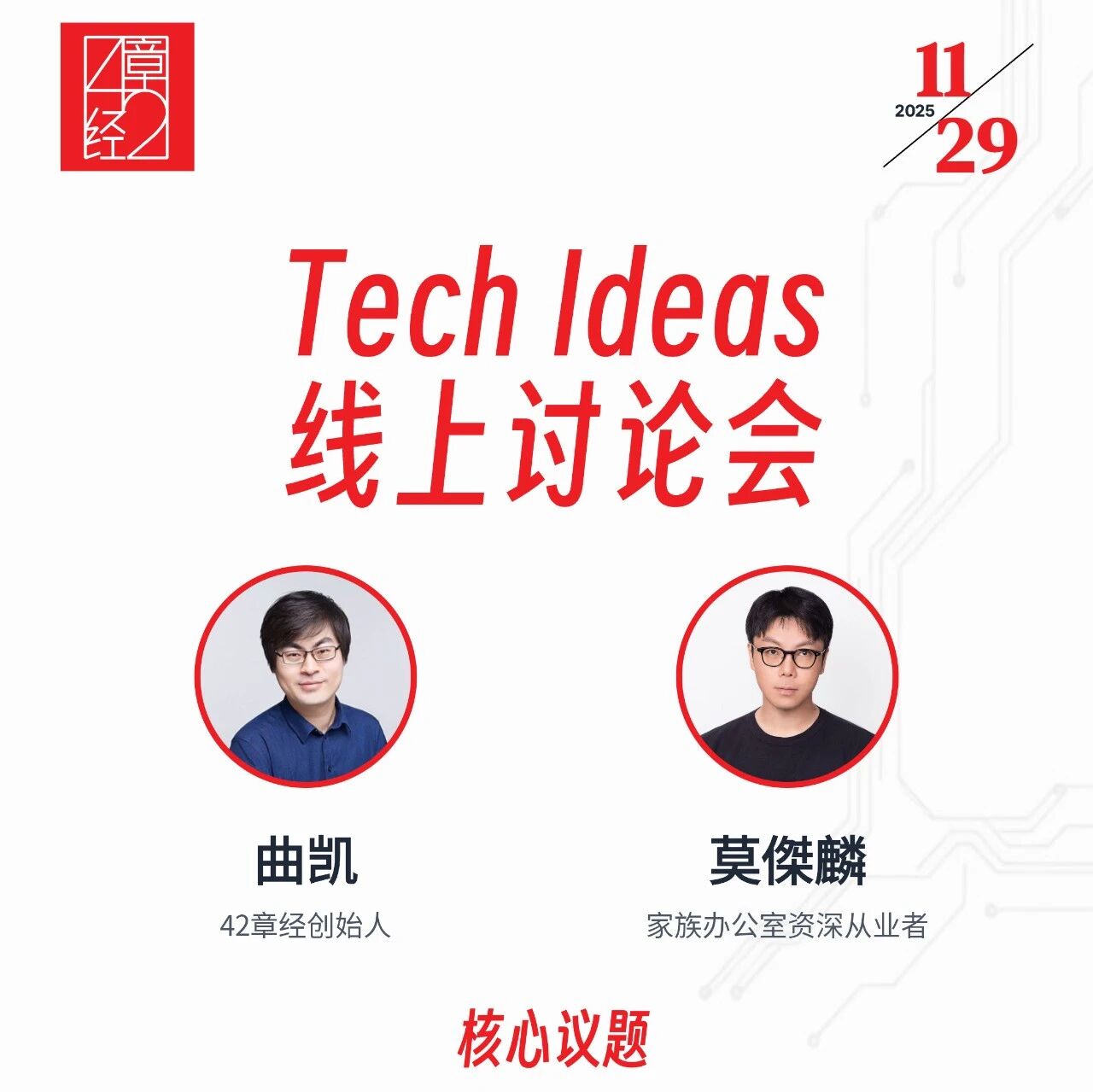
Group 1 - The core viewpoint of the article discusses the current state of the AI market, highlighting that the growth from 2023 to 2024 relies on the scaling law and the consensus around AGI, while there is no unified judgment on RL scaling law since 2025 [5] - AI models are developing in a stepwise manner, while applications are experiencing pulsed advancements, indicating a subtle blank period currently [5] - There is uncertainty regarding the continued enhancement of intelligence, but the acceleration of application deployment is assured [5] Group 2 - The narrative logic is changing, suggesting that while prices that rose previously may have bubbles, the intrinsic value of AI remains intact [5] - Several unresolved questions about the future development of AI, including whether to buy or short Nvidia, the opportunities in multimodal applications, and the feasibility of embodied production and deployment, are raised [5] - An online discussion meeting is scheduled for November 29, aiming to engage in these topics with interested participants [5]

把世界拆成最小单元,然后重新拼装 | 42章经 AI Newsletter
42章经· 2025-11-23 13:01
Core Insights - The article discusses the strategic shift of Grammarly, which has transformed from a grammar-checking tool into a more comprehensive productivity suite by acquiring Coda and Superhuman, aiming to create a robust AI-driven platform [4][14][28]. Group 1: Grammarly's Strategic Transformation - Grammarly has achieved over $700 million in annual revenue and surpassed 40 million users, defying expectations of decline in the AI era [4]. - The company rebranded itself as Superhuman after acquiring Coda and Superhuman, with Coda's founder becoming the new CEO [4][5]. - Grammarly's core strength lies in its distribution capabilities, allowing it to integrate AI into over 500,000 applications and websites [11][12]. Group 2: The Concept of Bundling - The article emphasizes the importance of bundling in business strategy, highlighting that bundling can activate non-essential users and spread user acquisition costs [31][34]. - Shishir Mehrotra, the new CEO, has extensive experience in bundling strategies, having worked with successful companies like Microsoft and Spotify [31][38]. - The best bundling strategy involves ensuring that essential users are as distinct as possible while overlapping non-essential users [40][41]. Group 3: AI and Future Opportunities - The emergence of AI is expected to lead to a rapid unbundling of tools, followed by a rebundling phase where platforms will integrate various AI components [50][51]. - AI will enable the creation of dynamic bundles tailored to individual user needs, potentially leading to unprecedented levels of customization and efficiency [51][66]. - The article draws parallels between the impact of containerization on global supply chains and the potential of AI to revolutionize knowledge and capability distribution [68][80]. Group 4: Market Dynamics and User Context - The article argues that user context is highly fragmented, providing opportunities for startups to create neutral, cross-platform AI layers that connect various applications [28][29]. - The competition will likely split into two extremes: specialized component experts and integrators who can effectively bundle these components into cohesive solutions [82].

2018 - 2020,抖音超越快手的关键三年|42章经
42章经· 2025-11-16 12:59
Core Insights - The article discusses the rise of Douyin (TikTok) and its strategic decisions that led to its success, as shared by Yu Beichuan, a former employee who joined during its early days [2][3][11]. Group 1: Douyin's Growth Phases - Douyin was officially launched in 2016, with significant growth starting in mid-2017, leading to surpassing Kuaishou in daily active users (DAU) by early 2019 [3][11]. - The growth can be divided into several phases: initial growth from 2017 to 2018, rapid expansion from 2018 to 2019, and a focus on commercialization post-2020 [12][13][15]. - By the end of 2018, Douyin's DAU reached 30 million, and by early 2019, it had surpassed Kuaishou, becoming the leading short video platform [11][21]. Group 2: Key Strategic Decisions - Douyin's initial strategy involved not directing users from Toutiao, which allowed it to build a unique user base [46]. - The brand's youthful and independent aesthetic, along with strong content operations, attracted a younger audience [46][49]. - Significant marketing efforts included sponsoring the Spring Festival Gala in 2019, which resulted in a peak DAU of 470 million during the event [87][88]. Group 3: Challenges and Learnings - Despite rapid growth, there were internal concerns about the sustainability of user engagement and the potential DAU ceiling [21][22]. - Attempts to integrate social features were largely unsuccessful, highlighting the challenges of fostering user interaction in a primarily content-driven platform [24][27]. - The company learned that maintaining a balance between rapid growth and user retention was crucial, leading to a focus on enhancing user interaction [81][82]. Group 4: Organizational Culture and Impact - ByteDance's flat organizational structure allowed for direct communication across levels, fostering a culture of ambition and opportunity for young talent [100][106]. - The company's emphasis on extreme execution and strategic thinking contributed to its innovative approach and competitive edge in the market [114][121]. - As the company grew, maintaining its original culture became a challenge, leading to concerns about losing its competitive spirit [108][109].


为什么说 AI 还没到泡沫?等四篇 | 42章经 AI Newsletter
42章经· 2025-11-09 13:19
Group 1 - Fal achieved a remarkable growth from $2 million to $100 million in ARR within a year, supported by a recent $250 million funding round led by Sequoia and KP, with a valuation exceeding $4 billion [2][4][5] - The company pivoted from data processing products to AI generative media cloud services, recognizing a significant user pain point during the GPU crisis and the emergence of Stable Diffusion [4][6][8] - Fal's strategic decision to focus on image and video generation rather than LLMs was based on the belief that the image market is a growing net market, unlike LLMs which compete directly with established giants like Google [8][9] Group 2 - The company adopted a PLG (Product-Led Growth) and sales strategy, starting with self-service for developers and then identifying high-potential customers for sales follow-up [15][18] - Fal's marketing strategy resonated with developers by creating relatable brand elements, such as themed merchandise and live demonstrations of new models [19][22] - The company identified opportunities in the AI ecosystem, suggesting the need for platforms that can scale AI data collection and labeling, as well as vertical advertising solutions [24][25] Group 3 - The article discusses the current perception of AI as a potential bubble, with 54% of fund managers believing it has entered a bubble phase, yet a detailed analysis by Coatue suggests otherwise [26][29] - Coatue's analysis indicates that current valuations, while high, are not excessive compared to historical bubbles, and the concentration of capital in tech giants is justified by their diversified business models [32][36] - The projected growth for AI revenues is significant, with expectations of reaching $1.9 trillion by 2030-2035, indicating a robust long-term outlook for the industry [52][54] Group 4 - The article emphasizes the importance of effective pricing strategies for AI products, highlighting that simplicity and clear value communication are crucial in early stages [68][69] - It suggests that founders should focus on co-creating business cases with clients during POCs (Proof of Concept) to demonstrate value effectively [74][76] - The need for continuous iteration of pricing strategies is highlighted, as the AI market evolves rapidly, necessitating frequent reassessment [72][79] Group 5 - Sandy Diao discusses the pitfalls of being overly data-driven in growth strategies, advocating for a balance between data insights and contextual understanding [82][84] - The concept of the power law of distribution in growth is introduced, where a small number of channels drive the majority of growth, emphasizing the need to identify core growth drivers [88][90] - The article concludes with insights on when to hire growth leaders, suggesting that early-stage companies should integrate growth strategies from the outset to address product-market fit challenges [92][93]
OpusClip 增长秘诀:如果每个阶段只让我选一件事做 | 42章经
42章经· 2025-11-02 13:30
Core Insights - OpusClip is recognized as one of the most successful AI products among overseas Chinese in recent years, with significant growth driven by strategic partnerships and user engagement [2][4]. Customer Acquisition - In the early stages of customer acquisition, it is crucial to identify true partners rather than affiliates, as partners are genuine users who can provide valuable feedback and support [9][12]. - Collaborating with content creators (KOLs) can effectively expand user reach, but it is essential to establish stable economic relationships to sustain long-term cooperation [18][20]. - Focusing on a small number of high-quality creators rather than a broad approach can lead to better results in user acquisition [22][32]. Conversion Strategies - Pricing strategies should be dynamic and tailored to user needs, with a focus on customization to enhance perceived value [39][41]. - Protecting the interests of existing users during pricing adjustments is vital for maintaining loyalty and positive word-of-mouth [46][47]. - Implementing A/B testing for pricing and user interface can lead to significant improvements in conversion rates [50][51]. Retention - Retention is identified as a critical long-term growth metric, as it directly impacts the potential scale of paid users [54][56]. - Establishing a feedback loop centered around customer service can enhance product iterations and user satisfaction [63][66]. - Collecting user feedback from various channels and ensuring a transparent product roadmap can help in addressing user needs effectively [71][79]. Insights and Data Utilization - Data-driven decision-making is essential throughout the product lifecycle, with an emphasis on identifying high-impact actions in the early stages [85][86]. - Utilizing SaaS tools for A/B testing and user feedback collection can streamline processes and reduce costs for startups [98][100]. - Continuous testing and adaptation of strategies based on user behavior and feedback are crucial for sustained growth [130][132].

Figma 如何战胜 Adobe 等六篇 | 42章经 AI Newsletter
42章经· 2025-10-26 13:42
Group 1: Figma vs Adobe - Figma's success is attributed to its focus on "collaboration" as a core feature, contrasting with Adobe's file-centric approach [2][3] - Adobe's collaboration is based on file transfer, while Figma allows real-time editing on a shared canvas, enabling true synchronous collaboration [3] - Existing giants like Adobe struggle to adapt due to their historical success paths and internal resistance to change [3] Group 2: Online Reinforcement Learning - Cursor's use of online reinforcement learning (RL) optimizes its code completion feature, Tab, by treating user interactions as feedback signals for real-time training [6][10] - The model's suggestion volume has decreased by 21%, while the acceptance rate has increased by 28%, indicating improved performance [6] Group 3: Plaud's Success - Plaud's success is rooted in recognizing the value of context, viewing conversations as a form of intelligence and a significant data source [12][14] - The company designs its hardware and software to effectively capture and analyze user context, positioning itself as a context collector rather than just a recording device [15] - Plaud's approach emphasizes a "reverse thinking" strategy, focusing on how AI can serve users by prompting them for context rather than the other way around [16][18] Group 4: Creating Delight in Products - Delight in products is defined as a combination of joy and surprise, with three main strategies: exceeding expectations, anticipating needs, and removing friction [25][27] - A systematic approach to creating delight involves redefining user categories based on motivations, transforming those motivations into opportunities, and ensuring that delight becomes an organizational capability [28][30] Group 5: Evaluating AI Product Retention - A16Z suggests that AI companies should measure retention starting from the third month (M3) to better understand their true user base, as early data may include many transient users [34][35] - The new metric M12/M3 is proposed to assess long-term retention quality, indicating how many users remain after a year compared to the third month [36][39] Group 6: Palantir's FDE Model - The Forward Deployed Engineer (FDE) model involves engineers embedded at client sites to bridge the gap between product capabilities and client needs, focusing on product exploration [42][46] - FDE teams consist of Echo (consulting analysts) and Delta (deployment engineers), each with distinct roles to ensure effective client engagement and product development [49][50] - The FDE model is particularly relevant in the AI era, where high-value contracts justify deep client integration and where product-market fit is often unclear [53][54]

一个原教旨主义产品经理眼中的世界|42章经
42章经· 2025-10-20 14:08
Core Viewpoint - The discussion emphasizes the importance of balancing practicality and creativity in product design, highlighting the evolving nature of user needs and the impact of societal changes on consumer behavior [3][4][5][6]. Group 1: Industry Insights - The current state of Beijing reflects a duality where some individuals are leaving due to anxiety and lack of security, while others continue to arrive, driven by ambition and the desire to create [4][5]. - The Chinese supply chain is robust, and the original internet pioneers prioritize connection and equality over mere monetization, suggesting a fertile ground for innovation [6][8]. - The development of China can be categorized into three layers: urbanization, supply chain evolution, and the rise of technology and the internet, all contributing to significant social mobility [7][8][9]. Group 2: User Behavior and Product Design - Users today are increasingly segmented, with many feeling underrepresented despite an abundance of practical offerings, indicating a gap in the "interesting" aspect of products [51][52]. - The balance between "usefulness" and "interestingness" is crucial; products must first be useful to gain attention, but their longevity depends on how engaging they are for users [33][35][36]. - The emergence of AI is expected to personalize user experiences, potentially reshaping the roles of makers, users, and designers in product development [46][49][50]. Group 3: Product Development Philosophy - Effective product design involves a process of observation, understanding, and creative combination of elements, rather than relying solely on data-driven decisions [12][19][20]. - The design philosophy includes a focus on creating surprises and emotional connections with users, which can lead to a more meaningful product experience [24][25][26]. - The importance of user feedback is emphasized, with a recommendation for continuous engagement to refine product offerings based on real user experiences [96][97][98]. Group 4: Future Outlook - The future of product design is seen as an opportunity for individualization, driven by AI's ability to understand and cater to unique user needs [47][48][49]. - The belief in the resilience and creativity of the Chinese people suggests a positive outlook for innovation and product development, despite current economic challenges [66][68][69]. - The necessity for organizations to adapt to the changes brought by AI is highlighted, indicating a shift towards more integrated and flexible operational structures [121][123].

组织能力才是 AI 公司真正的壁垒|42章经
42章经· 2025-09-26 08:33
Core Insights - The article discusses the implementation of an AI Native organizational structure within a company, emphasizing the significant efficiency improvements achieved through AI integration in various workflows [3][4][7]. Group 1: AI Integration in Workflows - The company has restructured its development workflow to allow AI to handle most tasks, resulting in a tenfold increase in efficiency, particularly in code review processes [3][4]. - AI tools, such as CodeRabbit, are utilized for code reviews, significantly reducing the time required from days to mere minutes [3][4]. - The company has adopted a mindset where AI is the default executor of tasks, with human intervention only when AI encounters insurmountable challenges [7][8]. Group 2: Talent Requirements - The company identifies three key talent attributes necessary for an AI Native engineering team: being a "Context Provider," a "Fast Learner," and a "Hands-on Builder" [12][14][15]. - Employees must provide context to AI systems to enhance their output, as the effectiveness of AI often depends on the quality of the context provided by humans [12][13]. - Rapid learning and the ability to communicate effectively with AI are crucial, as traditional skill sets may not suffice in an AI-driven environment [14][15]. Group 3: Organizational Structure - The company advocates for a results-oriented division of labor rather than a process-oriented one, allowing teams to address issues across the entire workflow [19][20]. - Engineering teams are central to the organization, responsible for rapid prototyping and iterative development, which contrasts with traditional models that emphasize extensive planning and meetings [22][23]. - Future organizational models may consist of a small number of core partners supported by a larger pool of flexible contractors, reflecting the high value and irreplaceability of individual contributions in an AI Native context [24][25].