Principles by Ray Dalio

Search documents
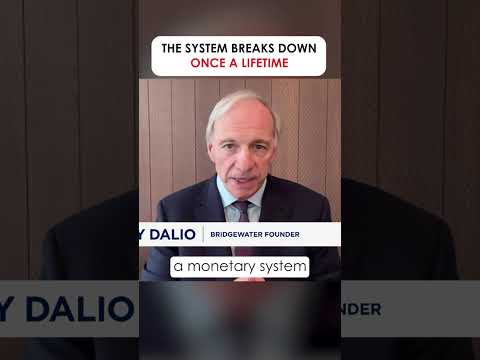
Ray Dalio Talks with CNBC's Squawk Box About How the System Breaks Down Once a Lifetime
Principles by Ray Dalio· 2025-07-16 16:36
Economic Cycles - The industry observes that economic cycles occur approximately once in a lifetime due to breakdowns in established systems [1] - These breakdowns create cyclical patterns [1] Debt and Monetary Systems - The industry notes the existence of monetary systems and debt cycles [2] - One entity's debt represents another's assets [2] - The industry identifies a debt issue arising from unsustainable debt accumulation [2]

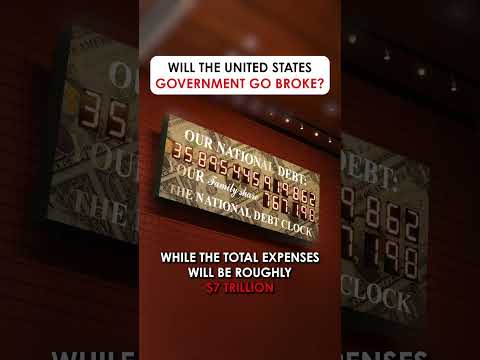
Will the United States Government Go Broke?
Principles by Ray Dalio· 2025-07-15 17:37
US Debt Outlook - US government debt is projected to reach $55-60 trillion in 10 years [1] - The projected debt will be 7-75 times government revenue [1] - The debt burden will amount to approximately $425000 per American family [1] Potential Economic Problems - There are concerns about insufficient buyers for the US debt [1] - The lack of demand for US debt could lead to significant economic challenges [1] Call to Action - Urgent action is needed to avoid the worst-case scenario [1]
My New Book How Countries Go Broke: The Big Cycle
Principles by Ray Dalio· 2025-07-14 17:34
Book Overview - The book "How Countries Go Broke: The Big Cycle" explains the mechanics of countries going broke, particularly focusing on the United States [1] - The book aims to help readers understand the situation and what actions can be taken individually or collectively [2] - The book was selected by Barnes & Noble as one of their best business books of the year [1]
What Happens When a Country Accumulates Too Much Debt?
Principles by Ray Dalio· 2025-07-11 15:18
Economic Cycles & Debt - Excessive debt coupled with economic downturns can lead to financial bubbles bursting, forcing countries to choose between defaulting or printing money, which devalues currency and raises inflation [1] - History shows cycles of debt-financed booms and busts, with central banks intervening [2] Internal Conflicts & Political Extremism - Economic hardship, declining living standards, and wealth inequality exacerbate internal conflicts among different groups, leading to political extremism [3] - Left-wing populism seeks wealth redistribution, while right-wing populism aims to maintain wealth concentration [3] Wealth Flight & Government Response - Rising taxes on the wealthy during turbulent times can trigger capital flight to safer assets and locations, reducing tax revenue and leading to economic decline [4] - Governments may eventually outlaw wealth flight as conditions worsen [4] Societal Impact & Leadership - Turbulent conditions undermine productivity, shrinking the economic pie and intensifying conflicts over resource allocation [5] - Democracy faces challenges as populist leaders emerge, promising order and control, potentially leading to a shift towards strong, centralized leadership [5]
My Honest Thoughts on the United States' Tariffs
Principles by Ray Dalio· 2025-07-09 15:48
Tariffs & Trade Policy - Tariffs are a symptom of underlying changes [1] - Well-executed tariffs of reasonable size can be beneficial [2] - The US aims to generate tax revenue from tariffs [2] - Tariffs are intended to boost US manufacturing for employment and security [2] Global Economic Shift - The world is moving away from efficient, globalized production and free-flowing capital [3] - The shift is towards a less efficient, more controlled global economy [3] - This transition may lead to higher inflation and slower growth, potentially stagflation [3] Manufacturing & Economic Impact - The potential for tariffs to develop US manufacturing remains a question [4]
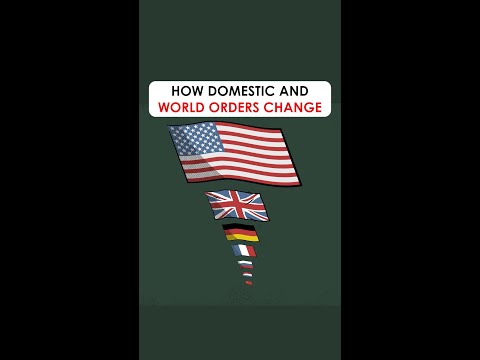
How Domestic and World Orders Change
Principles by Ray Dalio· 2025-07-07 14:36
Over the last few years, three big things that hadn't happened in my lifetime prompted me to do this study. First, countries didn't have enough money to pay their debts, even after lowering interest rates to zero. So, their central banks began printing lots of money to do so.Second, big internal conflicts emerged due to growing gaps in wealth and values. This showed up in political populism and polarization between the left who want to redistribute wealth and the right who want to defend those holding the w ...
How Government Debt Reduces Your Buying Power
Principles by Ray Dalio· 2025-07-03 13:24
Government Debt Management Strategies - When countries face excessive debt, governments are likely to devalue their currency and lower interest rates [1] - Devaluing currency is a subtle method for governments to reduce wealth, as it makes goods cheaper in markets and stimulates the economy [2][3] - Lowering interest rates is stimulative [3] Risks and Alternatives - Devaluing currency reduces buying power because the value of the currency is less [3] - Balancing the budget is an alternative to devaluing currency for offsetting debt problems [4]
The Challenge of Absolutist Politics
Principles by Ray Dalio· 2025-07-02 20:26
Budget Deficit & GDP Target - The consensus is to reduce the budget deficit to 3% of GDP [1] - Political constraints prevent pledges to achieve the 3% GDP target [1] Political Obstacles - Politicians are hesitant to compromise due to constituent and party pressures [2] - Fear of political repercussions hinders necessary budget adjustments [2] Potential Financial Crisis - Failure to adjust the current trajectory may lead to a financial crash [1]
Can the Right and Left Agree on This?
Principles by Ray Dalio· 2025-06-30 13:41
Everybody I speak with on both sides of the aisle agree that it's got to be a 3% of GDP. It's like but politics, we're having politics. The country um is at war.Two sides, the left, the right. The issue of how do you run the country. Very, very big differences.And that is um a difficult thing in our democracy because everybody's arguing and politics is standing in the way and making good decisions. and the idea of compromise, you know, that's out. I don't think anybody doubts uh that we need a renovation in ...

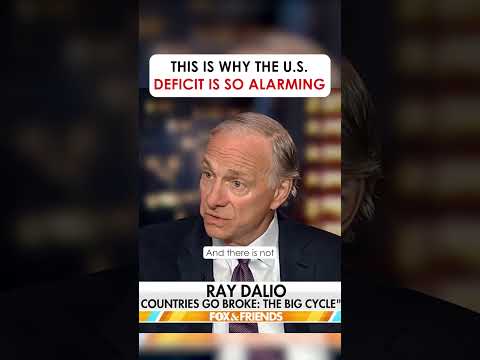
This is Why the U.S. Deficit is so Alarming
Principles by Ray Dalio· 2025-06-26 13:49
In 2008, he sounded the alarm about the impending financial crisis. And now he's warning about something even more important. He's the author of the brand new book, How Countries Go Broke: The Big Cycle.And Bridgewater Associates founder Ray Dio joins us now. Great. Uh, Ray, great to see you.Congratulations on the book. Thank you. Uh, it really relates now how countries go broke because everyone's should be concerned about the deficit that alarms you.Why. Well, there's a supply demand. you know, when they t ...