Principles by Ray Dalio

Search documents
My Life Advice for Teenagers
Principles by Ray Dalio· 2025-09-03 17:54
At this part in your life, you physically and mentally change so that you become an independent adult. At least you want to become an independent adult. And so you have to recognize that where in the past maybe your relationship with your parents and relationship with others was more of a you know a pal and their role model and so on that you're making a transition sometimes as the hormones and the physical and the mental changes take place.And along those lines, recognize though that you think you know eve ...

Ask Me Anything
Principles by Ray Dalio· 2025-09-03 01:48
I'm doing a Reddit ask me anything since I'm at a stage in my life that I want to pass along whatever I have that could be of value to others. Most importantly, principles for dealing with life, work, the changing world order, debt, money, and markets. I expect that we'll talk about those things, but you can ask me anything. So, I hope that I'll see you. ...

Success IS NOT What you Think it Will Be
Principles by Ray Dalio· 2025-08-28 16:52
Entrepreneurial Journey & Success - Assessing success is difficult before embarking on the journey due to unknown factors [1] - The learning process and discoveries are integral to the entrepreneurial journey, often leading to unexpected but successful outcomes [3] - The entrepreneurial path is likened to mountain climbing, involving struggles, setbacks, and progress to higher levels [4] Success & Perspective - Success doesn't necessarily equate to pride or marvel; successful individuals often remain grounded and concerned about potential setbacks [4][5] - Among 5,000 entrepreneurs studied, approximately 20% to 25% achieved success, but only a small fraction (5 out of 5,000) succeeded according to their initial plans [2]
Would I Ever Run For Government?
Principles by Ray Dalio· 2025-08-26 15:56
Why don't you go into government. Why have you thought about you being Secretary of Treasury, chairman of the Federal Reserve, run for the Senate or something and solve those problems while you're in government. Have you ever thought of that.Scares the daylights out of me. Uh I I let me say I have the greatest appreciation and respect for those who go into public service and serve in this kind of an environment. I think there's a question of whether uh with the population, it's not just a leadership questio ...
How the Economic Machine Works Part 2
Principles by Ray Dalio· 2025-08-26 13:21
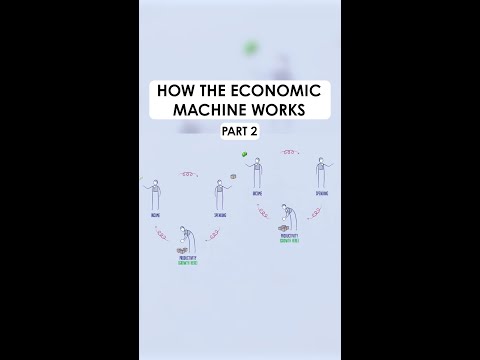
Economic Principles - Productivity growth, driven by innovation and hard work, is the primary driver of rising living standards over time [1] - Credit's impact is more significant in the short term due to its ability to create economic swings, allowing consumption to exceed production temporarily [2] - Borrowing is essentially pulling spending forward, creating a future obligation to spend less than one earns to repay the debt, thus forming a cycle [5][6] Credit and Debt Dynamics - Credit differs from money; money settles transactions immediately, while credit creates an asset and a liability, representing a promise to pay in the future [7] - The total amount of credit in the United States is approximately $50 trillion, significantly exceeding the total amount of money, which is about $3 trillion [8] - Credit is beneficial when it finances productive investments that generate income to repay the debt, but detrimental when it funds overconsumption that cannot be sustained [10] Economic Cycles - Economic swings are primarily influenced by the availability of credit, not by fluctuations in innovation or hard work [4] - Borrowing sets in motion a predictable series of events, making understanding credit crucial for anticipating future economic outcomes [6] - An economy with credit experiences increased spending and faster income growth than productivity in the short run, but this is unsustainable in the long run [9] Example of Credit Amplification - An individual earning $100,000 annually can borrow $10,000, enabling them to spend $110,000, which in turn becomes another person's income [11][12]
How the Economic Machine Works Part 1
Principles by Ray Dalio· 2025-08-25 19:22
How the economic machine works in 30 minutes. The economy works like a simple machine, but many people don't understand it or they don't agree on how it works. And this has led to a lot of needless economic suffering.I feel a deep sense of responsibility to share my simple but practical economic template. Though it's unconventional, it has helped me to anticipate and to sidestep the global financial crisis and it has worked well for me for over 30 years. Let's begin.Though the economy might seem complex, it ...
#Love is the most important soft skill...
Principles by Ray Dalio· 2025-08-21 15:38
Soft Skills Importance - Emphasizes the significance of soft skills, particularly empathy and caring, in supporting individuals during difficult times [1] - Highlights the power of love and kindness in helping others navigate challenging experiences [2] - Underscores that soft skills are valuable assets [2] Personal Experience - Shares a personal experience of loss and the impact of others' kindness [2] - Acknowledges the profound difference made by supportive gestures during times of grief [2]
My Biggest Failure Became My Strength
Principles by Ray Dalio· 2025-08-20 15:42
Lessons Learned from Failures - Difficulties and failures are great teachers, leading to progress through reflection [1] - Pain plus reflection equals progress [1] - The individual reflected on a painful experience to determine how to achieve upside without downside [4] Debt Crisis and Financial Loss - In 1980 and 1981, the individual calculated that American banks had lent more money to foreign countries than they could repay, predicting a debt crisis [2] - In August 1982, Mexico defaulted on its debts, gaining the individual attention [3] - The individual incorrectly predicted a big debt crisis and stock market decline, resulting in financial losses for themselves and clients [3] - The individual had to borrow $4,000 thousand from their dad to pay family bills due to being broke and humiliated [4] Business Strategy and Reflection - The individual paused and reflected on the experience to determine how to have the upside without the downside [4] - The individual faced a choice regarding their business and started thinking about how to solve the puzzle [4]
Be Generous and Expect Generosity from Others
Principles by Ray Dalio· 2025-08-18 13:14
Relationships & Generosity - Generosity fosters a reciprocal system where giving leads to receiving, benefiting both parties [1][2] - Cultivating win-win relationships is invaluable for personal and professional growth [2] - Strong relationships are spiritually enriching and considered the most important aspect of life [1] Behavioral Recommendations - Individuals should be generous and seek out other generous individuals to create a positive and effective network [1][2] - If generosity is not reciprocated, it is advisable to move on and find more supportive relationships [1]
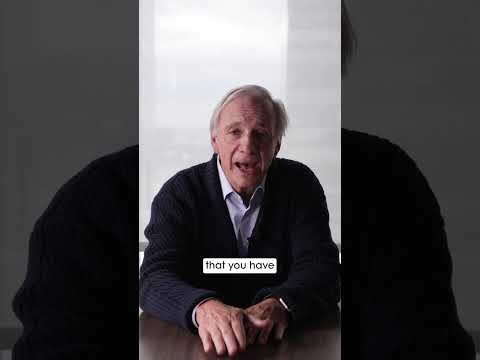
Ray Dalio's Advice for Young Adults in Their 20s
Principles by Ray Dalio· 2025-08-13 18:47
and you have a lot of young people here that would all like to be you. Um, what advice would you give them from your, you know, looking back at your 20-year-old self. >> I think the important thing is that you you have the life that you want to have.How you define success uh is important. I I I I don't think that there's a right path for success. I think that I was lucky in that I fell in love with the game that if I played the game, I ended up making a lot of money. I don't recommend just going after life ...