Principles by Ray Dalio

Search documents
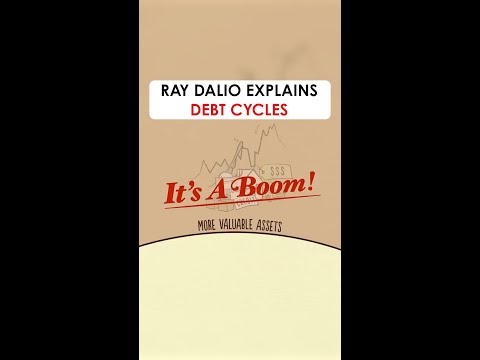
Ray Dalio Explains Debt Cycles
Principles by Ray Dalio· 2026-01-08 14:53
The short-term debt cycle. As economic activity increases, we see an expansion. The first phase of the short-term debt cycle, spending continues to increase and prices start to rise.This happens because the increase in spending is fueled by credit, which can be created instantly out of thin air. When the amount of spending and incomes grow faster than the production of goods, prices rise. When prices rise, we call this inflation.The central bank doesn't want too much inflation because it causes problems. Se ...

Embrace the Mechanics of Reality
Principles by Ray Dalio· 2026-01-07 17:11
seeking truth from facts. And it sounds very obvious, but it is very hard to do it. It can be hard to just look at facts and actually observe the world as it is rather than the observer the world that we want.>> I think part of it is a habit. >> Mhm. Same.>> If I mean I think that if we're if we're taught the emotional like um what is real. Yeah. Reality >> is interesting. Reality is beautiful in a sense.If you take evolution and things die, if you recognize that and you think that way and it's all part of ...

Ray Dalio's Formula for Business Leadership
Principles by Ray Dalio· 2026-01-06 16:11
There's a balance between uh autocratic leadership and democratic leadership. I don't believe either of those work. Okay.The autocratic leader is the person who believes that they have all the answers and just follow my instructions and I don't believe that works because they don't know enough and also they're not having the people with them. I don't think democratic leadership works like you take a survey or something and so I believe an idea meritocracy works. I I I I had a process of what we call believa ...
Ray DiaryofACEO Hiring CC Final
Principles by Ray Dalio· 2025-12-18 19:03
It's crazy how how often people say that hiring is the most important thing. Yet when you look at how what entrepreneurs are spending their time on, it's usually like the product, the marketing, etc. And it's maybe like one or two hours in some cases if they're lucky on finding truly exceptional people. They often just outsource it to someone else, the recruitment team.When you think back through your career, how important was it to find truly exceptional people. >> I systemized it. First of all, I think th ...
Today's Events from a Big Cycle Perspective
Principles by Ray Dalio· 2025-12-16 13:44
We had a global pandemic that disrupted life for everyone on earth in varying ways at least to some extent. We do have this unbelievable technology that everyone is trying to wrap their heads around with AI. We did have even starting you know arguably 10 years ago the emergence of serious trade tensions with China.We do see the emergence of their military clearly getting much more strong like some big stuff is going on these days. Well, yes. And the thing that I would like to focus on is the mechanics of ho ...

Challenges with the Development of Digital Ray
Principles by Ray Dalio· 2025-12-15 17:25
There are a lot of challenges to be able to do this. Well, well, first of of all, you have to be able to have enough of an understanding that you can have a a conversation. I'm very lucky because I wrote down, you know, many thousands of principles and many things I've said so that to educate it well is important.And I'm I had the benefit of been doing this for a long time. And so anybody who's going to do that has to be able to bring their whole self to it so that it can communicate in all the different di ...

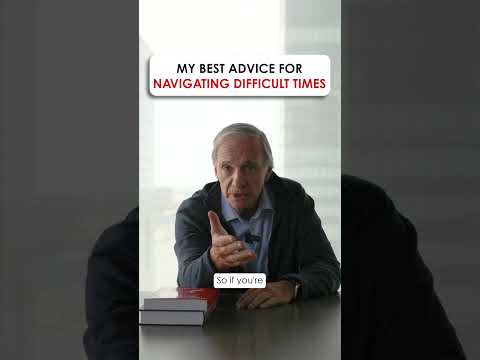
My Best Advice for Navigating Difficult Times
Principles by Ray Dalio· 2025-12-12 17:27
Investment Strategy - The advice emphasizes the importance of not being overly influenced by daily news and events, but rather focusing on the bigger picture [1] - It suggests developing a game plan, including strategies for dealing with uncertainty, to navigate market changes effectively [2] - Portfolio diversification is highlighted as a key element of a sound financial strategy, enabling investors to withstand market fluctuations [2] Risk Management - Reacting impulsively to market events is discouraged, as it is unlikely to lead to optimal outcomes [2] - Having sufficient financial resources and diversification helps avoid the need for reactive decision-making [2]
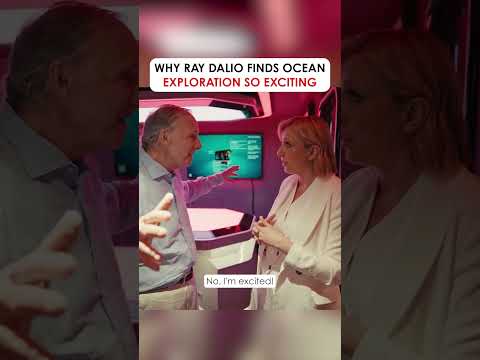
Why Ray Dalio Finds Ocean Exploration So Exciting
Principles by Ray Dalio· 2025-12-11 16:47
Ocean Exploration Initiative - Ray Dalio, founder of the world's biggest hedge fund, is focusing on the ocean as the planet's most important asset [1] - OceanX, a nonprofit initiative, was co-founded by Ray Dalio and his son, Mark Dalio [1] - The ocean covers twice the size of all land combined and remains largely unexplored [2] Ship Construction - Building the ship took approximately 3 years, from architecture to completion [1] Discoveries and Excitement - The discovery of the giant squid, shown in its media for the first and only time, was a significant find [3] - The exploration of the ocean is compared to discovering a new continent with unique species [2] - Historically, the whale and the squid have been subjects of interest, with massive fights occurring at depths of 1,000 meters [3]
Ray Dalio's 30 Year History using Artificial Intelligence for Decision Making
Principles by Ray Dalio· 2025-12-10 14:54
AI Adoption in Decision Making - The company has been leveraging AI in decision-making processes for approximately 35-40 years [1] - The company initially utilized AI through expert systems, which involved codifying decision-making criteria into algorithms and equations [1] - AI's ability to process complex information faster and with less emotion was a key advantage [1] Investment Strategy & Success - AI-driven investment decision-making was instrumental in the success of Bridgewater [2] - The company extended the application of AI beyond investment decisions to broader decision-making processes [2] Development of AI Tools - The company developed an app, a coach, to answer user questions [3] - The emergence of LLMs, such as ChatGPT, has further enabled the company's AI-driven decision-making capabilities [3]

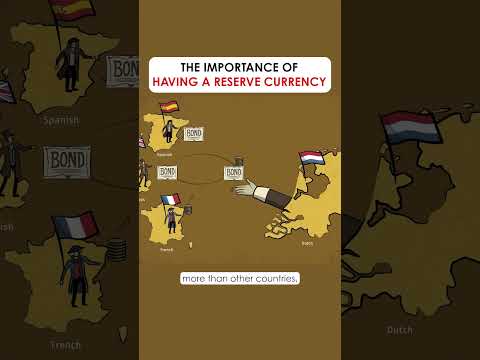
The Importance of Having a Reserve Currency
Principles by Ray Dalio· 2025-12-08 16:18
Global Currency Dynamics - A country's currency becomes the preferred global medium of exchange when it leads international trade [1] - This currency then becomes the preferred storehold of wealth and the world's leading reserve currency [1] - Historically, the Dutch Gilder, British Pound, and US Dollar served as reserve currencies when their respective countries led world trade [1] - China's currency is increasingly being used as a reserve currency [2] Reserve Currency Advantages - Having a reserve currency allows a country to borrow more than others [2] - Countries without a reserve currency do not have the same borrowing advantage [2] - A country with a reserve currency can print more money when it runs out [3] Potential Risks - The privilege of having a reserve currency can lead to increased borrowing and the beginning of a financial bubble [3] - This can create mutually supportive financial, political, and military powers [3] - Historically, empires have followed this path to power [4]