From The Desk Of Anthony Pompliano

Search documents
October Will Be VOLATILE For Markets
From The Desk Of Anthony Pompliano· 2025-10-02 19:22
Volatility is coming. That is the message from Goldman Sachs. They say that volatility tends to be 25% higher in October.It says 1928 October S&P realized volatility average 18 vol versus 15 vol for other months. Seth Associates say that they believe high October volatility is more than just a coincidence. They say that they believe it is a critical period for many investors and companies that manage performance to calendar year end.Regardless of why it happens or what you think is actually driving this, th ...

Why Gold Is Surging In Price This Year
From The Desk Of Anthony Pompliano· 2025-10-01 13:31
Gold has been on an absolute tear recently and many investors are wondering what has been going on. It's supposed to be a stable store of value with very little volatility on a day-to-day basis. That's why a 15% move in just a month has put all eyes on the precious metal.As a result, gold is on track for its seventh quarterly gain over the last eight quarters, which is its best streak since 2020 as well. Now, these large inflows are noteworthy, but they don't explain why so much capital is flocking to an as ...

History Tells Us Q4 Will Send Markets Much Higher
From The Desk Of Anthony Pompliano· 2025-09-30 16:54
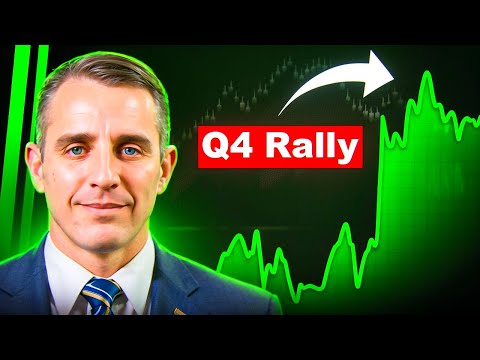
What does the future look like if the bull market is actually just beginning. These are the questions that I'm asking myself and they're not rooted in some fantasy world. Carson Group's Ryan Dietrich shows that Q4 is the single best quarter of the year historically. The last quarter of the year has an average return that is nearly twice as strong as any other quarter of the year.Ryan goes on to explain that Q4 has a positive return 14 of the last 15 times as long as the S&P 500 was up 10% or more going into ...
Q4 Is Here And Markets Should EXPLODE Much Higher
From The Desk Of Anthony Pompliano· 2025-09-29 21:00
Hello everyone. We are in a structural bull market and boy is it fun. And now I've got data that suggests things are only going higher in the coming months.Jordi Viser is going to join us to explain why Bitcoin is the purest AI trade in the market. And the recent seasonality data suggests that volatility is coming in the month of October. We're live today from the desk of Anthony Pompiano.[Music] Before we get into today's show, I need your help. My goal is to get to 1 million subscribers on YouTube, but we ...
Top Wall Street Trader Says The Market Looks RISKY Right Now
From The Desk Of Anthony Pompliano· 2025-09-27 14:00
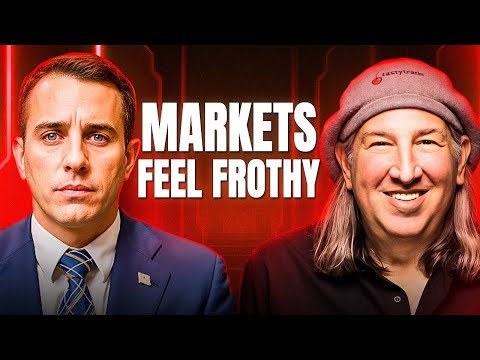
Market Overview & Strategy - The stock market's performance is not solely attributable to government policies, but significantly influenced by economic fundamentals [3][5] - The industry emphasizes engaging individuals in risk-taking, rather than focusing solely on education or specific strategies [9][10] - The speaker expresses nervousness about the stock market, finding no cheap sectors, commodities, or countries [30][31] - The speaker believes the volatility indexes are too cheap, suggesting fear is currently undervalued in the market [68] Retail Investor Impact - Retail investors are increasingly influential, driving changes in asset pricing and company valuation [13] - There's a massive demand for speculation and risk, but technology and content are needed to facilitate it [15] - Individual investors appreciate a probabilistic, quantitative, and mathematical approach more than a subjective, fundamental one [29] - Retail volume in derivatives has increased significantly, with options, futures, and options on futures now representing close to 80% of the market [16][17] Derivatives & Trading - A sophisticated derivatives model provides an expected move for every stock with underlying options, offering valuable information to investors [24][26] - The options marketplace determines the expected move of a stock, reflecting implied volatility set by high-frequency trading firms [28] - The speaker advocates for trading the yield curve to understand how the economy and bonds work [35] Crypto & Digital Assets - The speaker expresses concern that innovative crypto firms are being bought out, potentially leading to regulatory issues and consumer risks [55][56] - The speaker likes the listed futures and ETFs for digital assets, as they provide more optionality and tradability for retail investors [58][60] Event-Based Markets - Event-based markets are currently too expensive due to high fees, but are expected to improve with increased competition from larger exchanges [46][47][48]
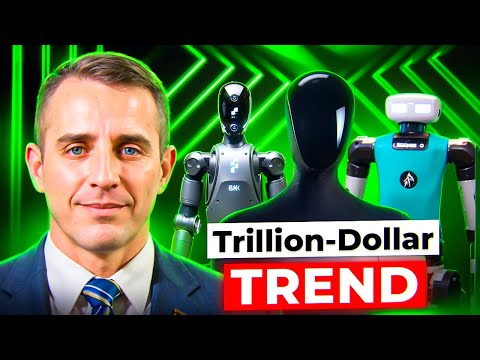
Humanoid Robots Could Be The BIGGEST INVESTMENT OPPORTUNITY Of Our Lifetime
From The Desk Of Anthony Pompliano· 2025-09-26 21:01
Humanoid Robotics Industry Overview - Humanoid robots are seen as the future of labor, potentially automating roughly 50% of global GDP currently attributed to physical labor [3] - Humanoid robots are considered the "gold standard" for data collection, essential for building and maintaining digital twin models [4] - Big tech companies are actively strategizing and investing in humanoid robots to secure a piece of the data pie that will be generated over the next 20 years [5][6] - The bottleneck for humanoid robot adoption is not manufacturing, but deployment, including strategy, integration, workforce preparation, and inventory digitization [15][16][17] - A 10 to 15-year supply-demand imbalance is expected for humanoid robots in the lowest-hanging fruit use cases, with companies willing to pay $100,000 per bot annually over a four to five-year lifespan [18] Investment Strategies & Market Analysis - The speaker believes that Tesla is the only publicly traded company worth considering in the humanoid robotics space, despite acknowledging issues with the Optimus program [20][21][22] - The US is likely to ban Chinese robots due to data security concerns, creating separate markets for China and the rest of the world [23][24] - The speaker emphasizes the importance of distribution in the humanoid robotics market, believing that companies with commercially viable relationships and the ability to deploy robots at scale will control and own the data [39][40][41] Social Investing Methodology - The speaker advocates for "social investing," which involves detecting changes in the world and connecting them to companies that will be affected before the information becomes widely disseminated [47][48] - The speaker uses various data sources, including TikTok comments, web traffic data, and institutional credit card data, to identify trends and assess consumer demand [55][56][59] - The speaker exits a trade when the information that motivated the investment becomes widely known among other investors [52][53] - The speaker is a concentrated, levered investor, typically holding 5 to 15 names at a time and allocating 5% to 30% of their portfolio to high-conviction trades [68][69]
Is The Bitcoin 4-Year Cycle OVER?
From The Desk Of Anthony Pompliano· 2025-09-26 15:01
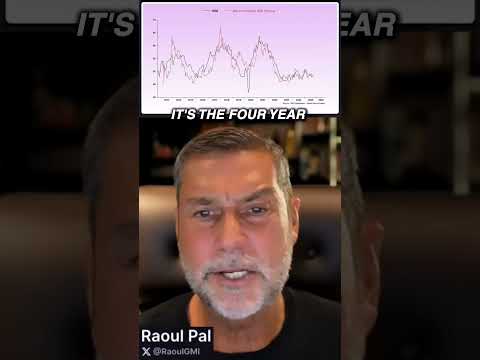
whether the four-year cycle is actually going to be extended or not. Raul Paul, global macro investor. He has come out and said he doesn't think that the four-year cycle will last any longer.He thinks it's now a 5year cycle. Take a listen to his logic. >> Why is Bitcoin sort of not wildly off to the races yet, and it's this chart, which is the business cycle.Remember, we've always said it's the business cycle stupid. It is always the business cycle stupid. And all of these people who claim it's the four-ear ...
Bullish or Bearish? Where Stocks And Bitcoin Are Headed Next
From The Desk Of Anthony Pompliano· 2025-09-25 21:01
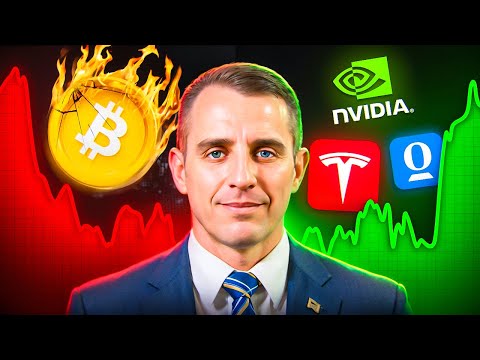
Hello everyone. Today we are going to deeply analyze all the current economic data with the goal of deciding whether we are bullish or bearish right now. We'll discuss the US government's new obsession with buying equity and important companies.And finally, we're going to ponder the big question of whether the Bitcoin 4-year cycle is that going to remain or not. We're live today from the desk of Anthony Pompiano. [Music] Before we get into today's episode, I need your help.My goal is to get to 1 million sub ...
The Fed Got Inflation Wong (AGAIN)
From The Desk Of Anthony Pompliano· 2025-09-25 19:15
People tend to have amnesia when it comes to financial markets. It was only just a few months ago that max fear it was spreading like wildfire all across Wall Street. They swore on their life that tariffs would bring sky-high inflation to American consumers.That hasn't happened. You don't have to believe me either. Federal Reserve Chairman Jerome Powell, the boss, he said it himself yesterday.We're now collecting a good bit of revenue. The federal government collecting a good chunk of revenue, three or 400 ...
Gold IS RIPPING Higher (And The Trend Is Here To Stay)
From The Desk Of Anthony Pompliano· 2025-09-25 16:30
Market Trends & Investment Opportunities - Gold has increased by 40% in 2025, marking its best year since 1979 [1] - Central banks are increasing their gold reserves, potentially due to geopolitical concerns or sanctions risks [1] - The debasement of currency is driving investors towards stores of value like gold and Bitcoin [2][3] - Gold and Bitcoin are expected to perform strongly in investment portfolios over the next decade [3] Monetary Policy Impact - M2 money supply has reached a new all-time high of $222 trillion [2] - Continued money printing is expected to support the rise of gold [2][3] - Gold's upward trend will cease when money printing stops [3]