Tus-Design(300500)

Search documents
【行业深度】洞察2025:中国建筑节能行业竞争格局及市场份额(附竞争梯队、企业竞争力分析等)
Qian Zhan Wang· 2025-07-17 07:15
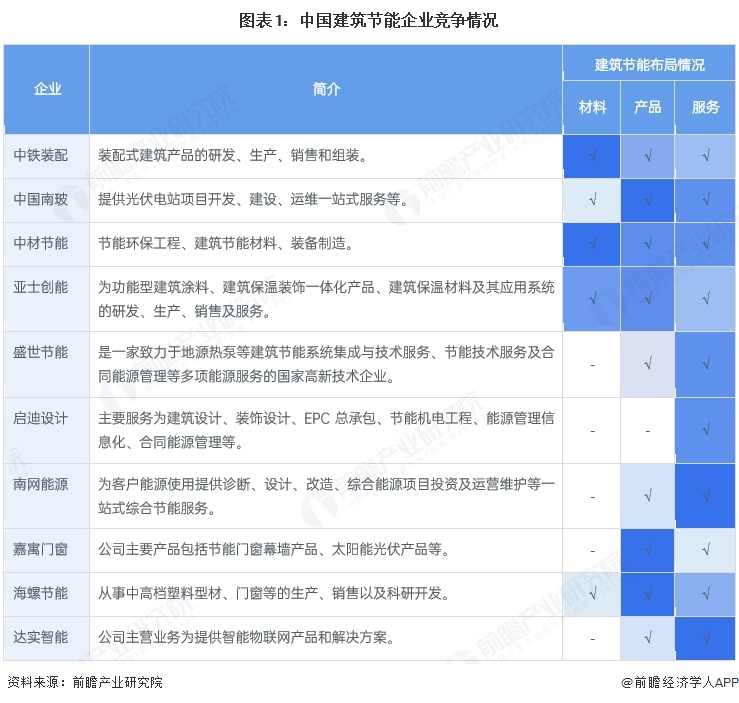
Core Insights - The article discusses the competitive landscape and strategic positioning of companies in China's building energy efficiency market, highlighting key players and their market strategies [1][4][7]. Company Layout - Major companies in the building energy efficiency sector include China National Materials Group (中材节能), Beixin Building Materials (北新建材), Qidi Design (启迪设计), and others, with a focus on providing comprehensive energy-saving solutions [1]. - Companies like Nanwang Energy (南网能源) and Dashi Intelligent (达实智能) are particularly focused on offering integrated energy-saving services to the construction industry [1]. Regional Distribution - The building energy efficiency companies are primarily concentrated in Eastern and Southeastern coastal regions of China, with Jiangsu and Guangdong having the highest representation [3]. Competitive Hierarchy - The industry is divided into three tiers: - The first tier includes leaders like Beixin Building Materials, Nan Glass Group (南玻集团), and Huajian Group (华建集团), which have strong market influence and comprehensive capabilities [4]. - The second tier consists of companies like Nanwang Energy and Qidi Design, which focus on niche areas but have notable professional advantages [4]. - The third tier includes smaller firms like China National Materials Group and Hengshang Energy, which are still in the process of market expansion and technology accumulation [4]. Strategic Cluster Analysis - The competitive landscape is analyzed through a four-quadrant model based on revenue and gross margin, identifying Beixin Building Materials as a leader due to its innovative technologies and sustainable practices [7]. - Other notable companies in the prominent category include Nan Glass Group and Huajian Group, which maintain their leadership through resource management and energy efficiency measures [7]. Market Segmentation - In specific segments, companies like China Nanbo (中国南玻) and Fuyao Glass (福耀玻璃) lead in low-energy glass, while the window industry remains fragmented with no clear leader [11]. Competitive Dynamics - The analysis using Porter's Five Forces model indicates that supplier bargaining power is moderate, while buyer power is slightly weaker due to cost sensitivity and regulatory requirements [13]. - The threat of new entrants is low due to high technical barriers and regulatory requirements, although some cross-industry players are entering through partnerships [13]. - The intensity of rivalry is high, driven by technological advancements and price competition, alongside a surge of capital into the sector [13].





2025年中国建筑节能行业应用现状 公共建筑主导节能市场【组图】
Qian Zhan Wang· 2025-07-14 04:12
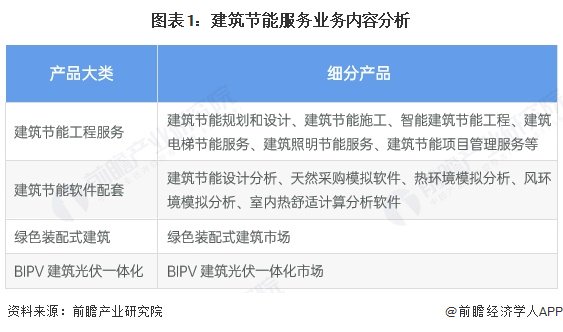
Core Insights - The article discusses the growth and trends in the building energy efficiency sector in China, highlighting the increasing energy-efficient building area and the investment trends in public, residential, and industrial buildings [1][4]. Group 1: Building Energy Efficiency Services - Building energy efficiency services include engineering services, software support, green prefabricated buildings, and BIPV (Building Integrated Photovoltaics) [1][2]. - Different building types require tailored energy-saving solutions, with public buildings focusing on systemic energy savings and residential buildings emphasizing comfort and cost balance [1]. Group 2: Energy-Efficient Building Area - As of 2020, China's energy-efficient building area reached 238.0 billion square meters, growing to 303.0 billion square meters by 2022, and further expanding to 326.8 billion square meters by 2023 [4]. - Projections indicate that by 2024, the energy-efficient building area could reach 360 billion square meters [4]. Group 3: Public Building Energy Consumption - Public buildings account for over 20% of national energy consumption, with hospitals, schools, and office buildings making up 38% of total building energy consumption [5]. - Investment in office buildings and commercial properties has been declining since 2018, with a projected investment of 416 billion yuan in 2024, reflecting a 9% year-on-year decrease [5]. Group 4: Residential Building Energy Efficiency - Residential energy efficiency focuses on insulation, natural lighting, renewable energy integration, and smart control technologies [8]. - The investment in residential buildings peaked and then declined, with 2023 investment dropping to 838.2 billion yuan and a further decrease to 760.4 billion yuan projected for 2024, a 10.5% decline [8]. Group 5: Industrial Building Energy Efficiency - Distributed photovoltaics are a significant application in industrial building energy efficiency, with cumulative installed capacity exceeding 100 million kilowatts by 2023 and projected to surpass 200 million kilowatts by 2024 [10][12].
2025年中国建筑节能行业技术现状 建筑维护结构和风平衡管理是主要技术路线【组图】
Qian Zhan Wang· 2025-07-02 07:47
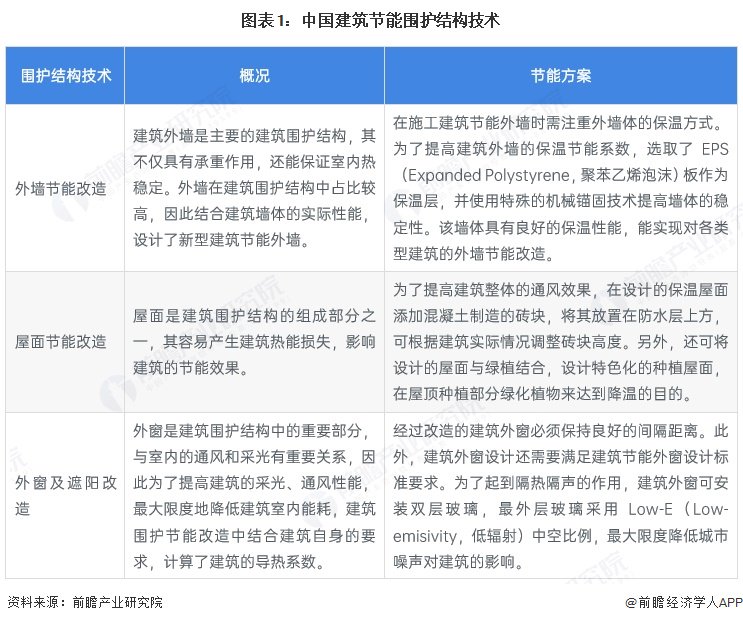
Core Viewpoint - The article discusses the advancements and trends in China's building energy-saving technologies, focusing on the insulation of external walls, roofs, and windows, which can reduce energy consumption by over 30% and help meet national energy-saving standards [1][2]. Group 1: Building Energy-Saving Technologies - The building energy-saving technology emphasizes three main areas: external wall insulation, roof modifications, and window upgrades [1]. - External wall energy-saving modifications utilize materials like EPS (Expanded Polystyrene) boards to enhance insulation performance [2]. - Roof energy-saving improvements include the addition of concrete blocks for ventilation and the integration of green roofs to lower temperatures [2]. - Upgraded windows feature low-emissivity (Low-E) glass and double glazing to improve thermal insulation and reduce indoor energy consumption [2]. Group 2: Patent Applications and Trends - As of May 2025, China has filed 9,069 patent applications related to building energy-saving technologies, with a peak of 1,397 applications in 2023 [7]. - Leading patent applicants in the building energy-saving sector include Chengde Green Building with 143 patents, China Building with 124, and Zhuobao Technology with 121 [9]. - The most popular patent category is E04B (buildings), accounting for 24.1% of applications, followed by F24F (air conditioning and ventilation) at 9.7% [10][12]. Group 3: Airflow Management in Public Buildings - Effective airflow management is crucial for the energy-efficient operation of public buildings, focusing on indoor and outdoor air movement [4][5]. - Various ventilation modes are employed based on seasonal conditions, such as natural ventilation in transitional seasons and mechanical ventilation in winter [5]. - Airflow management strategies primarily target building airtightness and the design of HVAC systems [5].
启迪设计(300500) - 关于特定股东减持计划时间届满的公告
2025-06-27 10:06
启迪设计集团股份有限公司 关于特定股东减持计划时间届满的公告 特定股东靳建华女士保证向本公司提供的信息内容真实、准确、完整,没有 虚假记载、误导性陈述或重大遗漏。 本公司及董事会全体成员保证公告内容与信息披露义务人提供的信息一致。 启迪设计集团股份有限公司(以下简称"公司")于 2025 年 3 月 21 日在巨潮资 讯网(www.cninfo.com.cn)披露了《关于特定股东股份减持计划的提示性公告》 (公告编号:2025-005),公司特定股东靳建华女士计划自公告发布之日起 3 个 交易日后的 3 个月内,以大宗交易或集中竞价的方式减持本公司股份累计不超过 501,600 股(占公司总股本的 0.2883%)。 近日,公司收到特定股东靳建华女士出具的《股份减持计划时间届满告知函》, 截至 2025 年 6 月 26 日,本次减持计划时间已届满,现将相关情况公告如下: 证券代码:300500 证券简称:启迪设计 公告编号:2025-032 一、股东减持情况 | 股东名称 | 减持方式 | 减持时间 | | 减持均价 | 减持股数 | 减持比例 | | --- | --- | --- | --- | --- ...
启迪设计(300500) - 第五届监事会第六次会议决议公告
2025-06-27 07:54
第五届监事会第六次会议决议公告 本公司及监事会全体成员保证信息披露的内容真实、准确、完整,没有虚假 记载、误导性陈述或重大遗漏。 启迪设计集团股份有限公司(以下简称"公司")第五届监事会第六次会议于 2025年6月27日下午在公司会议室以现场方式召开。会议通知于2025年6月23日以 专人送达方式发出。会议应到监事3人,实到监事3人。本次监事会的召集、召开 符合《公司法》、《公司章程》及相关法规的规定。会议由监事会主席金彦先生主 持,经全体与会监事认真审议形成如下决议: 1、审议通过《关于为参股公司提供担保暨关联交易的议案》 证券代码:300500 证券简称:启迪设计 公告编号:2025-030 启迪设计集团股份有限公司 监事会认为:本次公司为参股公司提供担保事项符合有关法律法规的规定, 表决程序合法、有效。不会给公司的正常运营和业务发展产生不利影响,不存在 损害公司及股东特别是中小股东利益的情形。 表决结果:3 票同意,0 票反对,0 票弃权。 特此公告。 启迪设计集团股份有限公司监事会 2025 年 6 月 27 日 ...
启迪设计(300500) - 关于为参股公司提供担保暨关联交易的公告
2025-06-27 07:54
证券代码:300500 证券简称:启迪设计 公告编号:2025-031 启迪设计集团股份有限公司 关于为参股公司提供担保暨关联交易的公告 本公司及董事会全体成员保证信息披露的内容真实、准确、完整,没有虚假 记载、误导性陈述或重大遗漏。 启迪设计集团股份有限公司(以下简称"公司")于2025年6月27日召开第五 届董事会第七次会议,第五届监事会第六次会议,审议通过了《关于为参股公司 提供担保暨关联交易的议案》,关联董事华亮先生已回避表决。本事项已经公司 独立董事专门会议审议通过,现将有关情况公告如下: 一、关联担保情况概述 为满足参股公司苏州鑫能启能源科技有限公司(以下简称"鑫能启")日常经 营流动资金和业务发展需要,启迪设计集团股份有限公司(以下简称"公司")拟 为鑫能启向苏州市农发融资租赁有限公司申请总额度不超过445万元的融资租赁 款项按持股比例提供担保,公司持有鑫能启40%的股权,需为鑫能启提供不超过 178万元的担保额度,鑫能启另一股东苏州中鑫新能源有限公司亦按持股比例为 鑫能启提供担保;担保方式为连带责任担保,授权有效期自董事会审议通过之日 起12个月,在额度范围内授权公司管理层签署担保合同等相关法 ...
启迪设计(300500) - 第五届董事会第七次会议决议公告
2025-06-27 07:54
证券代码:300500 证券简称:启迪设计 公告编号:2025-029 启迪设计集团股份有限公司 第五届董事会第七次会议决议公告 本公司及董事会全体成员保证信息披露的内容真实、准确、完整,没有虚假 记载、误导性陈述或重大遗漏。 启迪设计集团股份有限公司(以下简称"公司")第五届董事会第七次会议于 2025年6月27日下午在公司会议室以现场和通讯相结合的方式召开。会议通知于 2025年6月23日以专人送达方式发出。会议应到董事11人,实到董事 11 人,独 立董事丁洁民先生、吕大龙先生以通讯方式参加表决,公司监事及高级管理人员 列席了本次会议。本次董事会的召集、召开符合《公司法》《公司章程》及相关 法规的规定。会议由董事长查金荣先生主持,经全体与会董事认真审议,形成如 下决议: 1、审议通过《关于为参股公司提供担保暨关联交易的议案》 关联董事华亮先生已回避表决,本议案已经第五届董事会第三次独立董事专 门会议一致审议通过,并同意提交董事会审议。具体内容详见公司同日在巨潮资 讯网(www.cninfo.com.cn)披露的《关于为参股公司提供担保暨关联交易的公告》。 表决结果:10 票同意,0 票反对,0 票弃权。 ...
2025年中国建筑节能行业产品发展现状 多种产品共同构建建筑节能循环生态【组图】
Qian Zhan Wang· 2025-06-20 08:48
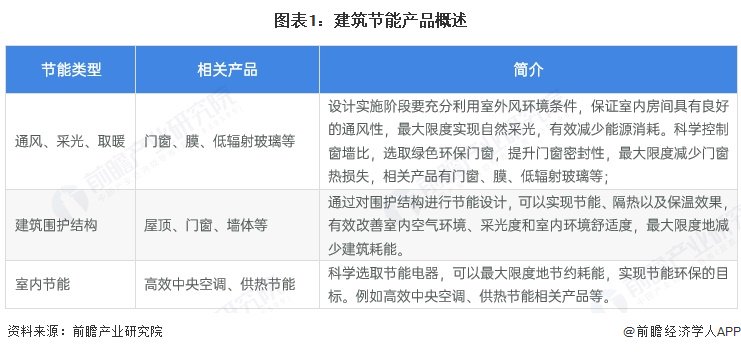
Core Insights - The rapid urban construction in China has led to increased energy consumption in the building industry, necessitating the promotion of green building energy-saving products to mitigate high energy consumption and support the development of energy-efficient construction projects [1][2]. Industry Overview - The building energy-saving industry in China is characterized by a growing market for energy-efficient products, driven by the need to address high energy consumption in construction projects [1]. - Key companies in the industry include China National Materials Group Corporation (中材节能), Beixin Building Materials (北新建材), and others [1]. Energy-Saving Product Types - **Ventilation, Lighting, Heating**: Products such as doors, windows, membranes, and low-emission glass are designed to optimize natural ventilation and lighting, thereby reducing energy consumption [3]. - **Building Envelope Structures**: Energy-saving designs for roofs, doors, and walls improve insulation and reduce energy use, enhancing indoor air quality and comfort [3]. - **Indoor Energy Efficiency**: High-efficiency central air conditioning and heating systems are essential for minimizing energy consumption [3]. Market Size and Growth - The Chinese central air conditioning market has seen continuous growth, with sales reaching 142.9 billion yuan in 2023, an increase of 11.1% year-on-year, and projected to reach 145.8 billion yuan in 2024 [4]. - The production of laminated glass, known for its excellent thermal insulation properties, reached 14.71 million square meters in 2023, with expectations to exceed 15 million square meters in 2024 [5]. Importance of Windows and Doors - Windows and doors are critical components affecting building energy efficiency, accounting for approximately 45%-50% of energy loss in building envelopes [9]. - Poor insulation performance of existing windows leads to significant energy waste, with single-glazed windows causing heat loss of 30%-50% during winter and contributing to 20%-30% of cooling loads in summer [9]. Heating Energy Efficiency Market - Investment in urban heating systems is closely linked to building energy efficiency, with a focus on high-efficiency heating system upgrades and energy-saving optimization of building envelopes [11]. - The fixed asset investment in urban centralized heating has fluctuated between 30-40 billion yuan from 2019 to 2022, with projections for 2024 nearing 40 billion yuan [11].
预见2025:《2025年中国建筑节能行业全景图谱》(附市场现状、竞争格局和发展趋势等)
Qian Zhan Wang· 2025-06-04 02:12
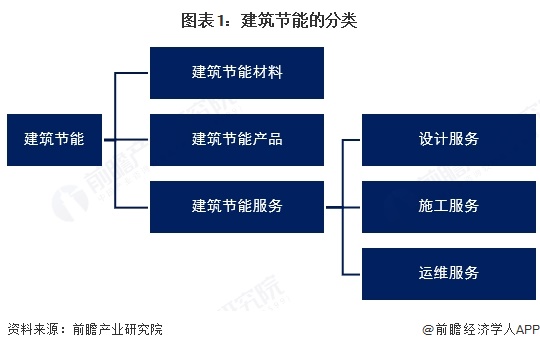
Industry Overview - The building energy-saving industry refers to the implementation of energy-saving standards and the use of energy-efficient technologies, processes, equipment, materials, and products throughout the planning, design, construction, renovation, and operation of buildings [1] - The industry can be categorized into energy-saving products, materials, and services, including design, construction, and operation services [1] Industry Chain Analysis - The upstream of the building energy-saving industry includes the manufacturing of energy-saving materials and equipment [2] - The midstream involves energy-saving products and materials such as thermal insulation materials and heating measurement equipment [2] - The downstream primarily consists of large public buildings, residential buildings, and commercial buildings as end users [2] Industry Development History - The global energy crisis in the 1970s prompted countries to initiate energy-saving programs, with China starting its building energy-saving efforts in the 1980s [5] Policy Background - China's "dual carbon" commitment aims to peak carbon emissions before 2030 and achieve carbon neutrality by 2060, leading to a transition towards zero-energy and zero-carbon buildings [10] - Policies focus on enhancing energy-saving standards for new buildings, retrofitting existing buildings, and promoting renewable energy applications [10] Current Industry Status - In 2022, the total energy consumption of the building sector was 18.4 billion tons of standard coal equivalent, accounting for 36.3% of the national energy consumption [13] - The total carbon emissions from the building sector reached 41.5 billion tons of standard coal equivalent, representing 39.1% of national energy-related carbon emissions [15] - The building operation phase remains the dominant contributor to carbon emissions within the building sector [21] Market Size and Growth - China's building energy-saving market is the third largest globally, with a market size of 160 billion yuan in 2023, projected to reach 195.8 billion yuan in 2024 [23] - The market is expected to grow at a compound annual growth rate of 4%, potentially exceeding 240 billion yuan by 2030 [32] Competitive Landscape - The building energy-saving industry features significant regional disparities in carbon emissions, influenced by population, GDP, climate, and energy structure [25] - Major companies in the sector include China Southern Power Grid, Dasintelligent, and China National Building Material, with a focus on providing comprehensive energy-saving solutions [27]
华为昇腾概念下跌3.09%,主力资金净流出59股
Zheng Quan Shi Bao Wang· 2025-05-15 08:43
Market Performance - Huawei Ascend concept declined by 3.09%, ranking among the top decliners in the concept sector [1] - Within the sector, Wutong Technology hit the daily limit down, while Pingzhi Information, Tongdahai, and Kela Software also experienced significant declines [1] - Only four stocks within the sector saw price increases, with Xingtuxinke, *ST Zhisheng, and Qidi Design rising by 7.94%, 4.99%, and 4.19% respectively [1] Concept Sector Overview - The top gainers among concept sectors included NMN concept (+2.07%), synthetic biology (+2.05%), and pet economy (+1.98%) [2] - Conversely, Huawei Pangu and Huawei Ascend concepts saw declines of 3.76% and 3.09% respectively [2] Capital Flow Analysis - The Huawei Ascend concept sector experienced a net outflow of 3.493 billion yuan, with 59 stocks seeing net outflows [2] - The stock with the highest net outflow was Changshan Beiming, with a net outflow of 439 million yuan, followed by Tuo Wei Information and Runhe Software with outflows of 386 million yuan and 327 million yuan respectively [2] - Stocks with the highest net inflows included *ST Zhisheng, Qunxing Toys, and Kaipu Cloud, with inflows of 2.600 million yuan, 1.518 million yuan, and 1.398 million yuan respectively [2] Individual Stock Performance - Notable decliners in the Huawei Ascend concept included Changshan Beiming (-5.14%), Tuo Wei Information (-4.59%), and Runhe Software (-3.26%) [3] - Other significant decliners included Wutong Technology (-10.01%) and Pingzhi Information (-7.65%) [3][4] - Stocks with positive performance included Xingtuxinke (+7.94%) and *ST Zhisheng (+4.99%) [4]