
BlackRock(BLK)

Search documents
美联储“历史性”Fintech会议:沃勒强调积极拥抱支付创新,提出“精简主账户”概念,木头姐称AI开启“Agent商业”时代
Hua Er Jie Jian Wen· 2025-10-22 13:47
Core Insights - The Federal Reserve has shifted its perspective on cryptocurrencies, now viewing them as a key component of the future payment system rather than a marginal threat [1] - The recent Fintech conference highlighted discussions on the integration of traditional finance with digital assets, stablecoin business models, AI applications in payments, and tokenization [1][3] - The concept of a "streamlined master account" was introduced, allowing non-bank payment companies to access Federal Reserve payment services, which could reduce costs and improve efficiency [1][7] Group 1: Federal Reserve's New Stance - The Federal Reserve no longer views the DeFi sector with skepticism, indicating a significant cultural shift towards embracing innovation in payments [1][7] - Christopher Waller emphasized the need for the Federal Reserve to actively participate in the ongoing payment revolution driven by technology [7][23] - The streamlined master account aims to provide basic payment services to qualified institutions without the need for a full master account, reflecting the evolving payment landscape [1][26] Group 2: Market Reactions and AI Integration - Following Waller's remarks, Bitcoin saw a 2% increase, indicating positive market sentiment towards potential regulatory easing in the U.S. digital finance sector [3] - Cathie Wood from ARK Invest predicted that AI-driven payment systems could lead to a new era of productivity, potentially increasing U.S. GDP growth to 7% over the next five years [3][8] - The integration of AI and blockchain is expected to unlock significant productivity gains, particularly in knowledge work [8] Group 3: Industry Collaboration and Infrastructure - Executives from major firms like Chainlink, Circle, and Google engaged in discussions with the Federal Reserve about interoperability, compliance, and risk management, highlighting the financial system's shift towards digitalization [5] - There is a consensus among participants that the proliferation of AI agents necessitates a new, native financial infrastructure, with stablecoins seen as a natural solution [5][8] - Coinbase's CFO noted that AI could significantly enhance operational efficiency, with AI-generated code expected to comprise half of their codebase by year-end [5] Group 4: Future Directions and Challenges - The conference underscored the importance of collaboration within the ecosystem, moving away from a competitive mindset to one focused on cooperation [8] - Waller's remarks indicated that the Federal Reserve is exploring new ideas to support innovations in payments, including the potential for tokenization and smart contracts [24][26] - The discussions highlighted the need for traditional financial institutions to adapt to the evolving landscape, particularly in integrating DeFi technologies and ensuring compliance with regulatory standards [44]






Blockbuster $40b AI Investment Is Only 10% of What's Coming (NVDA, MSFT, META, BLK)
247Wallst· 2025-10-22 13:29
Core Insights - Major tech companies including Meta, Microsoft, Amazon, and Oracle have announced a $40 billion investment to secure computing capacity for AI, indicating strong confidence in future demand for cloud computing and AI infrastructure [3][7] - The investment is part of a larger trend where tech giants are forming alliances to enhance their capabilities in AI and data center operations [6][7] - Concerns about energy supply and regulatory challenges are prompting tech companies to consider partnerships with energy firms to ensure reliable power sources for their operations [3][9] Investment and Market Trends - The global AI infrastructure spending is projected to reach $400 billion this year, reflecting the rapid growth and demand in the sector [4] - The $40 billion investment by BlackRock, Nvidia, Microsoft, and OpenAI to acquire Aligned Data Centers highlights the escalating competition and consolidation in the data center market [3][7] - There is speculation about potential overbuilding in the data center sector due to multiple inquiries from developers, which could lead to inefficient resource allocation despite the increasing demand for AI-driven computing [10][11] Energy and Infrastructure Challenges - The need for reliable energy sources is becoming critical as AI operations expand, with companies exploring locations near natural gas and oil fields to build data centers [9][10] - The approval process for new energy projects, particularly nuclear, is lengthy, which may hinder the ability to meet the growing energy demands of AI infrastructure [9][10] - The confusion among utilities regarding the actual demand for data centers could lead to overbuilding, as developers may misjudge the market needs based on inquiries [10][11]




X @Token Terminal 📊
Token Terminal 📊· 2025-10-22 12:58
RT Token Terminal 📊 (@tokenterminal)🚨 ICYMI: The @BlackRock BUIDL fund on @Aptos added ~$500 million in AUM yesterday.Aptos is currently the 2nd biggest deployment for the BUIDL fund.The BUIDL fund is tokenized by @Securitize, with asset interoperability provided by @wormhole. https://t.co/429wqIaCMq ...
BlackRock invests big in Meta data center debt deal - report (BLK:NYSE)
Seeking Alpha· 2025-10-22 11:23
Core Insights - BlackRock is a significant investor in the $27 billion private debt raised for the construction of Meta Platforms' data center in Louisiana [2] - The asset manager acquired over $3 billion in bonds issued last week [2]
港交所消息:10月17日,贝莱德公司持有的中国铝业H股多头头寸从4.81%增至5.46%
Xin Lang Cai Jing· 2025-10-22 09:33
港交所消息:10月17日, 贝莱德 公司持有的 中国铝业 H股多头头寸从4.81%增至5.46%。 ...

贝莱德:在中国银行H股的持股比例降至5.95%
Ge Long Hui· 2025-10-22 09:13
Core Viewpoint - BlackRock's stake in China Bank H-shares decreased from 6.10% to 5.95% as of October 16 [1] Group 1 - BlackRock's ownership reduction indicates a shift in investment strategy or market sentiment towards China Bank [1]

贝莱德:人工智能已经超越消费行业 成为美国经济增长的主要驱动力
Zhi Tong Cai Jing· 2025-10-22 08:01
Core Insights - BlackRock's report indicates that artificial intelligence (AI) has surpassed the U.S. consumer sector to become a primary driver of economic growth, with no signs of slowing down as spending intentions from major U.S. tech companies continue to rise [1] - The Fundamental Equities global tech team estimates that AI infrastructure spending will reach $5 trillion between 2025 and 2030, highlighting the evolving nature of AI opportunities [1] - Since the emergence of ChatGPT, AI has remained a focal point in the stock market, driving market returns and stimulating U.S. economic activity [1] Sector Analysis - AI is expected to continue propelling market development into Q4 2025, with opportunities expanding both within and outside the AI sector, as other areas in the market are being overlooked [1] - BlackRock identifies three sectors poised for stock price increases: technology, healthcare, and finance, suggesting a broadening of investment opportunities [1]

BlackRock Inc. (NYSE:BLK) Stock Analysis: A Deep Dive into Financials and Market Position
Financial Modeling Prep· 2025-10-22 03:02
Core Viewpoint - BlackRock Inc. is actively involved in significant financial ventures, particularly in the tech sector, while experiencing stock volatility and maintaining a substantial market presence. Group 1: Stock Performance - BlackRock's stock has decreased by $30, reflecting a -2.59% change, with current prices fluctuating between $1,129.54 and $1,159.39 [3] - Over the past year, the stock has seen a high of $1,219.94 and a low of $773.74, indicating significant market volatility [3] Group 2: Market Capitalization and Trading Activity - The market capitalization of BlackRock is approximately $174.98 billion, showcasing its substantial presence in the financial industry [4][5] - The trading volume for the day is 882,660 shares, suggesting active investor interest [4] Group 3: Strategic Investments - BlackRock is a major investor in a $27 billion tech infrastructure project by Meta and Blue Owl, highlighting its strategic focus on expanding influence in the tech sector [2][5]

2200亿美元,国际顶级投行从质疑到All-in中国创新药
3 6 Ke· 2025-10-22 01:00
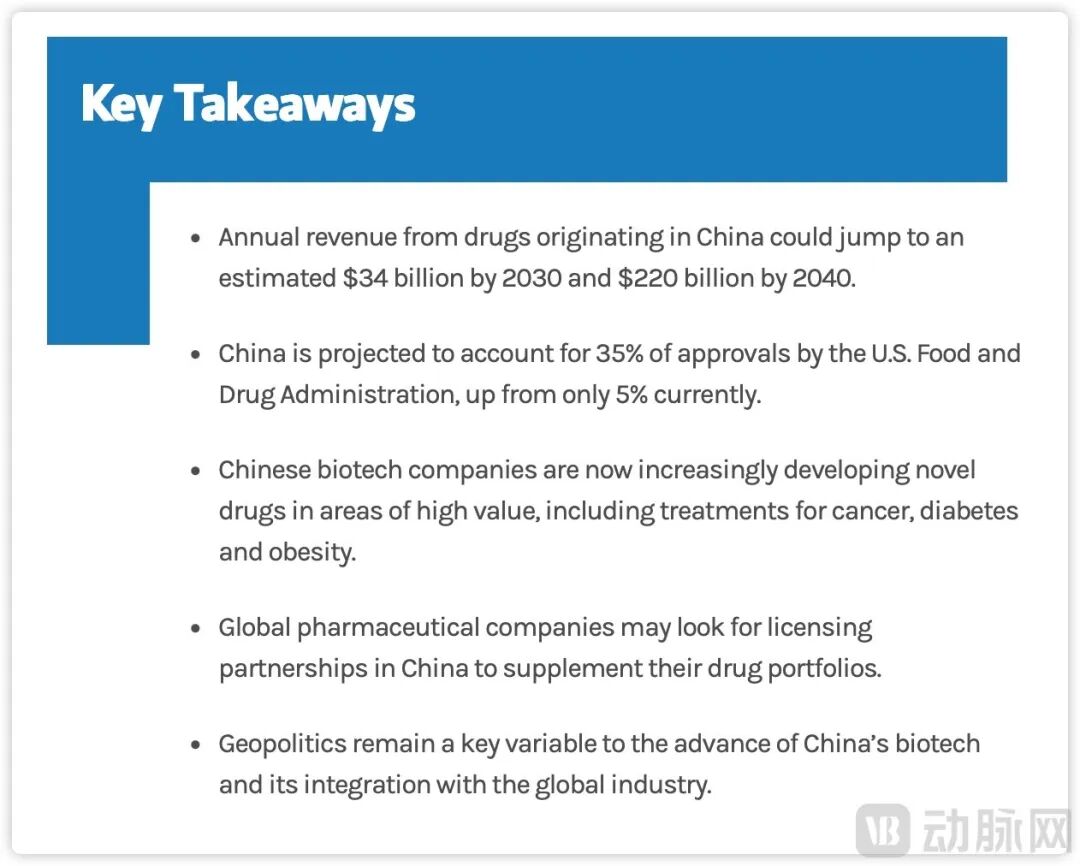
Core Insights - The attitude of foreign capital towards Chinese medical assets has dramatically reversed within a year, shifting from a neutral to a positive outlook on the biotechnology sector in China [1][3][7] Group 1: Market Sentiment Shift - Morgan Stanley's report titled "China Biotech: Innovation Dawn" indicates that China's biotechnology sector is now viewed as a critical part of the global new drug supply chain, with projected pharmaceutical revenues reaching $34 billion by 2030 and $220 billion by 2040 [1][3] - The number of foreign institutions conducting research on Chinese biotech companies has surged, with notable firms like State Street Bank and BlackRock showing increased interest [1][2] - The collective buying actions of foreign investors, such as JPMorgan and Citigroup, reflect a significant shift in sentiment towards Chinese innovative drug companies [2][5] Group 2: Investment Dynamics - The efficiency of converting research interest into actual holdings is evident, as seen in the stock price surge of WuXi AppTec, which rose by 6.52% due to increased foreign investment [2] - Major foreign investors have increased their holdings in key Chinese biotech firms, indicating a trend of strategic accumulation among top foreign capital [5][6] - The report highlights that foreign capital is now viewing specific sectors in China as essential assets in the global technology race, with over 90% of U.S. investors expressing plans to increase exposure to Chinese stocks, particularly in biotechnology [6][7] Group 3: Industry Evolution - The narrative surrounding China's pharmaceutical industry has shifted from being cost-driven to innovation-driven, acknowledging the significant advancements in the sector [3][4] - Morgan Stanley and Goldman Sachs both emphasize the growing recognition of China's innovative capabilities in biotechnology, with expectations that several leading biotech firms will reach breakeven by 2025-2026 [4][8] - The report outlines that the Chinese biotech sector is becoming a key player in filling the revenue gaps created by patent expirations in multinational corporations (MNCs), with an estimated $115 billion revenue loss due to patent cliffs by 2035 [8][10] Group 4: Future Projections - By 2040, China's share of FDA-approved drugs is expected to rise from 5% to 35%, with a projected global sales figure exceeding $1.22 trillion even in the most pessimistic scenarios [25][27] - The report anticipates that the collaboration between MNCs and Chinese biotech firms will intensify, driven by the need to address revenue shortfalls from patent expirations [10][14] - The overall improvement in clinical trial data integrity and the increasing number of new molecular entities launched in China are contributing to a more favorable investment landscape [20][22]


Meta与PE巨头Blue Owl联手筹资270亿美元建设数据中心,贝莱德是最大投资者之一
Hua Er Jie Jian Wen· 2025-10-22 00:11
Core Insights - Meta collaborates with Blue Owl Capital to raise $27 billion through bond issuance for data center construction, setting a record for private bond issuance and highlighting the significant capital demand for AI infrastructure [1][2] - BlackRock is a major investor, subscribing over $3 billion in bonds, while Pimco is the largest buyer with $18 billion [2][3] - The bonds received an A+ investment-grade rating from S&P Global, but the yield is notably high at 6.58%, indicating investor risk premium concerns [2][4] Group 1: Bond Issuance Details - The Hyperion data center project raised $27 billion through private bonds, marking the largest single transaction in the private bond market [2] - The bonds were issued at a face value of $100 and appreciated to $110.2, providing substantial paper gains for early investors [2] Group 2: Investment Management Strategies - BlackRock's bond subscriptions are partially directed towards its ETF products, with a high-yield ETF acquiring $2.1 million in Hyperion bonds, making it the largest single investment in the fund [3] - BlackRock's strategy post-2008 financial crisis has positioned it as the largest asset management company, with over $5 trillion in assets managed in its iShares series [3] Group 3: Off-Balance Sheet Financing - Meta's partnership with Blue Owl allows the financing to be off-balance sheet, enabling large-scale data center development without increasing direct debt [4] - This off-balance sheet structure is becoming a preferred financing method for tech companies pursuing capital-intensive AI infrastructure projects, balancing funding needs with financial flexibility [4]