Bristol-Myers Squibb(BMY)

Search documents
2 Dividend Stocks to Buy and Hold For 10 Years
The Motley Fool· 2026-01-19 18:58
Core Insights - The article emphasizes the resilience of dividend stocks, particularly Bristol Myers Squibb and Amgen, as attractive long-term investments despite facing challenges like patent cliffs [2][8][14] Group 1: Bristol Myers Squibb - Bristol Myers Squibb's stock has underperformed over the past year due to patent cliffs but has a strong product lineup, especially in oncology [3][8] - The company is introducing new formulations, such as a subcutaneous version of Opdivo, to mitigate competition from generics [4] - Bristol Myers has promising candidates in its pipeline, including BMS-986446 for Alzheimer's disease, which has received Fast Track Designation from the FDA [6][7] - The company has a forward dividend yield of 4.4% and has increased its payouts by 65.8% over the past decade, making it an attractive income stock [8] Group 2: Amgen - Amgen is facing challenges from a recent patent cliff but has strong growth drivers, including Tezspire for asthma and Tepezza for thyroid eye disease [9][10] - The company has a robust pipeline, including investigational drugs like MariTide for diabetes and weight management, which are in phase 3 studies [12][13] - Amgen's dividend yield is over 3%, and it has consistently increased its dividend since 2011, indicating a secure dividend program for income-seeking investors [14]



美国药企:欧洲若不涨价,新药将停止供应
3 6 Ke· 2026-01-19 12:35
Group 1 - U.S. pharmaceutical companies are increasing pressure on Europe to raise drug prices, with some threatening to stop supplying new drugs if European lawmakers do not comply [1][2] - Pfizer was the first to reach a "most-favored-nation price" agreement with the Trump administration, which has led to increased drug prices in overseas markets [1][2] - As of now, 16 multinational pharmaceutical companies have agreed to lower drug prices in the U.S., including AstraZeneca and Genentech [1] Group 2 - Trump praised these agreements as tools to force Europe to raise drug prices, claiming they have transformed prescription drug pricing in the U.S. to the lowest in the world [2] - Pharmaceutical executives, including Pfizer's CEO Albert Bourla, indicated they would prefer to stop supplying drugs to countries like France rather than lower U.S. prices [2] - Bristol-Myers Squibb previously threatened to halt the launch of a popular schizophrenia drug in the UK unless prices were increased, and the UK has since promised to raise drug prices following an agreement with the U.S. [2] Group 3 - European countries, which have government-led healthcare systems, have historically pressured pharmaceutical companies to accept lower prices, contrasting with the U.S. system that lacks a unified drug price negotiation mechanism [3] - The CEO of Germany's largest public health insurance provider stated that current drug prices in Germany are too high and called for legislative action to reduce spending, particularly on patented drugs [3] - Analysts predict that the ongoing tension may lead to further delays in the launch of new drugs in Europe, with new drugs currently taking about a year longer to reach the European market compared to the U.S. [3]


JPM 2026:AI破局,肥胖引爆,巨头血战新王座
Xin Lang Cai Jing· 2026-01-15 14:15
Core Insights - 2026 is identified as a pivotal year for transformation and output in the global biopharmaceutical industry, with major companies revealing strategic developments at the JMP conference [1] - The industry is experiencing extreme differentiation, with ADC and GLP-1 seen as key growth engines for the next five years, while mRNA, siRNA, and RLT are transitioning from concepts to clinical norms [1][9] - The BD strategies are becoming more precise, with 2025's small-scale acquisitions starting to yield results, and the logic behind mergers and acquisitions in 2026 expected to diversify [1] Hot Track Dynamics: Dual Drivers of Technology Iteration and Indication Expansion - ADC remains a leading player in the oncology sector, with Merck advancing multiple ADC assets through collaboration with Daiichi Sankyo [12] - BeiGene views ADC as a core technology and is actively promoting drug accessibility globally [12] - Eli Lilly has completed several ADC-related transactions to enhance its capabilities in cancer treatment [12] Weight Management Market Transition - The weight management market is shifting from simple weight loss to comprehensive management of metabolic syndrome, with Eli Lilly focusing on AI-driven drug discovery and direct patient engagement [14] - Roche's acquisition of Carmot Therapeutics enhances its pipeline with new metabolic therapies [14] - Sanofi is expanding the indications for its core asset Dupixent and advancing its autoimmune pipeline [14] Key Corporate Strategic Planning: Core Track Deepening and Platform Layout - Eli Lilly's strategy focuses on obesity and AI-driven drug development, with a projected investment of up to $1 billion in collaboration with NVIDIA [15] - Pfizer aims to maximize core transaction value and apply AI across its business chain, targeting a $150 billion market in obesity by 2030 [15] - Amgen is accelerating the integration of biotechnology and AI, with a focus on rare diseases and partnerships in China [16] BD Trends: Core Logic of Track Reinforcement and Ecological Synergy - The pharmaceutical industry is seeing a concentration of mergers and acquisitions in ADC and bispecific antibodies, with major companies acquiring key assets and technology platforms [17] - Big Pharma is shifting from scale expansion to pipeline restructuring to avoid revenue cliffs due to upcoming patent expirations [18] - The focus is on mid-stage assets with immediate Phase 3 potential, which are expected to have a premium advantage over early-stage assets [18] Industry Outlook - The biopharmaceutical industry is entering an "innovation harvest period" from 2026 to 2030, with GLP-1 drugs evolving into comprehensive metabolic management platforms [19] - The market for GLP-1 receptor agonists in China is projected to reach approximately 38.3 billion yuan by 2030 [19] - The commercialization of cutting-edge therapies is approaching a "singularity," with advancements in cell and gene therapies and RNA therapies expected to overcome production and reimbursement challenges [19][20]


JPM2026:礼来、辉瑞、AZ等巨头豪赌AI与并购
Xin Lang Cai Jing· 2026-01-15 14:09
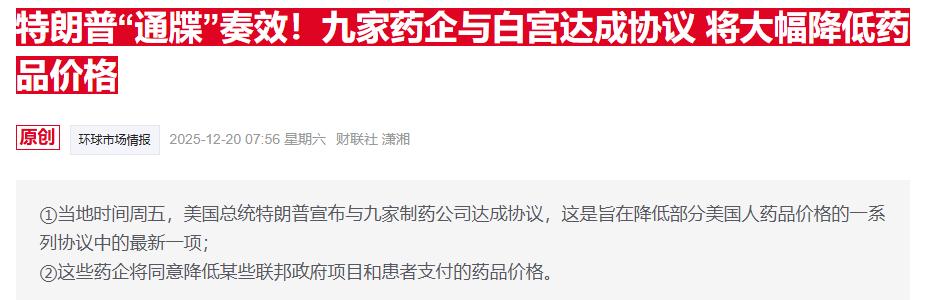
Industry Overview - The 44th JPMorgan Healthcare Conference is taking place in San Francisco, attracting over 8,000 industry elites from biotechnology, pharmaceuticals, and medical devices [1][24] - The global pharmaceutical sector saw a record 516 licensing deals in the past year, totaling over $250.2 billion, indicating a rise in industry transaction activity [24] - The shadow of the "patent cliff" continues to loom over many large pharmaceutical companies, prompting them to actively seek targets and plan for the future [24] AI Integration - AI has transitioned from a concept to a core component of research and development, with companies increasingly focusing on its strategic importance [24][29] - AstraZeneca has elevated AI to a strategic level, implementing its AI Development Agent (AIDA) system to reduce CMC development time by 50% [29] - Eli Lilly announced a partnership with NVIDIA to establish an AI innovation lab, investing $1 billion over five years to accelerate drug development [7][32] AstraZeneca's Strategy - AstraZeneca is focusing on "next-generation dual antibodies + high-value ADCs" as pillars for innovation and growth, aiming for $80 billion in total revenue by 2030 [2][25] - The company has initiated 14 Phase III trials for its PD-1/TIGIT and PD-1/CTLA-4 dual antibodies, with peak sales expected to exceed $3 billion and $2 billion, respectively [5][28] - AstraZeneca's revenue grew by 11% in the first nine months of 2025, with core EPS increasing by 15% [6][29] Pfizer's Focus - Pfizer's strategy for 2026 emphasizes maximizing acquisition asset value, achieving key R&D milestones, and applying AI across its operations [9][33] - The company has reduced operational costs by $5.6 billion to offset declining COVID-19 revenue, which is projected to drop from $11 billion in 2024 to $6.5 billion in 2025 [11][35] - Pfizer is building a differentiated portfolio in the obesity market, aiming to launch products by 2028 that could tap into a market projected to reach $150 billion by 2030 [12][35] Novartis' Pipeline - Novartis is focusing on cardiovascular, renal, metabolic, immunology, neuroscience, and oncology, with a robust pipeline supported by various technology platforms [36][39] - The company expects nine products to achieve peak sales of over $1 billion, with CDK4/6 inhibitors potentially exceeding $10 billion in peak sales [39] - Novartis anticipates a compound annual growth rate of 5-6% in sales from 2025 to 2030 [39] Bristol-Myers Squibb's Approach - Bristol-Myers Squibb is diversifying its pipeline to navigate the patent cliff, focusing on neuroscience, cardiovascular, immunology, and oncology [16][40] - The company plans to disclose core registration data for 13 new molecular entities in 2026 and complete 14 Phase III trials [41] Sanofi's Business Development - Sanofi is actively pursuing business development to enhance its early pipeline, aiming to launch 8-12 high-quality early projects by 2028-2030 [22][49] - The company has completed over 20 business development transactions since 2025, including significant acquisitions to bolster its pipeline [49]


3 Stock Picks Where Technical Indicators Still Say Buy
Barrons· 2026-01-15 09:02
Group 1 - Burlington Stores, Ituran Location and Control, and Bristol Myers Squibb have shown gains since being selected, indicating positive market performance [1] - The stock charts for these companies appear strong, suggesting potential for continued growth [1]
Will Positive Data on Camzyos Strengthen BMY's Cardiovascular Portfolio?
ZACKS· 2026-01-14 18:10
Core Insights - Bristol Myers' (BMY) cardiovascular portfolio includes blockbuster drugs Eliquis and Camzyos, with recent positive results from the SCOUT-HCM trial for Camzyos in adolescents with symptomatic obstructive hypertrophic cardiomyopathy (oHCM) [1][3] Group 1: Clinical Trial Results - The SCOUT-HCM trial met its primary endpoint, showing a statistically significant reduction in the Valsalva left ventricular outflow tract (LVOT) gradient at week 28 compared to placebo, indicating Camzyos' effectiveness in alleviating LVOT obstruction [2] - Several secondary endpoints also achieved statistical significance, reflecting clinically meaningful improvements in disease burden, with safety findings consistent with the established profile of Camzyos in adults [2] Group 2: Market Potential and Competition - The positive data from the SCOUT-HCM trial supports the potential for Camzyos to be the first cardiac myosin inhibitor (CMI) for treating adolescent oHCM, which could lead to increased sales if approved for a broader patient population [3] - Eliquis, a blood thinner, is a significant contributor to BMY's revenue, and the company has a co-development agreement with Pfizer [4] - Competition is intensifying as Cytokinetics received FDA approval for aficamten (Myqorzo) for obstructive HCM, marking a shift for the company into a commercial-stage entity [7] Group 3: Pipeline Developments - BMY and Johnson & Johnson (JNJ) discontinued the late-stage Librexia study on milvexian for acute coronary syndrome after an interim analysis indicated it was unlikely to meet primary efficacy endpoints [5] - However, two other late-stage studies for milvexian are proceeding, with top-line data expected in 2026 [6] Group 4: Financial Performance and Valuation - BMY shares have increased by 20.5% over the past six months, compared to the industry's growth of 23% [10] - The company is trading at a price/earnings ratio of 9.27x forward earnings, which is higher than its historical mean of 8.41x but lower than the large-cap pharma industry's average of 17.82x [11] - The Zacks Consensus Estimate for 2025 EPS remains stable at $6.52, while the estimate for 2026 has increased [13]
Bristol-Myers Squibb Reports Positive Phase 3 SCOUT-HCM Results for Camzyos in Adolescent Patients
Yahoo Finance· 2026-01-14 17:53
Core Insights - Bristol-Myers Squibb Company (NYSE:BMY) is highlighted as a potentially undervalued stock within the S&P 500, particularly following the positive results from its Phase 3 SCOUT-HCM clinical trial for Camzyos [1] Group 1: Clinical Trial Results - The SCOUT-HCM trial achieved its primary endpoint, showing a statistically significant reduction in the Valsalva left ventricular outflow tract (LVOT) gradient at Week 28 compared to a placebo, indicating effective reduction of physical obstruction in the heart [2] - The trial also demonstrated statistical significance across multiple secondary endpoints, suggesting that Camzyos could be the first cardiac myosin inhibitor approved for adolescents suffering from symptomatic obstructive hypertrophic cardiomyopathy (oHCM) [2] Group 2: Mechanism of Action - Camzyos acts as a selective, reversible, allosteric inhibitor of cardiac myosin, targeting the underlying pathophysiology of hypertrophic cardiomyopathy (HCM) by inhibiting excess myosin-actin cross-bridges in the sarcomere, which reduces hypercontractility of the heart [3] - The therapy aims to alleviate dynamic LVOT obstruction and improve cardiac filling pressures, thereby enhancing the daily activity levels of patients [3] Group 3: Current Usage and Warnings - Over 4,000 healthcare providers in the US currently utilize Camzyos for adult patients with symptomatic NYHA class II-III oHCM [3] - It is important to note that Camzyos carries a Boxed Warning regarding the risk of heart failure [3]
Healthy Returns: Novo Nordisk CEO on GLP-1 pricing, and more insights from the JPM conference
CNBC· 2026-01-14 17:08
Core Insights - The healthcare sector is optimistic about 2026, with expectations of better performance compared to previous years due to settled drug pricing issues, falling interest rates, and promising scientific advancements [3] Company Updates - Novo Nordisk plans to expand its incretin market with the introduction of the Wegovy oral pill and its injectable version in 2026, despite anticipating price pressures due to a recent drug pricing deal with the Trump administration and the introduction of cheaper generics [5][6] - Bristol Myers Squibb aims to deliver up to 10 new products by the end of the decade to offset losses from upcoming exclusivity expirations of blockbuster drugs, with a diverse portfolio in late-stage development [7][8] - Pfizer is heavily invested in obesity treatments following its $10 billion acquisition of Metsera, planning to launch 10 late-stage studies of obesity products by the end of the year [11][12] Business Development Strategies - Novo Nordisk is focusing on volume growth to counteract price cuts and is actively seeking complementary assets to enhance its pipeline [6] - Bristol Myers Squibb is casting a wide net for business development, aiming to build on its core therapeutic areas and pursue innovative science for challenging diseases [10] Collaborations and Investments - Eli Lilly and Nvidia announced a joint investment of up to $1 billion over five years to create a lab in San Francisco for AI-driven drug discovery [14] - AbbVie has reached an agreement with the Trump administration to lower drug prices and invest $100 billion domestically over the next decade, while also licensing an experimental cancer therapy from RemeGen for $650 million upfront, potentially worth $5.6 billion [14]



Bristol Myers price target raised to $60 from $54 at Leerink
Yahoo Finance· 2026-01-14 14:16
Core Viewpoint - Leerink analyst David Risinger has raised the price target for Bristol Myers (BMY) to $60 from $54, maintaining an Outperform rating, indicating confidence in the company's future performance and pipeline potential [1]. Group 1: Pipeline Potential - The firm sees significant pipeline optionality in 2026, suggesting that there is room for additional stock upside potential based on upcoming developments [1]. - Bristol Myers is expected to have 12 registrational data readouts from 8 assets in 2026, which represent significant new launch opportunities in the coming years [1]. - The firm believes that investors are heavily discounting most pipeline candidates, indicating that positive outcomes could lead to substantial upside for the stock [1].
Bristol-Myers Squibb Company (BMY) Presents at 44th Annual J.P. Morgan Healthcare Conference Transcript
Seeking Alpha· 2026-01-12 20:45
Core Insights - The company aims to build a financially strong organization that can deliver sustainable growth into the 2030s and beyond [3] - In 2025, the company focused on execution and made significant progress, with its growth portfolio increasing by 17% in the first nine months of the year [3]