Bristol-Myers Squibb(BMY)

Search documents
Should You Buy, Hold, or Sell BMY Stock Ahead of Q4 Earnings?
ZACKS· 2026-02-02 14:10
Core Viewpoint - Bristol-Myers Squibb Company (BMY) is set to report its fourth-quarter and full-year 2025 results on February 5, 2026, with consensus estimates for sales at $12.25 billion and earnings per share (EPS) at $1.15. Recent earnings estimates for 2025 have decreased, while those for 2026 have increased slightly [1][4]. Estimate Movement - The current EPS estimates for Q1, Q2, FY 2025, and FY 2026 are $1.15, $1.51, $6.09, and $6.08 respectively, showing a downward trend from previous estimates [2]. - The earnings surprise history indicates that BMY has consistently beaten estimates in the last four quarters, with an average surprise of 20.05% [2][3]. Factors Influencing Q4 Results - BMY's revenue growth is likely supported by its growth portfolio, which includes drugs like Opdivo, Reblozyl, and Breyanzi, despite facing pressure from declining sales of legacy drugs due to generic competition [4][6]. - Opdivo's sales are projected at $2.6 billion, benefiting from label expansions in new indications [7][8]. - Other drugs such as Orencia and Yervoy are also expected to contribute significantly to sales, with estimates of $989 million and $727 million respectively [9]. Legacy Drug Impact - Legacy products accounted for 47% of total sales in the first nine months of 2025, and their decline has negatively impacted overall revenue growth [21]. - Sales from legacy drugs like Eliquis, Revlimid, and Pomalyst are under pressure from generic competition, although Eliquis continues to show strong demand [14][15]. Strategic Collaborations and Acquisitions - BMY's recent acquisition of Orbital Therapeutics adds a promising preclinical RNA immunotherapy candidate to its pipeline, enhancing its capabilities in autoimmune diseases [23]. - The collaboration with BioNTech for the co-development of pumitamig has shown positive interim results, indicating potential in treating various solid tumors [24][25]. Stock Performance and Valuation - BMY's shares have underperformed compared to the industry and the S&P 500, with a current price/earnings ratio of 9.09x, lower than the industry average [17][19]. - The company is viewed as a safe haven for investors in the biotech sector, with a dividend yield of 4.58% providing an incentive to hold shares [26][27].


Lupin launches generic cancer drug in US
BusinessLine· 2026-02-02 10:05
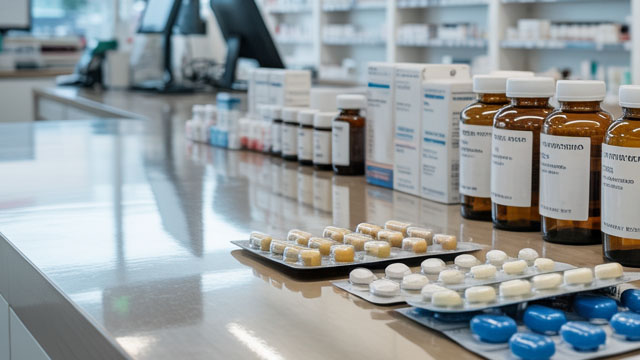
Drug firm Lupin on Monday said it has launched a generic cancer treatment medication in the US.The company has launched Dasatinib Tablets in strengths of 20 mg, 50 mg, 70 mg, 80 mg, 100 mg, and 140 mg, in the US, following the approval from the US Food and Drug Administration (USFDA).The product was developed in partnership with Pharmascience Inc, it added. Dasatinib Tablets are bioequivalent to Sprycel Tablets of Bristol-Myers Squibb Company, and indicated for the treatment of the newly diagnosed adults wi ...
Piper Sandler Raises Bristol Myers (BMY) PT to $66 Citing Pipeline Visibility
Yahoo Finance· 2026-02-01 18:27
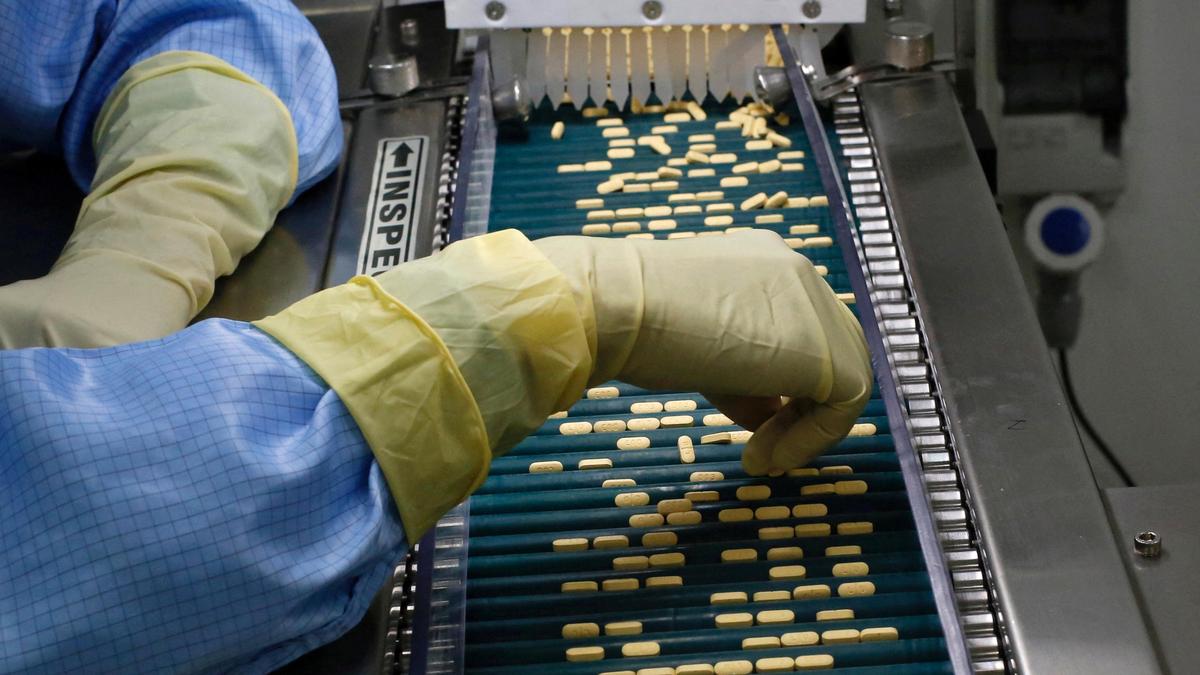
Core Insights - Bristol Myers Squibb Company (NYSE:BMY) is identified as one of the most undervalued large-cap stocks currently available for investment [1] - Analysts have raised price targets for Bristol Myers, indicating a positive outlook for the stock driven by pipeline progress and growth potential [2][3] Analyst Ratings and Price Targets - Piper Sandler increased its price target for Bristol Myers to $66 from $62, maintaining an Overweight rating, citing undervaluation due to the upcoming loss of exclusivity for Eliquis in the US [1] - Citi analyst Geoff Meacham raised the price target to $60 from $53 with a Neutral rating, highlighting favorable conditions for the biopharma sector heading into 2026 [2] - Leerink analyst David Risinger raised the price target to $60 from $54 with an Outperform rating, anticipating significant upside potential in 2026 due to a robust pipeline [3] Company Overview - Bristol Myers Squibb is involved in the discovery, development, licensing, manufacturing, marketing, distribution, and sale of biopharmaceutical products globally, focusing on areas such as oncology, hematology, immunology, cardiovascular, and neuroscience [4]
Citi Raises Bristol-Myers (BMY) Target as Sector Outlook Improves into 2026
Yahoo Finance· 2026-01-30 22:10
Group 1: Analyst Insights - Citi analyst Geoff Meacham raised the price target for Bristol-Myers Squibb Company (BMY) to $60 from $53, maintaining a Neutral rating, reflecting a more favorable outlook for the biopharma sector into 2026 [1] - The adjustments in targets across the biopharma group are based on estimates that are "beatable" and lower policy risk, which could create a better investment environment for the sector [1] Group 2: Partnership and Innovation - Bristol-Myers recently announced a partnership with Microsoft to enhance early detection of lung cancer using AI-enabled radiology technology, which is already operational in hospitals across the United States [2] - The partnership aims to improve access to early detection in medically underserved areas, including rural hospitals and community clinics [3] - The initiative underscores the practical benefits of AI in clinical care, with potential for expansion into other disease areas if successful [3] Group 3: Company Overview - Bristol-Myers Squibb is a global biopharmaceutical company focused on developing medicines for serious diseases, including cancer, blood disorders, immune conditions, cardiovascular disease, and neurological disorders [4]
Will BMY's Oncology Collaborations Drive Its Next Growth Phase?
ZACKS· 2026-01-30 14:50
Core Insights - Bristol Myers Squibb (BMY) has partnered with Janux Therapeutics to develop a novel tumor-activated therapeutic targeting a validated solid tumor antigen across multiple cancer types [2] - Janux is set to receive up to $50 million in upfront and near-term milestone payments, with potential additional milestones totaling approximately $800 million, along with tiered royalties on global product sales [3] - BMY will lead clinical development and global commercialization after the IND submission, while Janux will remain involved through the first phase I study [4] Collaboration and Development - BMY's collaboration with Microsoft aims to enhance early detection of lung cancer using AI-powered radiology solutions [4] - In 2025, BMY partnered with BioNTech for the co-development of the investigational bispecific antibody pumitamig (BNT327) for various solid tumor types [5] - Interim results from a phase II study of pumitamig in combination with chemotherapy for triple-negative breast cancer showed encouraging antitumor activity and a manageable safety profile [6][7] Competitive Landscape - BMY competes in the oncology space with major players like Merck and Pfizer, with Merck's Keytruda being a dominant drug in immuno-oncology [9] - Merck is developing bispecific antibodies targeting PD-1 and VEGF, while Pfizer has a diverse oncology portfolio including ADCs and bispecifics [10][13] Financial Performance and Valuation - BMY shares have increased by 25.4% over the past six months, outperforming the industry growth of 22.8% [15] - The company is trading at a price/earnings ratio of 9.02x forward earnings, which is lower than the large-cap pharma industry's average of 18.18x [17] - The Zacks Consensus Estimate for BMY's 2025 EPS has decreased to $6.33 from $6.51 over the past 60 days, while the estimate for 2026 has increased [19]

How Big Pharma is navigating a $300 billion patent cliff
Yahoo Finance· 2026-01-30 08:00
Industry Overview - The pharmaceutical industry is facing a potential loss of $300 billion, which represents one-sixth of its overall revenue, by 2030 due to a patent cliff [1] - Companies that can adapt quickly will be better positioned to navigate this challenge [1] Company-Specific Insights - Eli Lilly and Novo Nordisk are well-positioned with limited patent exposure and significant earnings from GLP-1 weight loss drugs [2] - Bristol Myers Squibb faces a significant challenge with a projected growth gap of about $38 billion, primarily due to the loss of patent protection for its top drugs, Eliquis and Opdivo, which together account for over half of its earnings [3] - Merck & Co. and Pfizer are also facing substantial gaps of $23 billion and $21 billion, respectively [3] Strategic Responses - Successful companies are employing multi-faceted strategies to mitigate losses, including mergers and acquisitions (M&A) to strengthen their drug pipelines [4] - Beyond M&A, companies are also focusing on delaying patent expirations, exploring new drug development areas, and refocusing efforts to generate growth [5] Johnson & Johnson's Position - Johnson & Johnson is positioning itself as a success story amid the patent cliff, despite facing challenges such as biosimilar competition for its drug Stelara, which could lead to a $15 million revenue gap [6] - The company’s drug Darzalex, with projected sales of almost $18 billion in 2024, will soon encounter its own patent cliff [6] - J&J reported over $24 billion in quarterly sales with a 6% increase in annual sales, surpassing market expectations, and is framing 2025 as a pivotal year for growth [7]

百时美施贵宝钱江:做不被定义的创新探路者
财富FORTUNE· 2026-01-29 13:10
Core Viewpoint - The article highlights the transformative journey of the Chinese pharmaceutical industry from "catching up" to "leading," exemplified by the career of Qian Jiang, who has witnessed and contributed to significant changes over three decades [4][6]. Group 1: Career Development and Industry Changes - Qian Jiang's career reflects the evolution of the Chinese pharmaceutical sector, transitioning from a time when patients waited 8-10 years for innovative drugs to a present where rapid advancements are being made [1][4]. - The pharmaceutical industry in China is experiencing a shift towards innovation, with Qian emphasizing the importance of embracing change and technology, particularly artificial intelligence, to enhance efficiency and speed in drug development [8][9]. - The average time for scientific innovation to reach clinical application remains at 17 years, highlighting a significant gap that the industry aims to close [8]. Group 2: Personal Philosophy and Leadership - Qian Jiang views himself as a "fortunate child of the era," attributing his career advancements to the broader changes in the pharmaceutical landscape [3][11]. - His leadership philosophy centers on the idea that the role of pharmaceutical executives has evolved from mere management to becoming pioneers who connect global and local innovation ecosystems [14][15]. - The commitment to patient-centered care is a core value for Qian, emphasizing that the ultimate goal of pharmaceutical work is to improve patients' lives [19][20]. Group 3: Strategic Vision for BMS - BMS China aims to leverage its long-standing presence and adapt to the changing pharmaceutical ecosystem by fostering innovation and collaboration [15][16]. - The company’s strategy includes a commitment to delivering innovative drugs more rapidly to patients, reflecting a long-term vision for growth and value creation [16][24]. - Qian Jiang's experience in both multinational corporations and local biotech firms positions him uniquely to drive BMS's strategic initiatives in China [13][14].

Bristol Myers Squibb (BMY), Microsoft (MSFT) Partner to Enhance Early Lung Cancer Detection Through AI
Yahoo Finance· 2026-01-29 07:07
Bristol-Myers Squibb Company (NYSE:BMY) is one of the best inexpensive stocks to buy now. On January 20, Bristol Myers Squibb announced a partnership with Microsoft (NASDAQ:MSFT) to enhance the early detection of lung cancer. The collaboration centers on integrating Bristol Myers’ oncology expertise with Microsoft’s advanced AI-enabled radiology platform. By using these digital tools, the companies aim to streamline the identification of non-small cell lung cancer, ensuring patients are guided toward optim ...

P/E Ratio Insights for Bristol-Myers Squibb - Bristol-Myers Squibb (NYSE:BMY)
Benzinga· 2026-01-28 20:00
In the current market session, Bristol-Myers Squibb Inc. (NYSE:BMY) share price is at $55.26, after a 2.07% drop. Over the past month, the stock went up by 2.06%, but over the past year, it actually fell by 8.01%. With good short-term performance like this, and questionable long-term performance, long-term shareholders might want to start looking into the company's price-to-earnings ratio.Comparing Bristol-Myers Squibb P/E Against Its PeersThe P/E ratio measures the current share price to the company's EPS. ...

General Motors To Rally More Than 27%? Here Are 10 Top Analyst Forecasts For Wednesday - Boeing (NYSE:BA), Bristol-Myers Squibb (NYSE:BMY)
Benzinga· 2026-01-28 14:14
Top Wall Street analysts changed their outlook on these top names. For a complete view of all analyst rating changes, including upgrades and downgrades, please see our analyst ratings page.Considering buying GM stock? Here’s what analysts think: Photo via Shutterstock ...