Biktarvy

Search documents
Gilead Strengthens Inflammation Portfolio With Ouro Medicines Deal
ZACKS· 2026-03-24 20:07
Core Insights - Gilead Sciences (GILD) has agreed to acquire Ouro Medicines for $1.675 billion upfront, with potential additional milestone payments of up to $500 million, to enhance its portfolio in innovative therapies for autoimmune diseases [1][2][9] - The acquisition includes OM336, a bispecific T-cell engager that shows promise in treating severe autoimmune conditions, and is expected to enter registrational studies by 2027 [4][9] - Gilead is also in advanced discussions with Galapagos (GLPG) for a strategic collaboration to co-develop OM336, sharing development costs and royalties [6][7][8] Acquisition Details - The acquisition price is set at $1.675 billion upfront, with an additional $500 million contingent on achieving certain milestones [2][9] - The deal is subject to regulatory approvals and customary closing conditions [2] Product Insights - OM336 is currently under an active investigational new drug (IND) application in the United States and has shown promising early phase I/II data in treating autoimmune hemolytic anemia (AIHA) and immune thrombocytopenia (ITP) [3][4] - The drug has received Fast Track and Orphan Drug designations in the U.S. for AIHA and ITP, indicating its potential significance in the market [4] Strategic Collaboration - Gilead plans to collaborate with Galapagos, where Galapagos would fund 50% of the upfront and milestone payments and take on the majority of Ouro's operating assets [6][7] - Both companies will share development costs equally after the start of registrational studies, while Gilead retains exclusive global commercialization rights, excluding Greater China [7][8] Market Positioning - Gilead aims to diversify its revenue base and strengthen its oncology franchise, having seen a 28.1% increase in shares over the past year compared to the industry growth of 9.4% [10] - The acquisition of Ouro Medicines aligns with Gilead's strategy to expand into next-generation immunology treatments, particularly T-cell engager platforms [3][10]



Will GILD's Move to Acquire ACLX Boost Its Cell Therapy Franchise?
ZACKS· 2026-03-13 15:11
Core Insights - Gilead Sciences, Inc. (GILD) is facing competitive pressures in its cell therapy franchise, which includes Yescarta and Tecartus, leading to a 7% year-over-year sales decline to $1.8 billion in 2025 [1][9] - To address this decline, GILD plans to acquire Arcellx for $7.8 billion, which will enhance its control over the anito-cel therapy and streamline development and commercialization [2][4][9] Sales Performance - Sales from GILD's cell therapy unit decreased by 7% year-over-year to $1.8 billion in 2025, with Yescarta sales down 5% to $1.5 billion and Tecartus sales down 15% to $344 million [1][9] - The decline is attributed to increasing competition from both in-class and out-of-class therapies [1][9] Acquisition Strategy - GILD's acquisition of Arcellx is valued at $115 per share in cash plus a $5 contingent value right, totaling an equity value of $7.8 billion [2] - This acquisition will provide GILD full control over anito-cel, eliminating profit-sharing and enhancing long-term margin potential [4] Pipeline Developments - GILD's subsidiary, Kite, is collaborating with Arcellx to co-develop anito-cel, which has received FDA acceptance for a biologics license application as a treatment for relapsed or refractory multiple myeloma, with a decision expected in December 2026 [3][4] Competitive Landscape - GILD faces strong competition in the cell therapy market from companies like Bristol Myers (BMY) and Novartis (NVS), with BMY's Breyanzi surpassing $1 billion in annualized sales in 2025 [6][7] - NVS's Kymriah recorded sales of $381 million in 2025, reflecting a 14% decline due to competitive pressures [8] Financial Performance - GILD's shares have increased by 30.3% over the past year, outperforming the industry growth of 15.4% [11] - The current price/earnings ratio for GILD is 16.41x forward earnings, higher than its historical mean of 11.32x but lower than the large-cap pharma industry average of 17.89x [13] Earnings Estimates - The bottom-line estimate for GILD in 2026 has increased to $8.66 from $8.60, while the estimate for 2027 has risen to $9.63 from $9.33 [14]


The Zacks Analyst Blog Oracle, T-Mobile, Gilead, and C&F Financial
ZACKS· 2026-03-13 08:31
Core Insights - The Zacks Equity Research team has highlighted several stocks, including Oracle Corp., T-Mobile US, Inc., Gilead Sciences, Inc., National Research Corp., and C&F Financial Corp., in their recent Analyst Blog [1][2] Oracle Corp. (ORCL) - Oracle's shares have outperformed the Zacks Computer - Software industry over the past year, with a growth of 11.6% compared to the industry's 2.7% [4] - The company reported strong fiscal Q3 2026 results, with earnings and revenues exceeding estimates, driven by an 84% surge in cloud infrastructure revenues due to AI workload and multicloud demand [4] - Free cash flow for the trailing 12 months was negative $13.2 billion as Oracle continues to invest aggressively in data center build-outs [5] - Competition from hyperscalers poses a risk to margins, and the transition from license revenue to subscription models may lead to near-term earnings volatility [6] T-Mobile US, Inc. (TMUS) - T-Mobile's shares have underperformed the Zacks Wireless National industry over the past six months, declining by 10.1% compared to the industry's 1.6% [7] - The company faces challenges due to macroeconomic factors, market saturation, and high debt burden, which could impact its premium valuation [7] - Despite these challenges, T-Mobile has achieved industry-leading postpaid customer growth and a record-low churn rate, bolstered by its acquisition strategy [8] - The company's 2.5 GHz 5G spectrum provides competitive advantages in speed and coverage [9] Gilead Sciences, Inc. (GILD) - Gilead's shares have outperformed the Zacks Medical - Biomedical and Genetics industry over the past six months, with a growth of 30.6% compared to 19.5% for the industry [10] - The company reported better-than-expected fourth-quarter results, driven by its market-leading HIV franchise, particularly Biktarvy and Descovy [10] - Gilead expects HIV sales to grow approximately 6% in 2026, with Biktarvy projected to have a CAGR of around 6% over the next three years [11] - The company is also developing additional HIV treatments and strengthening its oncology and virology franchises through collaborations [12] National Research Corp. (NRC) - National Research's shares have outperformed the Zacks Business - Information Services industry over the past six months, with a growth of 0.5% compared to a decline of 15.2% for the industry [13] - The company's Total Recurring Contract Value (TRCV) has risen for five consecutive quarters, reaching approximately $152 million by March 2026 [13] - New sales increased by approximately 86% in 2025, indicating improved commercial execution [14] - However, the company has faced declining revenues for three consecutive years, which poses execution risks if TRCV does not translate into growth [15] C&F Financial Corp. (CFFI) - C&F Financial's shares have outperformed the Zacks Banks - Southeast industry over the past six months, with a growth of 1.5% compared to a decline of 5.3% for the industry [16] - The company benefits from a diversified three-segment model that supports stable earnings and reduces reliance on any single revenue stream [16] - Core banking expansion is driving recurring income, while mortgage banking performance is improving as originations recover [17] - Key risks include margin pressure from interest-rate shifts and rising operating expenses [18]



Josh Brown: Biotech growth stocks immune to disruption risk
247Wallst· 2026-03-11 16:37
Core Viewpoint - Large-cap biotech stocks are considered resilient to disruption risks typically faced by tech companies, primarily due to their long drug approval processes and established product portfolios [1][2] Group 1: Biotech Sector Resilience - Companies like Amgen and AbbVie are highlighted for their ability to navigate revenue erosion through broad product portfolios and multi-year pipeline replacements [1] - The FDA approval process, which can take a decade, provides a structural time buffer that protects biotech firms from rapid obsolescence [1] - Year-to-date performance shows Amgen up 16% and Gilead up 21% in 2026, significantly outperforming the iShares Biotechnology ETF, which is up approximately 3% [1] Group 2: Disruption Mechanisms - While biotech firms are insulated from AI-driven disruption, they face challenges such as patent cliffs, biosimilar competition, and government drug pricing reforms [1] - AbbVie’s Humira lost exclusivity, leading to a revenue drop of about 50% in two years, highlighting the risks associated with patent cliffs [1] - Amgen's revenue from Enbrel fell 48% in Q4 2025 due to biosimilar competition and Medicare redesign, indicating structural revenue erosion [1] Group 3: Company-Specific Insights - Gilead's ASCENT-07 trial for Trodelvy missed its primary endpoint, demonstrating how clinical trial failures can significantly impact pipeline value [2] - Eli Lilly's stock has appreciated approximately 416% over five years, driven by the success of its GLP-1 products, but it is down 6% year-to-date in 2026 [2] - Biogen's revenue is expected to decline mid-single digits in 2026, with its MS franchise down 14% in Q4 2025, reflecting a different risk profile compared to other biotech firms [2] Group 4: Evaluating Biotech Stocks - Investors should assess biotech stocks based on three questions: the percentage of revenue from products with patent protection beyond five years, the presence of at least two Phase 3 pipeline products, and the strength of the balance sheet to support pipeline investments [2] - Amgen's CEO expressed confidence in the company's broad portfolio and innovative therapies, indicating a path for sustained long-term growth [2] - Understanding the specific types of disruption, such as patent cliffs and pricing reform, is crucial for investors to navigate volatility in the biotech sector [2]

Gilead Sciences (NasdaqGS:GILD) FY Conference Transcript
2026-03-11 16:02
Summary of Gilead Sciences FY Conference Call (March 11, 2026) Company Overview - **Company**: Gilead Sciences (NasdaqGS: GILD) - **Key Focus**: Biopharmaceuticals, particularly in oncology and HIV treatment/prevention Core Points and Arguments Financial Performance - Gilead reported an extraordinary performance in 2025, with significant growth in earnings per share (EPS) and strong operating expense control [7] - The company is at the beginning of a long cycle with multiple product launches and the strongest pipeline in its history [7] Product Launches - **Yeztugo**: A once-every-six-month subcutaneous HIV prevention medicine, launched with extraordinary data showing 100% prevention in high-risk populations [23][24] - **Livdelzi**: A drug for liver disease (PBC) that has shown strong initial sales performance [7] - **Anito-cel**: Acquired through a deal with Arcellx for approximately $8 billion, this is a best-in-class BCMA cell therapy for multiple myeloma with a significant commercial opportunity estimated at over $20 billion [9][10] Market Opportunities - The multiple myeloma market is highlighted as a major opportunity, with Gilead's anito-cel showing a differentiated safety profile compared to competitors [11][14] - Gilead's oncology revenues reached approximately $3 billion, representing about 12% of total revenues, with expectations for steady growth in this segment [19][20] Yeztugo Launch Insights - The launch of Yeztugo is tracking well, with $150 million in sales reported for the first year and over 90% payer coverage achieved [24][26] - The company anticipates significant growth, projecting $800 million in sales for the upcoming year, driven by a growing patient base [22][28] Long-term Growth Strategy - Gilead aims to diversify its portfolio beyond HIV, with multiple upcoming product launches across various therapeutic areas, including oncology and liver disease [66][67] - The company has no major patent cliffs until 2036, allowing for sustained growth and investment in its pipeline [67] Challenges and Market Dynamics - The HIV treatment market is expected to shift towards long-acting therapies, with a significant portion of patients currently not diagnosed or not virally suppressed [42][43] - Despite some Medicaid coverage restrictions, Gilead does not foresee a material impact on its business from these changes [46][54] Community Engagement - Gilead is actively working to reach new populations affected by HIV, particularly in underserved communities, through targeted awareness campaigns [61] Additional Important Content - The company is experiencing a shift in the HIV prevention market, with a noted increase in patients starting on Yeztugo who are naive to HIV prevention therapies [25] - Gilead's commercial team is adapting strategies to raise awareness and reduce stigma associated with HIV treatment and prevention [61] - The overall HIV prevention market is expected to grow significantly, with a 50% increase reported from 2024 to 2025 [35][36] This summary encapsulates the key points discussed during the Gilead Sciences FY Conference Call, highlighting the company's financial performance, product launches, market opportunities, and strategic direction.
2 Recession-Resistant Dividend Stocks to Buy Now
Yahoo Finance· 2026-03-11 10:20
Core Viewpoint - The article discusses the potential resilience of CVS Health and Gilead Sciences during economic downturns, suggesting they are solid investments even in uncertain economic conditions [1]. Group 1: CVS Health - CVS Health operates over 9,000 locations in the U.S. and has established strong community relationships, which may help it navigate economic challenges [2]. - The company has faced challenges in its Medicare Advantage business but is focusing on profitable growth by scaling back this segment, which should improve margins and financial results [3]. - CVS Health offers an attractive dividend yield of 3.4%, significantly higher than the S&P 500's 1.2%, and has increased its dividend by 56.5% over the past decade, making it a solid choice for recession-resistant investment [3]. Group 2: Gilead Sciences - Gilead Sciences is a leading biotech company known for its strong portfolio in the HIV market, including key products like Biktarvy and Descovy, and has expanded into oncology and COVID-19 treatments [4]. - The company's HIV products are essential for patients, which should help maintain sales even during a recession, despite recent fluctuations in revenue from Veklury [5]. - Gilead has a robust pipeline in oncology that is expected to support future product launches and sales growth, positioning the company well for economic challenges [5].

Gilead Gets a Buy, Amgen a Hold and ORIC a Vote of Confidence: Wall Street's Latest Biopharma Calls Explained
247Wallst· 2026-03-10 14:38
Core Insights - Jefferies initiated coverage on Gilead Sciences with a Buy rating and a price target of $180, while assigning a Hold rating to Amgen with a target of $350, reflecting differing views on their respective valuations and growth potential [1][2] - JPMorgan maintained an Overweight rating on Oric Pharmaceuticals, emphasizing the unjustified nature of its recent stock pullback due to competitor news [1] Gilead Sciences (GILD) - Jefferies views Gilead as well-positioned due to a clean intellectual property runway until 2036, high operating margins, and the ability to invest in its pipeline while returning capital to shareholders [1] - Gilead reported Q4 2025 revenue of $7.93 billion, exceeding the consensus estimate of $7.85 billion, with a full-year revenue of $29.4 billion, up 2% year-over-year [1] - The company's flagship HIV therapy, Biktarvy, generated $3.97 billion in Q4, while Descovy surged 33% to $819 million [1] Amgen Inc. (AMGN) - Jefferies acknowledged Amgen's strong execution but concluded that a 35% stock run-up has left limited near-term upside, with the stock currently trading above the $350 target [1][2] - Amgen's Q4 revenue was $9.87 billion, surpassing the estimate of $9.66 billion, with a notable growth in Repatha at +44% to $870 million, while Enbrel saw a decline of 48% to $532 million [1] Oric Pharmaceuticals Inc. (ORIC) - JPMorgan's reaffirmation of Oric's Overweight rating comes after a 16.07% drop in shares due to competitor news, which the firm believes does not reflect the fundamentals of Oric's pipeline [1] - Oric's lead asset, rinzimetostat, has shown a 55% PSA50 response rate in metastatic castration-resistant prostate cancer, with a Phase 3 trial initiation expected in H1 2026 [1] - The company holds $392.3 million in cash, projecting a funding runway into the second half of 2028, with shares up 42.42% year-to-date despite recent pullbacks [1]


Gilead Gets a Buy, Amgen a Hold and ORIC a Vote of Confidence: Wall Street’s Latest Biopharma Calls Explained
Yahoo Finance· 2026-03-10 14:38
Core Insights - Jefferies has initiated coverage on Gilead Sciences with a Buy rating and a $180 price target, while assigning a Hold rating to Amgen with a $350 price target, indicating a nuanced view on the biopharma sector [3][5][10] Gilead Sciences - Gilead is positioned as one of the best large-cap biotechs, benefiting from a clean intellectual-property runway until 2036, high operating margins, and overlapping franchises [2][4] - Q4 2025 revenue was $7.93 billion, exceeding the consensus estimate of $7.85 billion, with a full-year revenue of $29.4 billion, reflecting a 2% year-over-year increase [7] - Non-GAAP EPS for Q4 was $1.86, slightly above the estimate of $1.85, and full-year non-GAAP EPS rose significantly to $8.15 from $4.62 in 2024 [7] - The HIV therapy Biktarvy generated $3.97 billion in Q4, up 5%, while Descovy surged 33% to $819 million, with the newly launched Yeztugo expected to be a commercial catalyst [7] - Gilead's stock is currently trading at $146.63, up 19.46% year-to-date, with a forward P/E of 16x reflecting guidance of non-GAAP EPS of $8.45 to $8.85 in 2026 [5][11] Amgen Inc. - Amgen reported Q4 revenue of $9.87 billion, surpassing the estimate of $9.66 billion, with non-GAAP EPS of $5.29, well above the $4.83 estimate [8] - The growth driver was Repatha, which increased by 44% to $870 million, while Enbrel saw a significant decline of 48% to $532 million [8] - Amgen shares are currently trading at $376.97, reflecting a 15.96% year-to-date increase, but are above Jefferies' $350 target, indicating limited near-term upside [5][12] Oric Pharmaceuticals - Oric is a clinical-stage oncology company with no product revenue, but its lead asset, rinzimetostat, has shown a 55% PSA50 response rate in metastatic castration-resistant prostate cancer [9] - The company holds $392.3 million in cash, providing a funding runway into the second half of 2028, despite a recent 16.07% drop in shares due to competitor news [6][9] - The consensus analyst target for Oric is $21.23, while its current price is $11.65, indicating potential upside [9] Analyst Perspectives - Gilead's long IP runway and diversified revenue base, along with a 2.2% dividend yield, make it attractive to income-oriented investors [13] - Amgen's stock has largely priced in strong execution, with risks from biosimilar competition and an unproven obesity pipeline [12][14] - Oric's binary risk nature is highlighted, with significant implications for stock performance based on upcoming clinical data readouts [15]
Gilead Sciences (NasdaqGS:GILD) FY Conference Transcript
2026-03-03 17:12
Gilead Sciences FY Conference Summary Company Overview - **Company**: Gilead Sciences (NasdaqGS: GILD) - **Event**: FY Conference held on March 03, 2026 Key Industry Insights 1. 2026 Guidance - Gilead provided a mid-single digit growth guidance of **4%-5%** for its base business in 2026, with an additional **2%** impact from ACA and MFN adjustments [13][14] - Specific guidance for the HIV segment indicates a **6%** year-over-year growth, primarily driven by the product **Biktarvy** [13][14] - The HIV prevention franchise, particularly **Descovy**, is expected to grow significantly, with guidance set at **$800 million**, up from **$150 million** in 2025 [14] 2. Product Performance - **Biktarvy** is recognized as the standard of care for HIV treatment, showing strong performance in both naive and switch patient populations [17][18] - The HIV prevention market is growing at approximately **55%**, with expectations for continued growth through 2026 [14][19] - **Yescarta**, an injectable product, is anticipated to see steady growth, supported by a **90%** access rate and a recent DTC campaign aimed at normalizing HIV prevention [21][25][26] 3. Market Dynamics - The overall HIV treatment market is projected to grow at **2-3%** annually, with **40%** of HIV-positive individuals in the U.S. not currently virologically suppressed [49][50] - Gilead is focusing on lifecycle management and patient-centric options to maintain its market leadership in HIV treatment [20][48] 4. Oncology Developments - Gilead announced the acquisition of **Arcellx**, which is expected to enhance its oncology portfolio, particularly in the multiple myeloma space, with a market potential of up to **$20 billion** [55][56] - The company is also preparing for a potential launch of **Trodelvy** in the first-line setting for breast cancer, following positive data from recent trials [60][61] 5. Inflammation Pipeline - Gilead's inflammation pipeline includes promising products in phase 2 trials, which are not yet fully recognized by investors [85][86] - The company aims to position its inflammation segment as a third pillar alongside its HIV and oncology businesses [85][86] Additional Considerations - Gilead is maintaining a disciplined approach to business development, with ongoing investments in early development deals while managing operational expenses [81][84] - The company is optimistic about its growth trajectory, particularly in the HIV prevention and treatment markets, and is focused on expanding its product offerings and market share [34][48][85]
Merck's New HIV Drug Shows Promise. Its Chief Medical Officer Explains Why Wall Street Should Care.
Barrons· 2026-02-25 17:38
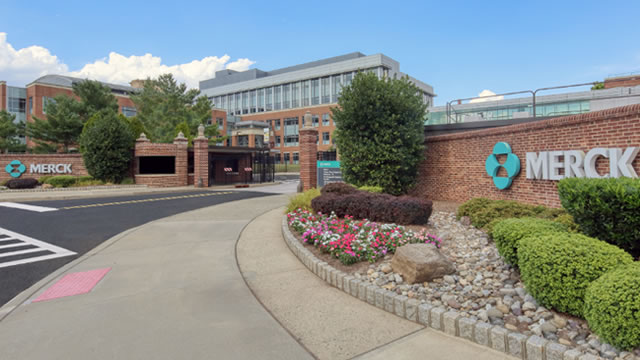
Core Viewpoint - Merck's two-drug HIV regimen has demonstrated comparable efficacy to Gilead's Biktarvy in Phase 3 trials and is currently under FDA review as the company anticipates the impact of Keytruda's patent expiration [1] Group 1: Drug Development - Merck's two-drug HIV regimen matches the performance of Gilead's Biktarvy in clinical trials [1] - The regimen is undergoing FDA review, indicating a potential for market entry [1] Group 2: Market Context - The development comes as Merck prepares for the impending patent cliff of its blockbuster drug Keytruda [1]