
CVS Health(CVS)

Search documents
5 Relatively Secure And Cheap Dividend Stocks, Yields Up To 8% (January 2026)
Seeking Alpha· 2026-01-03 13:00
Core Insights - The "High Income DIY Portfolios" service aims to provide high income with low risk and capital preservation for DIY investors, particularly targeting income investors such as retirees [1] - The service offers a total of 10 model portfolios, including various strategies for income generation and risk management, with a focus on sustainable yields [2] Group 1: Portfolio Strategies - The service includes seven portfolios: three buy-and-hold, three rotational portfolios, and a conservative NPP strategy portfolio designed for low drawdowns and high growth [1] - The investment approach emphasizes dividend-growing stocks and aims for a 30% reduction in drawdowns while targeting a 6% current income [2] Group 2: Additional Features - The service provides buy and sell alerts, live chat, and strategies for portfolio management and asset allocation to help investors achieve stable, long-term passive income [2]



JPMorgan Names CVS a Top Pick as Turnaround Gains Traction
Yahoo Finance· 2026-01-03 00:18
Core Insights - CVS Health Corporation is recognized as one of the 20 Best Performing Dividend Stocks in 2025 [1] - JPMorgan has identified CVS as a top pick in healthcare services, highlighting a significant stock recovery with an 80.5% gain in 2025 after a 43% drop in 2024 [2] - Analysts project a further 19% upside based on average price targets, with CVS providing positive guidance for 2025/2026 and mid-teens CAGR for adjusted EPS through 2028 [2][3] Financial Performance - CVS reported a record revenue of $102.9 billion in the third quarter, marking a 7.8% increase from the same quarter in 2024 [4] - The company is on track to achieve at least $2 billion in cost savings through measures such as store closures and workforce reductions, which are showing positive results [4] Growth Strategy - CVS is transitioning to an acquisition-based model for its Caremark segment, with expectations for normalized growth by 2027 [3] - The company operates across various healthcare sectors, including retail pharmacies, clinics, and prescription benefits management, providing multiple avenues for growth [5]

Wall Street's Most Accurate Analysts Spotlight On 3 Health Care Stocks Delivering High-Dividend Yields - Bristol-Myers Squibb (NYSE:BMY), CVS Health (NYSE:CVS)
Benzinga· 2025-12-31 12:20
Core Insights - During market turbulence, investors often seek dividend-yielding stocks, which typically have high free cash flows and offer substantial dividends [1] Group 1: Perrigo Company PLC (NYSE:PRGO) - Dividend Yield: 8.32% [6] - JP Morgan analyst Chris Schott maintained a Neutral rating and reduced the price target from $20 to $18 [6] - Canaccord Genuity analyst Susan Anderson kept a Buy rating but cut the price target from $40 to $20 [6] - Recent financial results were mixed, and FY25 adjusted EPS guidance was lowered below estimates [6] Group 2: Bristol-Myers Squibb Co (NYSE:BMY) - Dividend Yield: 4.65% [6] - B of A Securities analyst Tim Anderson upgraded the stock from Neutral to Buy and raised the price target from $51 to $61 [6] - Morgan Stanley analyst Terence Flynn maintained an Underweight rating and increased the price target from $36 to $37 [6] - The company announced an agreement with the U.S. Government to enhance affordability and access to critical medicines [6] Group 3: CVS Health Corp (NYSE:CVS) - Dividend Yield: 3.33% [6] - JP Morgan analyst Lisa Gill maintained an Overweight rating and raised the price target from $93 to $101 [6] - Truist Securities analyst David Macdonald maintained a Buy rating and increased the price target from $95 to $98 [6] - The company raised its FY2025 adjusted EPS and sales guidance [6]



CVS Gets Higher Target as Bernstein Cites Management Confidence
Yahoo Finance· 2025-12-30 22:58
Group 1 - CVS Health Corporation is recognized as one of the 14 Best Pharma Dividend Stocks to Buy in 2026 [1] - Bernstein raised the price target for CVS to $87 from $86, maintaining a Market Perform rating, citing increased confidence in management and market leadership [2] - CVS raised its 2025 profit forecast, indicating progress in its turnaround plan and a focus on enhancing consumer experiences [3] Group 2 - The company launched a new consumer app aimed at integrating services and creating new revenue opportunities, following significant changes including cost-cutting and market exits [4] - CVS forecasts total revenue of at least $400 billion for 2026, which is below the analyst expectation of $419.26 billion, with growth anticipated from Aetna and CVS Caremark [5] - CVS operates as a diversified healthcare company with services in pharmacy, retail health, and long-term care [5]
CVS Health (CVS) Beats Stock Market Upswing: What Investors Need to Know
ZACKS· 2025-12-24 23:46
Core Insights - CVS Health's stock closed at $79.12, reflecting a +1.38% increase from the previous day, outperforming the S&P 500's gain of 0.32% [1] - Over the past month, CVS shares have decreased by 0.55%, underperforming the Medical sector's increase of 1.67% and the S&P 500's increase of 4.7% [1] Financial Performance - CVS Health is expected to report earnings of $0.99 per share, indicating a year-over-year decline of 16.81%, with projected quarterly revenue of $103.03 billion, up 5.44% from the previous year [2] - For the full year, analysts anticipate earnings of $6.65 per share and revenue of $399.4 billion, representing increases of +22.69% and +7.13% respectively from last year [3] Analyst Estimates - Recent modifications to analyst estimates for CVS Health reflect evolving short-term business trends, with positive changes indicating a favorable outlook on business health and profitability [4] - The Zacks Rank system, which incorporates estimate changes, currently ranks CVS Health at 3 (Hold), with a 0.48% increase in the consensus EPS estimate over the last 30 days [6] Valuation Metrics - CVS Health is trading at a Forward P/E ratio of 11.73, which is below the industry average Forward P/E of 15.51 [7] - The company has a PEG ratio of 0.77, compared to the Medical Services industry's average PEG ratio of 1.71, indicating a more favorable valuation relative to expected earnings growth [7] Industry Context - The Medical Services industry, which includes CVS Health, has a Zacks Industry Rank of 153, placing it in the bottom 39% of over 250 industries [8] - Research indicates that the top 50% rated industries outperform the bottom half by a factor of 2 to 1, highlighting the competitive landscape within the industry [8]

3 Monthly Dividend ETFs That Are Must-Buys Right Now
247Wallst· 2025-12-23 16:27
Core Viewpoint - Inflation continues to impact consumer budgets, although the rate of inflation has slowed down significantly [1] Group 1 - The pace of inflation has decreased, but it remains a concern for consumers [1] - The slow reduction in inflation rates indicates persistent economic pressure on households [1]

LQD vs. VCLT: Choosing Between Stability and Long-Rate Exposure
Yahoo Finance· 2025-12-22 20:36
Core Insights - The iShares iBoxx Investment Grade Corporate Bond ETF (LQD) and the Vanguard Long-Term Corporate Bond ETF (VCLT) differ significantly in cost, yield, sector exposure, and risk profile, with LQD providing broader diversification while VCLT focuses on higher yield and an ESG screen [2][3] Cost & Size Comparison - LQD has an expense ratio of 0.14% and AUM of $33 billion, while VCLT has a lower expense ratio of 0.03% and AUM of $9 billion [4][5] - As of December 16, 2025, LQD's 1-year return is 5.38% and dividend yield is 4.4%, compared to VCLT's 3.51% return and 5.38% yield [4][5] Performance & Risk Comparison - Over the past five years, LQD experienced a maximum drawdown of 24.95%, while VCLT had a larger drawdown of 34.31% [6] - The growth of $1,000 over five years is $805 for LQD and $690 for VCLT, indicating LQD's better performance [6] Portfolio Composition - VCLT primarily invests in high-quality corporate bonds with maturities between 10 and 25 years, holding 257 bonds with significant sector exposure in cash and others (15%), healthcare (14%), and financial services (13%) [7] - LQD, in contrast, has over 3,000 holdings, with a concentration in cash and equivalents, and does not apply any ESG screening [8] Investment Implications - Both LQD and VCLT provide exposure to investment-grade corporate bonds but react differently to interest rate changes, with LQD spreading risk across a larger number of bonds and a wider maturity range [11]


健康服务-2026 年展望- 这次有所不同:利润率改善潜力与政策明确性奠定积极基调2026 Outlook_ It‘s Different This Time_ Potential for Margin Improvement and Policy Clarity Create a Positive Backdrop
2025-12-20 09:54
Summary of Healthcare Services Conference Call Industry Overview - The conference call focused on the **Healthcare Services** industry, particularly the **Managed Care** sector and its outlook for 2026, highlighting potential margin improvements and policy clarity as positive factors for growth [4][10][11]. Key Points and Arguments Managed Care - **Earnings Recovery**: Most Managed Care Organizations (MCOs) are expected to reach trough earnings in 2026, with potential upward revisions thereafter. Medicare Advantage (MA) is anticipated to drive margin upside, while skepticism remains around Medicaid and ACA Exchanges until MCOs demonstrate margin improvements [5][12]. - **Enrollment Trends**: MCOs are targeting enrollment declines to improve margins, with companies like CVS, ELV, and UNH focusing on this strategy. Conversely, HUM is positioned for membership growth [12][52]. - **Regulatory Environment**: The 2026 midterms are expected to create gridlock, reducing the likelihood of major policy changes outside of CMS rulemaking, which could stabilize the operating environment for MCOs [5][12]. Pharmaceutical Distributors - **Strong Fundamentals**: The current strength in results for pharmaceutical distributors is attributed to stable generic pricing, MSO growth, and a robust specialty pipeline. Companies like McKesson (MCK) and Cencora (COR) are favored due to their strong specialty businesses [9][16]. - **M&A Activity**: Distributors led M&A activity in 2025, with expectations for continued integration and organic investment in MSO capabilities in 2026 [25]. Labs and Healthcare Facilities - **Demand Trends**: Labs are expected to see steady demand trends with a healthy backdrop in diagnostics. Regulatory uncertainties may impact pricing and mix development, but overall operating conditions are stable [9][12]. - **Facility Performance**: Healthcare facilities are positioned to benefit from favorable utilization trends, although policy uncertainty remains a concern for future earnings growth [12][16]. Additional Insights - **Investment Picks**: Top investment picks include UnitedHealth (UNH) and CVS Health (CVS) for their cleaner stories, while Cigna (CI) is seen as attractive but with more complexities [5][14][17]. - **Margin Pressures**: Medicaid remains a challenge, with companies like ELV and UNH guiding for margin pressure in 2026. Investment income is also expected to be a headwind for managed care [5][12]. - **Market Dynamics**: The ACA Exchanges are viewed as a swing factor for MCOs, with a wide range of outcomes expected due to potential shifts in market morbidity [12][43]. Conclusion The healthcare services industry is navigating a complex landscape with potential for margin recovery and growth driven by Medicare Advantage, while facing challenges in Medicaid and ACA Exchanges. The focus on regulatory clarity and strategic M&A activity will be crucial for companies as they prepare for 2026 and beyond.


Trump unveils major drug price deals with 9 Pharma giants, launches TrumpRx.gov to cut medicine costs in US
MINT· 2025-12-19 23:46
Core Insights - President Trump announced a set of drug-pricing agreements with nine major pharmaceutical companies, aiming to align U.S. medicine costs with those in Europe [1][2] - The initiative includes a new direct-to-consumer portal, TrumpRx.gov, allowing patients to purchase certain medicines directly from manufacturers [2][4] Group 1: Agreements and Participants - The agreements involve 14 out of 17 drugmakers that Trump previously urged to lower prices, including Amgen, GSK, and Merck [2][3] - Drug companies are motivated to negotiate to avoid potential regulatory measures that could impact their profits [3] Group 2: TrumpRx.gov Functionality - TrumpRx.gov will serve as a central directory for patients to access selected medicines directly from manufacturers' websites [4] - The portal is expected to be fully operational by January, following a promotional launch [4] Group 3: Pricing Details - Highlighted medicines include Amgen's Repatha at $239/month, GSK's Advair Diskus at $89/month, and Merck's Januvia at $100/month [6] - Gilead's Epclusa will be priced at $2,492/month, despite lower costs for insured patients [6] Group 4: Impact on Medicaid and Medicare - Companies committed to launching new medicines in the U.S. at prices comparable to those in other wealthy countries [8] - Medicaid programs are legally entitled to the lowest drug prices, with Bristol Myers Squibb offering Eliquis free to Medicaid [9] Group 5: Industry Response and Future Outlook - Health policy experts express skepticism about the agreements' impact on overall drug prices for most Americans [10] - The agreements do not impose mandatory price controls and leave many brand-name drug costs unchanged [15] - Ongoing discussions with additional manufacturers like AbbVie and Johnson & Johnson may lead to further agreements [14]


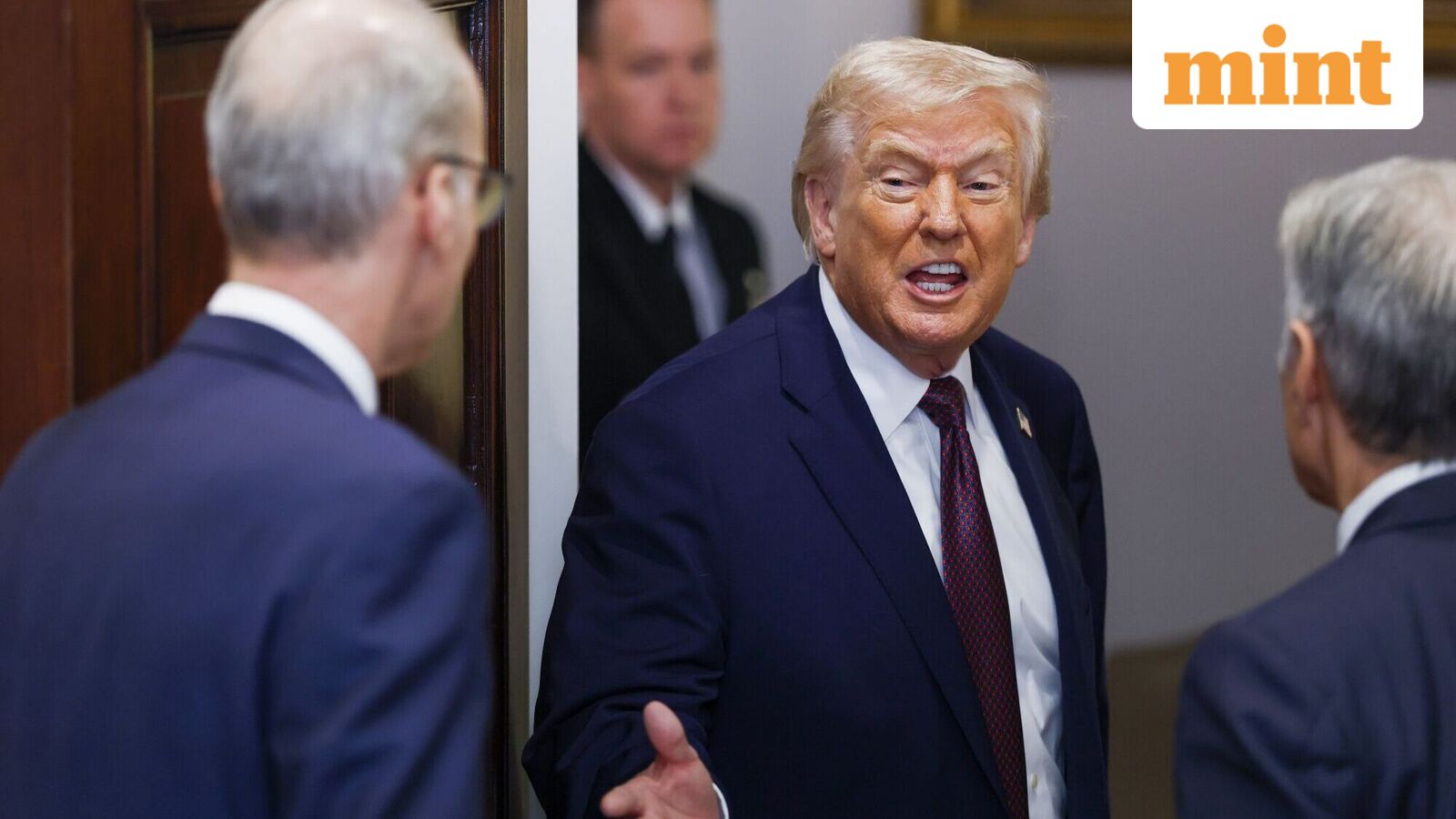
特朗普称将游说保险公司降低价格,医保股涨势消退
Xin Lang Cai Jing· 2025-12-19 20:28
Core Viewpoint - The stock prices of major U.S. health insurance companies declined following President Trump's announcement that he would meet with insurance companies in the coming weeks to negotiate lower prices [1][2]. Group 1: Market Reaction - Major health insurance stocks, including Humana (HUM), UnitedHealthcare (UNH), Cigna (CI), CVS Health (CVS), and Elevance Health (ELV), either retraced gains or fell further after Trump's comments [1][2]. - The decline in stock prices occurred after a news event where Trump announced pricing agreements with nine pharmaceutical companies [1][2]. Group 2: Trump's Statements - Trump indicated that he would convene large, wealthy insurance companies to persuade them to lower prices [3]. - He expressed optimism that a single discussion could lead to price reductions of 50%, 60%, or even 70%, suggesting that these companies have been highly profitable [4].

