Dell Technologies(DELL)

Search documents
DELL's Margins Under Pressure: Can ISG Strength Drive a Rebound?
ZACKS· 2026-01-14 17:00
Core Insights - Dell Technologies (DELL) is experiencing a decline in gross margin, which contracted 140 basis points year over year to 21.1% in Q3 FY26, primarily due to competitive pricing and an unfavorable geographical mix in traditional servers [1][9] Financial Performance - The Infrastructure Solutions Group (ISG) segment significantly supported overall gross margin performance, with revenues increasing 24% year over year to $14.10 billion in Q3 FY26, driven by a 37% growth in servers and networking revenues to $10.12 billion due to rising AI server demand [2][9] - DELL booked $12.3 billion in AI server orders in Q3 FY26, bringing year-to-date orders to $30 billion, and ended the quarter with a record backlog of $18.4 billion in AI server orders, indicating strong demand for AI solutions [3][9] - The company expects to ship $9.4 billion in AI servers in Q4 FY26, projecting full-year shipments to reach $25 billion, representing over 150% year-over-year growth [3] Competitive Landscape - DELL faces significant competition in the AI infrastructure market from Hewlett-Packard Enterprise (HPE) and Super Micro Computer (SMCI), with HPE benefiting from a favorable mix shift to networking and stable gross margins, achieving a non-GAAP gross margin of 36.4% in Q4 FY25, up 550 basis points year over year [5] - Super Micro Computer is transitioning to a full IT solutions provider, with its Data Center Building Block Solutions (DCBBS) expected to carry over 20% margins, enhancing revenue per deal and improving overall margins [6] Stock Performance and Valuation - DELL's shares have increased by 4.8% over the past six months, underperforming the broader Zacks Computer & Technology sector, which returned 19.2%, and the Zacks Computer - Micro Computers industry, which rose by 23.5% [7] - DELL's stock is considered undervalued, with a forward 12-month Price/Sales ratio of 0.64X compared to the sector's 7.49X, and the company holds a Value Score of A [10] - The Zacks Consensus Estimate for fiscal 2026 earnings is $9.89 per share, indicating a 21.50% year-over-year growth, with DELL currently holding a Zacks Rank 3 (Hold) [12]



Dell's Upside Is Mispriced Despite Memory Costs Headwinds
Seeking Alpha· 2026-01-14 16:35
Group 1 - Dell Technologies Inc. has faced challenges for investors over the past year, indicating a complex investment landscape [1] - The company is recognized for its potential in the technology sector, particularly in software and internet services [1] - The investment strategy focuses on identifying stocks with strong growth potential and those that are undervalued, aiming for significant upside recovery [1] Group 2 - The investment group Ultimate Growth Investing specializes in finding high-potential opportunities across various sectors, emphasizing stocks with solid fundamentals and robust buying momentum [1] - The approach combines price action analysis with fundamental analysis to generate alpha above the S&P 500 [1] - The analyst has a long position in NVDA, indicating confidence in its future performance [1]
戴尔捅破窗户纸,消费者其实并不在乎AI
3 6 Ke· 2026-01-14 12:17
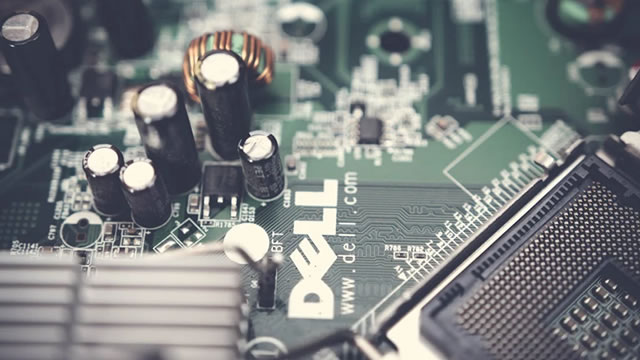
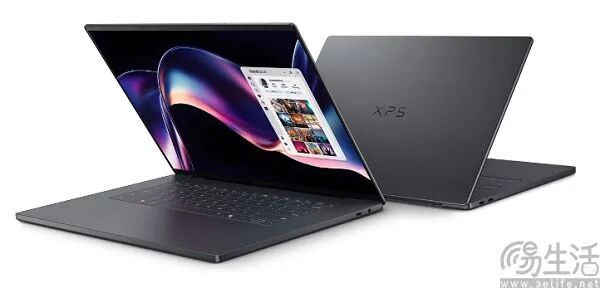
Core Viewpoint - Dell has recognized that consumers do not base their purchasing decisions on AI features, leading the company to abandon its AI-centric marketing approach [1][3]. Group 1: Dell's Marketing Strategy - Dell's product head Kevin Twillig stated that the company will stop emphasizing AI in its marketing, as it has not translated into increased computer sales and may even have a negative effect [1]. - The company admitted that the cancellation of its iconic XPS brand was a failure, indicating a lack of listening to user feedback [3]. Group 2: Market Perception of AI PCs - Lenovo's president of smart devices, Luca Rossi, echoed Dell's sentiment, noting that only a small group of professionals choose AI PCs based on AI features, while most consumers prioritize design, battery life, and future expandability [3]. - Market research firms like Gartner predict that AI PCs will capture 31% of the global PC market by the end of 2025, with Canalys forecasting over 100 million AI PC shipments, accounting for 40% of total PC shipments by 2025 [3]. Group 3: Consumer Demand and AI Ecosystem - The end of Windows 10 support is expected to create a significant replacement demand, with around 500 million PCs being over four years old and unable to run Windows 11 [5][6]. - Despite the anticipated demand, consumers remain indifferent to AI PCs, as there are currently no unique AI features that can only be experienced on AI PCs [6][8]. Group 4: Limitations of AI in Consumer Market - The AI technology has primarily developed in cloud environments, and users can access AI services without needing to download applications, which diminishes the appeal of AI PCs [8]. - Privacy and security are the only advantages of edge AI, but these concerns rank lower than price, performance, battery life, and aesthetics for consumers [8][10]. Group 5: Cost Implications of AI PCs - AI PCs require specialized hardware, including dedicated neural processing units (NPUs) and increased memory capacity, which raises their costs [10][12]. - The rising costs of storage chips due to demand from AI data centers have made AI PCs more expensive, leading to potential consumer resistance against paying a premium for uncertain AI functionalities [12].
高盛重新覆盖美股IT硬件与分销板块:力捧戴尔科技、慧与科技等五股 惠普、超微电脑遭唱空
智通财经网· 2026-01-14 06:40
Group 1: Core Insights - Goldman Sachs has resumed coverage of several companies in the IT hardware and distribution sector, assigning "buy" ratings to Dell Technologies, HPE, SYNNEX, and Penguin Solutions, while giving "sell" ratings to HP and Super Micro Computer, and a "neutral" rating to Insight Enterprises [1] - The IT hardware and distribution industry experienced a modest return of only 4% in 2025, compared to a 16% increase in the S&P 500, with expectations for continued volatility in 2026 due to fluctuating AI market enthusiasm and rising input costs [1][2] Group 2: Investment Themes - Analysts believe that patient investors will be rewarded, as the industry presents stock-picking opportunities, particularly for stocks with upward consensus expectations and attractive performance in three key investor topics: sustainability of AI demand, the stage of upgrade cycles for PCs, servers, storage, and campus networks, and the impact of higher input costs on margins and demand [2] - The rationale for the "buy" ratings on Dell Technologies, HPE, SYNNEX, Penguin Solutions, and NetApp includes Dell's strong earnings growth potential related to AI, HPE's attractive business transformation, NetApp's undervalued high-margin public cloud business, SYNNEX's resilient distribution model, and Penguin Solutions' accelerated profit growth through portfolio transformation [2] Group 3: Market Outlook - In terms of AI infrastructure demand, analysts expect strong growth in new cloud (GPU-as-a-service) demand, despite potential quarterly fluctuations due to product transitions and an expanding XPU ecosystem [3] - For traditional servers and enterprise storage, there is cautious optimism for revenue growth driven by data center modernization trends in 2026, while closely monitoring demand elasticity in an inflationary pricing environment and anticipating that higher DRAM/NAND costs will largely be passed on to customers [3] - The outlook for personal computers in 2026 is expected to be weaker than current market expectations due to diminished upgrade incentives and rising prices, with the impact of rising input costs on margins and demand being a key issue for 2026 [3]



Dell Technologies: AI Demand Is Real, Margin Payoff Comes Later (NYSE:DELL)
Seeking Alpha· 2026-01-14 06:15
Core Insights - The article discusses the investment thesis on Dell Technologies, focusing on AI server exposure and anticipated enterprise spending rebound as key drivers for potential upside [1]. Group 1: Company Analysis - Dell Technologies has been covered in previous analyses, with a focus on its AI server exposure leading to positive valuation support [1]. - The analyst has a background in quantitative research and financial modeling, emphasizing the importance of equity valuation and market trends in identifying investment opportunities [1]. Group 2: Investment Strategy - The approach combines rigorous risk management with a long-term perspective on value creation, aiming to provide actionable insights for investors [1]. - The analyst's experience includes leading teams in model validation and stress testing, which contributes to a deep understanding of fundamental and technical analysis [1].

Dell Technologies: AI Demand Is Real, Margin Payoff Comes Later
Seeking Alpha· 2026-01-14 06:15
Group 1 - The article discusses Dell Technologies' (DELL) performance and investment thesis, highlighting AI server exposure as a key driver for potential upside [1] - The analyst previously covered Dell in May and October 2025, noting varying degrees of success in their investment calls [1] - The May thesis focused on supportive valuations and anticipated a rebound in enterprise spending, which contributed to a positive outlook for the company [1] Group 2 - The analyst has over 20 years of experience in quantitative research, financial modeling, and risk management, emphasizing expertise in equity valuation and market trends [1] - The research approach combines rigorous risk management with a long-term perspective on value creation, aiming to provide actionable investment ideas [1] - There is a particular interest in macroeconomic trends, corporate earnings, and financial statement analysis to identify high-growth investment opportunities [1]

Dell tells staff to get ready for the 'biggest transformation in company history.' Read the memo.
Business Insider· 2026-01-13 19:01
Core Insights - Dell is initiating a significant transformation called "One Dell Way," aimed at standardizing processes and launching a unified enterprise platform on May 3, 2026, which is described as the biggest transformation in the company's history [1][8][17] Group 1: Transformation Overview - The initiative will replace Dell's existing applications, servers, and databases to enable seamless data flow, reduce repetitive tasks, and enhance decision-making speed [2][6] - The changes are essential for Dell to remain competitive in an AI-driven environment, necessitating a shift from multiple variations of processes to a simplified, standardized, and automated approach [4][5][11] Group 2: Implementation Details - The new operating system will be implemented on a specific date, May 3, for various divisions including PC business, finance, supply chain, marketing, sales, revenue operations, services, and HR, with the ISG division following in August [6][10][7] - Training for employees will commence on February 3, and it is emphasized that participation in training is critical for operating within the new system [16][17] Group 3: Expected Changes - The degree of change will vary across teams and roles, with some experiencing significant shifts while others may see minimal changes [14] - The transformation requires a mindset shift towards a company-first approach, prioritizing overall efficiency and quality over individual functional optimization [12][11] Group 4: Future Outlook - The modernization effort is positioned as foundational for Dell's success in an AI-driven world, emphasizing the importance of working as one connected company [5][17] - The initiative reflects Dell's long-term evolution since its founding 42 years ago, marking a pivotal moment in its operational strategy [8]
2025年全球PC市场出货量达到2.795亿台 联想以25.4%份额蝉联全球第一
Ge Long Hui· 2026-01-13 08:02
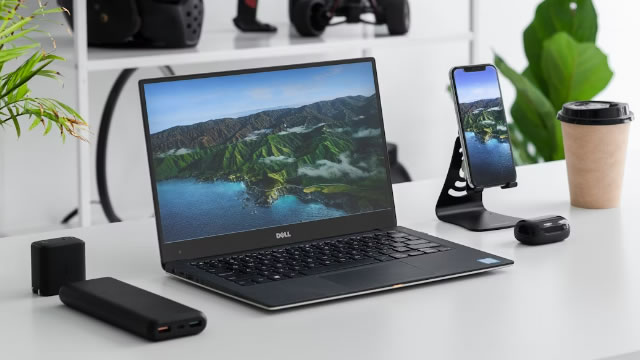
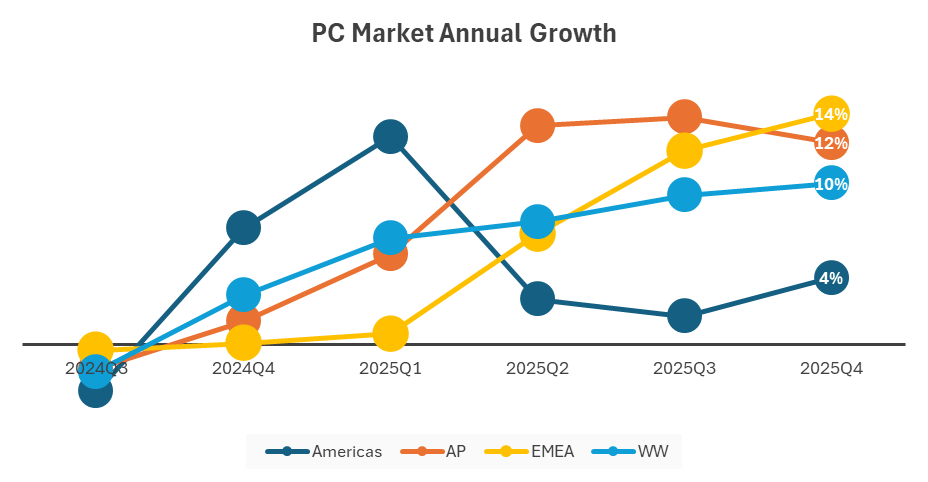
Group 1 - The global PC market is expected to see a 10.1% increase in total shipments in Q4 2025, reaching 75 million units, leading to an annual total of 279.5 million units, a year-on-year growth of 9.2% [1] - In Q4 2025, notebook shipments (including mobile workstations) are projected to reach 58.6 million units, with an annual growth of 8% to 220.4 million units. Desktop shipments (including desktop workstations) are expected to be 16.2 million units, with a 14.4% annual growth to 59 million units [1] - Lenovo leads the global PC market in Q4 2025 with a shipment of 19.3 million units and a market share of 25.8%, followed by HP (20.6%), Dell (16.7%), Apple (9.4%), and Asus (7.1%). Dell has the highest year-on-year growth rate at 26%, while Apple has the lowest at 1.9% [1] Group 2 - For the entire year of 2025, Lenovo maintains its position as the top vendor with 70.9 million units shipped and a market share of 25.4%, followed by HP (20.6%), Dell (15.0%), Apple (9.9%), and Asus (7.2%) [2] - Apple leads in year-on-year growth rate for 2025 at 16.4%, while Dell has the lowest growth rate at 7.2% [2] - Omdia's chief analyst indicates that in 2026, supply-side pressures will become more significant due to unresolved device replacement demands, affecting actual shipment volumes based on suppliers' procurement capabilities and negotiation leverage [2] - A survey conducted by Omdia in November 2025 shows that 57% of B2B channel partners expect growth in their PC business in 2026 compared to 2025, indicating a healthy demand environment for suppliers who can effectively manage supply [2]


IDC:2025年第四季度全球PC出货量达7640万台 同比增长9.6%
智通财经网· 2026-01-13 05:45
Core Insights - The global PC shipments are projected to grow by 9.6% year-over-year in Q4 2025, reaching 76.4 million units, marking a strong end to a turbulent year for the PC market [1][5] - Factors influencing the PC market include the end of Windows 10 support driving upgrade demand, uncertainties around tariff policies leading to preemptive inventory stocking, and a tightening memory supply impacting pricing and availability [1][2][4] Market Overview - The PC market is expected to experience significant volatility in the coming year due to rapid changes in the memory market, with potential price increases and adjustments in average memory configurations to extend existing inventory usage [2][4] - The average selling price (ASP) of PCs is anticipated to rise in 2026 as manufacturers prioritize mid-to-high-end product supply to cope with increasing component costs, particularly memory prices [4] Company Performance - Lenovo led the market in Q4 2025 with shipments of 19.3 million units, capturing 25.3% market share, reflecting a 14.4% increase from Q4 2024 [5] - HP Inc. and Dell Technologies followed with shipments of 15.4 million (20.1% market share, up 12.1%) and 11.7 million (15.3% market share, up 18.2%) units respectively [5] - Apple and ASUS reported shipments of 7.1 million (9.3% market share, up 0.2%) and 5.4 million (7.1% market share, up 10.9%) units respectively [5] Yearly Shipment Data - Total PC shipments for 2025 reached 284.7 million units, an 8.1% increase from 263.3 million units in 2024 [6] - Lenovo maintained a leading position with 70.8 million units shipped in 2025, holding 24.9% of the market, while HP Inc. and Dell Technologies shipped 57.5 million (20.2% market share) and 41.1 million (14.4% market share) units respectively [6]
Omdia:2025年全球PC出货增长9%,内存与存储供应紧张或影响2026年表现
Jin Rong Jie· 2026-01-13 01:30
Core Insights - The global PC market is projected to see a total shipment of 75 million units in Q4 2025, marking a year-on-year growth of 10.1%, leading to an annual total of 279.5 million units, a 9.2% increase from 2024 [1][8] Group 1: Market Performance - In Q4 2025, notebook shipments (including mobile workstations) reached 58.6 million units, with an annual total of 220.4 million units, reflecting an 8% year-on-year growth [1] - Desktop shipments (including desktop workstations) in Q4 2025 totaled 16.2 million units, with an annual total of 59 million units, showing a significant year-on-year increase of 14.4% [1] - Lenovo continues to lead the PC market with a Q4 2025 shipment of 71 million units, a 14.4% increase year-on-year, and an annual total of 71 million units, up 14.6% [6] - HP ranks second with Q4 shipments of 15.4 million units, achieving growth both quarter-on-quarter and year-on-year [6] - Dell achieved a strong Q4 performance with a 26% year-on-year growth, resulting in an annual shipment of 42 million units, a 7% increase from 2024 [6] - Apple, maintaining the fourth position, became the fastest-growing vendor with an annual shipment of 28 million units, reflecting a 16.4% year-on-year growth [6] Group 2: Supply Chain and Pricing Dynamics - Despite the positive market outlook for 2025, there are concerns regarding tightening supply of memory and storage, leading to upward price pressures starting mid-2025 [3] - By December 2025, PC manufacturers began to anticipate price increases due to supply shortages, which are expected to impact 2026 shipment forecasts [3] - The cost of mainstream PC memory and storage increased by 40% to 70% from Q1 to Q4 2025, resulting in cost pressures being passed on to customers [3] - The demand for device replacements in 2026 remains strong, but supply-side pressures are expected to be more pronounced, affecting the ability to meet demand [3] - A survey indicated that 57% of B2B channel partners expect growth in PC business for 2026, suggesting a healthy market demand environment [3]