Dell Technologies(DELL)

Search documents
【环球财经】权重科技股持续下跌 纽约股市三大股指27日均下跌
Xin Hua Cai Jing· 2026-02-28 02:44
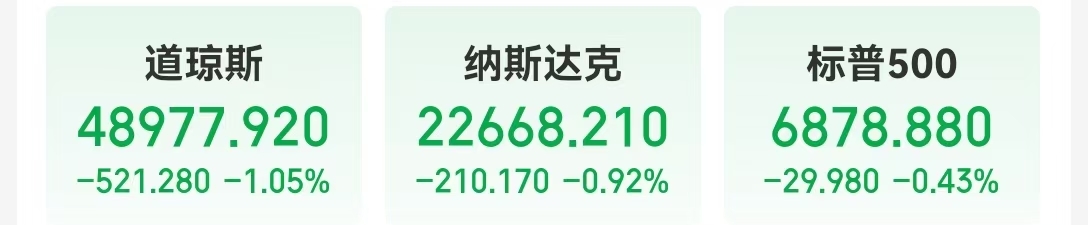
Market Overview - The New York stock market opened lower on February 27, with all three major indices closing down due to the weakness in heavyweight tech stocks like Nvidia and rising inflation concerns [1] - The Dow Jones Industrial Average fell by 521.28 points to close at 48,977.92, a decline of 1.05% [1] - The S&P 500 index decreased by 29.98 points to 6,878.88, down 0.43% [1] - The Nasdaq Composite Index dropped by 210.171 points to 22,668.212, a decline of 0.92% [1] Sector Performance - Among the eleven sectors in the S&P 500, nine rose while two fell [1] - The healthcare and energy sectors led the gains with increases of 1.77% and 1.68%, respectively [1] - The technology and financial sectors experienced declines of 2.17% and 1.99% [1] Economic Indicators - The U.S. Labor Department reported that the Producer Price Index (PPI) for final demand rose by 0.5% month-over-month in January, exceeding the market consensus of 0.3% [1] - The year-over-year PPI increase was 2.9%, higher than the expected 2.8% but lower than the previous month's 3% [1] - The core PPI, excluding food and energy, rose by 0.8% month-over-month, significantly above the expected 0.3% and the previous month's 0.4% [1] - The year-over-year core PPI increase was 3.6%, slightly below the prior month's 3.7% [1] Corporate Actions - Over 200 publicly traded companies have authorized stock buybacks in February, with the total buyback authorization amount reaching $233.3 billion, a historical high [2] - Block Inc. announced a significant reduction in workforce from over 10,000 to under 6,000 due to automation driven by artificial intelligence, resulting in a 16.82% increase in its stock price [3] - Nvidia's stock price fell by 4.16% following a previous decline of 5.46%, negatively impacting market sentiment and tech stock performance [4] - Dell Technologies reported better-than-expected earnings for Q4 2026 and projected over 100% growth in AI server revenue for FY 2027, leading to a 21.93% increase in its stock price [4]


9点1氪丨语音误关大灯致车祸,领克道歉;OpenAI获1100亿美元融资;米哈游内部通报员工意外离世
3 6 Ke· 2026-02-28 01:12
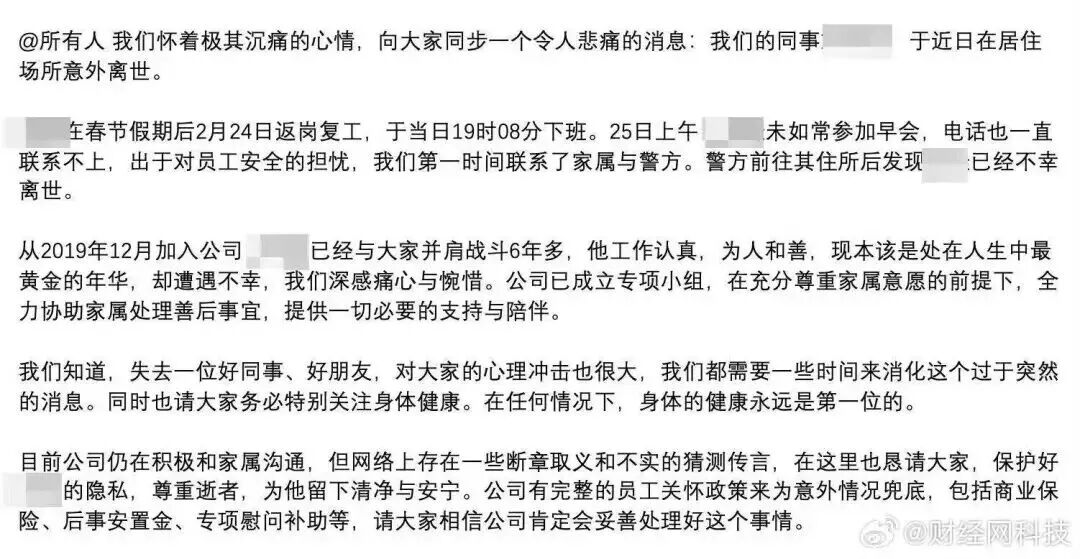
Group 1 - Lynk & Co apologized for a car accident caused by a voice command that mistakenly turned off the headlights of a Lynk Z20 vehicle, and they have implemented a cloud-based update to prevent this issue in the future [1] - OpenAI announced a significant funding round of $110 billion, with major contributions from SoftBank, NVIDIA, and Amazon, and a pre-money valuation of $730 billion [1] - MiHoYo responded to the unexpected death of a 36-year-old programmer, clarifying that the employee did not work excessive hours and that rumors about compensation were false [1] Group 2 - Doubao Mobile addressed claims of security vulnerabilities, stating that they have upgraded protective measures and have not received detailed reports of any issues [2] - Yingshi Innovation announced the conclusion of a 337 investigation by the US International Trade Commission, confirming that their products do not infringe on GoPro patents, allowing them to continue importing and selling in the US [3] - Meizu denied rumors of exiting the smartphone market, stating they are seeking third-party hardware partnerships while their existing business remains unaffected [5] Group 3 - The Shanghai police reported the arrest of three individuals for leaking unreleased game content from MiHoYo, marking a significant case in combating illegal game leaks [6] - China Post has halted a collaboration with the mobile game "Dust White Zone" following public controversy over the game's content [7] - ByteDance's subsidiary, Dongche Emperor, is reportedly considering an IPO in Hong Kong, aiming to raise between $1 billion and $1.5 billion [7] Group 4 - NVIDIA warned of a potential shortage of gaming GPUs in the first half of the fiscal year, which may lead to price increases [8] - Tesla completed road tests of its latest autonomous driving technology in Abu Dhabi under regulatory supervision [8] - The first generic versions of the weight-loss drug Semaglutide are expected to enter the Chinese market soon, potentially leading to a price war [8] Group 5 - Warner Bros. has signed a $110 billion agreement with Paramount for acquisition, which includes approximately $29 billion in debt, marking one of the largest mergers in Hollywood [8] - The Hong Kong Stock Exchange reported a net profit of HKD 17.75 billion for 2025, a 36% increase year-on-year, with a dividend of HKD 12.52 per share [16] - JinkoSolar reported its first loss in 12 years, with a net loss of CNY 6.786 billion for 2025, a significant decline from previous profits [17]





Why Dell Stock Surged Today
The Motley Fool· 2026-02-28 00:39
Core Viewpoint - Dell Technologies experienced a significant stock price increase of over 21% following the announcement of strong growth in its AI-focused businesses, highlighting the transformative impact of AI on the company [1]. Financial Performance - Dell's revenue for the fiscal 2026 fourth quarter rose by 39% year over year, reaching $33.4 billion [3]. - The company's adjusted net income increased by 36% to $2.6 billion, with adjusted earnings per share rising by 45% to $3.89, aided by stock buybacks [5]. AI Business Growth - Sales of Dell's AI-optimized servers surged by 342% to $9 billion, reflecting booming demand for AI infrastructure [3]. - The company reported closing over $64 billion in AI-optimized server orders and shipping more than $25 billion throughout the year, entering fiscal 2027 with a record backlog of $43 billion [7]. Future Outlook - Dell projects full-year revenue growth of 23% to approximately $140 billion for fiscal 2027, with expectations for sales of AI-optimized servers to more than double to $50 billion [6]. - Management anticipates adjusted earnings to increase by 25% to $12.90 per share, prompting a 20% increase in the cash dividend to $2.52 [6].

三大指数本周收跌 英伟达(NVDA.US)续跌4.16% 现货白银涨超6.2%
Zhi Tong Cai Jing· 2026-02-27 23:49
Market Performance - The three major U.S. indices closed lower, with the Dow Jones down 1.31%, Nasdaq down 0.95%, and S&P 500 down 0.44% for the week [1] - On the last trading day of February, the Dow Jones increased by 0.17%, marking its tenth consecutive month of gains, while Nasdaq fell by 3.38% and S&P 500 decreased by 0.87% [1] - Closing figures for the indices: Dow Jones at 48,977.92, S&P 500 at 6,878.88, and Nasdaq at 22,668.21 [1] Economic Indicators - The U.S. Producer Price Index (PPI) rose faster than expected in January, with the core PPI increasing by 0.8% month-over-month, surpassing December's 0.6% and the forecasted 0.3% [1] Corporate News - U.S. companies announced a record $233 billion in stock buyback plans for February, the highest for that month in history, with a total of approximately 205 companies approving buyback plans [7] - UBS downgraded its rating on U.S. stocks to neutral, citing multiple risks including low operating leverage compared to other regions and high valuations [8] - SpaceX, led by Elon Musk, is considering a confidential IPO application as early as March, aiming for a valuation exceeding $1.75 trillion [9] - Paramount has reached a final merger agreement to acquire Warner Bros. Discovery for an enterprise value of $110 billion, with the deal expected to close in Q3 2026 [10] - Trump Media & Technology Group is exploring the spin-off of its social media platform "Truth Social" into a new publicly traded company [11] - Bank of America raised its price target for Dell Technologies from $135 to $155 [12]




苹果跌超3%,英伟达市值蒸发超1.2万亿元!金、银、原油,全线上涨!什么情况?
Mei Ri Jing Ji Xin Wen· 2026-02-27 22:37
Group 1: Market Performance - The KBW Bank Index in the US fell nearly 5%, marking the largest single-day decline since April of the previous year [1] - Major tech stocks mostly declined, with Nvidia dropping over 4%, Apple over 3%, and Microsoft over 2%, while Netflix surged over 13%, marking its best single-day performance since October 2023 [1] - Goldman Sachs fell over 7%, Morgan Stanley over 6%, and Wells Fargo and Citigroup over 5%, contributing to a broader decline in US banks, which fell over 4% [1] Group 2: Company-Specific Developments - Nvidia's market value evaporated by $187.1 billion (approximately 128.32 billion RMB) despite revenue growth and a positive outlook for Q1, highlighting market concerns over high valuations in the AI sector [1] - Block announced layoffs of 4,000 employees, nearly half of its workforce, betting on AI to enhance productivity, which intensified existing market risks; however, Block's stock rose by 16.76% by the end of the trading day [1] Group 3: Chinese Stocks and Indices - The Livermore China Concept Stock Index fell by 1.26%, with notable declines in stocks such as Canadian Solar (over 11%), NEGG, and iQIYI (over 6%) [2] - Positive movements were seen in stocks like Yuchai International (over 8%) and Kingsoft Cloud (over 6%) [2] Group 4: Commodity Prices - Gold and silver prices surged due to geopolitical tensions, with spot gold rising by 1.75% and COMEX gold futures up by 1.64%; spot silver increased by 6.33% and COMEX silver futures by 7.67% [5] - International oil prices also saw significant increases, with WTI crude oil futures rising by 2.78% to $67.02 per barrel and Brent crude oil futures up by 2.45% to $72.48 per barrel [5]



戴尔科技2026财年营收1135亿美元,AI服务器收入同比增342%
Xin Lang Cai Jing· 2026-02-27 22:21
Core Viewpoint - Dell Technologies' stock surged significantly on February 27, 2026, driven by strong Q4 and full-year fiscal 2026 earnings and robust guidance for fiscal 2027, with notable growth in AI server business exceeding market expectations [1] Financial Performance - Q4 fiscal 2026 revenue reached $33.4 billion, a 39% year-over-year increase, surpassing market expectations of $31.7 billion [2] - Non-GAAP earnings per share were $3.89, up 45% year-over-year, exceeding forecasts [2] - Full-year revenue for fiscal 2026 was $113.5 billion, a 19% increase, setting a new record [2] - AI-optimized server revenue in Q4 was $9 billion, a staggering 342% year-over-year growth, becoming the core growth driver [2] - The company anticipates AI server revenue to double to approximately $50 billion in fiscal 2027, reflecting a 103% year-over-year increase [2] - As of the beginning of fiscal 2027, AI-related backlog orders reached $43 billion, a historical high [2] - The company announced an increase of $10 billion in stock repurchase authorization and a 20% increase in cash dividends, enhancing shareholder returns [2] Stock Performance - Following the earnings release, Dell's stock rose over 10% in pre-market trading on February 27, closing with a 21.93% increase, with a trading volume of approximately $4.83 billion, significantly above recent averages [3] - This performance contrasts with the broader market, as the Dow Jones index fell by 1.05%, indicating positive market sentiment towards Dell's AI growth prospects [3] Industry Environment - Analysts indicate that demand for AI data centers remains strong, with Dell being a key partner to chip manufacturers like NVIDIA, providing technological advantages and visibility in orders that support short-term growth [4] - However, it is noted that tight supply of storage chips may pose challenges to traditional PC business [4]
Dell Shares Surge 15% on AI-Driven Earnings Beat and Upbeat 2027 Forecast
Financial Modeling Prep· 2026-02-27 22:10
Core Insights - Dell Technologies shares increased over 15% intra-day following the release of fourth-quarter earnings that exceeded expectations, driven by rising demand for AI infrastructure [1] - The company reported adjusted earnings per share of $3.89, surpassing the consensus estimate of $3.52, and revenue rose 39% year over year to $33.4 billion, exceeding market expectations of $31.41 billion [1] Group 1: Revenue and Earnings Performance - Growth was primarily driven by the Infrastructure Solutions Group, where AI-optimized server revenue surged 342% to $9.0 billion [2] - Dell disclosed a record AI server backlog of $43 billion, indicating sustained demand for high-performance computing systems [2] Group 2: Future Projections - For the current year, the company anticipates AI server revenue to increase by 103% to approximately $50 billion [2] - Dell forecasts fiscal 2027 revenue between $138 billion and $142 billion, significantly above the consensus estimate of $124.9 billion [3] - Projected annual earnings per share are $12.90, compared to analyst expectations of $11.49 [3] Group 3: Shareholder Returns - The company announced a 20% increase in its cash dividend and authorized a $10 billion expansion of its share repurchase program [3]

Paramount to Acquire Warner Bros. Discovery in $110B Deal; Trump Bans Anthropic AI and Markets Slide
Stock Market News· 2026-02-27 21:38
Company Acquisition - Paramount Global (PARA) announced its acquisition of Warner Bros. Discovery (WBD) at an enterprise valuation of $110 billion, priced at $31 per share [2][10] - The acquisition has significantly impacted the entertainment sector, with Paramount Skydance (PSKY) shares rising 21%, marking their best performance since last August [2] Market Performance - U.S. equity markets experienced a downturn, with the Dow Jones Industrial Average falling 1.14% (563.04 points) to 48,936.16 and the Nasdaq Composite dropping 0.96% to 22,658.03 [4][10] - The KBW Bank Index (BKX) saw its largest decline since April, decreasing by 4.9% as investors reacted to recent Federal Reserve data [4] Technology Sector Gains - Despite the overall market slump, Dell Technologies (DELL) surged 22%, achieving its best single-day performance since March 2024, while Netflix (NFLX) rose 14%, marking its strongest day in over two years [5][10] - Analysts attribute these gains to a flight to quality within the tech sector amid ongoing geopolitical uncertainties [5] Geopolitical Context - President Trump expressed a lack of concern regarding potential strikes in Iran and their impact on oil prices, while also indicating dissatisfaction with negotiations [6] - Secretary of State Marco Rubio suggested a tougher stance on Iran, indicating the U.S. may designate it as a state sponsor of wrongful detention [6] Credit Ratings - S&P Global affirmed Portugal's 'A+' rating with a positive outlook, while Morningstar DBRS confirmed the Netherlands at AAA with a stable trend, and Scope Ratings affirmed Switzerland's AAA rating [7]



Dell Is Now Deep In Bargain Territory (Rating Upgrade) (NYSE:DELL)
Seeking Alpha· 2026-02-27 19:48
Core Viewpoint - Dell Technologies Inc. (DELL) stock is approaching bargain territory due to robust AI server demand, a growing backlog, and favorable valuation metrics [1] Group 1: Company Performance - The demand for AI servers is strong, contributing to Dell's increasing backlog [1] - The valuation of Dell Technologies is considered attractive, indicating potential investment opportunities [1] Group 2: Analyst Background - The analysis is conducted by a full-time investor with a focus on the tech sector and a strong academic background in finance [1] - The analyst emphasizes core values of excellence, integrity, transparency, and respect as essential for long-term success [1]
Dell Is Now Deep In Bargain Territory (Rating Upgrade)
Seeking Alpha· 2026-02-27 19:48
Core Viewpoint - Dell Technologies Inc. (DELL) stock is approaching bargain territory due to robust AI server demand, a growing backlog, and favorable valuation metrics [1] Group 1: Company Performance - The demand for AI servers is strong, contributing to Dell's increasing backlog [1] - The valuation of Dell Technologies is considered attractive, indicating potential for investment [1] Group 2: Analyst Background - The analysis is conducted by a full-time investor with a focus on the tech sector and a strong academic background in finance [1] - The analyst emphasizes core values of excellence, integrity, transparency, and respect as essential for long-term success [1]