First Solar(FSLR)

Search documents
First Solar: Current Valuation Unsustainable, I'm Not Buying It (NASDAQ:FSLR)
Seeking Alpha· 2025-12-16 07:47
Core Insights - First Solar (FSLR) has emerged as the sole winner among solar and renewable energy companies that were hyped in 2022, primarily due to its functioning manufacturing capacity [1] Company Analysis - First Solar stands out from its competitors in the solar sector by having actual manufacturing capabilities, which has contributed to its success [1] Industry Context - The solar and renewable energy sector saw a lot of hype in 2022, but many companies failed to deliver on their promises, leaving First Solar as a notable exception [1]


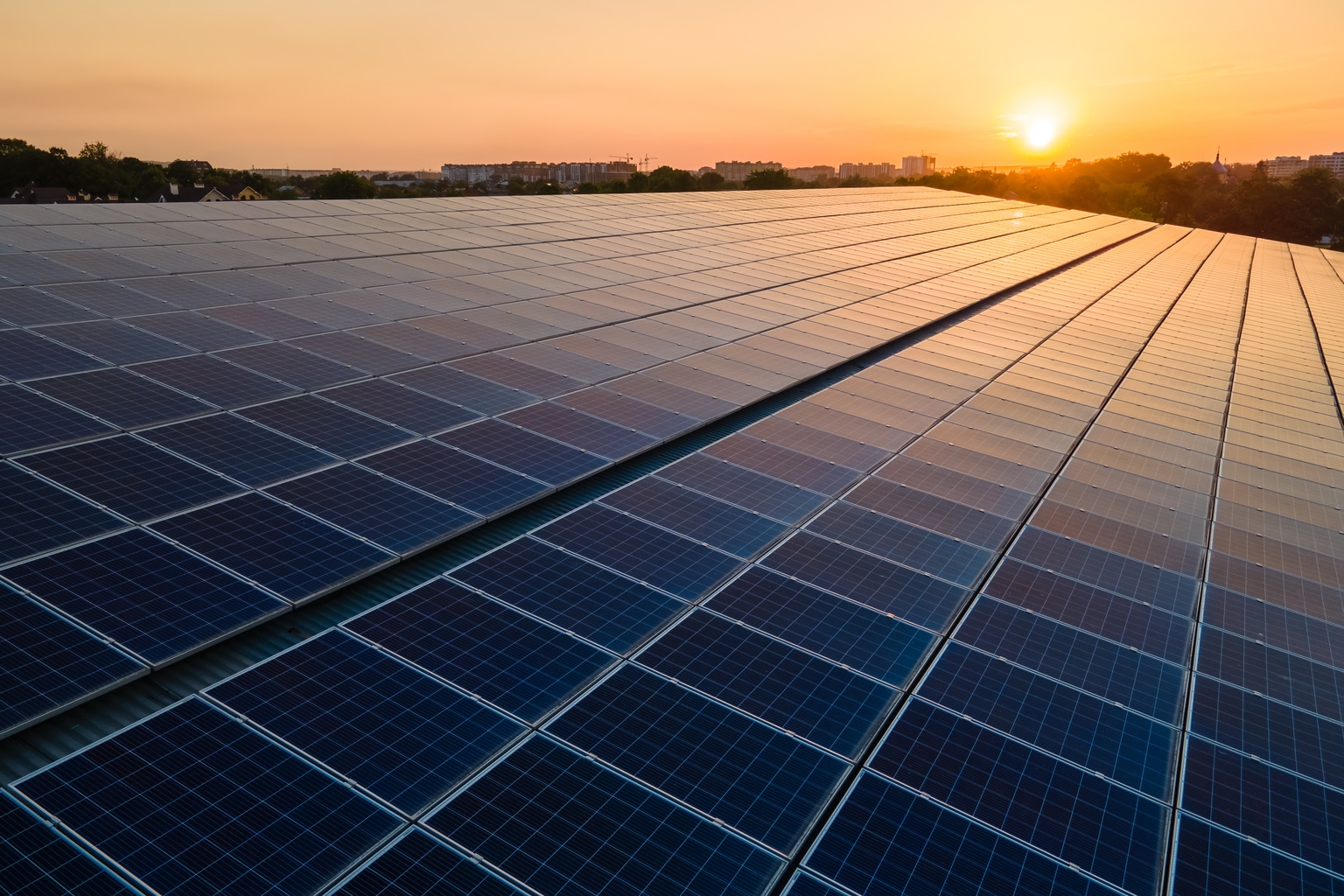
First Solar's Technology Advantage Meets Exploding Solar Demand
ZACKS· 2025-12-15 22:46
Company Overview - First Solar is the world's largest thin-film photovoltaic solar module manufacturer, leveraging cadmium telluride (CdTe) semiconductor technology for efficiency and lower carbon emissions [1] - The company's production process requires less water, material, and energy compared to competitors, focusing on solar power plants and commercial utility projects [1] Industry Trends - Tesla CEO Elon Musk predicts that solar energy will soon become the dominant energy source due to its vast potential, economic viability, and scalability [2] - A study by the National Electrical Manufacturers Association (NEMA) indicates that U.S. electricity demand will increase by 2% annually, totaling a 50% increase over the next 25 years, driven by electric vehicles, robotics, and data centers [3][6] Financial Performance - First Solar's latest earnings report shows a 46% year-over-year growth in earnings per share and an 80% increase in revenue [9] - Zacks Consensus Estimates project continued double-digit growth in both revenue and earnings through 2026 [9] Sales and Earnings Estimates - Current quarter sales estimate for First Solar is $1.58 billion, with a year-over-year growth estimate of 4.23% [10] - Earnings per share for the current year is estimated at $14.60, reflecting a year-over-year growth of 21.46% [10] Manufacturing Capacity Expansion - To meet soaring demand, First Solar is investing in new manufacturing capacity, including a 3.7-gigawatt facility expected to be operational by late 2026 [10] Technological Advancements - First Solar is set to unveil new CuRe technology modules next year, which will enhance semiconductor performance and energy output [11] Market Positioning - The company is currently experiencing a pullback in stock price, presenting a potential low-risk buying opportunity for investors [12] - As global electricity demand rises and grid constraints become more pronounced, large-scale solar is increasingly critical to the energy mix, positioning First Solar favorably for future growth [14]

P/E Ratio Insights for First Solar - First Solar (NASDAQ:FSLR)
Benzinga· 2025-12-12 21:00
Core Insights - First Solar Inc. (NASDAQ:FSLR) stock is currently trading at $273.99, reflecting a 0.43% increase in the current session, a 0.76% increase over the past month, and a significant 33.84% increase over the past year [1]. Performance Analysis - The stock's performance over the past year has been strong, leading to optimism among long-term shareholders [1]. - The price-to-earnings (P/E) ratio is a critical metric for assessing the company's market performance, with a lower P/E potentially indicating undervaluation or lack of expected future growth [5][8]. P/E Ratio Comparison - First Solar has a lower P/E ratio compared to the aggregate P/E of 105.81 for the Semiconductors & Semiconductor Equipment industry, suggesting that the stock may be undervalued despite potential concerns about future performance [6]. Investment Considerations - While the P/E ratio is a useful tool for market performance analysis, it should not be used in isolation; other factors such as industry trends and business cycles must also be considered for informed investment decisions [8].

First Solar Stock: Is FSLR Outperforming the Technology Sector?
Yahoo Finance· 2025-12-08 08:45
Core Viewpoint - First Solar, Inc. has demonstrated strong financial performance and growth in the solar energy sector, with significant increases in revenue and stock performance, positioning itself as a leader in the industry [5][6]. Company Overview - First Solar, Inc. is based in Tempe, Arizona, and operates as a solar technology company providing photovoltaic (PV) solar energy solutions, with a market cap of $22.6 billion [1]. - The company is categorized as a large-cap stock, reflecting its substantial size and influence in the solar industry [2]. Stock Performance - FSLR stock reached a 52-week high of $281.55 on November 5 and is currently trading 8.5% below that peak, having increased 25.6% over the past three months, outperforming the Technology Select Sector SPDR Fund's (XLK) 11.5% gains [3]. - Year-to-date, FSLR stock has surged 46.2%, and over the past 52 weeks, it has increased by 30.2%, compared to XLK's 26.1% and 22.2% gains respectively [4]. Financial Results - Following the release of impressive Q3 results on October 30, FSLR stock prices soared 14.3%. The company sold a record 5.3 GW of energy during the quarter, leading to a 45.4% year-over-year revenue increase to $1.6 billion [5]. - Earnings per share (EPS) grew 33.3% year-over-year to $4.24, and operating cash flows increased by 100.3% year-over-year to $815.2 million. As of September 30, First Solar had a contracted sales backlog of 53.7 GW, valued at $16.4 billion [5]. Analyst Ratings - Among the 32 analysts covering FSLR stock, the consensus rating is a "Strong Buy," with a mean price target of $268.51, suggesting a modest 4.2% upside potential [6].
The Pitfalls of Selling Stocks (and How to Avoid Them)
The Motley Fool· 2025-12-02 04:00
Core Insights - The podcast discusses the emotional pitfalls of selling stocks too soon, emphasizing that selling good companies prematurely can lead to significant missed opportunities for gains [2][4][12] - Historical examples, such as Netflix and Sea Limited, illustrate how selling decisions based on short-term performance can result in substantial long-term losses [3][5][10] - A framework for evaluating when to sell stocks is proposed, focusing on business fundamentals rather than emotional reactions to market fluctuations [12][14] Emotional Temptations of Selling - Investors often succumb to emotional impulses driven by fear and greed, leading to premature selling of stocks that may recover or grow significantly [2][3] - The pain of perceived losses is more intense than the pleasure of gains, influencing investors to sell stocks that are declining or have appreciated significantly [2][3] Historical Examples of Selling Mistakes - David Gardner's sale of Netflix in 2003 for valuation reasons resulted in a missed opportunity for 26,000% gains had he held onto the stock [3] - Sea Limited was sold in November 2023, missing out on 223% gains, despite logical reasons for selling at the time [5][10] Framework for Selling Decisions - A structured approach to selling stocks is recommended, including evaluating whether the decision is based on business fundamentals, macroeconomic factors, or valuation concerns [12][13] - Key questions to consider include whether the stock has reached a financial milestone or if the business is still aligned with the investor's thesis [12][13][14] Importance of Patience and Long-Term Perspective - Holding onto stocks that have the potential for significant growth can outweigh the risks of short-term volatility [10][11] - The concept of asymmetric returns highlights that the potential upside of successful investments can far exceed the downside risk [9][10] Lessons from Past Sales - The podcast emphasizes the importance of reflecting on past selling decisions to avoid repeating mistakes and to recognize the potential for recovery in previously sold stocks [6][16] - Building a habit of reviewing earnings reports and company fundamentals can help investors resist the urge to sell based on market noise [15][16]



The Coming Energy Shock: How AI Data Centers will Reshape Power Needs
ZACKS· 2025-12-01 16:06
Core Insights - The average electricity price in the US has increased by 30% from $0.133 to $0.188 per kilowatt-hour since 2020, indicating a potential electricity crisis [1] Factors Driving Higher Energy Prices - Aging Electrical Grid: The US electrical grid is aging, and major upgrades are unlikely due to a significant fiscal deficit, leading to persistent grid issues [2] - Extreme Weather Events: Climate change has led to more frequent extreme weather events, exemplified by the 2021 Texas winter storm that left 2 million Texans without power [2] - Persistent Inflation: Although inflation has slowed since its peak in 2022, it continues to increase the costs of equipment and materials necessary for electricity generation [3] - EVs & AI Buildout: The rise in electric vehicle adoption and the expansion of AI infrastructure are significantly increasing electricity demand, with data centers expected to triple their electricity use by 2030, reaching 11.7% of total consumption [4] Energy Solutions and Investment Opportunities - Nuclear Energy: While nuclear energy is a clean and reliable option, it is not a short-term solution due to the lengthy construction time for new plants and regulatory challenges [8] - Natural Gas: Seen as a practical short-term solution, natural gas is expected to meet immediate energy needs during the AI revolution [9] - Bloom Energy: This company utilizes solid oxide fuel cell technology to produce cleaner electricity from natural gas, making it a viable investment opportunity [10] - Solar Energy: With decreasing costs, solar energy is positioned to benefit from the increasing demand driven by AI, making it a key player in the energy market [12] - First Solar: As a leading domestic solar provider, First Solar is expected to see significant growth, aided by the Inflation Reduction Act [13] - Nextpower: This company offers software and services that enhance the efficiency of solar projects, positioning it well for the upcoming electricity demand surge [14] Conclusion - The US is facing an accelerating demand for electricity, with early signs of a long-term power crisis. While nuclear energy presents a long-term solution, immediate investments are likely to focus on natural gas, advanced fuel cell technology, and solar energy [15]


First Solar Stock Flashing Intriguing Contrarian Signal
Forbes· 2025-11-28 17:40
Core Insights - First Solar (FSLR) has experienced a significant increase of over 55% year-to-date, reaching a 12-month high of $281.55 on November 5, despite political challenges [1] - The stock is currently showing a quantitative signal that may attract contrarian traders, indicating potential for further gains [1] Stock Performance - FSLR's recent peak coincides with historically low implied volatility (IV), which has historically been a bullish indicator for the stock [2] - The current Schaeffer's Volatility Index (SVI) for FSLR is 49%, placing it in the 18th percentile of its 12-month range, suggesting a favorable trading environment [2] Historical Trends - Data indicates that FSLR was higher a month later 50% of the time, with an average return of 6.3% during that period [3] - A similar upward movement from the current price of $274.43 could push FSLR above $290 for the first time since June 2024 [3] Short Interest and Trading Dynamics - Short interest in FSLR has increased by 10.4% in the last two reporting periods, with 9.28 million shares sold short, accounting for 9.2% of the stock's total float [4] - At the current trading pace, it would take shorts more than four trading days to cover their positions, indicating potential buying power that could support the stock's price [4] Options Market Sentiment - There is a growing popularity of short-term puts in the options market, with FSLR's Schaeffer's put/call open interest ratio (SOIR) at 1.43, placing it in the 100th percentile of its annual range, reflecting unusually high bearish sentiment [5]

Airbus issues major A320 recall after flight-control incident
Reuters· 2025-11-28 17:39
Core Viewpoint - Airbus is implementing an immediate software change on a significant number of its A320-family jets, affecting approximately 6,000 jets, as reported by industry sources [1] Company Summary - The software change is described as significant and pertains to Airbus's best-selling A320-family jets, indicating a proactive approach to enhance operational efficiency or address potential issues [1]


FSLR vs. CSIQ: U.S. Thin-Film Leader or Global Volume Player?
ZACKS· 2025-11-26 16:10
Core Insights - The rising demand for solar energy is attracting investor interest in companies within the solar value chain, particularly First Solar (FSLR) and Canadian Solar (CSIQ) [1][2] Group 1: Industry Trends - Solar power is rapidly growing as a solution for cleaner energy, with significant increases in solar photovoltaic (PV) installations across various markets [2] - Government incentives, corporate decarbonization efforts, and consumer adoption of renewable technologies are driving the surge in solar deployment [2] Group 2: First Solar (FSLR) Overview - First Solar is expanding its manufacturing capacity to meet global solar demand, producing 3.6 gigawatts (GW) and selling 5.3 GW of modules in Q3 2025, with a total nameplate capacity of 23.5 GW [3] - The company is adding a new 3.7 GW module finishing line in the U.S., expected to begin operations in late 2026, which will enhance its global presence and revenue growth [3] - A new $1.1 billion AI-enabled manufacturing facility in Louisiana will add 3.5 GW of annual capacity, improve quality control, and reduce costs while using U.S.-sourced materials [4] Group 3: Canadian Solar (CSIQ) Overview - Canadian Solar is a vertically integrated clean-energy company, known for high-quality crystalline silicon solar panels and expanding into energy infrastructure, including large-scale solar power plants and energy-storage projects [5] - The company secured a German battery energy storage system contract in November 2025, marking a strategic shift towards becoming a full-fledged energy-storage and grid-solutions provider [6] Group 4: Financial Performance and Estimates - The Zacks Consensus Estimate for First Solar's 2025 earnings per share (EPS) indicates a decrease of 3.25%, while Canadian Solar's EPS estimates show increases of 18.94% for 2025 and 61.5% for 2026 [8][10] - First Solar has a total debt to capital ratio of 5.8%, significantly lower than Canadian Solar's 60.41% [11] - In the past six months, FSLR shares have risen by 64.8%, while CSIQ shares have increased by 149.5% [12] Group 5: Valuation Comparison - FSLR shares trade at a forward Price/Sales (P/S F12M) multiple of 4.56, compared to CSIQ's P/S F12M of 0.22, indicating a significant valuation difference [13] Group 6: Strategic Positioning - Both companies operate in the solar market but with different strategies; Canadian Solar focuses on scale and a diversified clean-energy ecosystem, while First Solar emphasizes high-efficiency thin-film technology and U.S.-based production [14] - Currently, Canadian Solar is favored due to its better price performance and earnings growth compared to First Solar [15]


First Solar Inaugurates New $1.1 Billion AI-Enabled Louisiana Manufacturing Facility
Businesswire· 2025-11-21 19:15
Core Insights - First Solar, Inc. inaugurated a new fully vertically integrated manufacturing facility in Iberia Parish, Louisiana, with an investment of $1.1 billion [1] - The facility covers approximately 2.4 million square feet, making it about 11 times the size of the New Orleans Superdome [1] - The current employment at the facility exceeds 700 people, with expectations to reach 826 employees by the end of the year [1] Company Overview - The new facility is part of First Solar's strategy to enhance its manufacturing capabilities and increase production capacity [1] - The investment reflects the company's commitment to expanding its footprint in the renewable energy sector [1] Employment Impact - The facility is expected to create significant job opportunities in the region, contributing to local economic growth [1] - The increase in employment from over 700 to 826 positions indicates a positive trend in workforce expansion [1]