
Norfolk Southern(NSC)

Search documents
Norfolk Southern Corporation (NSC) Union Pacific Corporation - M&A Call - Slideshow (NYSE:NSC) 2025-12-22
Seeking Alpha· 2025-12-22 23:02
Group 1 - The article does not provide any relevant content regarding the company or industry [1]



Union Pacific, Norfolk Southern merger faces pushback from signalmen's union
Reuters· 2025-12-22 14:51
Core Viewpoint - A rail workers' union has expressed opposition to Union Pacific's proposed $85 billion acquisition of Norfolk Southern, citing concerns over safety and workforce impact [1] Company Summary - Union Pacific is pursuing an acquisition of Norfolk Southern valued at $85 billion [1] - The acquisition has raised alarms among rail workers' unions regarding potential safety risks and effects on employment [1] Industry Summary - The proposed merger in the rail industry is being scrutinized for its implications on safety standards and workforce dynamics [1]

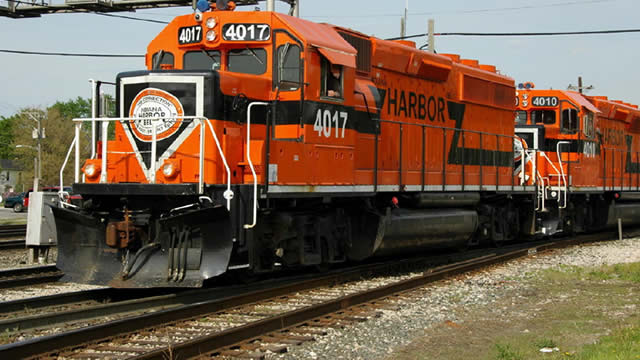
Déclaration du CN au sujet du dépôt de la demande de UP et NS auprès du STB
Globenewswire· 2025-12-20 00:22
Group 1 - The merger proposal by Union Pacific and Norfolk Southern fails to demonstrate that it would enhance competition or provide significant public benefits, not meeting the merger rules established in 2001 and by the Surface Transportation Board (STB) [1] - The proposed merger would reduce transportation options for customers, creating a single entity controlling over 40% of the freight rail market in the United States, which could lead to increased prices and harm consumers due to lack of competition [2] - CN will actively participate in the STB process and encourages all stakeholders to voice their opinions to enhance competition [3] Group 2 - CN plays a crucial role in the economy by safely transporting over 300 million tons of natural resources, manufactured goods, and finished products across North America annually, utilizing a rail network of nearly 20,000 miles [4]


CN Statement on UP-NS STB Filing
Globenewswire· 2025-12-19 22:00
Group 1 - The merger application by Union Pacific and Norfolk Southern does not demonstrate enhanced competition or significant public benefits, falling short of the standards set by the Surface Transportation Board (STB) [1] - The merger would reduce rail transportation options for customers and create a single entity controlling over 40% of the US freight rail market, which could lead to increased prices and reduced consumer choice [2] - CN emphasizes the importance of protecting competition to keep costs down and maintain a sound economy, and it will actively participate in the STB process to ensure stakeholder voices are heard [2] Group 2 - CN operates a nearly 20,000-mile rail network, transporting over 300 million tons of natural resources, manufactured products, and finished goods across North America annually [3] - The company has been contributing to sustainable trade and community prosperity since its establishment in 1919 [3]
Union Pacific, Norfolk Southern File Merger Application as Teamsters Object
Yahoo Finance· 2025-12-19 21:25
Core Viewpoint - Union Pacific and Norfolk Southern have filed a joint application for an $85 billion merger, aiming to create the first modern transcontinental railroad in the U.S. [1] Group 1: Merger Details - The merger application is approximately 7,000 pages long and argues that the deal will enhance competition by simplifying and standardizing pricing for shipments between the two networks [1] - The merger is expected to transform "tens of thousands" of interline lanes into single-line services, converting over 2 million truckloads of traffic to rail annually [3] Group 2: Competitive Advantage - A single-line service from the merger would allow railroads to compete more effectively with long-haul trucking, improving service reliability compared to interline services [2] - The combined companies anticipate reducing an estimated 2,400 daily rail car and container handlings, saving approximately 60,000 car miles per day, which could eliminate delays [3] Group 3: Regulatory Process - The Surface Transportation Board (STB) has 30 days to decide on the acceptability of the filing, followed by a 45-day window for public comments and a 90-day window for responsive applications if accepted [3] - The full review process for the merger is expected to extend into 2027 [4] Group 4: Opposition and Concerns - The Teamsters Rail Conference, representing nearly 20,000 workers from both railroads, has voiced opposition, stating that executives have not made commitments to protect union jobs [5]
BNSF CEO: Rail merger still a “significant threat” to economy, consumers
Yahoo Finance· 2025-12-19 17:44
Core Viewpoint - A rival railroad, BNSF, is firmly opposing the proposed merger between Union Pacific (UP) and Norfolk Southern (NS), citing significant threats to the U.S. economy and consumer prices due to reduced competition [2][3]. Group 1: Opposition to the Merger - BNSF's CEO, Katie Farmer, stated that the merger poses a significant threat to the U.S. economy and consumers by potentially leading to higher shipping rates and prices [2]. - The merger is criticized for not being initiated by customer demand, with benefits primarily accruing to shareholders rather than the public [3]. - BNSF emphasizes that past mergers have resulted in service failures that negatively impacted customers and the rail network [3]. Group 2: Concerns Over Pricing Power - There are concerns that the merger will concentrate pricing power with one carrier, leading to increased rates and service disruptions similar to those experienced in previous mergers [4]. - BNSF has previously dismissed speculation about pursuing its own merger, indicating a cautious approach to consolidation in the industry [4]. Group 3: Regulatory Context - The Surface Transportation Board (STB) has strengthened merger rules, requiring applicants to demonstrate that their deals will enhance competition and serve the public interest [5]. - BNSF believes that UP has not met these regulatory requirements and has a history of failing to uphold promises made during past mergers [5].
Union Pacific kicks off regulatory review for $85 bln coast‑to‑coast rail merger
Reuters· 2025-12-19 15:44
Group 1 - Union Pacific and Norfolk Southern have submitted a nearly 7,000-page merger application to the U.S. Surface Transportation Board (STB) [1] - The submission initiates a 30-day period during which the STB can request additional information or hold hearings regarding the merger [1] - This merger could significantly impact the freight transportation industry, potentially leading to increased efficiency and market consolidation [1]
Norfolk Southern (NYSE:NSC) M&A Announcement Transcript
2025-12-19 14:47
Summary of Union Pacific and Norfolk Southern Merger Conference Call Industry and Companies Involved - **Industry**: Rail Transportation - **Companies**: Union Pacific (NYSE: UNP) and Norfolk Southern (NYSE: NSC) Core Points and Arguments 1. **Merger Application Submission**: Union Pacific and Norfolk Southern submitted a comprehensive merger application to the Surface Transportation Board (STB) consisting of approximately 7,000 pages, highlighting the merger's potential benefits and compliance with STB requirements [3][4][5] 2. **Safety and Operational Excellence**: Both companies aim to lead the industry in safety, with Union Pacific expecting to end the year as the safest railroad and Norfolk Southern as the industry leader in mainline and community safety [4][6] 3. **Economic Impact**: The merger is positioned as a pivotal opportunity to enhance America's competitiveness, improve freight service, and create jobs, with the potential to remove over 2 million truckloads from highways, thereby reducing emissions and road congestion [5][6] 4. **Customer Benefits**: The merger will provide customers with faster, more reliable single-line service, reducing delays caused by handoffs and improving asset utilization. It is expected to transform 10,000 existing lanes from interline to single-line service [12][13][14] 5. **Volume Growth**: The combined network is projected to add approximately 900 new net union jobs and generate significant volume growth, with estimates of 1.4 million annual intermodal loads and 425,000 carloads of merchandise, bulk, and automotive products [6][16][18] 6. **Competitive Landscape**: The merger is expected to enhance competition within the rail industry and against trucking, with 75% of the freight converted to the combined railroad anticipated to come from highways [9][20] 7. **Environmental Benefits**: The merger is projected to significantly reduce carbon emissions, with the potential to eliminate 2.7 million metric tons of CO2 annually, reinforcing rail as a more sustainable transportation option compared to trucking [40][41] 8. **Financial Projections**: The merger is expected to yield up to $2 billion in net revenue EBITDA synergies by the end of year three, with nearly $1 billion in cost-saving opportunities across various categories [42][43] Other Important but Potentially Overlooked Content 1. **Commitment to Jobs**: Every employee with a union job at the time of the merger will retain their position, with a commitment to add new jobs that offer an annual pay and benefit package of $160,000, which is approximately 40% above the national industrial average [6][7] 2. **Operational Changes**: The merger will streamline operations by reducing the number of handlings and improving routing efficiency, which is expected to result in nearly 900,000 fewer handlings and a reduction of approximately 22,000 car miles annually [27][31] 3. **Technology Integration**: Both companies have modernized their operating systems, which will facilitate a seamless integration post-merger, ensuring service stability and continuity for customers [32][33] 4. **Stakeholder Support**: The merger has garnered support from over 2,000 parties, including more than 500 shippers and 800 public officials, indicating a broad consensus on the merger's potential benefits [46][47] 5. **Phased Integration Plan**: The integration of the two companies will be executed in phases to ensure reliability and effectiveness, with a focus on maintaining a resource buffer to manage challenges [31][48] This summary encapsulates the key points discussed during the conference call regarding the merger between Union Pacific and Norfolk Southern, emphasizing the anticipated benefits, competitive dynamics, and operational strategies.
Union Pacific and Norfolk Southern file historic rail merger application
Yahoo Finance· 2025-12-19 13:56
Core Viewpoint - The merger between Union Pacific and Norfolk Southern aims to create a unified transcontinental railroad network that enhances freight delivery efficiency and competition while providing significant benefits to customers and the economy [6][7]. Network and Operational Enhancements - The combined network will span 50,000 route miles across 43 states and connect over 100 ports, integrating Union Pacific's western reach with Norfolk Southern's eastern access [2][3]. - The merger is expected to convert 10,000 existing interline service lanes into single-line service, eliminating 2,400 rail car and container handlings and 60,000 car-miles daily, thus improving speed and reliability [9][10]. Customer Benefits - Customers will experience faster service with the introduction of 84,000 new county-to-county lanes and reduced transit times, including a 20-hour reduction from Southern California to the Ohio Valley and Northeast [12][13]. - The merger will provide a unified digital experience for shippers, allowing for better scheduling, tracking, and visibility through a single platform [14]. Economic Impact - The merger is projected to shift approximately 2 million truckloads of freight annually from road to rail, reducing highway congestion and enhancing the competitiveness of American businesses [19][20]. - The upper midwest watershed region will gain access to single-line manifest service for the first time, benefiting previously underserved markets [17][18]. Environmental Benefits - Rail transportation is already more sustainable than trucking, producing 75% less carbon emissions. The merger is expected to remove 2 million trucks from the road annually, further reducing transportation-related emissions [22]. Workforce Considerations - The merger includes commitments to protect railroad employees, ensuring job security for union workers and creating approximately 900 net new union jobs by the third year post-merger [23][24]. Safety Measures - A comprehensive safety integration plan has been developed to enhance safety outcomes by combining best practices from both railroads, with significant safety improvements already demonstrated by both companies [25][26]. Financial Aspects - The companies anticipate investing $2.1 billion in incremental capital for system integration and expect to achieve $133 million in annual capital synergies [28].
Norfolk Southern (NYSE:NSC) Earnings Call Presentation
2025-12-19 13:45
Merger Benefits - The merger of Union Pacific and Norfolk Southern aims to advance America's domestic manufacturing and economic growth[7] - The merger is projected to convert over 2 million annual truckloads from roads to rails[7] - Customers will benefit from a single network, faster routes, and single-line pricing[7] - Approximately 900 net new union jobs are expected to be created to handle volume growth[7] Operational Improvements - The integrated network will include six new premium intermodal lanes, with transit time savings of up to 20 hours on Southern California/Northeast lanes and up to 95 hours on Southern California/Southeast lanes[11] - The merger anticipates carload growth of 425,000 annual carloads in manifest, bulk, and auto, driven by single-line service in underserved markets[12] - The combined company plans a total of $2.1 billion in incremental integration capital to support growth and greater efficiency[16] - The merger expects to reduce 60,000 car-miles, 2,400 handlings, and 4,700 train-miles each day through optimized operating plans[15] Financial Synergies - The merger anticipates up to $2 billion in net revenue EBITDA synergies[20] - The merger anticipates approximately $1 billion in cost synergies[20] - The merger anticipates generating over $12 billion in annual free cash flow by Year 3[20]