Norfolk Southern(NSC)

Search documents
Watch These 4 Transportation Stocks for Q3 Earnings: Beat or Miss?
ZACKS· 2025-10-22 18:41
Industry Overview - The Zacks Transportation sector is facing challenges due to increased expenses, inflation-driven high interest rates, a decline in freight demand, and supply-chain issues [1][2] - Geopolitical uncertainties and tariff-related economic tensions are negatively impacting consumer sentiment and growth expectations [1] Economic Factors - Inflation concerns and risks of an economic slowdown are likely to increase market volatility [2] - Supply-chain disruptions are expected to keep costs elevated in the near future [2] Oil Prices Impact - A decrease in oil prices by 4.2% during the July-September 2025 period is anticipated to positively affect the profitability of transportation companies, as fuel costs are a major expense [3] Company Earnings Expectations - Investors are awaiting earnings results from Southwest Airlines Co. (LUV), Union Pacific Corporation (UNP), American Airlines Group Inc. (AAL), and Norfolk Southern Corporation (NSC), all scheduled for release this week [4] Southwest Airlines (LUV) - LUV is expected to report a 1.3% increase in passenger revenues compared to the third quarter of 2024 [6] - The Zacks Consensus Estimate for LUV's third-quarter 2025 revenues is $6.97 billion, reflecting a 1.44% year-over-year growth [7] - LUV's earnings estimate has been revised upward by over 100% in the past 60 days to 1 cent per share, but this represents a 93.33% decline from the previous year's actual [7][8] Union Pacific Corporation (UNP) - The Zacks Consensus Estimate for UNP's third-quarter 2025 revenues is $6.23 billion, indicating a 2.34% increase year-over-year [9] - Freight revenues are estimated at $5.86 billion, a 1.7% increase from the previous year, while other revenues are expected to decline by 3.6% [9] - The earnings estimate for UNP is $2.99 per share, reflecting an 8.73% increase from the year-ago actual [10][11] American Airlines Group Inc. (AAL) - AAL's loss estimate for the third quarter has widened to 27 cents per share, compared to a profit of 30 cents in the same quarter last year [12] - The Zacks Consensus Estimate for AAL's revenues is $13.63 billion, indicating a slight decline of 0.13% year-over-year [13] - AAL's earnings prediction does not suggest a likely earnings beat, with an Earnings ESP of -0.68% and a Zacks Rank of 3 [14] Norfolk Southern Corporation (NSC) - The earnings estimate for NSC has been revised downward by 4.50% to $3.18 per share, indicating a 2.15% decline from the previous year [15] - The revenue estimate for NSC is $3.09 billion, reflecting a 1.26% year-over-year growth [15] - E-commerce demand is expected to support shipment volumes, but challenges such as inflation, high interest rates, and weak freight demand may negatively impact performance [16][17]


Unveiling Norfolk Southern (NSC) Q3 Outlook: Wall Street Estimates for Key Metrics
ZACKS· 2025-10-20 14:16
Core Viewpoint - Analysts expect Norfolk Southern (NSC) to report quarterly earnings of $3.18 per share, reflecting a year-over-year decline of 2.2%, with revenues projected at $3.09 billion, an increase of 1.3% from the previous year [1]. Earnings Estimates - Over the last 30 days, the consensus EPS estimate has been revised downward by 2.5%, indicating a collective reassessment by analysts [2]. - Changes in earnings estimates are crucial for predicting investor reactions, as empirical studies show a strong correlation between earnings estimate revisions and short-term stock performance [3]. Revenue Projections - The consensus estimate for 'Railway operating revenues - Merchandise - Agriculture, forest and consumer products' is $639.63 million, showing a year-over-year increase of 2.5% [5]. - 'Railway operating revenues - Coal' is expected to reach $389.94 million, indicating a decline of 8.7% from the previous year [5]. - 'Railway operating revenues - Merchandise - Chemicals' is projected at $560.89 million, reflecting a 3.3% increase year-over-year [6]. - 'Railway operating revenues - Intermodal' is estimated at $760.31 million, showing a slight decline of 0.4% [6]. Operational Metrics - Analysts predict the 'Railway Operating Ratio' will be 63.7%, up from 47.7% reported in the same quarter last year [7]. - 'Revenue ton miles' is expected to reach 44.60 billion, slightly up from 44.50 billion year-over-year [7]. Volume Estimates - 'Carloads (Units) - Volume - Merchandise' is estimated at 589.88 thousand, compared to 563.90 thousand in the same quarter last year [8]. - 'Carloads (Units) - Volume - Intermodal' is projected at 1.03 million, down from 1.05 million year-over-year [8]. - The total 'Carloads (Units) - Volume' is expected to remain at 1.80 million, unchanged from the previous year [9]. - 'Carloads (Units) - Volume - Coal' is estimated at 179.40 thousand, down from 185.30 thousand year-over-year [9]. Coal Tonnage - 'Coal Tonnage - Total' is expected to be 20.16 thousand, a decrease from 20.79 thousand in the same quarter last year [10]. - 'Carloads (Units) - Volume - Merchandise - Agriculture, forest and consumer products' is projected at 184.04 thousand, down from 186.30 thousand year-over-year [10]. Stock Performance - Over the past month, Norfolk Southern shares have returned +2.1%, outperforming the Zacks S&P 500 composite's +1.1% change [11]. - Currently, NSC holds a Zacks Rank 4 (Sell), indicating potential underperformance relative to the overall market in the near future [11].
The chemicals industry hates the UP – NS merger
Yahoo Finance· 2025-10-20 12:00
Core Viewpoint - The proposed merger between Union Pacific (UP) and Norfolk Southern (NS) raises significant concerns among chemical industry executives regarding reduced competition and potential monopolistic practices in the U.S. freight rail system [2][5][7]. Industry Concerns - The chemical industry, represented by the American Chemistry Council (ACC), emphasizes that the merger could exacerbate existing issues in the freight rail system, leading to higher rates and service disruptions [2][3][11]. - Executives from major companies, including Cabot Corporation and Huntsman Corporation, have signed a letter expressing their opposition to the merger, citing historical negative outcomes from past rail mergers [3][4]. Economic Impact - The chemical industry contributes over $633 billion annually to the U.S. economy and supports more than 550,000 jobs, making it a critical component of manufacturing and various sectors [4][5]. - The merger is viewed as a threat to U.S. manufacturing competitiveness and the broader economy, with concerns that it could harm the ability of chemical companies to compete globally [5][6]. Regulatory Aspects - The ACC has called for the Surface Transportation Board (STB) to maintain stringent approval standards for the merger, requiring clear evidence that it would enhance service, safety, and competition [14][17]. - The burden of proof is on UP and NS to demonstrate that the merger would not degrade service but rather improve competitiveness [6][14]. Historical Context - Past rail mergers, particularly in the 1990s, have led to severe service disruptions and increased costs for businesses reliant on timely rail deliveries, reinforcing the ACC's concerns about the proposed merger [10][12][13]. - The merger could centralize control in the rail industry, potentially leading to fewer competitive routes and higher costs for shippers, particularly affecting those near current UP lines [11][12]. Proposed Solutions - The ACC advocates for an expansion of 'reciprocal switching' to allow shippers more flexibility in choosing rail providers, which they believe should be a condition for any merger approval [15][16]. - The industry expects to play a significant role in discussions around the merger as regulatory processes unfold, pushing for concessions that would enhance competition [16][17].
全球物流供应链脉搏检查:海洋和航空需求连续放缓-Supply Chain Pulse Check_ Ocean and air demand slow sequentially
2025-10-19 15:58
Summary of Key Points from the Conference Call Industry Overview: Global Logistics Core Insights and Arguments - **Deceleration in Demand**: Signs of deceleration in ocean and air freight demand are emerging as ocean volume growth slowed to +3% globally in August, with a significant decline of -12% in Transpacific Eastbound volumes [1][3]. Air freight volumes also showed a modest deceleration in September, likely due to the expiration of the de minimis exemption [5][23]. - **Pressure on Ocean Rates**: Ocean freight rates are at their lowest levels since 2023, with the SCFI down over 50% year-to-date [3][20]. Key indicators such as the SCFI and WCI have seen declines of 54% and 58% respectively [20]. - **Orderbook Expansion**: The container shipping orderbook grew by +6% in Q3, with new orders equivalent to 3.4% of the in-service fleet, indicating continued investment despite oversupply risks [4][21]. - **Airfreight Performance**: Airfreight demand grew by 4% in August, but the growth rate moderated in September, with revenues below last year's levels [5][23]. The expiration of the US de minimis exemption is expected to impact future demand [23]. - **Surface Freight Outlook**: U.S. surface rates contracted in June and are expected to remain flat or decline in the second half of the year due to a softer freight outlook [6][24]. Additional Important Insights - **Global Trade Volumes**: Global trade volumes increased by 4.9% YoY in July, driven by a 6% rise in emerging market exports, while U.S. and European exports remained largely unchanged [2][18]. - **PMI Indicators**: September PMIs showed an increase in China (+0.7pt to 51.2) and the U.S. (+0.4pt to 49.1), while Europe saw a decrease for the first time this year (-0.9pt to 49.8) [2][18]. - **Market Sentiment**: The sentiment in the logistics sector remains weak, with companies expressing pessimism regarding international ocean demand and potential challenges in achieving a meaningful peak season [3][19]. Company Ratings and Valuations Key Company Ratings - **DSV**: Rated Outperform with a target price of DKK 1,700. Expected to become the largest freight forwarder post-acquisition of DB Schenker [9]. - **DHL**: Rated Outperform with a target price of €42.00. Strongly levered to e-commerce and world trade, with a solid long-term holding outlook [10]. - **Kuehne+Nagel**: Rated Market-Perform with a target price of CHF 165. Underperformance in volume growth noted, with execution issues impacting investor sentiment [11]. - **AP Moller - Maersk**: Rated Underperform with a target price of DKK 10,600. Facing challenges in container shipping with declining spot rates and a high orderbook [12]. Valuation Comparisons - **Valuation Metrics**: DSV shows a strong growth trajectory with an expected EPS of DKK 100+ by 2028, while Maersk's strategy has been criticized for failing to deliver promised synergies [9][12]. - **Market Cap and Share Buybacks**: DSV is projected to repurchase DKK 24 billion of shares annually, compared to its current market cap of DKK 310,654 million [9]. Conclusion The global logistics industry is experiencing a notable deceleration in demand across both ocean and air freight sectors, with significant pressure on rates and a growing orderbook despite oversupply risks. Companies like DSV and DHL are positioned favorably, while others like Maersk face challenges. The overall sentiment in the logistics sector remains cautious as companies navigate a complex market landscape.


Railroads set shareholder vote on transcontinental merger
Yahoo Finance· 2025-10-16 16:58
Core Points - Union Pacific and Norfolk Southern are seeking shareholder approval for an $85 billion merger, with votes scheduled for November 14 [1][2] - Both companies' boards have unanimously approved the merger agreement announced on July 29 and are encouraging investor support [2] - The merger will result in former Norfolk Southern shareholders owning 27% of Union Pacific's outstanding shares, with the remainder held by Union Pacific shareholders [4] Company Details - The implied value of the merger consideration is $320 per Norfolk Southern share, representing a 25% premium over its 30-day average closing price as of July 16 [3] - The merger application will be filed by a deadline of January 29, 2026, and is subject to regulatory review by the Surface Transportation Board [4] Shareholder Engagement - Union Pacific and Norfolk Southern executives emphasized the importance of shareholder votes, stating that the merger cannot proceed without approval from both companies' shareholders [3]
What to Expect From Norfolk Southern's Next Quarterly Earnings Report
Yahoo Finance· 2025-10-09 12:38
Core Insights - Norfolk Southern Corporation (NSC) has a market cap of $66.6 billion and operates one of the largest freight rail networks in the eastern United States, providing transportation for various commodities [1] Financial Performance - The company is expected to release its fiscal Q3 2025 results on October 23, with analysts projecting an adjusted EPS of $3.18, a 2.2% decline from $3.25 in the same quarter last year [2] - For fiscal 2025, adjusted EPS is forecasted to be $12.46, reflecting a 5.2% increase from $11.85 in fiscal 2024, with further growth projected to $13.97 in fiscal 2026, a 12.1% year-over-year increase [3] Stock Performance - NSC stock has increased nearly 22% over the past 52 weeks, outperforming the S&P 500 Index's 17.4% return and the Industrial Select Sector SPDR Fund's 14.8% gain during the same period [4] Market Sentiment - Despite a better-than-expected Q2 2025 adjusted EPS of $3.29, shares fell over 3% due to revenue of $3.11 billion missing estimates and concerns over rising operating expenses [5] - Analysts maintain a cautiously optimistic view on NSC stock, with a "Moderate Buy" rating from 21 analysts, including six "Strong Buy" and 15 "Hold" ratings, indicating a less bullish sentiment compared to three months ago [6] - The average analyst price target for Norfolk Southern is $310, suggesting a potential upside of 4.5% from current levels [6]
BNSF Slams Union Pacific-Norfolk Southern Merger, Warns of Lost Competition and Higher Rates
Yahoo Finance· 2025-10-06 11:00
Core Viewpoint - BNSF Railway opposes the proposed $85 billion merger between Union Pacific and Norfolk Southern, urging customers to voice their concerns to the Surface Transportation Board (STB) [1][2]. Group 1: Merger Opposition - BNSF asserts that no customers are requesting the merger, which it claims is driven by Wall Street for shareholder payouts [2]. - The company believes that the merger is unnecessary and that it can provide immediate benefits to customers while maintaining competition [2]. Group 2: Market Impact - A merger would result in Union Pacific and Norfolk Southern controlling 45% of existing freight, moving 46% of containers, and holding a 43% market share of total carload volumes [2]. - The combined companies would dominate over 50% market share in categories such as chemicals, metals, and lumber [2]. Group 3: Customer Effects - Carload and agricultural product customers would be significantly affected, facing reduced shipping options to the eastern U.S. and potentially higher rates for traffic currently interchanged with Norfolk Southern [3]. - Post-merger, some customers may still have two rail options, but many will be left with no alternative routes, creating a new generation of captive shippers [4]. Group 4: Competitive Landscape - Union Pacific's CEO defends the merger, citing previous tie-ups by companies like CSX and Canadian National Railway to enhance efficiency [4]. - Despite pressure from an activist investor, BNSF has no interest in merging with CSX as a counter to the Union Pacific-Norfolk Southern deal [5].
Union Pacific CEO on Norfolk Southern deal, innovation, and railroad career opportunities
Youtube· 2025-10-04 18:00
Group 1: Workforce and Hiring - The railroad industry is experiencing a worker shortage, particularly in critical roles such as train drivers, but Union Pacific reports no significant issues attracting talent due to competitive compensation and job appeal [2][4][5] - Union Pacific employs a diverse range of professionals, including technicians and legal staff, and has a notable percentage of veterans among its workforce, indicating a broad hiring strategy [4][5] - Average compensation for jobs at Union Pacific, including benefits, ranges from $140,000 to $150,000 per year, which is competitive compared to other industries [7] Group 2: Economic Outlook - The demand for products transported by Union Pacific remains strong, with the company moving approximately 500 different products that consumers use daily, indicating robust consumer spending [13] - Despite some sectors, like housing, showing signs of slowdown, Union Pacific's overall business volume has increased year-over-year, suggesting resilience in the economy [14] - The merger with North Fork Southern, valued at $85 billion, aims to create the first transcontinental railroad in the U.S., which is expected to enhance competitiveness and efficiency in the transportation sector [15][16][18] Group 3: Innovation and Productivity - The company emphasizes the importance of leveraging technology to maintain productivity in the face of workforce challenges, suggesting that innovation will continue to drive growth [8] - The potential merger is framed as a significant step towards creating a seamless railway transportation system in the U.S., which is currently lacking compared to other industrial nations [17]

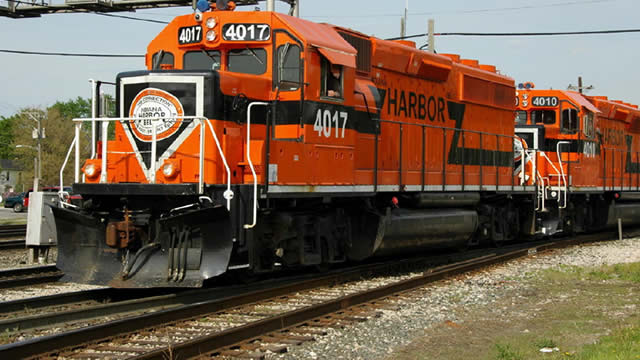
BNSF to shippers: Speak up about UP-NS merger
Yahoo Finance· 2025-10-01 12:43
Core Viewpoint - BNSF Railway opposes Union Pacific's proposed acquisition of Norfolk Southern, arguing it will reduce rail competition, increase rates, and potentially lead to operational issues [2][3][6] Group 1: Concerns About the Merger - BNSF claims that no customers are requesting the UP-NS merger, stating it is primarily driven by Wall Street for shareholder profits [3] - The merger is expected to impose costs on shippers, as UP's target of 10% volume growth is deemed unrealistic, leading to higher rates on captive traffic [3][4] - BNSF warns that UP will likely close 300 intermodal lanes if the merger is approved, prioritizing high-density lanes over low-volume ones [4] Group 2: Impact on Competition and Service - BNSF argues that the merger will diminish competition, adversely affecting smaller customers and communities [4] - The company highlights that past Class I megamergers have resulted in service-related issues, raising concerns about the operational integration of UP and NS [5] - BNSF expresses skepticism about the Surface Transportation Board's ability to enforce conditions that would protect shippers' competitive options [6] Group 3: Broader Implications - The potential impact of the merger on America's supply chain, economy, and consumers is viewed as too risky, especially in light of challenges faced during the pandemic [6] - BNSF encourages customers to voice their concerns to the Surface Transportation Board regarding the merger [2]
Mega Wall Street dealmakers are having their best year ever
Yahoo Finance· 2025-09-30 15:16
Group 1: Mega Deals in M&A - The year has seen a record number of 49 global M&A transactions valued over $10 billion, marking the highest count for mega deals in the first nine months of any year [1] - Notable transactions include Electronic Arts' $55 billion leveraged buyout, Union Pacific's $85 billion merger with Norfolk Southern, and Google's $32 billion acquisition of Wiz [2] Group 2: Investment Bank Performance - Jefferies Financial Group reported a record revenue of $655.6 million from M&A advisory services for the three months ending in August, a 10% increase from the previous year [3] - Total investment banking revenue for Jefferies in the third quarter reached $1.1 billion, a 20% increase year-over-year, with profits rising 38% to $242 million [8] Group 3: Market Sentiment and Expectations - Jefferies CEO expressed an increasingly optimistic mood at the bank, citing a rebound in global market sentiment [4] - Major banks like Goldman Sachs, JPMorgan Chase, and others are expected to report higher dealmaking fees due to increased activity in the third quarter [5] - Global M&A deal announcements surged to $1.22 trillion since July, representing a $345 billion increase compared to the same period last year, indicating the highest third quarter for M&A since 2021 [6][7]