NatWest Group(NWG)

Search documents
Willis Towers Watson announces agreement to acquire Cushon from NatWest (WTW:NASDAQ)
Seeking Alpha· 2025-12-10 12:56
Core Viewpoint - Willis Towers Watson (WTW) announced the acquisition of the workplace retirement schemes platform Cushon from NatWest, indicating a strategic move to enhance its offerings in the retirement solutions market [3]. Group 1 - The acquisition of Cushon is part of WTW's strategy to expand its capabilities in workplace retirement schemes [3]. - WTW was reported to be in advanced talks for the acquisition by the end of November [3]. - Financial terms of the deal have not been disclosed [3].



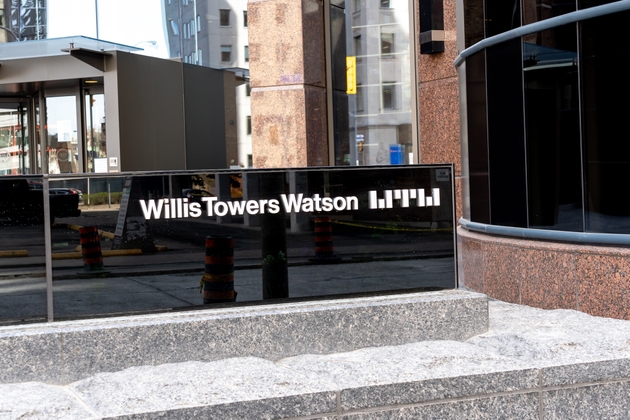
NatWest in exclusive talks to sell Cushon to Willis Towers Watson, sources said
Reuters· 2025-11-28 13:58
Core Viewpoint - NatWest Group is in exclusive negotiations to sell its 85% stake in Cushon, a workplace pension provider, to U.S. insurance broker Willis Towers Watson, just two years after acquiring the business [1] Group 1 - NatWest Group's decision to sell its stake indicates a strategic shift in its investment focus [1] - The sale reflects the growing interest of U.S. firms in the UK pension market [1] - Cushon has been positioned as a key player in the workplace pension sector, which is experiencing increased demand [1]

Pollard Banknote: The Market Is Underpricing The Impact Of New Long-Term Contracts
Seeking Alpha· 2025-11-28 13:56
Group 1 - The article discusses the expertise of a research firm focused on the U.S. restaurant industry, covering various segments from quick-service to fine dining [1] - The firm employs advanced financial modeling and sector-specific KPIs to identify hidden value in public equities, particularly in micro and small-cap companies [1] - The analyst has a strong academic background with an MBA in Controllership and Accounting Forensics, and a Bachelor's in Business Administration, along with specialized training in valuation and financial modeling [1] Group 2 - The research has been featured on multiple platforms including Seeking Alpha, Yahoo Finance, and Investing.com, indicating a broad reach and credibility in the industry [1] - The firm also covers related sectors such as consumer discretionary, food & beverage, and casinos & gaming, showcasing a diverse analytical approach [1]

NatWest Group plc (NWG) Presents at JPMorgan UK Leaders Conference Transcript
Seeking Alpha· 2025-11-25 22:43
Core Viewpoint - The company has demonstrated strong operating performance with a 19% return on tangible equity, trading at 7.5x PE and 1.3x book value, despite a volatile fiscal backdrop [1]. Economic Environment - The economic environment is characterized by cautious optimism, with base rates behaving as expected and a slight increase in unemployment [2].

JPMorgan names top European bank stocks to own heading into 2026
Invezz· 2025-11-23 11:00
Core Viewpoint - JPMorgan's senior analyst Kian Abouhossein has identified preferred European bank stocks as investors prepare for 2026 amidst macroeconomic uncertainty and varied M&A activity in the sector [1] Group 1: Analyst Insights - The analysis highlights the importance of selecting bank stocks that can withstand economic fluctuations and capitalize on potential growth opportunities [1] - Abouhossein's recommendations are based on a thorough evaluation of the banks' fundamentals and market positioning [1] Group 2: Market Context - The current macroeconomic environment presents challenges, including inflationary pressures and interest rate changes, which could impact bank performance [1] - M&A activity in the banking sector remains inconsistent, influencing investor sentiment and stock valuations [1]

NatWest Group (NYSE:NWG) Conference Transcript
2025-11-19 12:17
Summary of NatWest Group Conference Call Company Overview - **Company**: NatWest Group - **Industry**: Banking and Financial Services Key Points Economic Environment - The economic backdrop is characterized by cautious optimism despite volatility in budget news and a slight increase in unemployment to 5% from 4.7%[2][3] - Wage growth remains high, contributing to strong consumer confidence, particularly in retail deposits and mortgage markets[4][5] Financial Performance - NatWest's stock has performed well, trading at 7.5 times P/E and 1.3 times book value, with a return on tangible equity (ROTE) of nearly 19%[2] - The bank has upgraded its income guidance to approximately GBP 16.3 billion for the year, with expectations of ROTE exceeding 18%[10] Lending and Deposits - The bank has seen over 4% compound growth in lending over the past seven years, with a current market share of 12.6% in mortgages and 11% in unsecured credit[13][19] - The mortgage market has grown from GBP 240 billion to GBP 285 billion year-on-year, indicating strong consumer movement and confidence[18] - Retail deposit growth is supported by a saving rate of over 10%, with competitive pricing in the market[22][23] Non-Interest Income - Non-interest income has been bolstered by strong customer activity, particularly in foreign exchange (FX) and capital markets, benefiting from market volatility[9][29] - The structural hedge is expected to provide an additional GBP 1 billion in incremental net interest income (NII) next year[12] Market Share and Competition - NatWest holds a 25% market share in corporate deposits and nearly 20% in corporate lending, with a 6% growth in the corporate lending book year-to-date[27] - The bank is aware of increasing competition from fintechs and neobanks, which have improved customer service across the industry[61][62] Wealth Management - Assets under management (AUM) in the private banking and wealth management segment have increased by 15% to GBP 56 billion, with a target of achieving a cost-to-income ratio in the mid-60s and ROTE above 20% by 2027[34][35] - The bank aims to enhance its wealth management services by leveraging its existing customer base and improving referral systems[36][37] Capital Management - NatWest's capital target range is currently set at 13%-14%, with ongoing discussions about potential adjustments in light of regulatory changes and capital requirements[46][50] - The bank has increased its dividend payout ratio to 50%, indicating a strong commitment to returning capital to shareholders while maintaining flexibility for growth investments[52][53] Cost Management - Cost growth is projected to be around 2% this year, with a focus on maintaining cost discipline and driving operating leverage across all business segments[54][55] - Significant investments in technology, including AI and data management, are expected to enhance customer experience and operational efficiency[56][57] Regulatory Environment - The bank supports strong regulation but has expressed concerns about overregulation in certain areas, advocating for a balanced approach that fosters growth while ensuring stability[63][64] - Anticipation of upcoming regulatory reviews and potential changes in capital requirements is a key focus for the bank[49][50] Future Outlook - NatWest remains cautiously optimistic about growth prospects, driven by strong consumer confidence and strategic investments in technology and customer service[67] - The bank is committed to exploring inorganic growth opportunities in the wealth management sector while focusing on organic growth strategies[38][42] This summary encapsulates the key insights and data points from the NatWest Group conference call, highlighting the company's performance, market position, and strategic outlook.
U.K. Bank Stock, China Hotelier Top This Global Leaders List
Investors· 2025-11-18 15:11
Group 1 - A selection of top-performing European bank stocks has recently broken out, with some experiencing returns exceeding 120% this year [2] - NatWest Group (NWG) is highlighted as a member of the global bank stocks group, showing constructive charts [1] - Atour Lifestyle Holdings (ATAT), a Chinese company, is also featured as part of the IBD 50, indicating strong performance and potential investment interest [1][4] Group 2 - The market is currently mixed but positive, with notable stocks like Eli Lilly and Deutsche Bank in focus for potential buy opportunities [4] - Palantir has been elevated to best stock lists, indicating strong market performance and investor interest [4] - The S&P 500 has achieved record gains in 2025, with a specific Chinese stock vaulting 250%, suggesting robust market conditions for certain sectors [4]

隔离规定小放松?英国银行想动储户钱,央行说“不行!”
智通财经网· 2025-11-18 08:58
Core Viewpoint - The Bank of England is preparing to relax certain aspects of the UK's ring-fencing regulations while opposing significant reforms sought by banks, aiming to retain core protective measures during the review process by the government [1][2]. Group 1: Regulatory Changes - The ring-fencing regulations require banks to separate their retail operations from investment banking activities to protect depositors and taxpayers in times of crisis [1]. - The regulations apply to banks with retail deposits exceeding £35 billion (approximately $46.1 billion), including Lloyds Banking Group, NatWest, HSBC, Barclays, and Santander UK [1]. - Critics argue that these regulations hinder the UK's international competitiveness and that their removal could free up capital for lending [1]. Group 2: Bank Perspectives - Some banks have lobbied the UK Treasury, which has the final say on significant changes, to allow them to use a portion of the £35 billion from non-ring-fenced banks for investment banking activities [1]. - An anonymous source indicated that the Prudential Regulation Authority (PRA) opposes such proposals, viewing them as dismantling the ring-fencing framework [2]. - The PRA is more open to smaller changes, such as allowing shared back-office functions between entities and permitting certain activities within the ring-fenced entity [2]. Group 3: Future Outlook - The UK Chancellor, Rachel Reeves, has promised "meaningful" reforms to the ring-fencing regulations as part of efforts to reduce red tape and promote economic growth [1][3]. - The PRA plans to propose its reform plan in early 2026, with the current CEO, Sam Woods, having been involved in designing the existing regulations that took effect in 2019 [3]. - Barclays is noted as the only major UK bank supporting the current regulations, having established independent service departments for both its retail and investment banking operations [3].


NatWest Group (NWG) Is Up 2.91% in One Week: What You Should Know
ZACKS· 2025-11-13 18:01
Core Viewpoint - Momentum investing focuses on following a stock's recent price trends, with the aim of buying high and selling higher, capitalizing on established price movements [1] Company Overview: NatWest Group (NWG) - NatWest Group currently holds a Momentum Style Score of B, indicating a positive momentum outlook [2] - The company has a Zacks Rank of 2 (Buy), suggesting strong potential for outperformance in the market [3] Performance Metrics - Over the past week, NWG shares increased by 2.91%, outperforming the Zacks Banks - Foreign industry, which rose by 0.52% [5] - In a longer timeframe, NWG shares have appreciated by 12.3% over the past month, compared to the industry's 7.51% [5] - For the past quarter, NWG shares rose by 8.95%, and over the last year, they gained 64.96%, significantly outperforming the S&P 500's increases of 6.64% and 15.78%, respectively [6] Trading Volume - The average 20-day trading volume for NWG is 3,009,980 shares, which serves as a bullish indicator when combined with rising stock prices [7] Earnings Outlook - In the last two months, two earnings estimates for NWG have been revised upwards, with the consensus estimate increasing from $1.60 to $1.82 [9] - For the next fiscal year, two estimates have also moved higher, with no downward revisions noted [9] Conclusion - Given the positive momentum indicators and earnings outlook, NWG is positioned as a strong buy candidate with a Momentum Score of B, making it a noteworthy option for investors seeking growth [11]

New Strong Buy Stocks for Oct. 31: PMT, NWG, and More
ZACKS· 2025-10-31 09:56
Core Insights - Five stocks have been added to the Zacks Rank 1 (Strong Buy) List, indicating strong potential for investment returns Group 1: Company Summaries - **PennyMac Mortgage Investment Trust (PMT)**: This real estate investment trust focuses on residential mortgage loans and related assets, with a 10.3% increase in the Zacks Consensus Estimate for current year earnings over the last 60 days [1] - **NatWest Group (NWG)**: A banking and financial services company offering a range of services including personal and business banking, with a 7.5% increase in the Zacks Consensus Estimate for current year earnings over the last 60 days [2] - **Phibro Animal Health (PAHC)**: A global diversified animal health and mineral nutrition company providing products for food animals, with a 4.4% increase in the Zacks Consensus Estimate for current year earnings over the last 60 days [3] - **Centene (CNC)**: A well-diversified healthcare company serving government-sponsored healthcare programs, with a 2.4% increase in the Zacks Consensus Estimate for current year earnings over the last 60 days [4] - **ACNB (ACNB)**: A provider of banking and financial services to individuals and businesses, also seeing a 2.4% increase in the Zacks Consensus Estimate for current year earnings over the last 60 days [4]